

Backing public transit on Shabbat, Bennett steers campaign into jammed center lane
No longer constrained by right-wing niche, former PM seeks broader appeal — but he may end up only drawing votes away from his potential coalition partners

 Add ToI as a Preferred Source on Google
Sam Sokol is a former political correspondent at The Times of Israel. He was previously a reporter for the Jerusalem Post, Jewish Telegraphic Agency and Haaretz. He is the author of "Putin’s Hybrid War and the Jews"
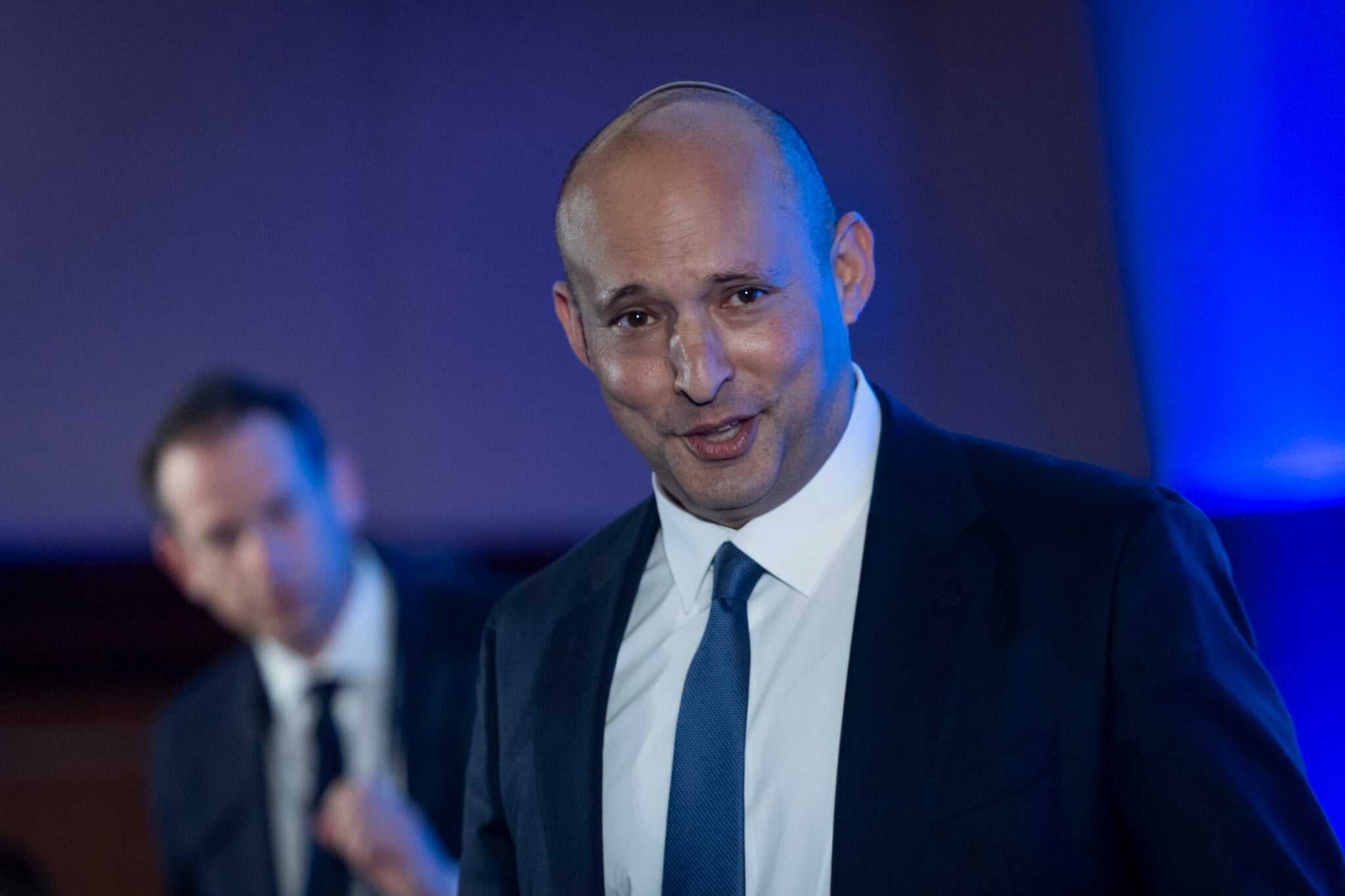
This week, former prime minister Naftali Bennett came out in favor of public transportation on Shabbat, and civil marriage.
For Bennett, the former political face of the socially conservative national-religious community, the announcements were the latest to underline what appears to be his ongoing move toward the center as he mounts a political comeback ahead of this year’s elections.
Speaking with Army Radio, Bennett declared that “cities must be allowed to choose if they want public transportation on Shabbat” and that “every person in Israel should be able to bring their love to fruition in this country and not travel abroad.”
At present, public transit is officially banned on Shabbat in nearly all Israeli cities, and Israelis who want a non-Orthodox Jewish wedding must tie the knot abroad, since the Chief Rabbinate holds a state monopoly on matrimony in Israel.
“My compass in this matter is common sense and fairness,” Bennett said.
Both issues are likely to resonate with a liberal, progressive audience that may have formerly viewed Bennett as anathema, even if they may alienate the religious conservatives he formerly counted as his voters.

His comments were immediately condemned by the ultra-Orthodox Shas party, which accused him of being “ready to trade away the country’s Jewish identity” for political gain, and argued that he would, in the end, also turn his back on his other long-held positions, such as support for West Bank settlements.
But they were welcomed on the other side of the aisle. Yair Golan, chair of the left-wing Democrats party, noted that Bennett had “come a long way” from his days as leader of the right-wing Jewish Home party.
Bennett’s political career — he also headed the New Right and Yamina parties –was long associated with the hawkish, pro-settler and nationalist ideological space now occupied by far-right Religious Zionism party leader Bezalel Smotrich.
But his political horizons were transformed in 2021 when he managed to bargain his way to the top of an extremely diverse coalition cobbled together by Yesh Atid party head Yair Lapid, ousting Benjamin Netanyahu from the premiership.
Spanning from Bennett on the right to Meretz on the left and including the Arab Ra’am party, the coalition left many of Bennett’s voters feeling betrayed by his decision to lock hands with those from across the aisle. That rift was exploited by the then-opposition Likud to help bring down the so-called “change coalition” after a year and a half.
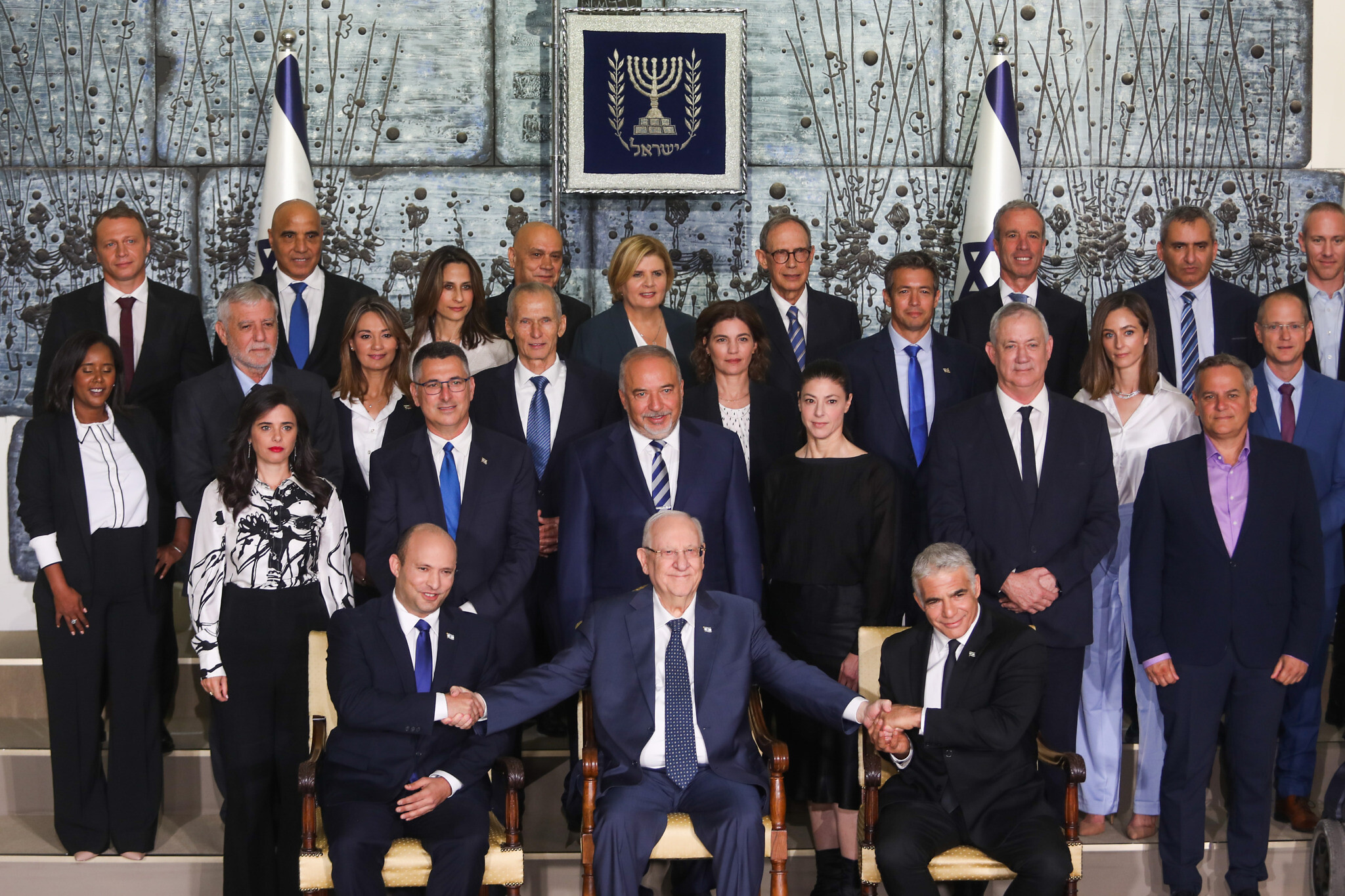
But Bennett’s time in power also made him a viable choice for voters far from his traditional base, especially those opposed to Netanyahu. Out of office since the 2022 election, Bennett is currently polling as Netanyahu’s leading challenger and his nascent party has consistently been projected to receive the most votes of any anti-Netanyahu faction in elections that must be held by October, and the second-most overall after Netanyahu’s Likud.
The path back to the prime minister’s office is not simple, though. On the right, Bennett presented voters with the value proposition of a right-wing stalwart bringing the movement into alignment with Israel’s high-tech future. By turning toward the center, Bennett may widen his appeal to a much larger swath of voters, but it will also put him in direct competition with a crowded field of other anti-Netanyahu consensus builders.
Bennett “is aiming for the positions of the majority of the public,” said Ariel Finkelstein, a researcher at the Israel Democracy Institute. “He is no longer a religious ‘niche’ party.”
A spokesperson for Bennett 2026 declined to comment.
Competing in the center
Bennett has long taken a more progressive approach toward religion than many in the religious Zionist community, but so long as he viewed that community as an essential part of his base he was largely constrained from advocating for anything beyond modest reforms.
A push for public transportation on Shabbat and civil marriage, which would represent a sea change in the religion-state relationship, indicates Bennett no longer feels those electoral fetters.
“I don’t think he’s changed his views; I think he’s just in a party where he can voice them out loud,” a former Bennett associate told The Times of Israel on condition of anonymity on Monday.
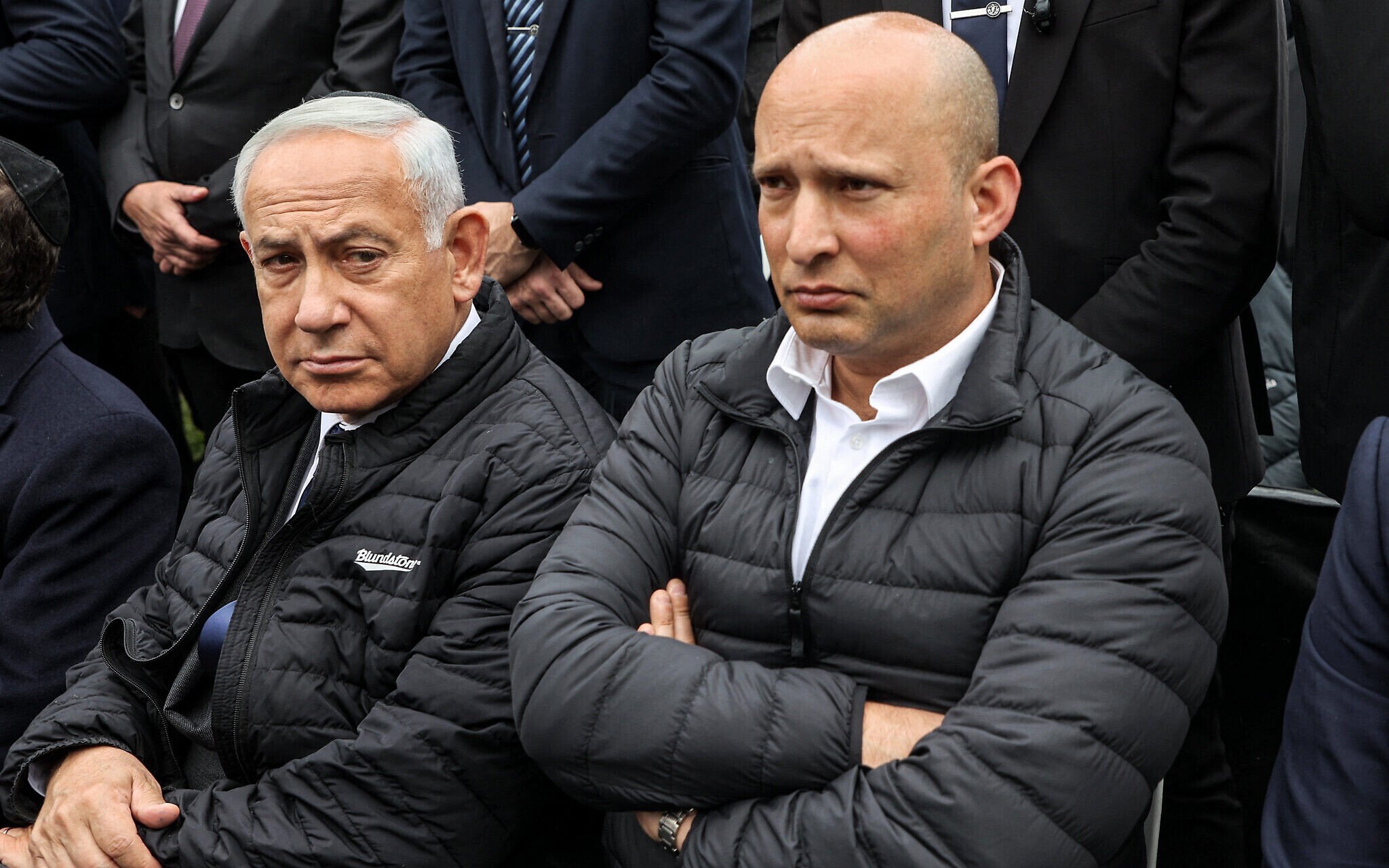
The stance dovetails with other moves and comments from Bennett that show him striding away from the right and toward the center, including his active pursuit of collaboration with other prominent center and center-right politicians.
The former premier, who has previously said that his approach is based on advancing issues on which there is political consensus, is reportedly in contact with Opposition Leader Yair Lapid and Yashar party chief Gadi Eisenkot to discuss the potential formation of a new joint party called “New Israel.”
The Bennett associate noted, however, that his comments on religious reforms did not necessarily represent a total break with the right.
“I think many right-wing and religious voters are more moderate on social issues and I expect he will gain from voicing these views,” the associate said. “It’s a clear contrast from [far-right Otzma Yehudit party chief Itamar] Ben Gvir and Smotrich, who are more to the right than the mainstream religious and right-wing community.”
However, there are indications that Bennett still sees himself on the political right, presenting himself as leading the conservative flank of such an alliance.

Speaking with the Kan public broadcaster on Monday, Bennett said he believes it is “super critical that we unite in the Zionist-liberal bloc of the opposition” based on the model recently seen in Hungary, in which a conservative ex-ally of former prime minister Viktor Orban swept him from power at the head of a largely liberal coalition of opposition parties.
“In Israel too, if they try once again to bring someone who is not a right-wing figure, we will lose as we have since 2009. Only a man of the right can defeat this government,” he said, confirming that he suggested to Eisenkot that they run together.
“Security-wise, I am a hawk, and nationally, I am a liberal, and in favor of sitting with people from both the left and the right,” he told the network.
A history of circumspection
Bennett’s relationship to religious policy has always been complicated. He has been circumspect in his approach toward religion and state over the course of his political career, pushing for measured changes but declining to enact major policy shifts.
Polls in recent years have shown a majority of Israelis support public transportation on Shabbat and civil marriage, and Bennett “realizes that he’s competing to lead the large center-right/secular and traditionalist right that is not happy with the fanatical, fundamentalist lurch in Israeli politics,” said Dahlia Scheindlin, a political analyst and columnist for the Haaretz daily.
“It has always been safer to be bold on separation of religion and state, which has long enjoyed a solid absolute majority… far easier than breaking with his earlier far-right positions regarding the Palestinians, supporting annexation and opposing Palestinian self-determination,” Scheindlin said. She added that Bennett’s latest statements were unsurprising given that the “mainstream right and even center has been his constituency and target group ever since breaking with the [Netanyahu] camp.”

According to Finkelstein, who focuses on issues of religion and state, Bennett’s shift toward the center on religious issues could already be seen in 2019, when his New Right party expressed measured support for the Gavison-Medan Covenant, a proposal for religious reform.
“Now he truly aspires to be a ruling party that leads the general public, both secular and traditional. Ultimately, the majority of the public in Israel is secular and traditional, not religious. Among the secular and traditional public, there is a clear majority supporting these things,” he said.
The party of governance
Elections must take place by late October and campaign machines have begun revving up, but Bennett has yet to officially name his party and has only announced the identities of three others who will run on his party slate.
Those names, though, have reinforced the idea that he is trying to craft a new image and distance himself from his old political persona even while capitalizing on his record as a prime minister. Two of the figures are technocrats who held senior government positions and have protested what they see as problematic management by the current government.
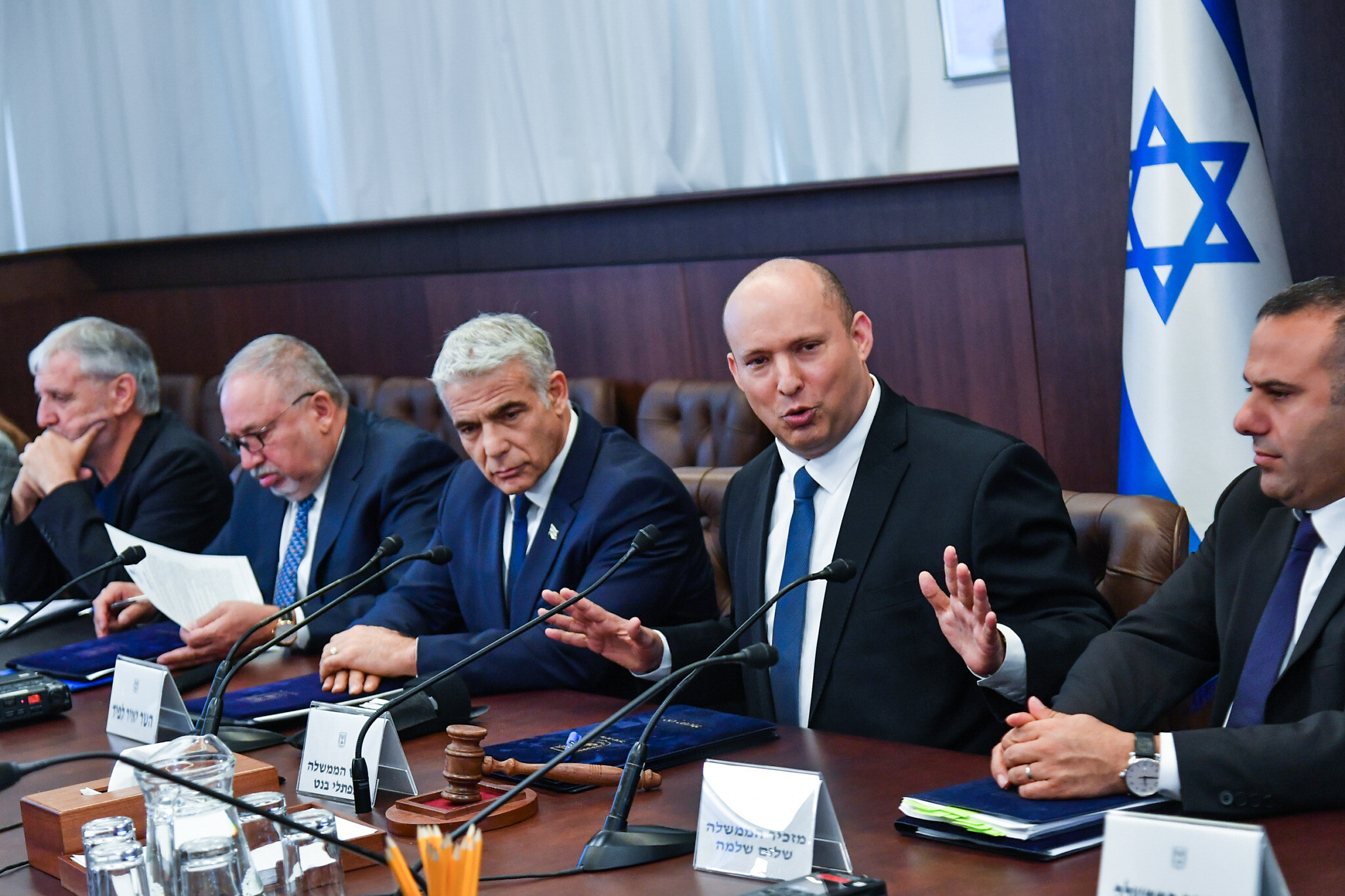
Both could help project an image of a party looking first and foremost to establish effective governance in place of what critics say has been a process of unprofessional politicization of various ministries.
“In order to go back to running the state, we need the best managers and executives in the state,” Bennett wrote on X when announcing his choice of Keren Terner, who resigned as director general of the Finance Ministry in 2021, and Liran Avisar Ben-Horin, who resigned as director general of the Communications Ministry in 2023.
Ben-Horin is currently in charge of Bennett 2026’s “100 Days” project — a plan to rehabilitate what she has described as “everything that has been destroyed in government ministries in recent years.”
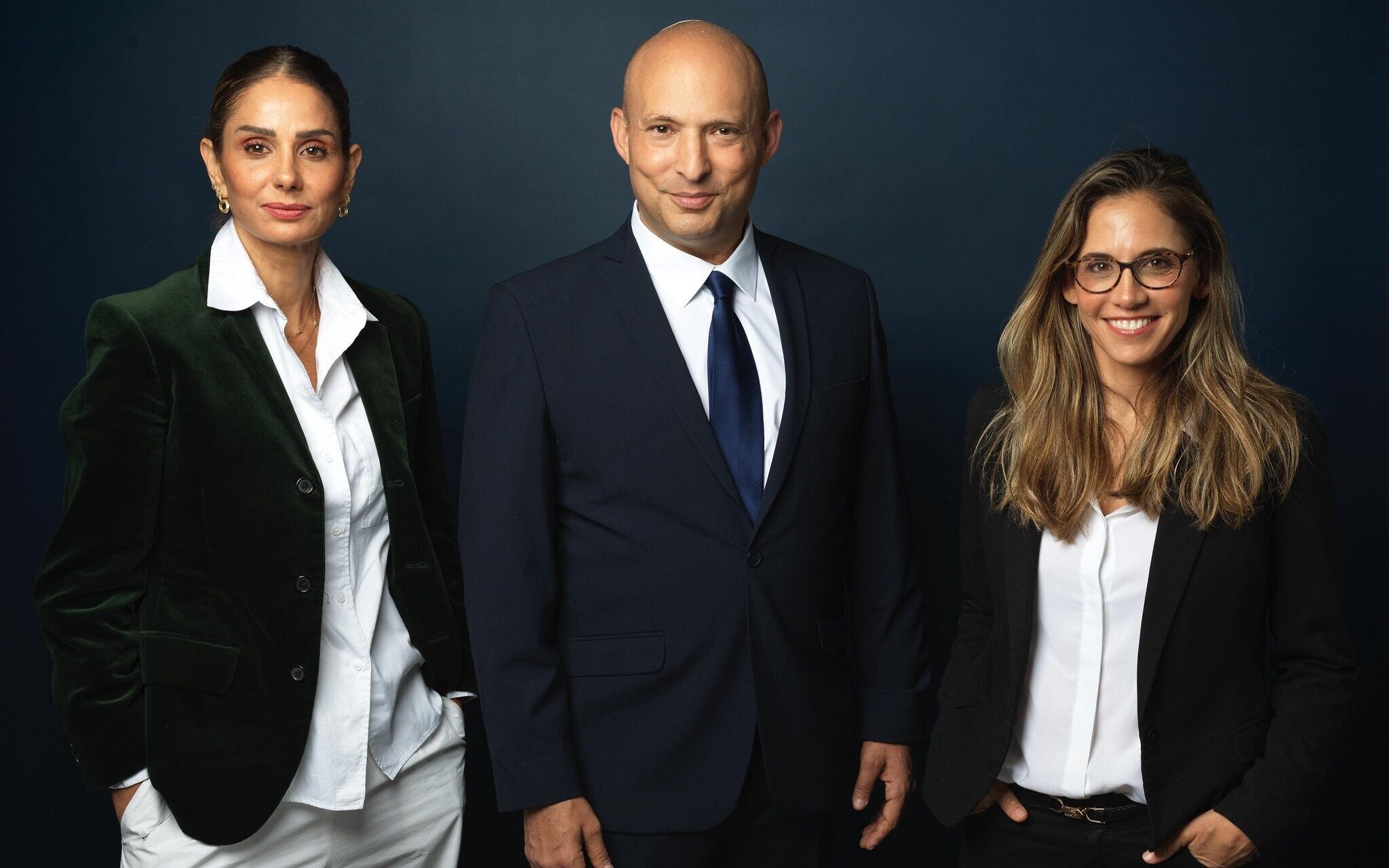
In addition, Bennett has chosen 23-year-old Yonatan Shalev, a leader of the Shoulder to Shoulder movement, which represents reservists and young soldiers advocating for Haredi conscription, an issue on which there is even wider consensus than buses on Shabbat and civil matrimony.
“Generally speaking, he wants to reach as broad a base as possible,” a party insider told The Times of Israel.
Trouble differentiating himself
While Bennett has moved to increase his mainstream appeal by taking up consensus issues and working to create an expectation of competent governance, he has largely failed to show how he is different from his fellow party leaders in the center, with whom he is largely competing for votes.
His rhetoric on nonreligious issues has echoed that of other center and center-right parties, such as pushing for the establishment of a state commission of inquiry into the October 7 massacre and advocating for prime ministerial term limits.

“In terms of what Bennett might be doing to distinguish himself from Benny Gantz, Yair Lapid and Eisenkot, I don’t see a lot right now, which is why I think we keep seeing survey strength shifting and fluctuating. But I also think that he will certainly try to play up his credentials as prime minister,” said Scheindlin.
Bennett’s turn as prime minister has indeed helped place him ahead of other politicians who have spent years leading from the center, polling shows. But those surveys also indicate that most of the support for Bennett will come at the expense of fellow centrists, and will fail to significantly boost the anti-Netanyahu bloc beyond its current strength.
Recent polling has shown that if Eisenkot, Lapid and Bennett ran together, their combined ticket would receive 38 seats, one more than if they each ran separately. Yet in either configuration, the polls show for now, the array of parties likely to join up with them would still fall just short of the 61-seat majority needed to form a government.
“I don’t really think that he’s doing that much to distinguish himself,” Scheindlin said of Bennett. “Maybe he hopes that he will win over some of the more right-wing and religious types who are moderate politically and disaffected by Netanyahu.”
JTA News and Ariela Karmel contributed to this report.






The Times of Israel Community.