

Budget deficit could balloon if steps not taken, central bank chief warns
Bank of Israel governor Amir Yaron says that without higher taxes, shortfall could reach ‘dangerous level’ of more than 4.5 percent of GDP
 Add ToI as a Preferred Source on Google
Shoshanna Solomon was The Times of Israel's Startups and Business reporter
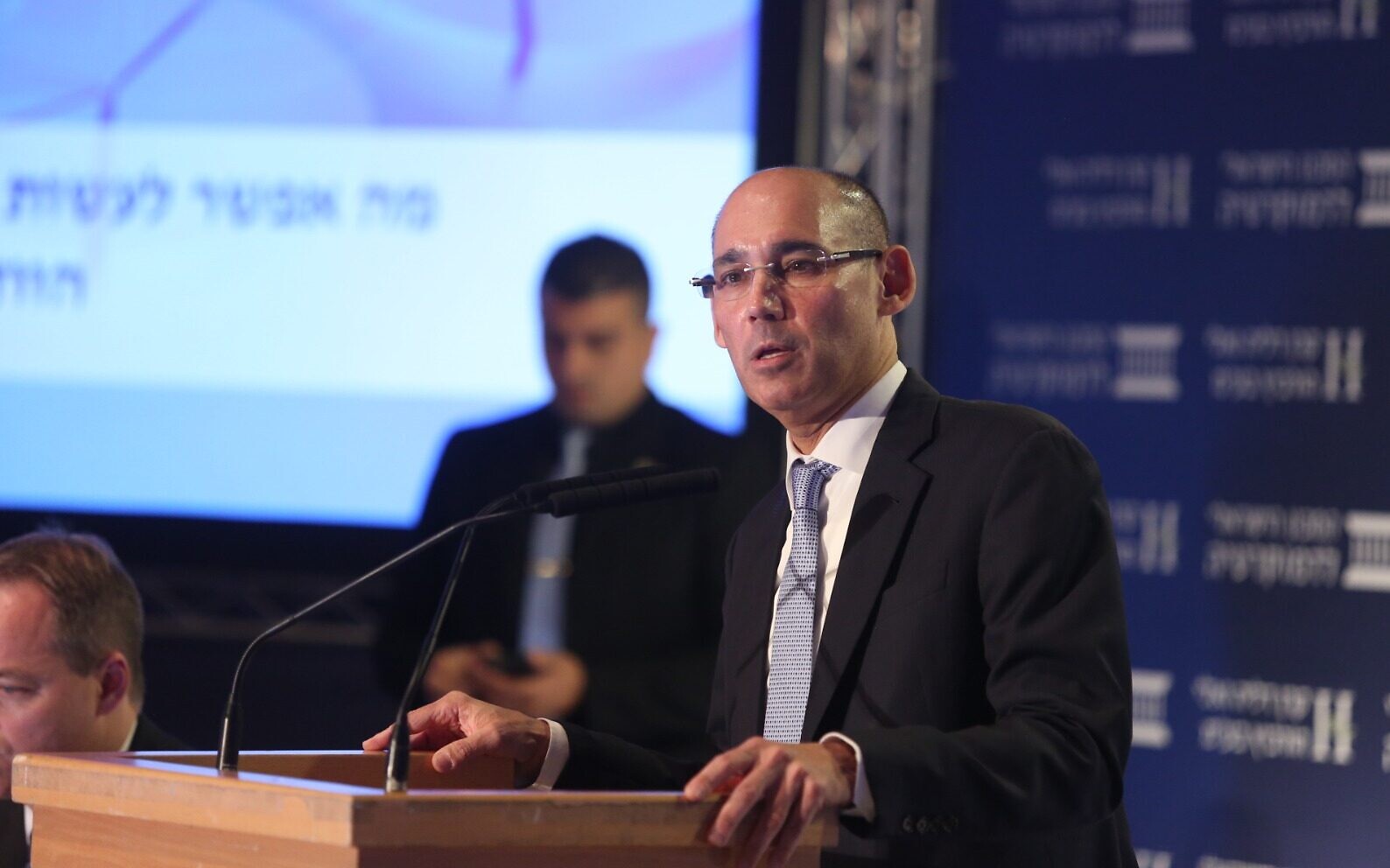
Bank of Israel governor Amir Yaron warned on Tuesday that if the government does not cut taxes and continues with business as usual, the already over-target budget deficit could balloon even further.
Speaking at the Eli Hurvitz Conference in Jerusalem, organized by the Israel Democracy Institute, Yaron predicted that if the government does not raise taxes, “the deficit is expected to reach a dangerous level” of more than 4.5 percent of GDP, and the debt-to-GDP ratio is expected to spike, reaching 75 percent of GDP in 2025.
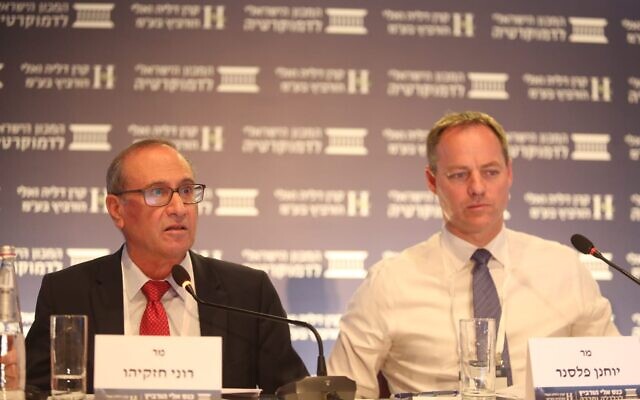
The budget deficit in 2019 will likely creep up to 3.7%, well above the government target of 2.9%, the Finance Ministry’s accountant general Rony Hizkiyahu said at the conference, with the debt to GDP ratio probably remaining stable at around 61%.
The political stalemate that is seeing Israel holding its third elections within a year and run by an interim government for a prolonged period of time is causing a delay in the implementation of economic programs and stalling the generation of essential economic reforms, Hizkiyahu said.
Even so, a new government could still take significant steps to tackle the challenges afflicting the economy: a limping infrastructure, particularly a weak public transportation system that is lowering productivity; a lack of qualified workers for the tech industry; and over-regulation and bureaucracy that weighs on businesses.
With an election set for March 2, a budget for 2020 is unlikely to be approved until at least the middle of next year. This means that government spending in 2020 will be based on a pro-rated version of the 2019 base budget, not including any extra spending made during the year
Hizkiyahu urged that the focus of any future government be to invest.
“We cannot lower costs, we must invest in infrastructure,” Hizkiyahu said. Israel is a young country with a young population, “and we must invest in more school classes, hospitals, and support business infrastructure. We must continue to invest today and bring strong growth.”
Shaul Meridor, the director of budgets at the Finance Ministry, reiterated at the conference that to maintain economic growth, Israel must invest in public transportation and education.
“We are seeing a significant increase in the number of vehicles on the roads,” he said. “There is no way in the world that Israel can close the gap by just building roads.” Steps must be taken to reduce the use of private vehicles and boost mass transportation.
And the educational system, which is failing its students, must use its money better. “The education budget is not managed,” he said. “The money that was invested did not in any way improve students’ achievements.”
At the conference, Anat Guetta, chair of the Securities and Exchange Commission, said that the capital markets are “detached from the success of high-tech” because technology companies shun raising funds in the local stock market, opting instead for foreign markets, other funding avenues or being acquired.
“This has negative effects on the Israeli economy,” she said, since most people never get a chance to invest in successful firms as their shares are not publicly traded.
The central bank’s Yaron added that this interim period, between elections, should be used by ministries to set out plans and programs that will benefit the economy and that can be implemented as soon as a new government is formed.
Israel does not have the “privilege” of delay, he said. “We must take advantage of the near future to prepare programs that can meet our needs for the coming years.”








The Times of Israel Community.