

Cabinet set to shutter military cemeteries for Memorial Day
Despite coronavirus closure, some families insist they will visit their loved ones’ graves ‘at all costs’
 Add ToI as a Preferred Source on Google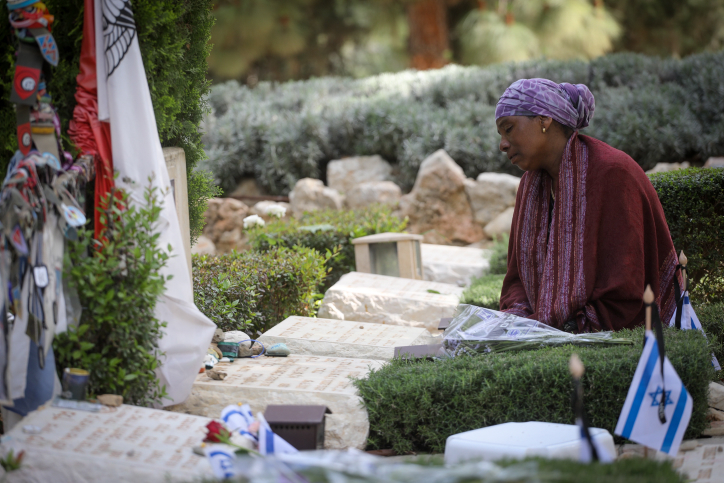
The cabinet was set to vote on Wednesday morning to severely limit commemorations and celebrations of upcoming holidays, including Israel’s independence and memorial days and the Muslim holy month of Ramadan, in a bid to stem the spread of the coronavirus.
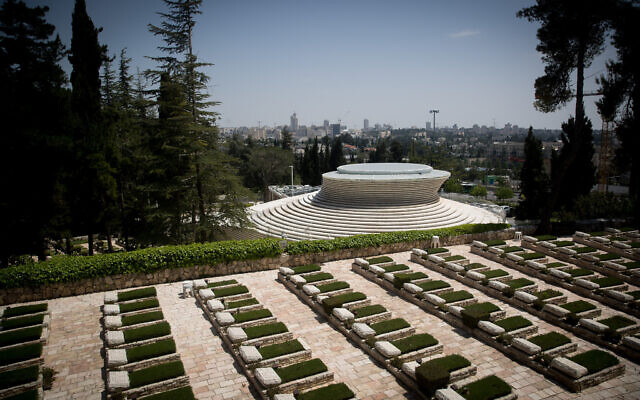
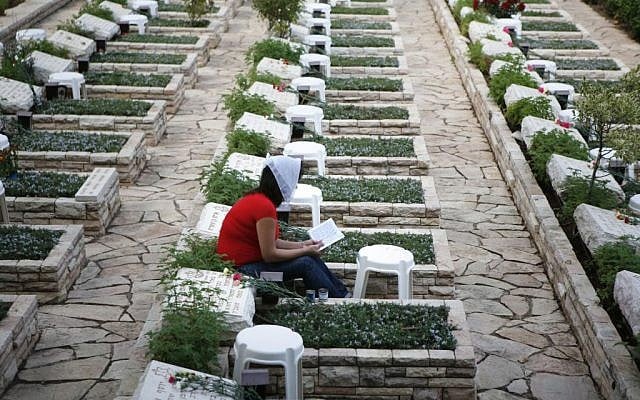
The measures expected to be approved by a telephone vote of the cabinet include a blanket prohibition on families of fallen soldiers and terror victims visiting the graves and memorial sites of their loved ones.
Meanwhile, all intercity traffic will be prohibited on Memorial Day, which lasts from sundown on April 27 to nightfall on April 28. Independence Day, which begins just as Memorial Day ends, will see a full lockdown of the country similar to the lockdown earlier this month for Passover.
Defense Minister Naftali Bennett said Wednesday families would be allowed to visit before Memorial Day, in order to avoid a mass gathering at the cemeteries on the day itself.
“The nuclear families alone can visit the cemetery from this morning, Wednesday morning, until Sunday night, whenever they wish, while observing the accepted distancing rules,” Bennett said in a statement.
“It’s a painful decision, but it’s necessary. The decision was made after consulting with the head of Yad Labanim,” the largest bereaved families organization in Israel, he added.
While bereaved family organizations have backed the government’s decision to close cemeteries, many families say they will defy the orders.
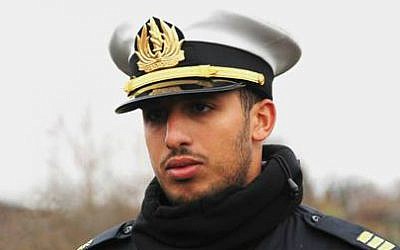
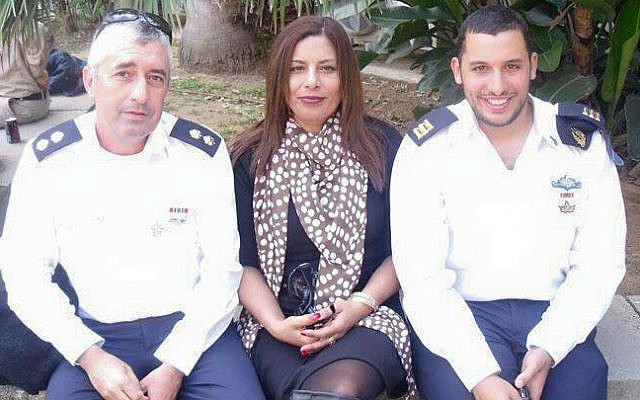
“I understand the decision, but they have to let us parents visit, without the general public,” insisted Irit Shahar, mother of Omri Shahar, a soldier killed in a car accident while on duty in 2012, to the Ynet news site.
“I will violate the closure in order to reach my son. You’re in greater danger going to the supermarket. My son won’t infect me. His gravesite is my second home, and the state suddenly decides I can’t go in? How dare they prevent me from reaching my son?” Shahar said.
“We don’t want them to hold ceremonies. We want them to let us sit next to our boy that day. I know we’re going to go, and there will be police officers there, and it will be an unpleasant scene,” said Omri’s father, Asher Shahar.
If they are prevented from reaching the grave, “we will sit next to the police,” he said.
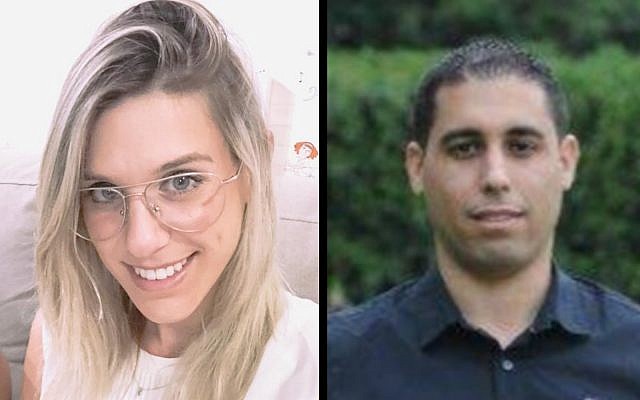
“It’s disrespectful,” Rafi Levengrond, father of Kim Levengrond, who was murdered in the October 2018 terror attack at the Barkan Industrial Zone in the northern West Bank, told the site.
His grief “is still fresh,” he said. “It’s not like 30 years have gone by. We’re in pain, my family is crushed. I’ve already lost everything I had to lose. I don’t care about the coronavirus, I don’t care about dying either. I’m going at all costs.”
Other families said they would heed the warnings.
“The thought that we won’t be able to visit the gravesite on such a sad day makes the day even harder,” said Tal Hajbi, brother of Ziv Hajbi, who was also murdered in the Barkan attack.
“The nuclear family will visit before Memorial Day. Considering the situation, and the danger to public health, we won’t put anyone in danger. Bereaved families don’t need a special day to remember our grief,” Hajbi said.
The comments were echoed by Eli Keidar, father of Lt. Col. Dolev Keidar, who was killed in the 2014 Gaza war.
“I think we have to be careful and safe. True, Memorial Day is important, but for us every day is memorial day,” Keidar said.
Eli Tohar, who mourns both his son Roi and his brother Lt. Col. Yossi Tohar on Memorial Day, urged families to visit ahead of time, and said the public’s respect could be shown in other ways.
“I say it’s not such a terrible thing if people stand on their porches to pay their respects. It’s more important for me that people don’t get infected.”
The largest organization of bereaved families, Yad Labanim, has backed the government’s expected decision.
“What the prime minister decided is our recommendation,” said Yad Labanim chair Eli Ben Shem.
“We’re worried about the health of the families, we don’t want to put them in danger. Memorial Day doesn’t belong to the families alone, but to all the people of Israel. I’ll be going on Friday [three days early], because there’s no need to put anyone in danger. There are 4,000 graves on Mount Herzl, and that’s a terrible danger [of spreading the virus]. The phrase [penned by poet Hayim Nahman Bialik and often recited at funerals] ‘In their deaths they directed us to live’ is relevant here. Our children, who fought so that we may live, won’t be angry with us.”
Tami Shelah, head of the IDF Widows and Orphans Organization, also backed the government’s decision.
“Despite the sorrow and pain, we call on the bereaved families — please stay home, so that next year we can all visit the graves of our loved ones in good health,” Shelah said.





The Times of Israel Community.