

GOP Jewish group says confab and Trump speech still on
Republican Jewish Coalition declines to join other groups canceling conferences, director denies politics or Trump’s attempt downplay virus played a factor in decision
 Add ToI as a Preferred Source on Google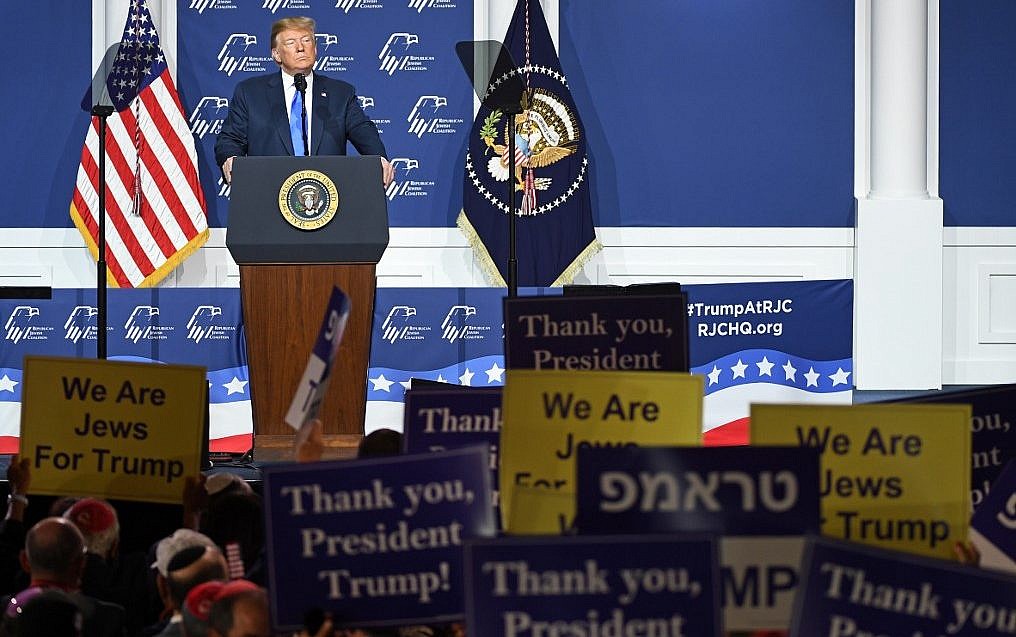
WASHINGTON (JTA) — As events around the world are canceled because of the coronavirus, at least one major Jewish gathering is going forward: this weekend’s Republican Jewish Coalition conference in Las Vegas.
The annual event, which is scheduled to feature an address by President Donald Trump, drew a crowd of nearly 1,500 last year.
Matt Brooks, the coalition’s executive director, said he expects “a strong showing” this year, too, despite the emerging epidemic that has canceled conferences, shuttered synagogues and effectively closed Israel to travelers. He said about 10% of those who signed up had pulled out but would not say how many people had registered.
“The marketplace is determining whether we continue with the event,” Brooks told the Jewish Telegraphic Agency. “We’re not forcing anyone to come.”
As Jewish groups and leaders grapple with their coronavirus response, political allies of the Trump administration must weigh more than just public safety and sentiment. They also must face the fact that Trump himself has been downplaying concerns, including those expressed by top public health officials, and for the most part continuing with his regular public appearances and handshakes.
“Nothing is shut down, life & the economy go on,” Trump tweeted Monday.
Brooks said politics had not played a role in RJC’s decision to move forward. But reports suggest that Israel’s new quarantine rules for international travelers might reflect US preferences.
Prime Minister Benjamin Netanyahu, whose hold on power is tenuous, dithered for several days over whether to restrict travel to Israel from the United States because of the virus. When he announced a two-month quarantine on Monday, he extended it to all countries, although many nations have reported no or very few cases.
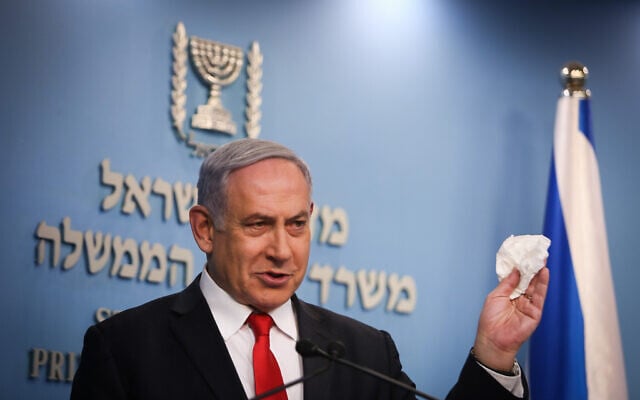
On Monday, quoting anonymous officials, Axios reported that Vice President Mike Pence had asked Netanyahu to expand any ban to the entire world so the United States would not appear to be singled out. A Pence spokesman denied the account.
The task of handling Trump’s sensitivities is not new for the Jews in his orbit, and the delicacy is compounded by the degree to which the president has aligned himself with right-wing pro-Israel views: He moved the U.S. Embassy to Jerusalem, defunded the Palestinians, extended recognition to some of the areas captured by Israel in the 1967 Six-Day War and exited the 2015 Iran nuclear deal.
Netanyahu also has trod carefully on the rare occasion that his government has opposed Trump actions, refusing to speak out for instance about Trump’s pullback from resolving the Syria crisis — an absence that could leave the country open to Israel-hostile actors like Iran.
On Sunday, the day before his decision to stop all travelers from entering Israel, Netanyahu suggested in a statement that one consideration was navigating a path that would not offend good friends.
“We will also make use of my ties with the leaders of certain countries,” he said. “We will help them and they will help us. There are things that it is possible to give. I will do what is necessary to safeguard the health of the citizens of Israel.”
At last year’s RJC conference, the remnants of tensions between Trump and those who had expressed dissent were on display.
Norm Coleman, the RJC chairman and a former Minnesota senator, wrote in an op-ed in 2016 that he could not vote for Trump, calling him a “fraud and a bully.” Coleman introduced Trump last year, effusively expressing regret for that piece.
“There were some doubters in this room, and I was foolishly among them,” Coleman said, introducing Trump, who nonetheless needled the crowd for having opposed him.
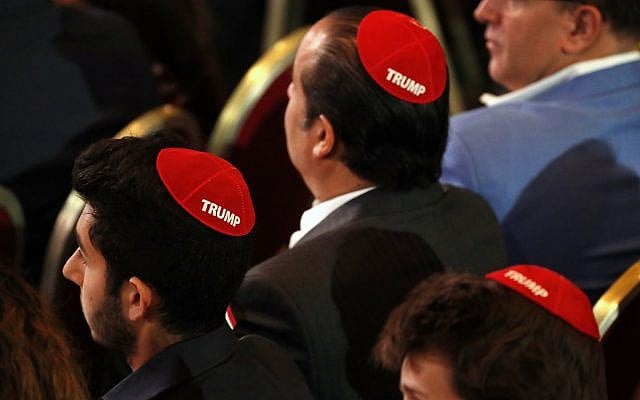
The RJC put out last-minute calls to non-Jewish Trump supporters in the area to show up at last year’s conference, suggesting that the event had not drawn a big enough crowd to fill the 1,500-seat capacity. Several hundred local Trump supporters turned out, but that still meant that about 1,000 Jews had traveled for the event — a relatively impressive turnout for a gathering that did not take place in one of the major coastal Jewish communities.
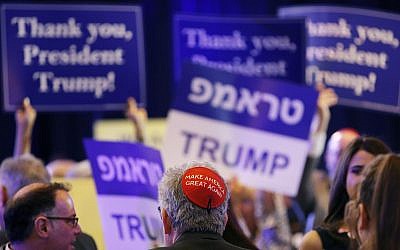
Most of those on hand appeared to fall into the demographic that is considered most susceptible to the coronavirus’s complications, those over 60 years old. Public health authorities in some places have advised elderly people to avoid crowds or even cautioned against any large gatherings at all.
“People should consult with their family and physicians and make a decision about whether it’s appropriate or good for them to come,” Brooks said when asked about older people who might be in attendance. “We will put into place precautions and education and sensitivity, and encourage people to be situationally aware — no handshaking, no hugging, no kissing. We’ll give everybody Purell, massive amounts of hand sanitizer will be available.”
Many of those precautions were in place at last week’s conference of the American Israel Public Affairs Committee, which drew about 18,000 Israel supporters to Washington, DC. Now the organization is coping with the fact that at least five people who attended have tested positive for the coronavirus.
The American Conservative Union’s annual conference, CPAC, held the same weekend, also reported that a man who was infected with the virus was in attendance. Four Republicans in Congress who interacted with the man at CPAC have self-quarantined. Trump, who was also at the conference, has continued to travel and make public appearances.




The Times of Israel Community.