

Hamas tries to keep lid on tunnel disaster as death toll rises
Terror group blames Israel for cave-in that left seven dead and four missing

 Add ToI as a Preferred Source on Google
Avi Issacharoff, The Times of Israel's Middle East analyst, fills the same role for Walla, the leading portal in Israel. He is also a guest commentator on many different radio shows and current affairs programs on television. Until 2012, he was a reporter and commentator on Arab affairs for the Haaretz newspaper. He also lectures on modern Palestinian history at Tel Aviv University, and is currently writing a script for an action-drama series for the Israeli satellite Television "YES." Born in Jerusalem, he graduated cum laude from Ben Gurion University with a B.A. in Middle Eastern studies and then earned his M.A. from Tel Aviv University on the same subject, also cum laude. A fluent Arabic speaker, Avi was the Middle East Affairs correspondent for Israeli Public Radio covering the Israeli-Palestinian conflict, the war in Iraq and the Arab countries between the years 2003-2006. Avi directed and edited short documentary films on Israeli television programs dealing with the Middle East. In 2002 he won the "best reporter" award for the "Israel Radio” for his coverage of the second intifada. In 2004, together with Amos Harel, he wrote "The Seventh War - How we won and why we lost the war with the Palestinians." A year later the book won an award from the Institute for Strategic Studies for containing the best research on security affairs in Israel. In 2008, Issacharoff and Harel published their second book, entitled "34 Days - The Story of the Second Lebanon War," which won the same prize.
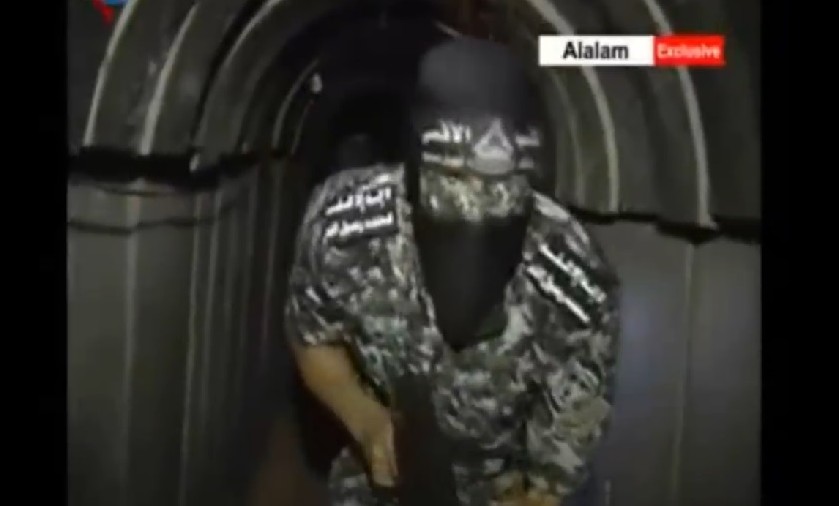
Hamas on Wednesday tried to keep under wraps the details of a Gaza Strip tunnel collapse, the day after the cave-in killed several members of the terror group.
Seven people were confirmed killed and another four remain missing after the collapse, which came as heavy rains drenched the region, according to sources in Gaza.
In a bid to keep a lid on the disaster, the group, which is the de facto ruler in Gaza, prevented local media from reporting the incident, which occurred in the Al-Tuffah neighborhood in northeastern Gaza City.
Hamas accused Israel of causing the collapse by opening dams to flood Gaza with water — an annual claim made by Palestinians and flatly rejected by Israel.
As a result of the recent heavy rain in the region the tunnel fell in, burying the 11 Hamas members who were digging the passage. Seven bodies were pulled out, according to senior Palestinian sources, but another four have not yet been found.
The nature of the tunnel in question was not immediately clear. Hamas has in the past dug cross-border tunnels into Israel in order to stage attacks on civilians and soldiers. Other tunnels are used by the terror group as part of its defensive infrastructure.
It has recently been reported that Hamas has accelerated its tunnel-digging program.
Hamas has built dozens of tunnels into Israel, many of which were used to carry out attacks during the 2014 conflict with Israel. The IDF said it destroyed over 30 tunnels at the time, but officials have expressed concern that the terror group is seeking to rebuild the infrastructure.
The Strip has been subject to a blockade by both Egypt and Israel, designed in part to prevent the terror group from importing arms and building new tunnels reinforced with concrete.
Egypt has embarked on a massive campaign aimed at stemming cross-border smuggling between Gaza and Sinai, where it is fighting an insurgency by Islamist militants. The operation has included flooding hundreds of tunnels that once dotted the border region and building a 500-meter-wide buffer zone filled with seawater.
Times of Israel staff contributed to this report.









The Times of Israel Community.