 Add ToI as a Preferred Source on Google
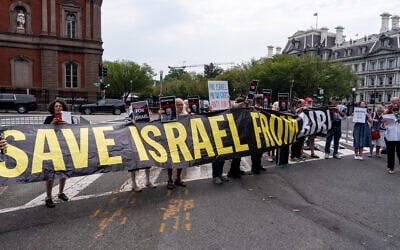
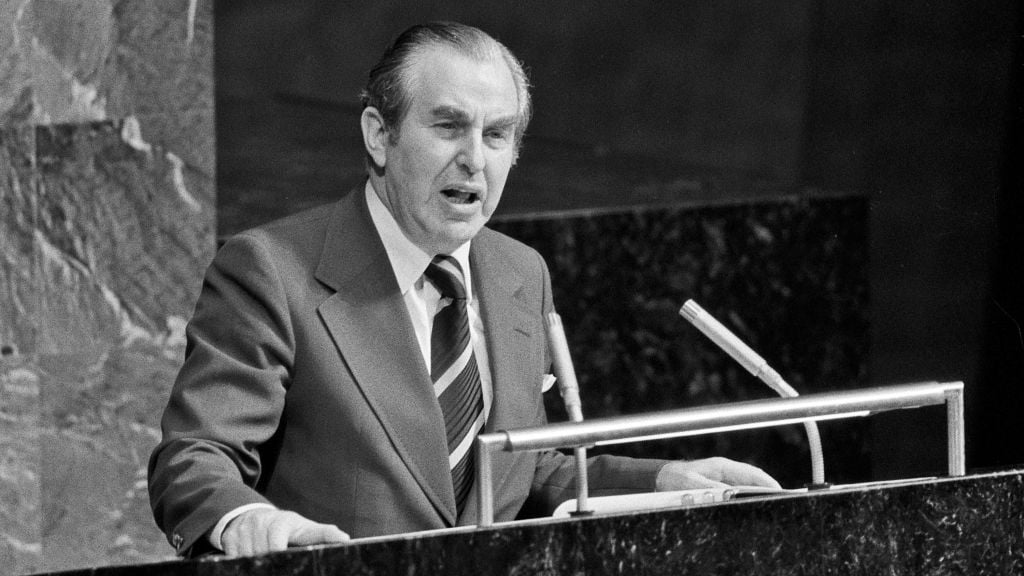
When a small group of lawmakers gathered at the US Capitol Visitors Center on Tuesday for a B’nai B’rith event, it was to show support for Israel — and to mark 50 years since the UN passed its notorious Resolution 3379 declaring “Zionism a form of racism.”
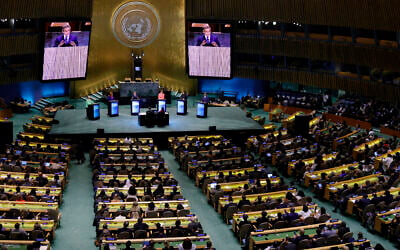
The measure was passed on November 10, 1975, the 38th anniversary of Kristallnacht. And while it was repealed 16 years later in 1991, it continues to influence the conversation around Israel to this day, experts say.
The resolution was backed by states aligned with the Soviet Union — as well as many others, including post-colonial countries such as India, Egypt and Algeria — and opposed mainly by Western liberal democracies. It incorporated earlier international resolutions that linked Zionism with apartheid and other forms of racism.
“The resolution should be understood as part of the Cold War,” Jeffrey Herf, a historian specializing in Cold War politics and professor emeritus at the University of Maryland, told The Times of Israel. “What the Soviet Union was able to do that the Arabs by themselves were not, was to bring anti-Zionism into the realm of the global left.”
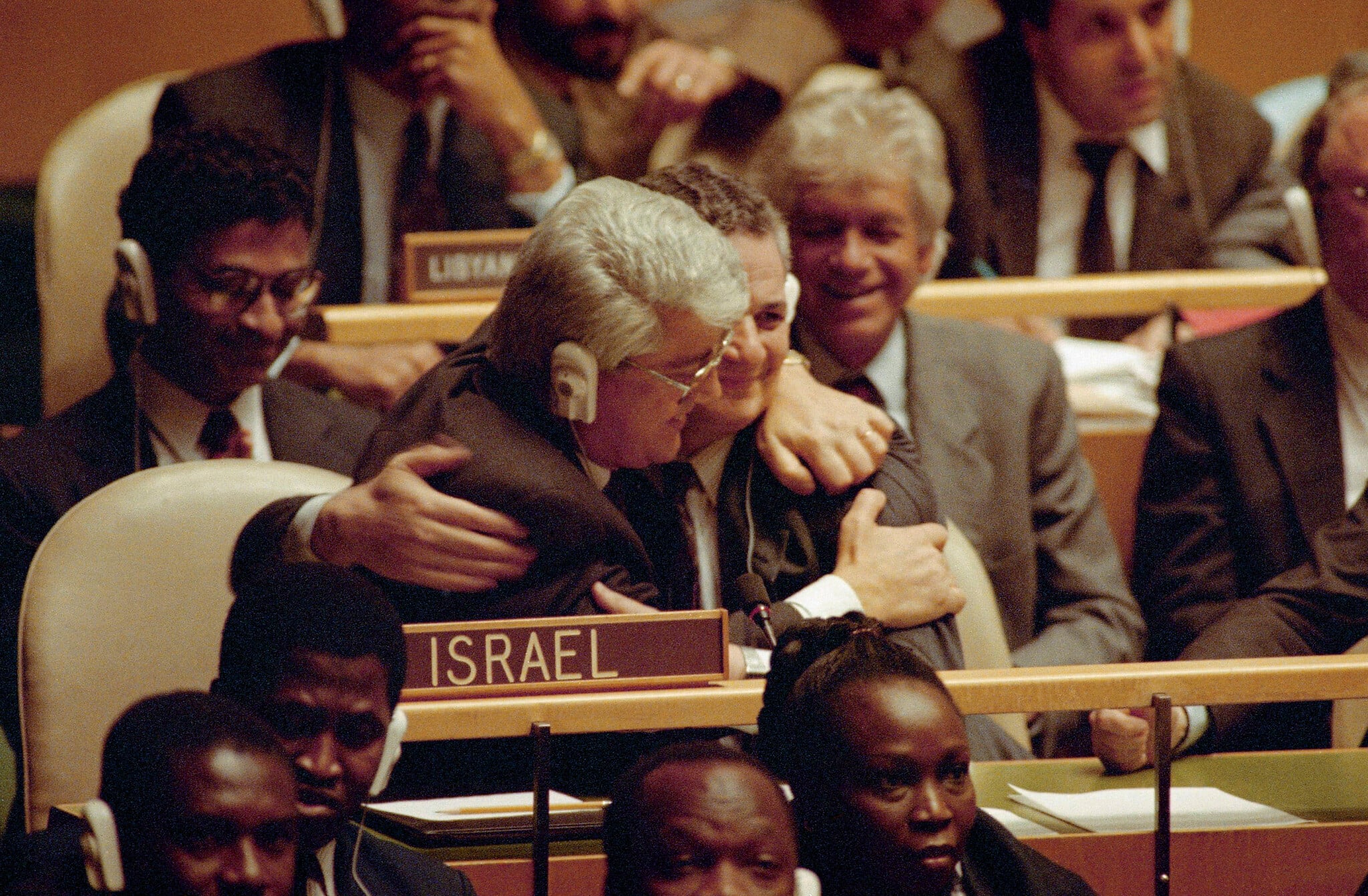
When the UN General Assembly repealed the “Zionism is racism” resolution by a vote of 111 to 25 just 10 days before the USSR collapsed, even Moscow reversed its 1975 vote, calling it “a relic of the ice age” as it went on to co-sponsor the repeal.
But, said Gil Troy, a historian of liberal democracy and Zionism and professor at Canada’s McGill University, the repeal didn’t stop the resolution’s effect on an emerging discourse.
When Resolution 3379 was passed, Troy said, its Western opponents “warned this was going to be injected into the international bloodstream. Even though in 1991 it was rescinded, it became… the Rosetta Stone of the anti-Zionist movement.”
“If you believe that Zionism is a form of racism, the implication is that you don’t have to pay any attention to what Israelis have to say unless they’re anti-Zionists,” Herf added.
The Cold War fight over antisemitism
Troy, who spoke at the December 9 Washington event, traces the international Soviet campaign against Zionism back to domestic politics.
Zionism was particularly threatening to the USSR, he said, “both because of the independence of the Jewish community and the particulars and nationalism of the Jewish community. And so the Soviets, long before 1975, were trying to cook up ways of knocking down and delegitimizing the Zionist movement.”
‘The resolution should be understood as part of the Cold War’
The first appearance of Soviet anti-Zionism in the international system came in negotiations on the International Convention on the Elimination of All Forms of Racial Discrimination (CERD) in the early 1960s.
When the United States and Brazil attempted to introduce antisemitism to the CERD list of prohibited racial prejudices, the USSR and its non-aligned cohort of Arab, Asian and African countries bristled. The USSR, worried that it would be sanctioned for its anti-Jewish policies, responded by introducing a draft amendment adding Zionism to the list of racial discrimination.
At this impasse, both antisemitism and Zionism were dropped from the CERD list.
As a member of the Soviet delegation reportedly put it to an Israeli representative, the denunciation of Zionism was made to “get the Americans off their antisemitism kick.”
‘The state is not going to be destroyed militarily. You have to attack its very right to exist if you can’t attack its existence’
There was a Cold War campaign of influence beneath these moves. As Israeli diplomat Meir Rosenne recalls, a growing debate over the plight of Soviet Jewry reached the floor of the UN in 1963, where it was spiritedly debated. This proved embarrassing to the self-styled “fighters for freedom and enemies of colonialism.”
Diplomacy as political warfare
Holocaust historian Norman Goda, who has written critically on anti-Zionism, told The Times of Israel that Resolution 3379 should be seen as a tactic of war rather than a path to diplomacy.
“If you want the fundamental problem, it’s that no one can destroy Israel. And that becomes especially clear after 1967, when Israel destroyed the entire Egyptian Air Force on the ground,” Goda said.
“That’s Israel’s strongest adversary,” he continued. “That means that the state is not going to be destroyed militarily. You have to attack its very right to exist if you can’t attack its existence.”
As Troy put it, “Once you start using phrases like genocide, settler colonialism, oppressor — these oversimplifications, you’ve gone into essentialism and you’ve made it not a conflict about what Israel does or what Israel can do, but about what Israel is.”
Countries outside of the Soviet and Arab spheres of influence had their own reasons for voting for Resolution 3379.
“The Arabs were using the oil weapon against the Africans, and they got a lot of votes that way,” Herf said.
Former Mexican deputy foreign minister Andrés Rozental told The Times of Israel that Mexico’s 1975 “yes” vote came from politics, not moral conviction. Then-president Luis Echeverría, he recalled, saw the resolution as a way to win international support for his own UN ambitions.
“Many of us in the Foreign Ministry argued strongly against it,” Rozental said, predicting the “huge negative reaction” that soon followed — a Jewish-American tourism and convention boycott of Mexico.
Goda describes the international community’s 1970s split on Israel as a choice between enforcing the pre-1967 armistice demarcation lines as mandated by UN Resolution 242 shortly after the Six-Day War, and the demand for a total Palestinian right of return to what is now Israel, called for in UN Resolution 194 after Israel’s War of Independence.
Goda frames the split as pragmatic versus maximalist.
“You had the 242 crowd saying ‘This can actually work,’” he said, “and the Third World and the Soviets saying, ‘No, no, no — it’s got to be [the Palestinian right of return] or nothing.’”

This policy agenda contributed to the creation of Resolution 3379, said Goda.
“The argument behind 194 is that Israel is a completely irredeemable, racist, genocidal state, that is sort of the cat’s paw of the United States in the Middle East,” he said.
The afterlife of ‘Zionism is racism’
Goda sees Resolution 3379 as the international debut of an anti-Zionism decoupled from its historical context.
“What’s so important is that it was the United Nations that now embraced this idea,” Goda said. “It made [anti-Zionism] respectable and legitimate in broad squares of world public opinion.”
‘All of the accusations have been there for decades and decades. The difference is that the accusations are now voiced by tenured professors’
Herf sees the resolution’s legacy in similar terms.
“All of the accusations have been there for decades and decades. The difference is that the accusations are now voiced by tenured professors,” he said.
Herf believes that these accusations have had a cumulative effect: “For several generations of now middle-aged and young Americans, the phrase ‘Zionism is a form of racism’ seems like conventional wisdom,” he said.
There’s a throughline between these 50-year-old accusations and today, Goda said.
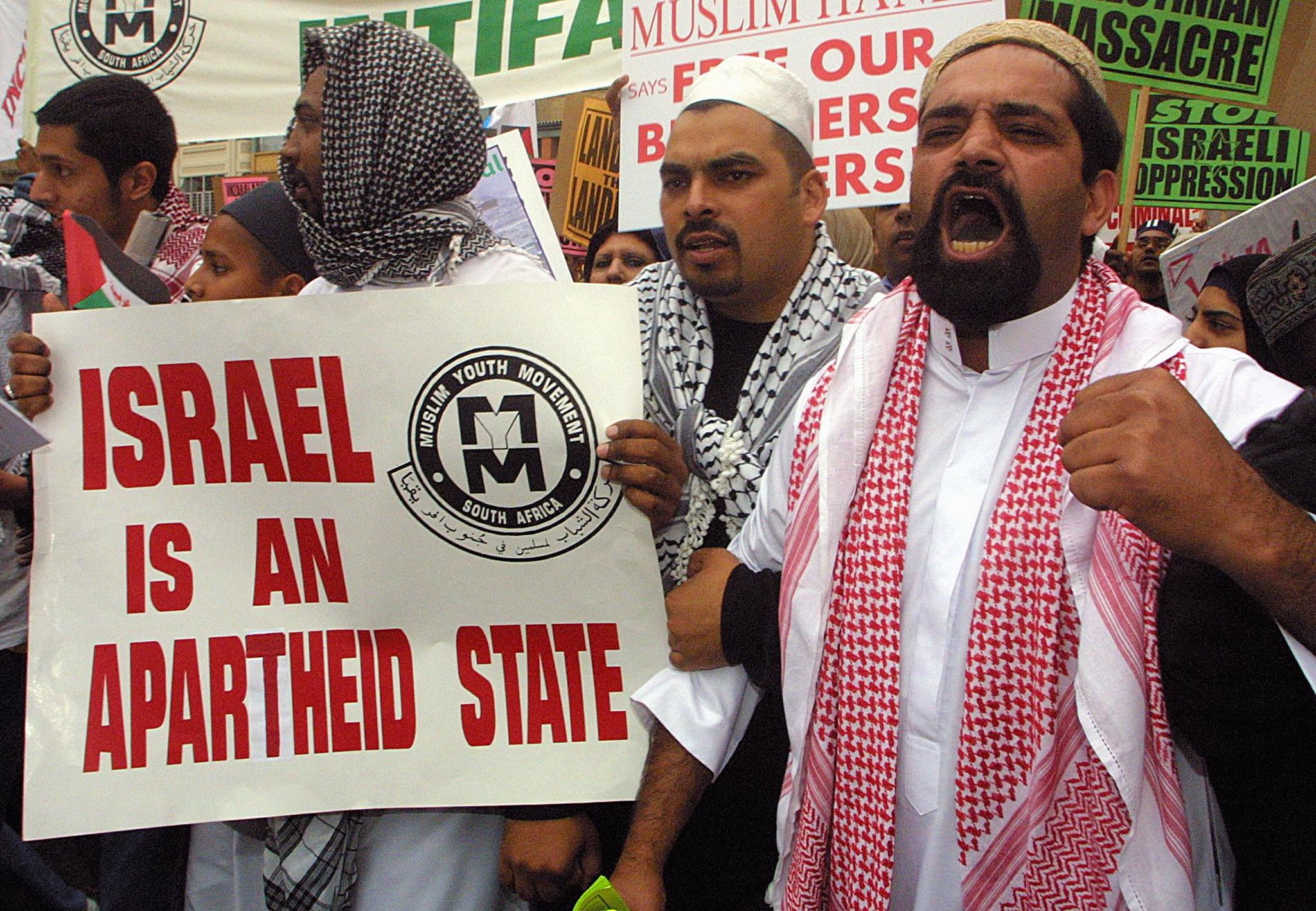
“When the ‘Zionism is racism’ resolution is repealed without a lot of fanfare in 1991,” he said, “you just have this fury in the Arab states and fury in Iran and fury in the progressive West and in the NGOs. All of that rears its head at the Durban anti-racism conference in 2001.”
The 2001 World Conference Against Racism in Durban, South Africa, featured a new draft resolution equating Zionism with racism. The diplomatic conference was preceded by an NGO conference that, according to the Jewish Telegraphic Agency’s Ron Kampeas, “was a template for the next 20 years of anti-Israel rhetoric, codifying the argument now increasingly prevalent on the left that Israel is an apartheid state deserving of isolation.”
Goda sees this rhetoric as a consequence of Resolution 3379.
“The insistence on using this global conference against racism to launch screed after screed about the Israelis,” he said, “shows [that], ‘We don’t really care if the resolution was repealed. This is our truth anyway.’”

The Times of Israel Community.