

Indonesia tsunami death toll rises to 373
1,459 people injured in disaster, with at least 128 reported missing; president vows to replace all equipment for detecting seismic waves
 Add ToI as a Preferred Source on Google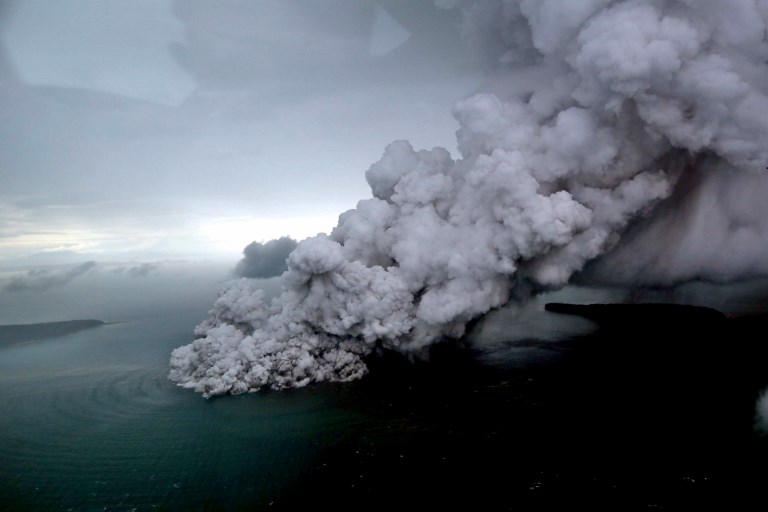
JAKARTA, Indonesia — The death toll from a volcano-triggered tsunami in Indonesia has risen to 373, with more than 1,459 people injured, a spokeswoman for the national disaster agency announced Monday.
At least 128 others were missing in the disaster, Sutopo Purwo Nugroho said.
Hundreds of military personnel and volunteers were combing debris-strewn beaches looking for victims.
The waves washed ashore along western Java and southern Sumatra islands Saturday night following a volcanic eruption.
https://content.jwplatform.com/previews/4jigxpmw-U4CTA3JQ
Hotels and hundreds of homes were heavily damaged by the waves. Broken chunks of concrete and splintered sticks of wood littered hard-hit coastal areas, turning popular beach areas into near ghost towns. Debris from thatch-bamboo shacks was strewn along the coast.
The Indonesian Medical Association of the worst-affected Banten region said that it sent doctors, medical supplies and equipment, and that many of the injured were in need of orthopedic and neurological surgery. It said most victims are domestic tourists who were visiting beaches during the long weekend ahead of Christmas.

It was the second deadly tsunami to hit seismically active Indonesia this year. A powerful earthquake triggered a tsunami that hit Sulawesi island in September, giving residents a brief warning before the waves struck.
On Saturday night, however, the ground did not shake to alert people before the waves ripped buildings from their foundations and swept terrified concertgoers celebrating on a resort beach into the sea.
“I heard people shouting to run away and I saw the water had gone up to the mainland and the hotel had been flooded by water,” said witness Feri Ardian. “About 200 people were dragged away by the waves.”
Dramatic video posted on social media showed the Indonesian pop band Seventeen performing in a tent on Tanjung Lesung beach at a concert for employees of the state electricity company. A wave smashed through the makeshift stage, tossing the band and its equipment into the audience.
The group released a statement saying their bass player, guitarist and road manager were killed, while two other band members and the wife of one of the performers were missing. On Monday, five more bodies were recovered around the hotel, including a little boy.
President Joko Widodo, who faces what promises to be a tough re-election campaign next year, responded Monday to the lack of any warning of the disaster with a vow to have all equipment used for detection of tsunamis replaced or repaired. Sutopo Purwo Nugroho, spokesman for Indonesia Disaster Mitigation Agency, acknowledged on Twitter that the country’s network of detection buoys had been dysfunctional since 2012, due to vandalism and budget shortfalls.

But the head of Indonesia’s Meteorology, Climatology and Geophysics Agency, Dwikorita Karnawati, said Monday that the tsunami was caused by Krakatau’s volcanic activity, so could not have been picked up by her agency’s sensors, which monitor the conventional tectonic earthquakes that are responsible for more than 90 percent of the tsunamis occurring in the country.
With Krakatau still erupting, she warned people to avoid activities around coastal areas in coming days due to high waves its activities and other factors.
The president — popularly known by the nickname Jokowi — told journalists after arriving by helicopter in the disaster region that he has ordered the Social Ministry to give compensation to the families of the dead as quickly as possible. He praised the army and police, along with local government officials, for their work in evacuating shorefront areas, which are still considered a danger zone.
Scientists, including those from Indonesia’s Meteorology and Geophysics agency, said the tsunami could have been caused by landslides — either above ground or under water — on the steep slope of the erupting volcano. The scientists also cited tidal waves caused by the full moon.
Gegar Prasetya, co-founder of the Tsunami Research Center Indonesia, said Saturday’s tsunami was likely caused by a flank collapse — when a big section of a volcano’s slope gives way. It’s possible for an eruption to trigger a landslide above ground or beneath the ocean, both capable of producing waves, he said.









The Times of Israel Community.