

Liberman’s ultimatum has a glaring problem, and no one is talking about it
Yisrael Beytenu chief says Gantz must accept president’s plan for Netanyahu to serve first as PM and take a leave of absence if indicted. Israel’s Basic Law begs to differ

 Add ToI as a Preferred Source on Google
Raoul Wootliff is a former Times of Israel political correspondent and Daily Briefing podcast producer.
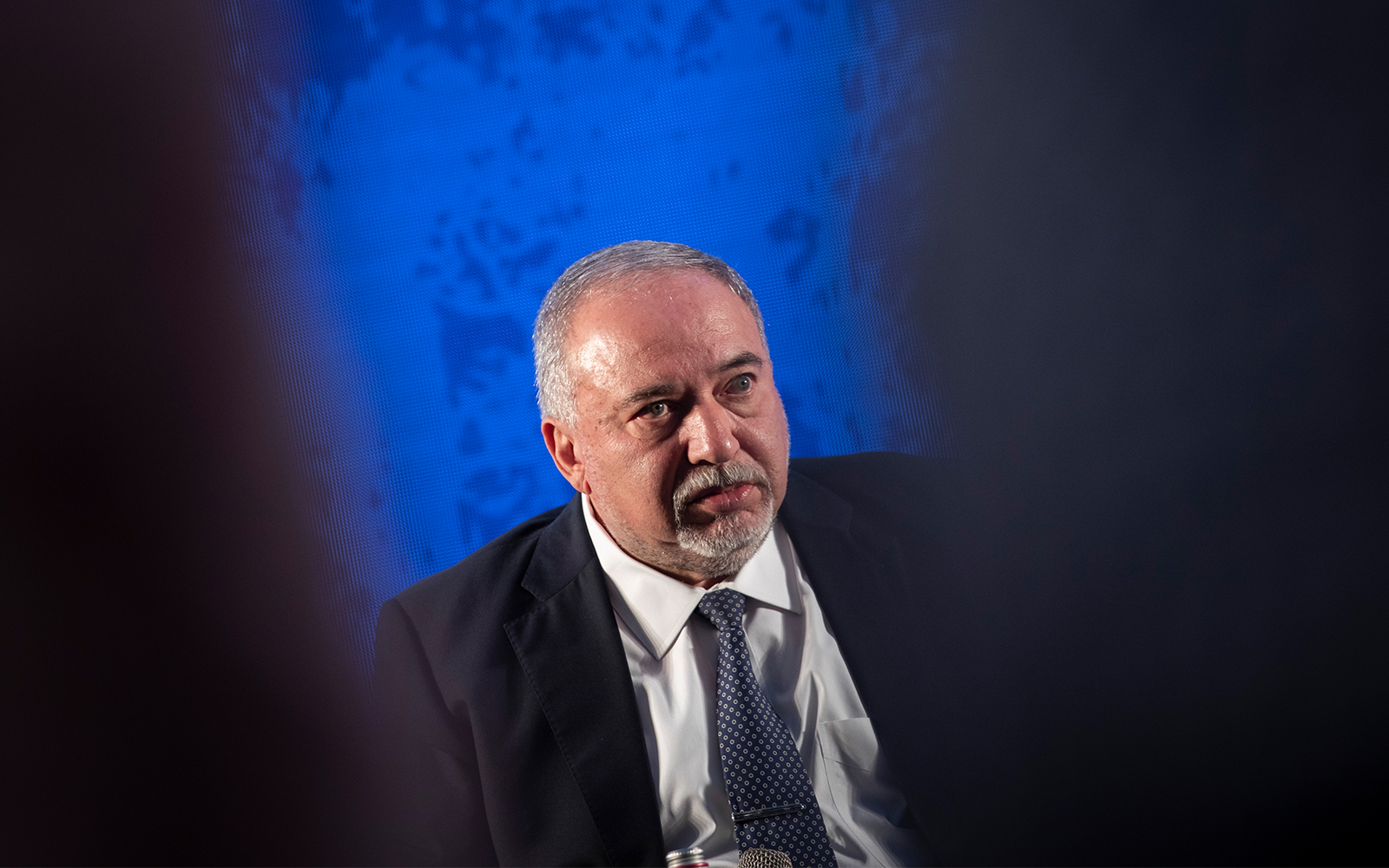
Avigdor Liberman’s ultimatum to Prime Minister Benjamin Netanyahu and Blue and White chairman Benny Gantz — that each must accept tough compromises in order to form a coalition together, or Liberman will back the candidate who doesn’t refuse — stole the headlines Saturday night and Sunday from the appointment of Naftali Bennett as defense minister.
While Netanyahu’s decision to give one of the most coveted prizes in Israeli politics (other than the premiership itself) to Bennett was seen as a bid to prevent the New Right MK from joining a Blue and White-led government and enabling the formation of a coalition, Liberman’s move appeared to be the opposite — a genuine attempt to force a breakthrough in the deadlock.
According to Liberman, Netanyahu must give up on the bloc of 55 lawmakers his Likud party formed with ultra-Orthodox and national-religious factions, who have vowed to only enter a government together, and Gantz must accept the “president’s outline” by which Netanyahu would serve first as prime minister under a rotation agreement but agree to take an open-ended leave of absence if or when he is indicted in one or more of the probes in which he faces charges.
“I expect both people to make the right decisions…. Whoever makes the wrong decision — we will support the other side,” Liberman said emphatically in an interview with Channel 12 news.

But while the plan, as simple as the Yisrael Beytenu chair made it out to be, faces numerous political difficulties, it also currently faces a glaring legal obstacle — one that could potentially change the dynamic of the stalled coalition negotiations and would require a constitutional amendment to overcome. It’s also one that neither Blue and White nor Likud appear to be aware of or are talking about.
When tasking Netanyahu with forming a government at the end of September (before giving the mandate to Gantz after the prime minister failed), President Reuven Rivlin said that he had proposed to the two a legal change to the position of “interim prime minister” that would grant the office holder “full power” in the case the prime minister cannot carry out his duties.
“As long as the prime minister is unavailable, his role will be preserved and he will return to it when he is able to. That was my proposal and that is what I suggest,” Rivlin said at the ceremony officially handing the mandate to form a government to Netanyahu.
Since then, Netanyahu and his Likud negotiators have repeatedly said they are willing to accept Rivlin’s plan and have accused Blue and White of preventing the formation of a government due to its rejection of the proposal.
Such a change could theoretically allow Netanyahu to take a leave of absence if he is formally charged in the trio of graft cases currently pending against him, enabling Gantz to avoid serving in a government with a prime minister who is under indictment. At the same time, Rivlin also proposed lengthening the period for which a prime minister could take leave without surrendering his job beyond the current 100-day maximum.
But the president’s power-sharing outline referred specifically to a scenario in which Netanyahu succeeded in creating a national unity government and served first as prime minister.
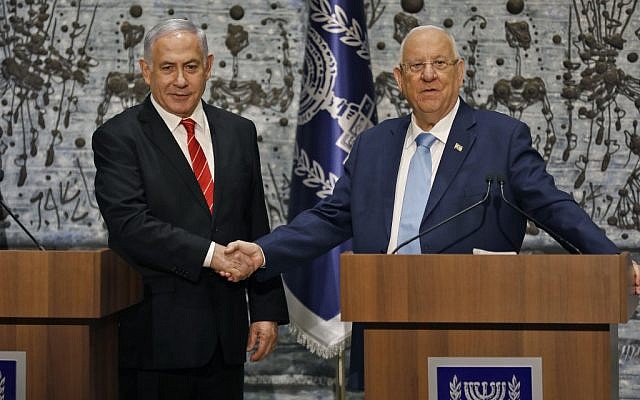
Yet according to Israel’s Basic Law: The Government, “the Knesset Member who has formed a Government shall head it.” And as Gantz now has the mandate to do so, he must serve first as prime minister in a rotation agreement, several legal experts confirmed to The Times of Israel.
“There was a case in 1961 when Levi Eshkol formed a government for [Israel’s first prime minister David] Ben Gurion and Ben Gurion served as the prime minister. But the law has since been changed and that is now impossible,” said Dr. Assaf Shapira, an Israeli constitutional expert and a researcher at the Israel Democracy Institute. “It’s written clearly: whoever forms the government must sit at its head. If Gantz forms a government he needs to head it.”
The president’s office also confirmed that the current law only allows for the person tasked with forming a government by the president to be prime minister.
According to Shapira, however, “no one really seems to have noticed this big limitation.”

Indeed, spokespeople for both the Blue and White and Likud parties initially told The Times of Israel that there was no problem with Gantz forming a coalition and letting Netanyahu serve as prime minister first. Only when presented with the Basic Law and legal opinions to the contrary did both parties concede that under the current law, Gantz would automatically become prime minister if he formed the government.
For Gantz to accept Liberman’s ultimatum and agree to the president’s outline, he would therefore have to either tell the president that he can’t form a coalition and use the 21-day period that Israeli law then provides during which any Knesset member who can muster a majority can be tasked with forming a government to recommend Netanyahu, or agree to change the law.
“Its only relevant for the 21 days,” Shapira said.
“But the president’s plan already calls for a change to legislation,” he added, “so perhaps they could also change this.”







The Times of Israel Community.