

Live updates (closed)
 Add ToI as a Preferred Source on Google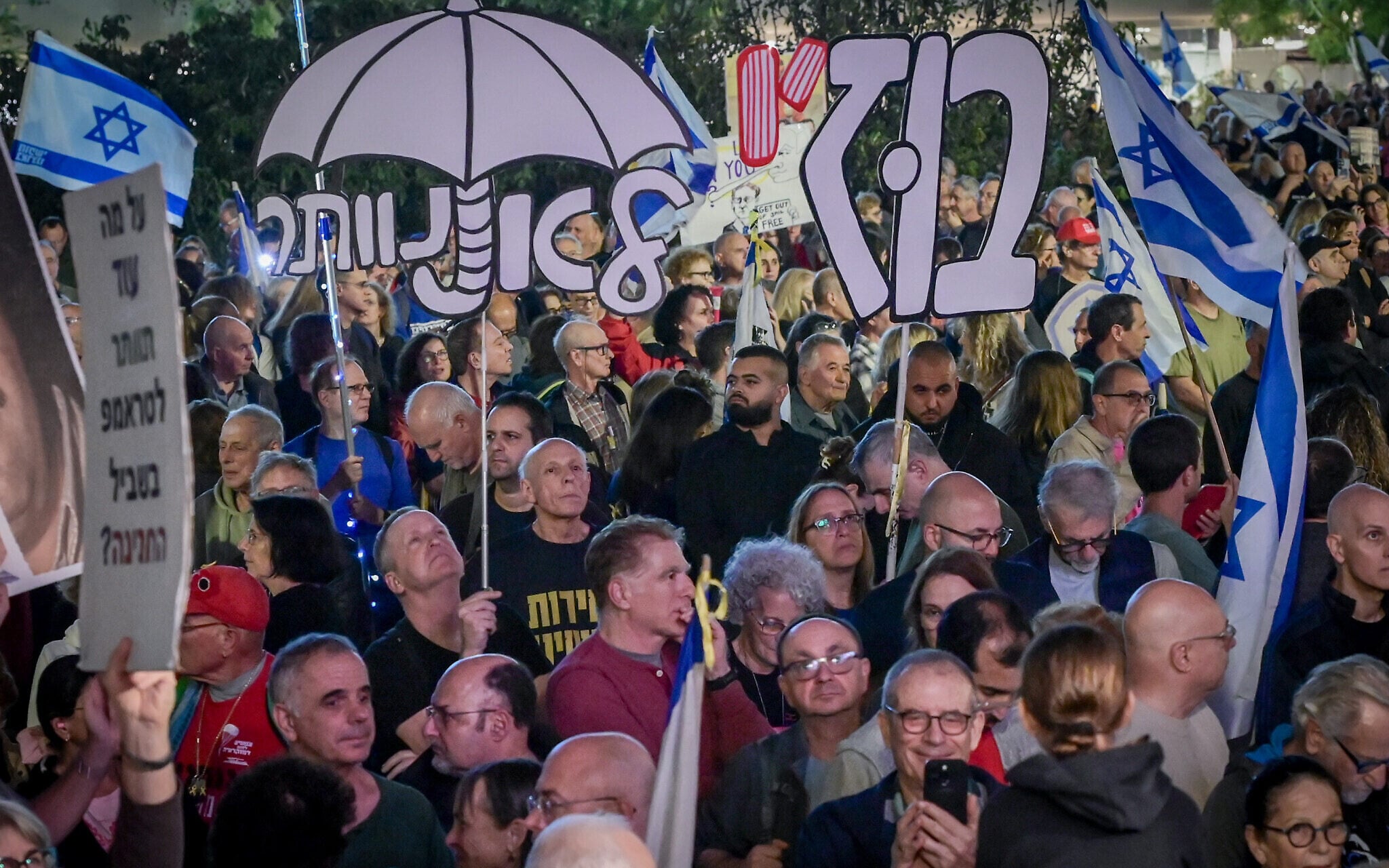



The Times of Israel liveblogged Saturday’s events as they happened.
Road in and out of Eilat opened after nine hours
Israel Police open the northern exit from Eilat via Route 90, after it was closed for nine hours due to flooding.
The road is open up to the Arava Junction, but remains closed from the Arava Junction to Neve Zohar, on the southern end of the Dead Sea.
The move earlier in the day effectively sealed off all road access to and from the southern resort city, as heavy rains battered the region.
IDF says uninvolved Palestinian shot dead at scene of car-ramming in West Bank
In an update, the IDF says that one of the Palestinians killed by troops in Hebron this evening was a passerby.
Only one Palestinian was in the vehicle that accelerated toward soldiers operating near a checkpoint in the West Bank city. The IDF says the troops fired on the Palestinian in the car, killing him.
After a preliminary investigation, the IDF says it emerged that an uninvolved Palestinian civilian who was at the scene was also shot dead amid the incident.
Hamas says it will only hand over weapons to Palestinian state at end of ‘occupation’
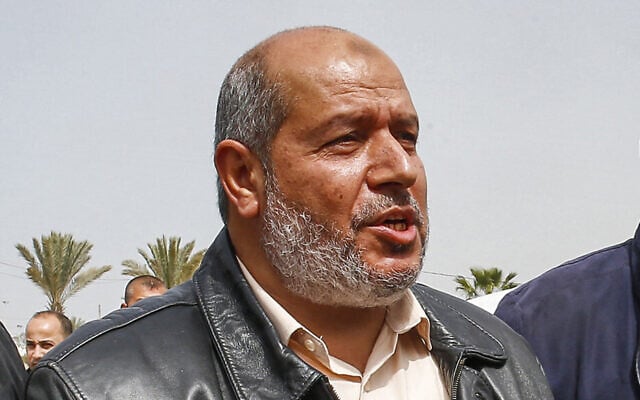
Hamas leader Khalil Al-Hayya is seen outside the VIP hall at the Rafah border crossing with Egypt in the southern Gaza Strip on March 15, 2021. (Said Khatib/AFP)
Hamas says it is ready to hand over its weapons in the Gaza Strip to a Palestinian authority governing the territory on the condition that the Israeli army’s military control of Palestinian territories ends.
“Our weapons are linked to the existence of the occupation and the aggression,” Hamas chief negotiator and its Gaza chief Khalil al-Hayya says in a statement, adding: “If the occupation ends, these weapons will be placed under the authority of the state.” Asked by AFP, Hayya’s bureau says he was referring to a sovereign and independent Palestinian state.
“We accept the deployment of UN forces as a separation force, tasked with monitoring the borders and ensuring compliance with the ceasefire in Gaza,” Hayya adds, signalling his terror group’s rejection of the deployment of an international force in the Strip whose mission would be to disarm it.
In the past, Hayya has said that a two-state solution would be only temporary and that the Palestinians retain their “historic right to all Palestinian lands.”
Prime Minister Benjamin Netanyahu and his government are overwhelmingly opposed to the creation of a Palestinian state on lands Israel captured during the Six Day War in June 1967.
Times of Israel staff contributed to this report.
Pro-Palestinian activists stopped from disrupting Winter Olympic torch relay in Rome

Italian singer Achille Lauro carries the 2026 Milan Cortina Winter Olympics torch in front of the Colosseum in Rome, along its journey through Italy, December 6, 2025. (AP Photo/Gregorio Borgia)
ROME, Italy — Two groups of pro-Palestinian activists were prevented by authorities from coming into contact with the opening stages of the Milan Cortina Winter Olympics torch relay, Italian police say.
Both groups — one of them with about 15 people — were removed before they reached the relay route in Rome, police say.
A third group of about 10 people that was monitored by police waved Palestinian flags when the relay passed by the city’s biggest university, La Sapienza.
There were also three people carrying signs in support of Venezuela near the American embassy.
Germany’s Merz hails ‘miracle’ friendship with Israel in meeting with Herzog
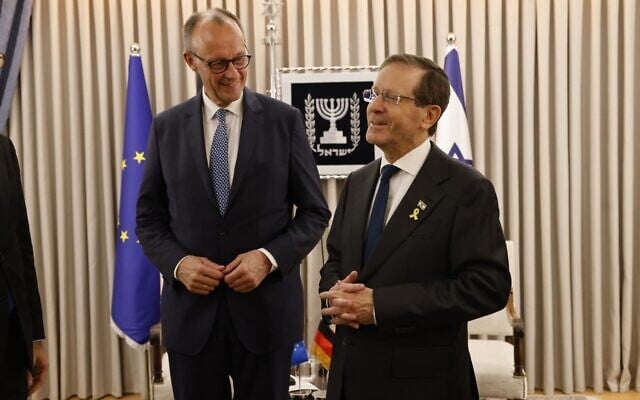
President Isaac Herzog (R) meets with German Chancellor Friedrich Merz at the President's Residence in Jerusalem, December 6, 2025. (Yossi Zamir/GPO)
President Isaac Herzog hosts German Chancellor Friedrich Merz at his official residence in Jerusalem, hours after the German leader touched down in Israel for his first visit since entering the role.
“We have become very close friends, and for me to see the Arrow 3 missiles being installed in Germany to defend Germany and Europe, Israeli-made products, is something very unique and moving and important,” Herzog tells Merz, according to remarks published by his office.
He says Germany has a “huge role to play” in creating a “new horizon” for Israelis and Palestinians, and the region.
“As we know, we are facing an empire of evil from Tehran, and that is why the equilibrium in the world is very clear. It’s us defending Europe, and it’s us working very hard to reach the day after in Gaza,” Herzog adds.
“We couldn’t meet in more challenging and more complicated times, and you know that Germany firmly stands at Israel’s side, especially since the horrific attack perpetrated by Hamas on October 7, 2023,” Merz says.
“Since then, we were able to deepen and further intensify our friendship, and you know that we will always stand by Israel’s side. We still consider this friendship a miracle. So shortly after the Shoah, to be able to establish diplomatic relations and further continue to deepen and foster our friendship is very special and important to us indeed,” Merz says.
Merz expresses hope that the war against Hamas will end soon when the terror group “has laid down all its arms,” and that a two-state solution will be realized, calling it an “important factor for good coexistence between Israel and the Palestinians, and the Israeli people, the Palestinian people, and the Arab world, for it to be able to live peacefully in peace and security and in dignity.”
South Africa nixes Palestinian visa exemption, citing ‘abuse’ by Israeli actors tied to Gaza ‘voluntary emigration’ efforts
South Africa’s Department of Home Affairs says it is canceling visa exemptions for Palestinian passport holders, citing “deliberate and ongoing abuse” by “Israeli actors linked to ‘voluntary emigration’ efforts for residents of the Gaza Strip.”
In a statement, the department says the visa exemption was abused in two recent charter flights, “with travel designed not for the purposes of tourism or short-stays as intended, but to relocate Palestinians from Gaza.”
“Rather than using ordinary commercial flights, entire airplanes were chartered not by the travelers themselves, but by intermediaries. Most passengers were given one-way tickets to South Africa and prohibited from bringing luggage with them,” the statement added.”
In an incident last month, some 160 Palestinians fleeing Gaza were stranded on their plane at Johannesburg’s O.R. Tambo Airport for 12 hours before eventually being allowed entry by South African authorities.
The Haaretz daily revealed days after that a shadowy organization operated by a dual Israeli-Estonian national was behind that flight, along with several others chartered for those seeking to flee Gaza.
South Africa is seen as one of the strongest supporters of the Palestinian cause. Pretoria filed a case against Israel with the International Court of Justice in 2023, accusing it of genocide in Gaza.
The hesitance to take in the fleeing Gazans last month exposed South Africa to allegations of hypocrisy, given its long-held supposed support for the Palestinian cause. Pretoria has said it is opposed to attempts to displace Palestinians from the enclave.
BREAKING: South Africa has announced the cancellation of visa exemptions for Palestinians. pic.twitter.com/JUCqnVlNea
— Ihab Hassan (@IhabHassane) December 6, 2025
IDF: Two Palestinians shot dead after speeding in car toward troops in Hebron; soldier lightly hurt
Two Palestinians in a vehicle who accelerated toward troops in the West Bank city of Hebron were shot dead, the army says.
The soldiers of the Paratroopers Brigade, who were operating near a checkpoint in the city, “opened fire on the terrorists and eliminated them,” the IDF says.
First responders say one soldier was lightly hurt in the incident.
Netanyahu spokesperson issues flat denial of TV report PM ordered 14 illegal outposts evacuated
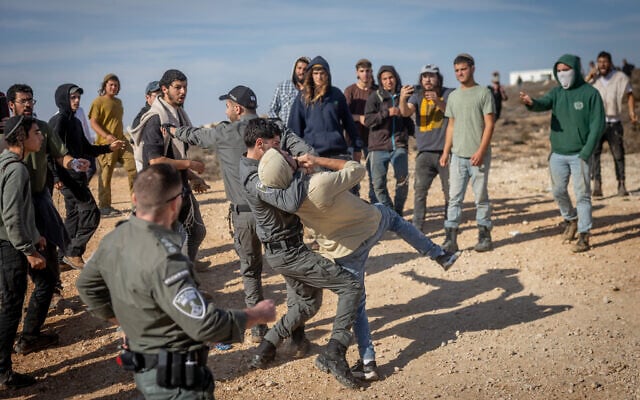
A Border Police officer puts a man in a chokehold during clashes between security forces and Jewish extremists amid the demolition of the West Bank outpost of Tzur Misgavi, near Efrat, November 17, 2025. (Chaim Goldberg/Flash90)
According to a report by Channel 12 news, Prime Minister Benjamin Netanyahu has ordered the evacuation of 14 illegal settlement outposts in the West Bank due to the involvement of their residents in extremist violence, although Netanyahu’s spokesperson flatly denies the story.
The report states that the security services view the outposts as sources of Jewish terrorism, and as “staging posts” for extremist settlers to attack Palestinian villages and civilians in the vicinity.
The residents of such outposts are also thought to be responsible for recent attacks against the IDF and the Israeli police.
According to the report, the security services will seek to detain some 70 such extremist activists and issue them with orders banning them from the West Bank.
A spokesperson for Netanyahu denies that the prime minister has issued any such order when asked by The Times of Israel, however, and a denial is repeated by a senior government official.
Violence by extremist settler activists has erupted in recent months, especially beginning with the olive harvest season in mid-October, with numerous incidents of extremists beating Palestinian civilians and carrying out arson attacks and other forms of violence.
And dozens of illegal outposts have been established around the West Bank since the beginning of the war with Hamas in Gaza.
The heightened violence has generated international condemnation, with US Secretary of State Marco Rubio expressing concern in November over the attacks.
Mother of soldier slain in captivity to Herzog: ‘Don’t you dare cancel Benjamin Netanyahu’s trial’
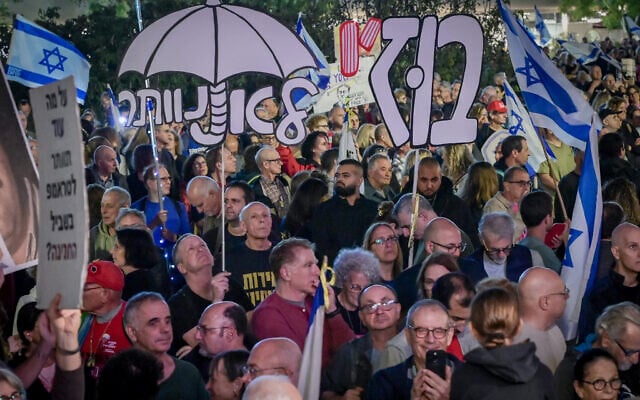
Anti-government protesters demand the establishment of a state commission of inquiry into the October 7 massacre, at Habima Square in Tel Aviv, December 6, 2025. (Avshalom Sassoni/Flash90)
Maayan Sherman, whose soldier son Ron was killed by an Israeli airstrike in Hamas captivity, blames his death on Prime Minister Benjamin Netanyahu.
“Ron was one of at least 42 hostages who reached Gaza alive and were killed there because of the decision of Prime Minister Benjamin Netanyahu, who preferred dead hostages over a deal that would have brought everyone back alive but could have ended his rule,” Sherman says.
“Because of this loss,” Sherman says, she demands President Isaac Herzog turn down Netanyahu’s request this week that his corruption trial be abrogated.
“Don’t you dare cancel Benjamin Netanyahu’s trial,” she says. “Nobody in this country can be above the law… that’s a red line that Israel, as a democratic country, must not cross.”
Sherman also slams Netanyahu’s “coalition of crooks and parasites” for seeking to pass a “corrupt draft-dodging bill… at the expense of worn-out reservists.”
“We demand a real, independent, state commission of inquiry, not a politicized whitewashing committee designed to protect those responsible,” she adds, railing against the government’s effort to establish its own probe of the Hamas invasion. “We won’t let the people who were responsible on the day of the massacre judge themselves.”
“My duty as a mother did not end when Ron’s heart stopped beating,” she says. “This country deserves a chance to rebuild… after this bad government took so much from us.”
Speaking after her, Omri Ronen, an activist with the Brothers in Arms reservist protest group, hails the overwhelmingly secular crowd as Israel’s “serving, productive public, the locomotive of the country.”
“You all served in the army,” he tells the protesters. “This is a full wagon, full of talent and creativity and Jewish and humanist values,” he adds, alluding to a famous comment by ultra-Orthodox master Rabbi Abraham Yeshayahu Karelitz (Hazon Ish) to Israel’s first prime, David Ben Gurion, that secular Israelis were like an “empty wagon.”
Ronen says “the enormous energy that has emerged over the past three years” — since the protests against the judicial overhaul — will in the next election manifest in “a massive show of hope and synergy of people who’ve decided to build themselves and their country.”
If we keep faithfully charting the same path together, nothing can stop us,” he says. “You are the new pioneers.”
IDF officer calls Katz’s blocking of his promotion a ‘political decision, not a professional one’
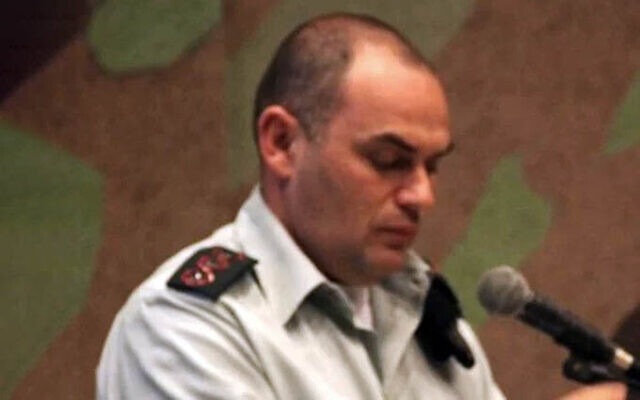
Then-commander of the 14th Armored Brigade, Col. German Giltman, in 2014. (Israel Defense Forces)
Col. (res.) German Giltman slams Defense Minister Katz’s decision to block his promotion and appointment to a senior role in the IDF as a “political decision, not a professional one.”
In a message to officers in the 162nd Division, where Giltman has served for more than 700 days in reserves, he writes that he will remain in his current reservist role.
“The entire General Staff Forum expressed full support for my candidacy, but unfortunately, Minister Katz decided to disqualify the appointment. This is a political decision, not a professional one, and that is how it should be regarded,” Giltman says in the message, published in full by Army Radio.
Giltman, who retired from the IDF in 2022, was set to be promoted to brigadier general and return to the military to serve in a senior role in the Ground Forces. But Katz said he would not approve the promotion, citing Giltman’s apparent involvement in the Brother in Arms protest group, which he denies.
“I have never called for refusal to serve or for non-volunteering, and I denounce such calls. Throughout my adult life, from my regular service to my reserve duty, I have served the state with pride,” Giltman writes.
“In light of the uproar, and out of a desire to keep the IDF clean [of politics], I agreed to withdraw my candidacy for the position in question, but I’m not going anywhere,” he says.
“After much thought, I have decided to continue serving as the division chief of staff. It is important to me to remain above politics. We have a heavy responsibility on our shoulders, and this country has only one army,” Giltman adds.
Sa’ar welcomes Merz to Israel on German leader’s first visit as chancellor

Foreign Minister Gideon Sa’ar (R) receives German Chancellor Friedrich Merz at Ben Gurion Airport, on December 6, 2025. (Shlomi Amselam/GPO)
Foreign Minister Gideon Sa’ar receives German Chancellor Friedrich Merz at Ben Gurion Airport upon the leader’s first visit to Israel since being elected in May.
“I was pleased to welcome [Merz] on his first visit to Israel as chancellor,” says Sa’ar in a statement from his office, adding that “relations between the two countries are on an upward trajectory.”
Sa’ar cites several recent steps as evidence of Germany’s support, including its decision last month to lift a partial arms embargo it imposed in August, Berlin’s “clear opposition to all forms of boycotts against Israel,” and its abstention at the United Nations last month on a vote to extend the mandate of UNRWA — the agency for Palestinians that Israel says has been infiltrated by terror groups. He also notes that Merz’s visit follows Israel’s landmark sale of its Arrow 3 missile defense system to the country last week.
“Germany is a valued friend and partner, and I am convinced that the chancellor’s visit will contribute to strengthening the special relationship between our countries,” Sa’ar says.
Merz is set to meet with Prime Minister Benjamin Netanyahu at his Jerusalem office at 11 a.m. tomorrow, where the two are expected to discuss the Gaza ceasefire and other regional issues. The chancellor will also visit the Yad Vashem Holocaust memorial center and meet with local representatives during his two-day visit.
Katz slams IDF chief’s conduct, insists he won’t approve his promotions
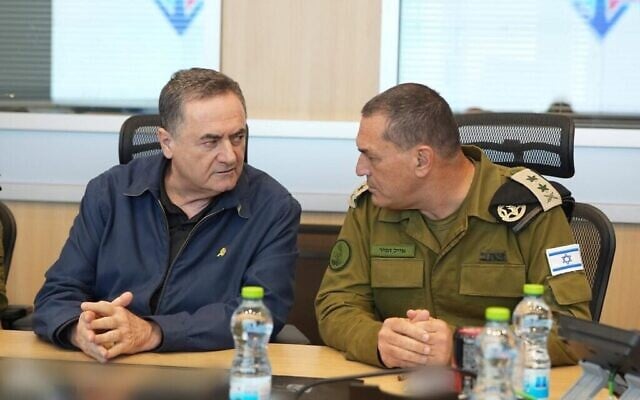
Defense Minister Israel Katz (left) and IDF Chief of Staff Eyal Zamir, June 2025. (Ariel Harmoni / Defense Ministry)
Defense Minister Israel Katz says that he will not approve IDF Chief of Staff Lt. Gen. Eyal Zamir’s latest promotions of senior officers, in a lengthy statement slamming the military chief on several topics.
On Thursday night, Zamir announced a new round of appointments in the military at the ranks of colonel and brigadier general, subject to Katz’s approval.
Katz had already said he was freezing senior appointments in the IDF for 30 days, until the defense establishment comptroller conducts a re-investigation of the military’s review of its earlier internal probes into the failures surrounding the October 7, 2023, Hamas-led massacre.
The external review, conducted by Maj. Gen. (res.) Sami Turgeman and other former senior officers found that many of the initial probes were inadequate, and also pointed to several topics that were not investigated at all.
Zamir has since instructed various IDF units to complete their investigations, and he has also appointed officers to investigate topics that were not previously probed, chief among them the military’s failed handling of intelligence reports that outlined Hamas’s intent to launch a wide-scale attack against Israel.
“I expected the chief of staff to act according to the committee’s recommendations and complete and deepen the investigations, but I was surprised when he summoned officers and imposed various sanctions on them without updating me on such a significant step and without consultation,” Katz says, refering to Zamir’s decision to dismiss several officers from the military over their failures on October 7.
“Since I am the authority who, by law, approves the appointment of senior IDF officers from the rank of colonel and above, I tasked the defense establishment comptroller — the most qualified professional body — with completing the investigations and presenting findings that would allow me to consider my position on senior appointments. I also asked the chief of staff to wait 30 days on the appointments so that I would have the required information and we could act according to the procedure we formulated, which includes prior consultations,” Katz says.
“Unfortunately, the chief of staff did not comply with my request and held the appointments discussion,” he continues, referring to Zamir’s announcement on Thursday.
Katz says that “it is important to emphasize that regarding the IDF’s operational activity in the various arenas, I maintain direct and continuous contact with the chief of staff and the IDF brass, as well as numerous joint discussions chaired by the prime minister, and none of this is affected.”
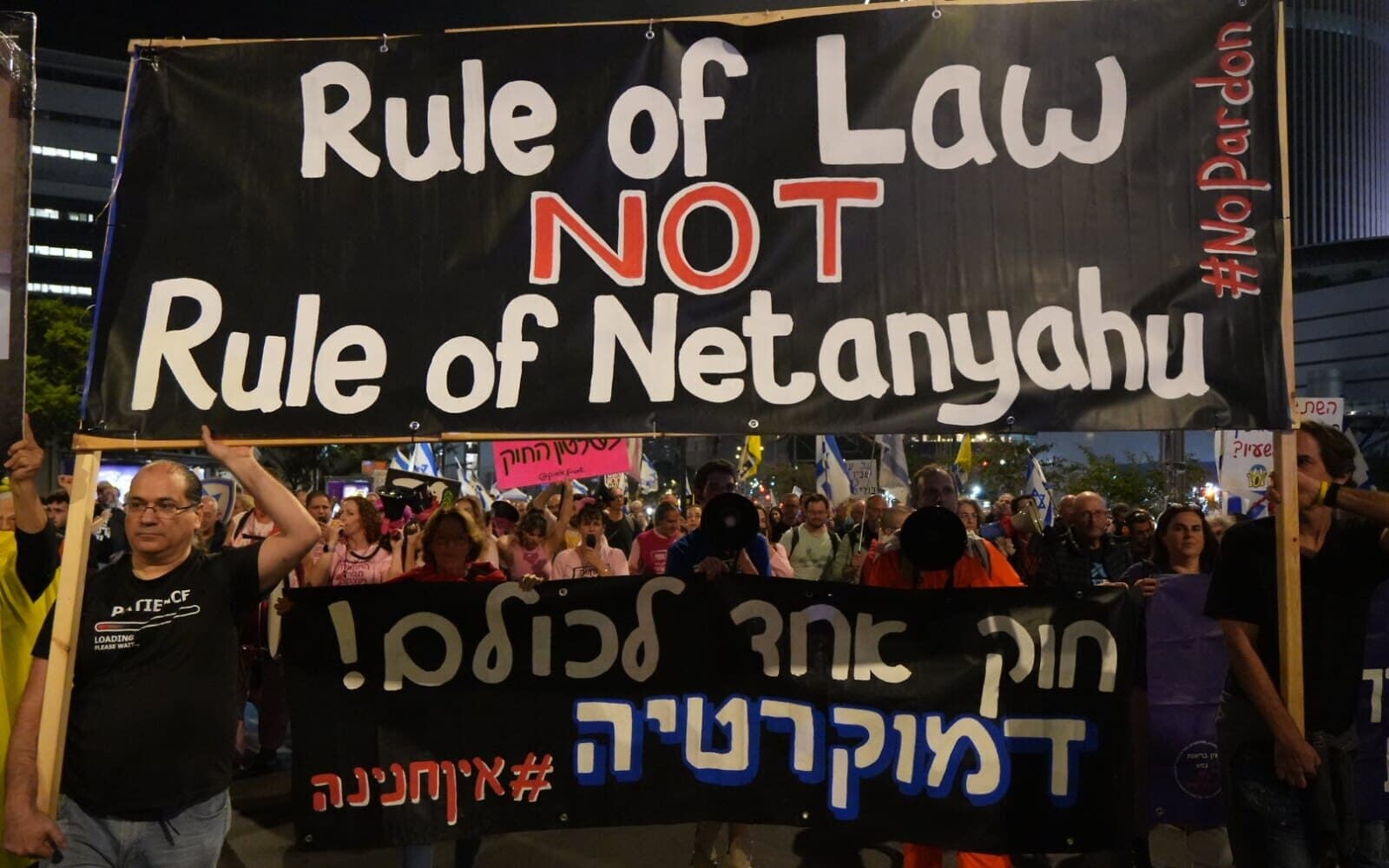
About 1,000 protesters gather at Habima Square in Tel Aviv to rail against Netanyahu
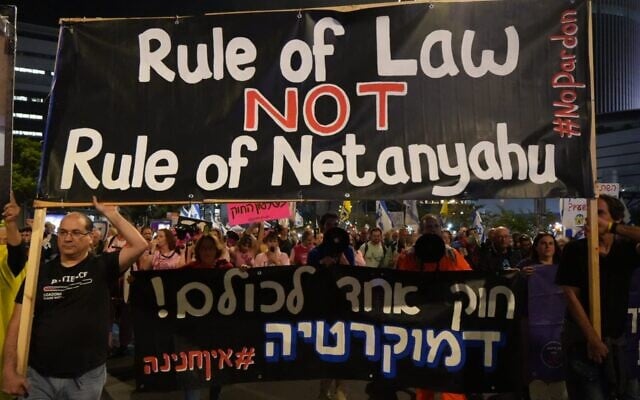
Anti-government protesters march on Begin Road to Habima Square in Tel Aviv, December 6, 2025. (Lior Segev/Pro-Democracy Protest Movement)
About 1,000 anti-government protesters gather at Tel Aviv’s Habima Square, including a large group that marched over from the Begin-Kaplan interchange.
Represented at Habima are members of disparate activist groups.
Brothers in Arms, a reservist protest group, sets up a large stand on the square’s south end to rail against the government’s bid to codify the Haredi exemption from military service.
On one side of the stand, activists from the left-wing Looking the Occupation in the Eyes group hold signs saying, “We were silent about the occupation, now we have a dictatorship.” About 100 other left-wing protesters hoist signs with pictures of slain Gazan children.
On the other side of the stand, the Movement for Quality Governance set up a tent calling for a state commission of inquiry into failures surrounding the Hamas onslaught of October 7, 2023 — a demand Prime Minister Benjamin Netanyahu rejects. Suspended between two nearby trees is a large banner reading “Crime Minister,” with Netanyahu’s face; this is the name of a protest group that sprang up last decade, when the corruption charges against Netanyahu first came to light.
On a screen, a video plays accusing Netanyahu of arranging cash payments from Qatar to Hamas and salvaging both their reputations when they were both shunned by much of the Arab world — leading to the Hamas onslaught of October 7, 2023, and explaining why Netanyahu is loath to allow a proper inquiry, according to the video.
MCing the rally is activist Shikma Bressler, who rose to prominence in the 2023 protests against the government’s bid to weaken the judiciary, which came to a halt with the Hamas onslaught that sparked the Gaza war.
“We are the people. We all can and must end the destruction of democracy and of the country,” she says, after the rally opens with Hatikva, the national anthem. “Together, we can all rebuild the State of Israel as a country we’ll all be proud of: Jewish, democratic, liberal, serene.”
Family of Ran Gvili demand return of hostage’s body before transition to phase 2 of ceasefire
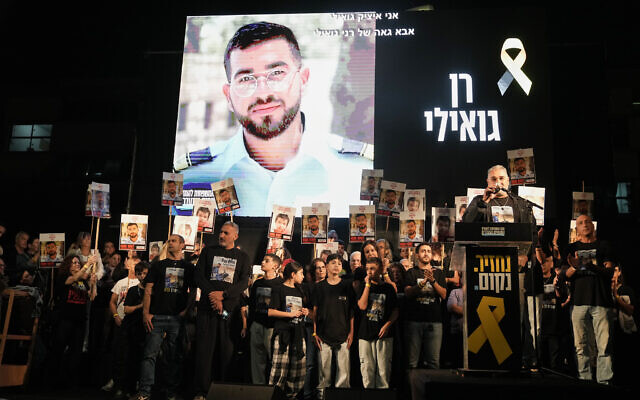
A photo of slain hostage Ran Gvili, whose remains are being held by Hamas in the Gaza Strip, is displayed during a rally calling for the return of the deceased hostages held in Gaza, in Tel Aviv, Israel, on Nov. 29, 2025. (AP Photo/Mahmoud Illean, File)
The family of Master Sgt. Ran Gvili, the last deceased hostage held in Gaza, demands that Prime Minister Benjamin Netanyahu and US President Donald Trump pressure terror groups to return his body before the ceasefire deal with Hamas moves onto the second phase.
“The first phase of the hostage deal is still not completed, while Rani hasn’t returned home. We demand that Prime Minister Netanyahu and President Trump pressure Hamas and Islamic Jihad to return Rani home immediately! We can’t move to the second phase of the deal without Rani here,” they say in a statement carried by Hebrew-language media outlets.
Trump’s administration is aiming to announce the transition to the second phase of its Gaza peace plan in about two weeks, as Washington aims to maintain a fragile ceasefire it brokered between Israel and Hamas nearly two months ago.
Jacob Magid and Nava Freiberg contributed to this report.
Damage caused to Ovda Airbase due to wild weather over weekend, IDF says
Over the weekend, damage was caused to “infrastructure and communication systems” at the Ovda Airbase in the Negev Desert, due to harsh weather conditions, the military says.
The base is used by the Israeli Air Force for training, and it also houses the Border Defense Corps’ school.
“There is no impact on operational readiness,” the IDF says, adding that commanders are “conducting damage assessments to ensure a quick and safe response to the malfunctions.”
Storms began Friday night and continued unabated into Saturday, causing major floods throughout southern Israel, where the desert landscape is especially susceptible to severe weather and flash floods.
Ra’am leader says party will cut ties with religious council, form separate institutions
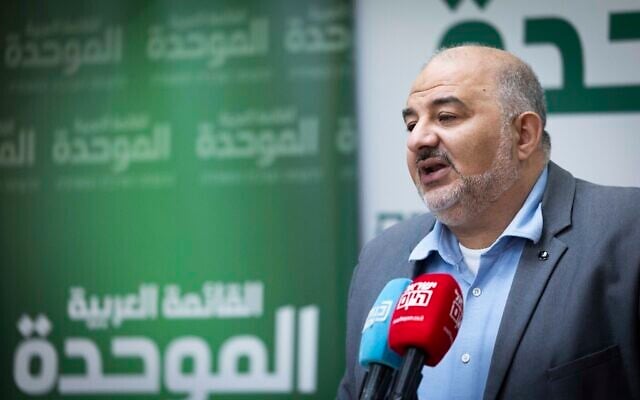
Ra'am party head Mansour Abbas leads a faction meeting at the Knesset in Jerusalem, on November 24, 2025. (Chaim Goldberg/Flash90)
Ra’am chair Mansour Abbas says his party will separate from the religious council that it is linked to and establish its own institutions, in an interview with Channel 12’s Meet the Press.
Abbas also insists that his party is not a part of the Islamist Muslim Brotherhood: “First of all, we are not a part of the Muslim Brotherhood. If we were part of the Muslim Brotherhood, I wouldn’t be in the Knesset, I wouldn’t even be sitting with you here.”
“The second thing is that we have learned lessons from what we had [in the Bennett-Lapid coalition]. Ra’am today is moving in the direction of being a completely civilian party, with separate institutions,” he says.
Pressed if that meant his party would be separating from the Shura Council, Abbas says: “Of course. This is the approach that has been advanced in recent years in Ra’am. Next month we have a conference, and it will approve the changes.”
Currently, the Islamist party is the political wing of the Southern Islamic Movement, a group inspired by the Muslim Brotherhood, a global Islamist organization that has been outlawed in around a dozen countries for alleged links to terrorism.
Abbas has repeatedly denied that his party is connected to the Brotherhood.
Ra’am, which joined the coalition led by prime ministers Naftali Bennett and Yair Lapid in 2021, takes a conciliatory stance toward Israel and is focused more on socioeconomic issues than its parent movement’s more radical sister branch, the Northern Islamic Movement, which is outlawed.
Ra’am holds five seats in the Knesset, and polls indicate it will likely retain that number in the next elections.
IDF says it will hold drill on Mount Hermon and Mount Dov tomorrow
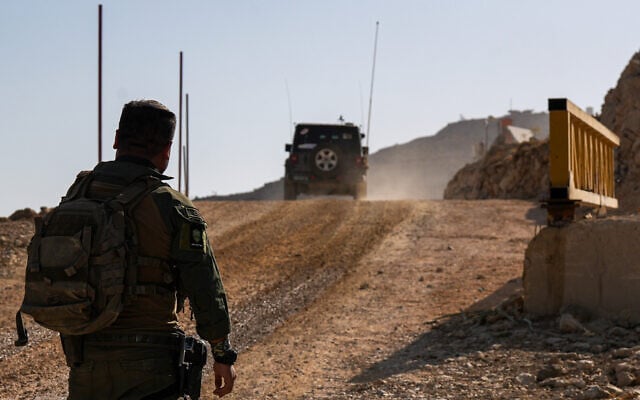
Illustrative: Israeli soldiers seen on the Syrian side of Mount Hermon, August 12, 2025. (Ayal Margolin/ Flash90)
The IDF announces that it will be conducting a military exercise in the Mount Hermon and Mount Dov areas on the northern border tomorrow.
There will be increased movement of military vehicles and forces in the area, as well as sounds of explosions beginning in the morning hours, the IDF warns.
Eisenkot blasts Netanyahu for senior appointments made as ‘reward for loyalty’
Former IDF chief of staff and “Yashar! With Eisenkot” chairman Gadi Eisenkot slams Prime Minister Benjamin Netanyahu in a lengthy X post, accusing him of making senior appointments on the basis of loyalty.
Eisenkot slams several events involving Netanyahu over the past week, including his request for a pardon in his criminal trial, his promotion of a law regulating military draft exemptions for ultra-Orthodox yeshiva students, and his intention to lead a panel deciding the mandate of a probe of the failures of October 7.
“And if all this is not enough — senior officials are appointed by the ‘Commander in Chief,’ in what appears to be a reward for loyalty and siding with his path, at the expense of experience, professionalism, and national considerations,” he writes, in an apparent reference to his decision to tap his military secretary, Maj. Gen. Roman Gofman, as the next Mossad director.
“He is afraid of a state commission of inquiry to investigate his responsibility over October 7. He is afraid of an equal conscription law that will benefit Israel’s servicemen. He is afraid of his legal process, even though he has constantly claimed otherwise, and most of all, he is afraid of elections in which the people will judge his actions that led to the October 7 massacre and the way the military campaign was conducted,” Eisenkot writes.
IDF probing reservists who allegedly beat West Bank Palestinian
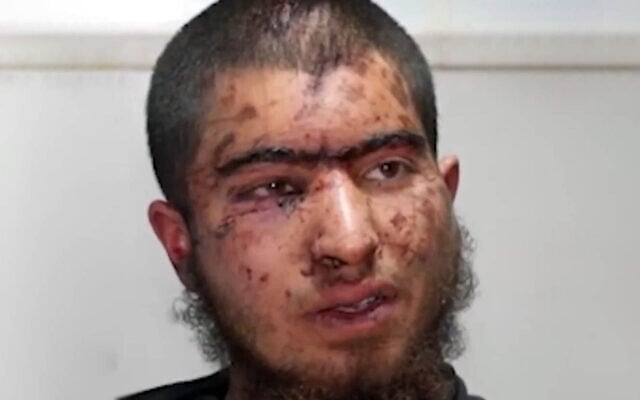
Owais Hamam (X screenshot)
The IDF is investigating the conduct of reservist forces who allegedly beat a Palestinian man in the West Bank earlier this week, causing a “disturbing” amount of injuries.
On Wednesday, Owais Hamam, 18, from the village of Khirbet Bani Hairth, was wandering in the area, close to the recently legalized Sde Ephraim Farm settlement. He has claimed he went to the nearby hills to pray.
The army says it received reports of a Palestinian suspect approaching Israeli civilians, “while shouting slogans about martyrs and expressing an intention to carry out an attack.” A military source claimed that the man was suffering from a mental illness.
Soldiers of the IDF’s so-called area defense force, known by its Hebrew acronym Hagmar — made up of local settlers in reserve duty — who were already in the area, alongside Sde Ephraim’s security coordinator, called on the man to leave.
According to the military, the reservist soldiers fired in the air, but the suspect continued to approach them. “The reserve soldiers struggled with the suspect physically until they were able to arrest him,” the IDF says.
When additional IDF troops arrived, they took the man to the Shin Bet for questioning, the military says.
The IDF says that “the conduct of the reserve forces during the incident is being investigated and actions will be taken in accordance with the findings.”
A military source says that the suspect’s “numerous injuries” are “disturbing and will be closely examined.”
However, they also note that according to the reservists, the suspect had fallen over on the rocks while approaching and was injured by that as well.
Hamam, speaking from a hospital bed, said that settlers kidnapped him, punched him, and beat him with an M-16 rifle as they threatened to kill him.
Herzog: I respect Trump’s opinion on Netanyahu pardon, but Israel is a sovereign country
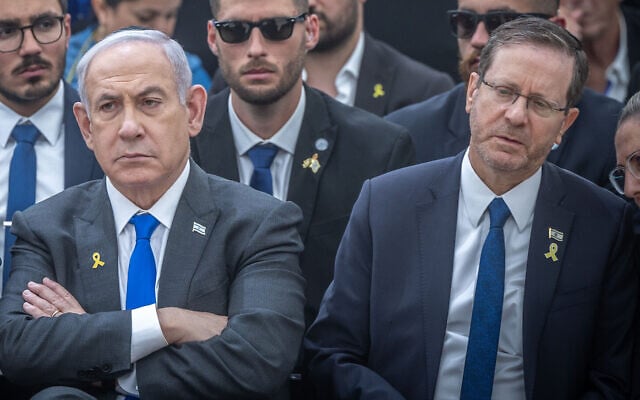
Prime Minister Benjamin Netanyahu, left, and President Isaac Herzog at a state memorial ceremony for victims of terror, at Mount Herzl military cemetery in Jerusalem, May 13, 2024 (Chaim Goldberg/Flash90)
President Isaac Herzog says he respects US President Donald Trump’s opinion that he should pardon Prime Minister Benjamin Netanyahu in his corruption case, but adds that Israel is a sovereign country, and emphasizes respect of the country’s legal system.
“Everybody understands that any pre-emptive pardon has to be considered on the merits,” Herzog tells the Politico news site.
“There are many, many issues to discuss. On the one hand, the full equality under the law, or in front of the law, as we say in Israel. And on the other hand, of course, the unique circumstances of each and every case,” he adds.
“I respect President Trump’s friendship and his opinion,” he says, referencing Trump’s repeated requests that he pardon Netanyahu.
“Why? Because as I tell many Israelis, it is the same President Trump we begged and asked to bring back our hostages and who led bravely an enormous step to bring back our hostages and get the UN Security Council resolution through. But Israel, naturally, is a sovereign country, and we fully respect the Israeli legal system and its requirements.”
Palestinian envoy to UK decries ‘attacks’ after group of men posed with Israeli, Union Jack flags outside embassy
The Palestinian ambassador to the UK calls for extra security at his London embassy after a group of masked men posed with Israeli and Union Jack flags outside the building last Saturday, the Guardian newspaper reports.
In addition to the rally, pro-Israel stickers, including ones reading “I love the IDF,” and “We are not Jews with trembling knees,” were placed on the building.
Palestinian Ambassador Husam Zomlot characterized the activity as “attacks,” according to comments reported by the Guardian, and demanded police provide “comprehensive protection for the embassy.”
The embassy called the incident “a flagrant breach of diplomatic laws and customs and the rules of international law,” the Guardian reports.
Aside from the stickers, no significant damage was caused to the facility, and the demonstrators do not appear to have trespassed or harmed staff.
The irony: Supporters of the occupier demonstrating against the occupied. The genocider against the genocided. And they bring the Israeli occupation’s playbook to British soil: masked men intimidating, vandalising, trespassing, making threats of violence. They barricade the… pic.twitter.com/R5M0mOIfWd
— Husam Zomlot (@hzomlot) December 6, 2025
70-year-old mother and her son reportedly killed by Israeli drone in Gaza City’s Zeitoun
Two people were killed by Israel in Gaza City’s southeastern Zeitoun neighborhood, Al Jazeera reports, citing a source in the city’s Al-Ahli Baptist Hospital.
Hamas’s civil defense agency identifies the dead as a mother and her son. Further Palestinian media reports give their names as Rahma and Said Yassin, ages 70 and 45, respectively.
According to the reports, the two were killed by a drone near Zeitoun’s al-Shamah mosque, which lies on the Hamas-controlled side of the Gaza ceasefire line.
The IDF does not immediately comment.
Iran arrests two marathon organizers after women competed without hijab

A combo image from screenshots of social media videos showing hundreds of unveiled women running at the Kish island marathon in Iran, December 5, 2025. (X)
TEHRAN, Iran — Iranian authorities have arrested two organizers of a marathon on Kish Island, the judiciary says, after images emerged of women competing without hijab.
The Islamic Republic’s judicial authorities have faced mounting criticism from ultraconservatives for failing to properly enforce a mandatory headscarf law for women, as fears grow of a surge of Western influence.
Images online of yesterday’s marathon showed a number of runners who were not following the Islamic Republic’s strict dress code for women, which was enshrined in law in the early 1980s.
“Two of the main organizers of the competition were arrested on warrants,” the judiciary’s Mizan Online website reports, the day after the marathon took place.
“One of those arrested is an official in the Kish free zone, and the other works for the private company that organized the race,” it adds.
Tel Aviv soccer fans wearing printed shirts calling police, racist party and rival team ‘scum’ barred from game
Hapoel Tel Aviv soccer fans were barred from a game today after wearing t-shirts reading “ultras Hapoel against the scum,” with symbols of the police, the banned racist Kach party, and the Maccabi soccer club.
Many who attended the game against Hapoel Petah Tikva at Tel Aviv’s Bloomfield Stadium boycotted the match, with images showing much of the stadium empty.
Police say in a statement that a “handful of fans arrived at the stadium wearing shirts with a print blatantly insulting Israel Police and another rival team.”
“The police’s action is in accordance with the law, and the police have the authority to prevent entry if there is a real concern about a breach of order to prevent harm to life and property,” the police says.
אנשי מיליציית בן גביר מוציאים אוהדי הפועל תל אביב מהיציע בבלומפילד. הסיבה: הם לובשים את החולצה הזאת.
בושה וחרפה, שיא שלילי חדש אפילו בעבור העובדים של המחבל מהממשלה.
שאר היציע יצא החוצה – כי סולידריות היא הנשק הכי חזק מול פאשיזם ואלימות.#רקהפועל pic.twitter.com/qVrdUISpLU— Haim Har-Zahav (@haimhz) December 6, 2025
בלומפילד פחות משעה למשחק.
אין לי קרדיט לצילום. pic.twitter.com/10nxKl1WFJ— Doron Paz (@Doron_paz1) December 6, 2025
Lebanese FM: Hezbollah won’t disarm without a decision from Iran
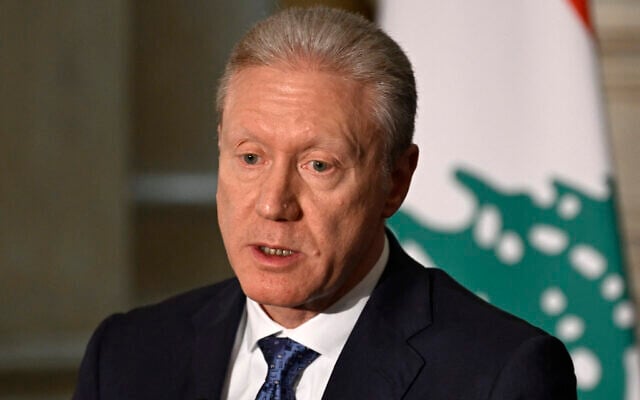
Lebanon's Foreign Minister Youssef Rajji speaks during a joint press conference with his counterpart from Egypt at the Foreign Ministry headquarters in Cairo, Egypt, on April 22, 2025. (Khaled Desouki/AFP)
Lebanon’s Foreign Minister Youssef Rajji says Iran has the final word on whether its Lebanese proxy terror group Hezbollah will disarm, and that he has brought up the issue with his Iranian counterpart Abbas Araghchi.
“Hezbollah won’t hand over its weapons without an Iranian decision,” Rajji tells Saudi news network Al Arabiya. “Right now [Hezbollah] is concerned with preserving itself and regaining power.”
Amid US and Israeli pressure on Beirut to disarm Hezbollah, Rajji says “disarming Hezbollah and dismantling its military structure are a Lebanese demand, regardless of the international demand.”
Contrary to Hezbollah’s claims, its weapons have failed to “support Gaza, liberate Jerusalem or defend Lebanon” from Israeli attacks, says Rajji.
Hezbollah “provokes the government every day with the talk by its chief, Sheikh Naim Qassem, about rearming,” says Rajji. The comment comes a day after Qassem accused Beirut of giving Israel a “free concession” by sending a civilian rather than a military envoy this week to direct talks mandated under last year’s November 27 Israel-Hezbollah ceasefire deal.
Rajji says he hopes sending the civilian envoy, Lebanese diplomat Simon Karam, was a “positive step” that could “spare Lebanon a large-scale military operation” by Israel.
Nonetheless, “Lebanon is very far from signing a peace deal with Israel,” said Rajji, adding that Karam was holding talks with Israel only on “military issues” such as an end to Israeli attacks on southern Lebanon and the withdrawal of the IDF from there.
Egyptian FM urges deployment of Gaza stabilization force ‘as soon as possible’
DOHA, Qatar — Egypt’s Foreign Minister Badr Abdelatty urges the rapid deployment of an international ceasefire monitoring force under the second phase of a peace deal for the Gaza Strip.
“As for the International Stabilization Force, we need to deploy this force as soon as possible on the ground because one party, which is Israel, is every day violating the ceasefire… so we need monitors,” the minister says.
He warns that Egypt’s Rafah Crossing into Gaza “is not going to be a gateway for displacement. It’s only for flooding Gaza with humanitarian and medical care.”
Sharaa: Israel exporting conflict to distract from Gaza, sees ghosts everywhere
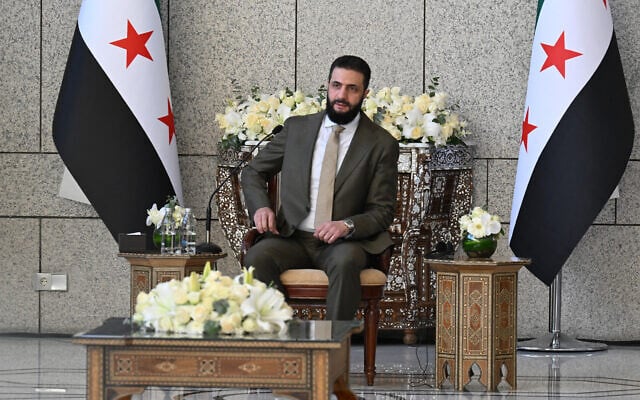
Syrian President Ahmed al-Sharaa attends a reception with United Nations Security Council delegation at the Presidential Palace in Damascus, Syria, on December 4, 2025. (LOUAI BESHARA / AFP)
DOHA — Syrian President Ahmed al-Sharaa accuses Israel of “exporting crises” to other countries around the region in order to distract from its “horrifying massacres in Gaza.
“Israel… tries to run away from the horrifying massacres committed in Gaza, and it does so by attempting to export crises,” Sharaa says during an onstage interview at the Doha Forum in Qatar.
“Israel has become a country that is in a fight against ghosts,” he claims, claiming Israel’s use of security concerns and preventing another October 7 massacre to justify every action it takes, even though no such correlation exists.
“Since we arrived in Damascus, we sent positive messages regarding regional peace and stability… and that we are not interested in being a country that exports conflict, including to Israel,” Sharaa continues.
“But in return, Israel has met us with extreme violence,” Sharaa says, highlighting the deadly Israeli raid on terrorists in the southern Syrian town of Beit Jinn last month.
“Syria has suffered massive violations of our airspace, and we’ve been victim of over 1000 airstrikes and over 400 incursions,” he says.
Sharaa reiterates his call for Israel to withdraw from the Golan territories in southern Syria that it has occupied since December after the fall of Bashar Assad’s regime.
He expresses his support for the 1974 disengagement agreement with Israel, adding that tampering with it “and seeking other agreements such as a demilitarized zone… could lead us to a dangerous place.”
Sharaa acknowledges “atrocities” that have been committed against minorities in the Sweida region but insists that Syria is a country governed by the rule of law, which will hold those responsible accountable.
Police close all roads in and out of Eilat as flooding intensifies
Israel Police says it has shut the northern exit from Eilat via Route 90 due to flooding, effectively sealing off all road access to and from the southern resort city as heavy rains continue to batter the region.
The police say flooding along multiple sections of Route 90, which passes through southern Israel’s Arava region, has forced the full closure of the city’s northern exit. Earlier in the day, Routes 12 and 40 — the main roads connecting Eilat to the rest of the country — were also closed amid flash-flood warnings.
With all three highways now blocked, authorities urge drivers to exercise patience and follow police instructions, adding that updates will continue to be issued through media channels.
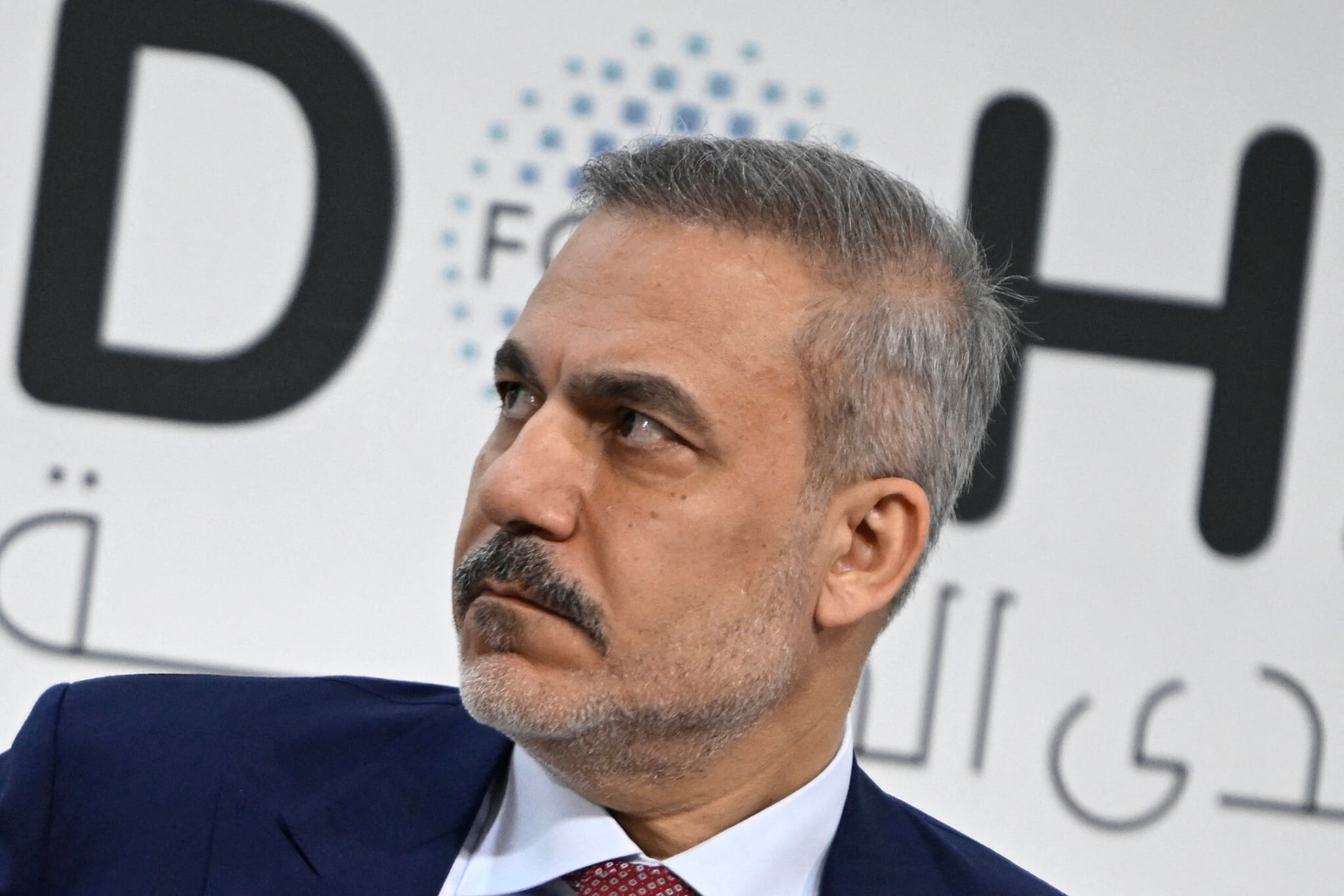
Turkey says Gaza administration, police force should come before Hamas disarmament in ceasefire deal
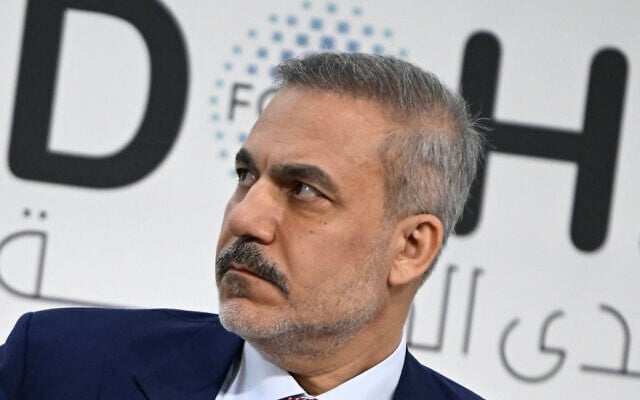
Turkish Foreign Minister Hakan Fidan looks on as he attends a session on the opening day of the Doha Forum, an annual diplomatic conference, in Doha, December 6, 2025. (Mahmud Hams/AFP)
DOHA — Turkish Foreign Minister Hakan Fidan tells Reuters that a credible Palestinian civil administration and a vetted, trained police force should be in place to allow Hamas to disarm, saying the group is prepared to hand over governance of the enclave.
In an interview on the sidelines of the Doha Forum, Fidan says that without those initial steps, expecting Hamas to disarm in the first phase of the ceasefire deal is neither “realistic nor doable.”
He says the proposed police force would exclude Hamas members and would be backed by an international stabilization force. He adds that Washington is pressing Israel over Turkey’s bid to join the force.
Israel has been adamant that it will not allow such a development, as Ankara has been one of the world’s leading critics of Jerusalem since the start of the war over two years ago.
Fidan warns that failure by the international community to advance the ceasefire plan to its next stage would amount to a “huge failure” for the world and for Washington, noting that US President Donald Trump has personally led the push.
Jacob Magid contributed to this report.
IDF says troops killed three terror operatives who crossed Gaza ceasefire line
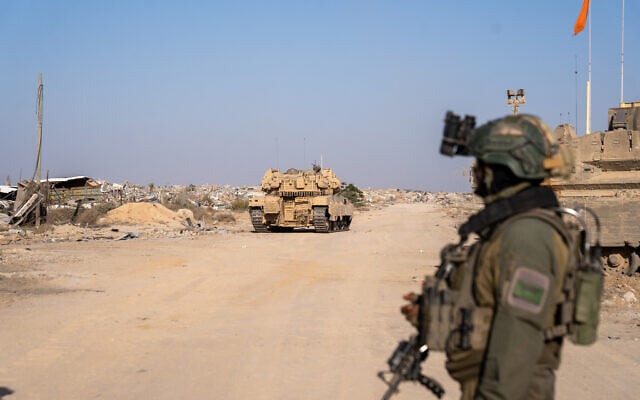
IDF troops are seen in southern Gaza's Rafah, November 23, 2025. (Emanuel Fabian/Times of Israel)
The IDF says it killed three Palestinian terror operatives who crossed the Gaza ceasefire line and approached troops in the Strip’s north today.
According to the military, in two separate incidents, troops of the Gaza Division’s Northern Brigade and reservists of the Carmeli Brigade identified several terror operatives crossing the Yellow Line.
The operatives “posed an immediate threat” to the soldiers stationed in the area, the IDF says, adding that the troops opened fire and “eliminated three of the terrorists to remove the threat.”
Palestinian media reported that three people were killed in the Beit Lahiya area, and another person was killed in Jabalia by Israeli fire. The military says it is unaware of any drone strikes being carried out, contrary to Palestinian reports.
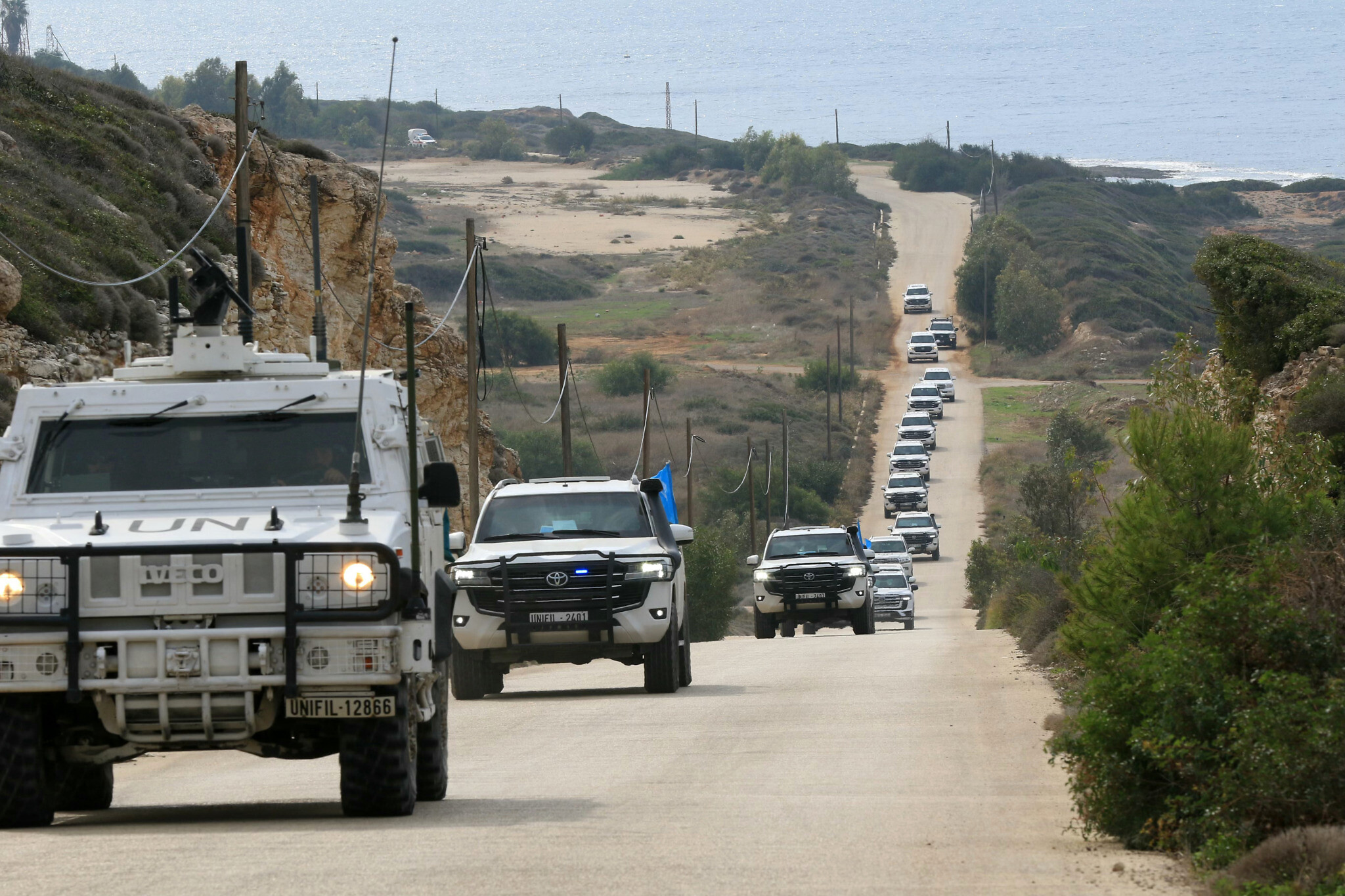
Lebanon arrests six after attack on UN patrol
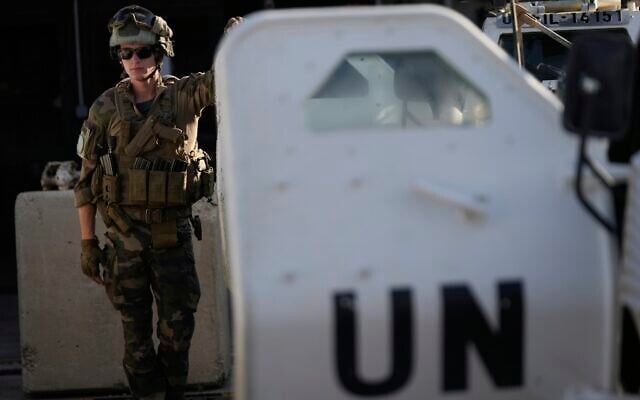
A French UN peacekeeper stands beside an armored vehicle at his base, waiting to move with his unit for a patrol along the Lebanese-Israeli border in Deir Kifa, southern Lebanon, August 20, 2025. (AP Photo/Hussein Malla)
The Lebanese army says it has arrested six people after gunmen attacked UN peacekeepers patrolling in the south of the country.
The UN force, known as UNIFIL, had reported that six men riding on three mopeds opened fire on a patrol vehicle on Thursday without hurting anyone.
According to today’s statement, the Lebanese army’s intelligence directorate followed up on the attack and arrested six suspects.
The Lebanese army says it would not tolerate attacks on UNIFIL, which it says carries out an important stabilizing role south of the Litani River, near the Israeli border.
Times of Israel staff contributed to this report.
Heavy rains trigger road closures, major traffic leaving Eilat, Arava
Heavy rainfall across Israel’s south has sparked fears of flash floods, prompting road closures and long traffic jams as many residents attempt to leave Eilat and Arava desert communities, according to Hebrew media reports.
The Hevel Eilot Regional Council says police have shut down Route 40 between Mitzpe Ramon and Ketura Junction in both directions due to weather conditions. A major backup is also reported on Route 90 northbound from the town of Ir Ovot to the Arava Junction.
הבריחה מאילת: פקק כבד על כביש 90 צפונה מעיר אובות ועד צומת הערבה.
צילום: גיל שביט pic.twitter.com/R4gqQOuglS— ilana curiel (@ilanacuriel) December 6, 2025
Local security officials warn that additional roads leading to Eilat and the Arava may be closed from the afternoon through the night as flooding risks rise.
Uri Lev, the security officer of the Central Arava Regional Council and commander of the Arava emergency search and rescue unit, says rescue teams and police have held emergency assessments and deployed patrols in preparation for possible flash floods.
Heavy rain is already falling in Eilat. Dr. Amir Givati of the Israel Meteorological Service says that flooding is expected “in the Eilat area, the Negev, and up to the northern Arava” in the coming hours, urging the public to stay away from desert stream beds.
One said killed by IDF drone in Jabalia
A Palestinian was killed by an Israeli drone strike in northern Gaza’s Jabalia this morning, Al Jazeera reports, citing first responders.
The Gaza ceasefire line passes through Jabalia. It’s unclear what side of the line the report refers to.
Merz pushes PA’s Abbas on reforms ahead of Israel trip

German Chancellor Friedrich Merz delivers the opening speech at an economic summit hosted by German newspaper Süddeutsche Zeitung at the Adlon Hotel in Berlin, November 17, 2025. (Tobias Schwarz/AFP)
German Chancellor Friedrich Merz called for reforms of the Palestinian Authority in a phone call with its leader Mahmoud Abbas ealier today, hours before taking off for Israel.
Speaking from Berlin, Merz urged Abbas to push through “urgently necessary reforms” at the Palestinian Authority so that the organization could “play a constructive role in a post-war order,” according to German government spokesman Stefan Kornelius.
Merz also underscored German support for US President Donald Trump’s peace plan for Gaza and “welcomed the Palestinian Authority’s cooperative attitude” toward the deal in the call, the spokesman says.
The fragile ceasefire agreement to end the Gaza war is supposed to be just the first phase of the plan.
After a brief stop in Jordan, where Merz is scheduled to meet with the Jordanian King Abdullah II, Merz is expected to arrive in Jerusalem for meetings with top Israeli leaders, including Prime Minister Benjamin Netanyahu.
Merz also plans to visit the Yad Vashem Holocaust memorial in Israel.
In his call with Abbas, Merz reiterated Germany’s position that a two-state solution remains the ultimate way to achieve peace and security for Israelis and Palestinians, according to the spokesman.
Netanyahu and other senior Israeli officials have repeatedly rejected the prospect of an independent Palestinian state.
Hamas has also explicitly ruled out a two-state solution.
Times of Israel staff contributed to this report.
Family of slain Thai hostage Sudthisak Rinthalak prepares to welcome remains home

Sudthisak Rinthalak, a Thai agricultural worker who was murdered by Hamas-led terrorists on October 7, 2023, and whose body was taken hostage to Gaza and returned to Israel on December 3, 2025. (Courtesy)
NONG KHAI — Two years after Hamas militants killed Thai worker Sudthisak Rinthalak, his family in northeastern Thailand is preparing to welcome his remains home and hold a Buddhist ceremony they believe will bring his spirit peace.
Sudthisak’s elder brother Thepporn has spent the past two years fulfilling promises he made to his younger sibling, using compensation money to build a new house, buy pickup trucks for their elderly parents and expand their rubber farm.
But the 50-year-old farmer says none of it matters without Sudthisak there to see it.
“Everything is done, but the person I did these things for is not here,” Thepporn says, walking through the rubber plantation in Nong Khai province near the Laos border.
Israel identified Sudthisak’s remains on Thursday after Hamas handed over his body as part of a ceasefire deal. The 44-year-old agricultural worker was captured by Hamas at an avocado farm during its October 7, 2023, attack on southern Israel and was later killed at Kibbutz Be’eri.
The last image his family has of Sudthisak came from a video sent by friends that showed him lying face down with militants pointing guns at him.
“I feel sad because I couldn’t do anything to help him,” Thepporn says. “There was nothing I could do when I saw him with my own eyes. He was hiding behind a wooden frame and they were pointing the gun at him.”
“Whenever there was a hostage release, he was never included,” Thepporn says.
His sister-in-law Boonma Butrasri wipes away tears as she speaks about the family’s loss.
“I don’t want war to happen. I don’t want this at all,” she says.
Thepporn says his brother’s death serves as a warning to other Thai workers considering jobs abroad.
“I just want to tell the world that you’ve got to think very carefully when sending your family abroad,” he says.
“See which countries are at war or not, and think carefully.”
Israeli ambassador to US calls for peace with Lebanon, envisions ‘Abraham Accords 2.0’
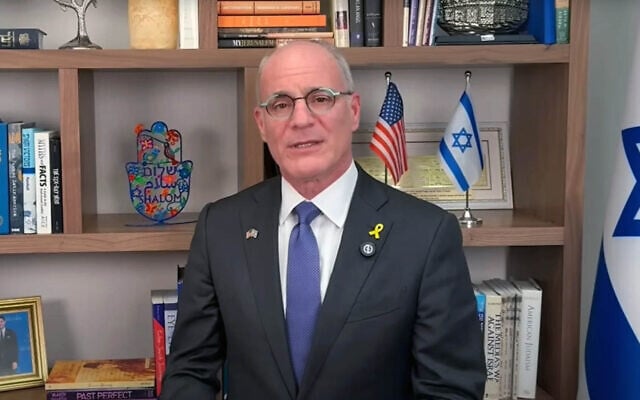
Israeli Ambassador to the US Yechiel Leiter delivers a prerecorded message published by English-language Lebanese outlet This is Beirut, December 5, 2025. (Screenshot: Youtube; used in accordance with Clause 27a of the Copyright Law)
In a prerecorded message published by English-language Lebanese outlet This is Beirut, Israeli Ambassador to the US Yechiel Leiter tells Lebanese citizens, “We want very much to pursue peace with you.”
Leiter emphasizes that Israel’s concerns are solely security-related, saying, “We have no issues with your territory. We have issues only with our security… When we’re threatened, we have to respond.”
Looking ahead, he speaks of potential bilateral economic and tourism ties, envisioning “Israelis visiting Beirut” and “Lebanese visiting Jerusalem.”
He compares the possibilities for Israeli-Lebanese relations to the Abraham Accords signed with the UAE and Bahrain, adding, “I think we can clearly move into Abraham Accords 2.0… We have to expand the broad relationship of moderation within the Middle East.”
Abu Shabab militia appears to confirm reports leader was killed by fellow tribe member
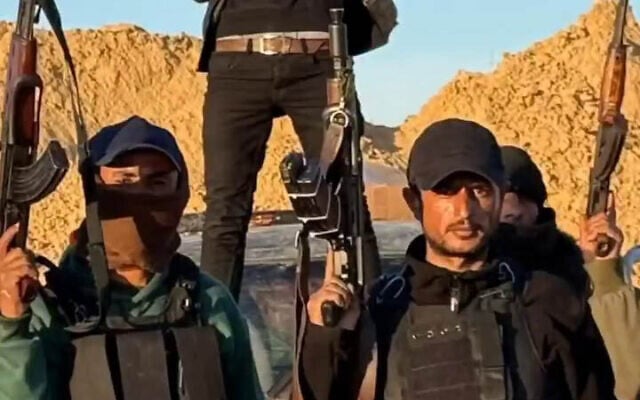
Yasser Abu Shabab (right) and members of his group in Gaza are seen in an undated video posted by the group. (screen capture: Facebook, used in accordance with Clause 27a of the Copyright Law)
The Israeli-backed Abu Shabab militia appears to confirm that its namesake and commander Yasser Abu Shabab was killed earlier this week in a gunfight with members of the Abu Sanima family, which like him belonged to the Bedouin Tarabin tribe.
On a Facebook page affiliated with it, the militia, which goes by the “Popular Forces,” shares a post from yesterday by a user who identifies as Amna Abu Shabab, Yasser’s Abu Shabab’s wife, who says he was killed while “trying to solve a dispute among members of the Abu Sanima family after tensions worsened and shot were fired.”
“As usual, Yasser went into the heart of the affair, searching for the word that would put out the fire rather than the bullet that would ignite it,” says the post, without offering specifics about the dispute.
The post comes after a Turkey-based anti-Hamas activist Hamza al-Masri, citing Abu Sanima family sources, said on Telegram that Abu Shabab was killed in a gunfight sparked by his refusal to secure the release of a relative of another prominent member of the tribe.
Al-Masri did not specify who had detained the nephew’s son, but indicated that Abu Shabab’s group had access to him. At least one Gazan recently released from Israeli custody has recounted first having been abducted by the Abu Shabab militia and then handed over to Israel.
Israeli defense officials have said the militia leader was killed as a result of “internal conflict,” and Hamas’s anti-collaborationist Sahm unit also said he had been killed by a fellow Tarabin tribe member.
Former Supreme Court president warns of ‘dangerous decline’ in Israel’s legal system

Former Chief Justice Esther Hayut, November 3, 2025. (Moshe Shai/FLASH90)
Former Supreme Court president justice Esther Hayut warns of a dangerous deterioration in Israel’s legal system during her address at the Public Law Conference in Haifa, according to Walla News.
“Public officials who are committed to statesmanship must not ignore or disobey court orders,” Hayut says. “This is a dangerous decline. It undermines the rule of law, damages the status of the Supreme Court, and hinders its ability to continue fulfilling its role as the guardian of individual rights and the rule of law in the country.”
“God forbid we allow or accept such a retreat from one of our fundamental principles,” she adds. “These words are spoken out of great concern, but also out of belief and conviction that the judiciary will persevere, despite and in the face of everything.”
“The judges and administrative staff will continue to carry out their mission as faithful public servants, despite the obstacles and difficulties that some choose to place in their way,” Hayut concludes.
Three said killed by IDF in northern Gaza’s Beit Lahiya
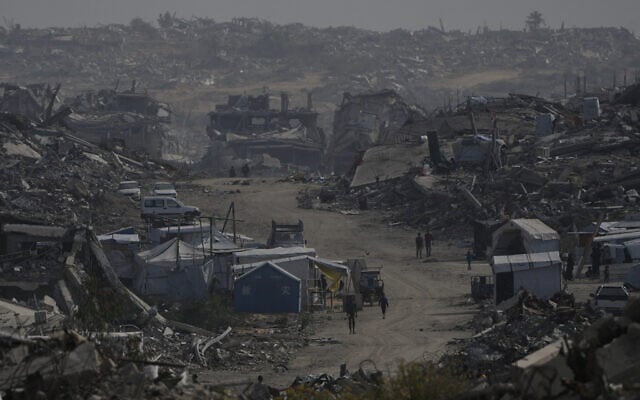
Palestinians walk through the destruction left by the Israeli air and ground offensive in Gaza City, December 5, 2025. (AP Photo/Abdel Kareem Hana)
Three people were killed, and several were wounded by the IDF in Beit Lahiya in the northern Gaza Strip this morning, Al Jazeera reports, citing a source in Gaza City’s Shifa Hospital.
According to WAFA, the Palestinian Authority’s official news agency, two people were killed by a drone strike in Beit Lahiya’s northwestern Atatra neighborhood, which the Gaza ceasefire line passes through. It’s unclear what side of the line the report refers to.
Hamas’s civil defense agency identifies its lieutenant, Suhail Dahman, as another one of those killed in Beit Lahiya today, adding that his son sustained serious injuries. According to WAFA, they were bombed by Israel near the Ribat Mosque, on the Hamas-controlled side of the so-called Yellow Line.
Meanwhile, a Palestinian sustained serious wounds in an Israeli artillery strike on Gaza City’s eastern Shejaiya neighborhood this morning, according to a source in the city’s Al-Ahli Baptist Hospital cited by Al Jazeera. The Yellow Line passes through Shejaiya, and it’s unclear which side of the line the report refers to.
Another two Palestinians were wounded by IDF bombing on Gaza City’s Nasser neighborhood, Al Jazeera reports, citing first responders. The neighborhood is on the Hamas-controlled side of the Yellow Line.
The outlet also reports IDF bombing on Rafah and Khan Younis in southern Gaza.
Qatari PM: Gaza truce can’t be considered ceasefire until Israel withdraws from Strip
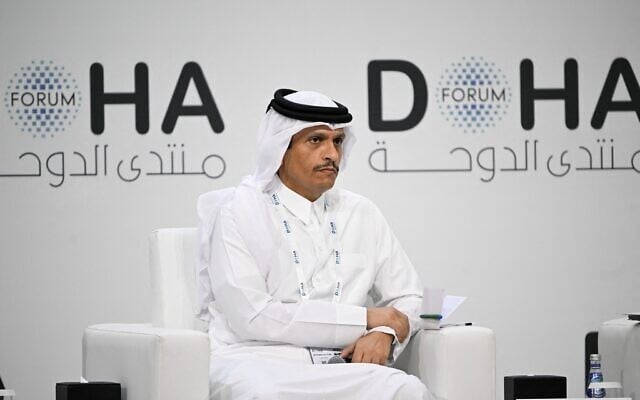
Qatar's Prime Minister and Minister for Foreign Affairs Sheikh Mohammed Abdulrahman Al Thani, attends a session on the opening day of the Doha Forum, an annual diplomatic conference, in Doha, December 6, 2025. (Mahmud Hams/AFP)
DOHA — Qatari Prime Minister Mohammed Abdulrahman Al Thani says Doha doesn’t consider the current situation in Gaza to be a ceasefire, arguing that this would require an Israeli withdrawal from the entirety of the Strip.
“We are at the critical moment,” Al Thani says about the Gaza peace process during a panel discussion at the Doha Forum.
“What we have just done is a pause. We cannot consider it yet a ceasefire. A ceasefire cannot be completed unless there is a full withdrawal of the Israeli forces, there is stability back in Gaza [and] people can go in and out, which is not the case today,” he maintains.
At the start of the Gaza truce on October 10, Israel withdrew its forces to a newly drawn Yellow Line that roughly divides the Strip into eastern and western halves. While Israel was supposed to allow the reopening of the Rafah Crossing, it held off on doing so for well over a month, arguing that Hamas must release the remaining deceased hostages that are still in Gaza. The number of bodies now stands at one.
Earlier this week, Israel said it would allow the Rafah Crossing to reopen in one direction, for the transit of Palestinians out of Gaza, but Egypt has rejected this framework, insisting that Palestinians be allowed to enter the Strip as well.
Al Thani says the mediating countries Qatar, Turkey, Egypt and the US are “getting together in order to force the way forward for the next phase.”
A US official told The Times of Israel on Thursday that Washington is aiming to announce a transition to the second phase — which will see the operationalization of a technocratic Palestinian government and International Stabilization Force overseen by a Board of Peace headed by US President Donald Trump — in the next two weeks or so.
But Al Thani clarifies that Qatar also views phase two as “temporary because at the end of the day, if we are just resolving what happened in Gaza… it’s not enough. There is a root for this conflict.”
“This conflict is not only about Gaza, but also the West Bank. It’s about the rights of the Palestinians for their state,” the Qatari premier continues. “We are hoping that we can work together with the US administration to achieve this vision.”
Al Thani credits the Trump administration for its determination in the Gaza ceasefire talks, arguing that Washington’s willingness to speak directly with Hamas was what helped secure “breakthroughs” needed for an agreement in October.
Asked about opposition from Prime Minister Benjamin Netanyahu’s coalition partners to elements of the Trump peace plan that include a potential pathway to a future Palestinian state, the Qatari prime minister says the US role will be critical in ensuring that Israel adheres to the deal’s terms.
Pressed on Qatar’s decision to host Hamas’s leaders, Al Thani argues that this open channel with the terror group was critical for reaching every one of the ceasefire and hostage release deals throughout the Gaza war.
He argues that many of Qatar’s most vocal critics come from countries that rely on Doha’s mediation efforts, in an apparent reference to Israel, where many government officials have knocked the Gulf country over its ties to Hamas.
“Qatar provides a platform for those parties to talk. It doesn’t mean that we are taking one side or the other. Our role is to make sure that the dialogue is ongoing and the dialogue is coming out with a positive outcome… that ends conflicts,” Al Thani says.
Turkish FM: We must be realistic about our expectations for foreign Gaza force
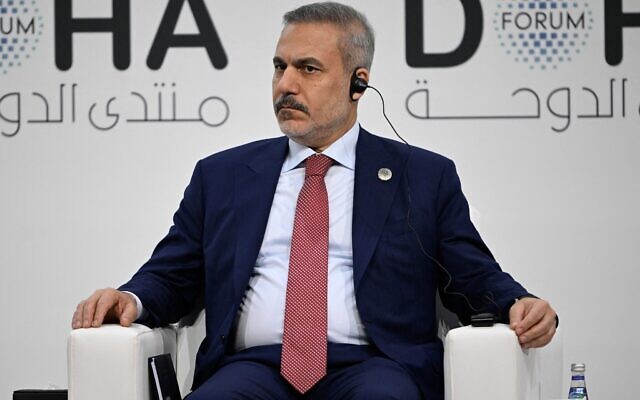
Turkish Foreign Minister Hakan Fidan attends a session on the opening day of the Doha Forum, an annual diplomatic conference, in Doha, December 6, 2025. (Mahmud Hams/AFP)
DOHA — Turkish Foreign Minister Hakan Fidan says “we should be realistic” regarding what to expect from the International Stabilization Force that US President Donald Trump’s administration is hoping to stand up at the beginning of 2026.
“When we define the mission of the ISF, we should be realistic and nuanced in expecting certain things from ISF because there are realities in the field,” Fidan says during an onstage panel discussion at the Doha Forum in Qatar.
The Turkish foreign minister doesn’t get into specifics, but appears to be referring to assertions by Israel that the ISF play an active role in the disarmament of Hamas — a demand that is said to concern many countries considering contributing troops to the force due to fears of clashes with Hamas fighters or of finding themselves in the middle of clashes between Gaza gunmen and Israeli forces.
While Turkey — one of the ceasefire mediators — has privately offered to contribute troops to the ISF, Israel has been adamant that it will not allow such a development, as Ankara has been one of the world’s leading critics of Jerusalem since the start of the war. Asked at the Doha Forum whether Turkey is prepared to contribute to the ISF, Fidan avoids answering directly but says that his country “is ready and willing to do whatever it takes for us to contribute to ongoing peace.”
Fidan then indicates that negotiations regarding the standing up of the ISF are still in their early stages, with many key questions left unanswered.
“There is a big discussion taking place [on] how to form [the ISF], what [will be] the specific mission statements and what will be the rules of engagement,” he says, adding that the list of contributing countries is still not final, along with the command structure.
“Our first objective in deploying the ISF is to separate Palestinians from the Israelis on [the] borderline. This will be our main objective. Then we can address the other remaining issues,” Fidan continues, apparently referring to the Gaza border, as opposed to the Yellow Line, which was the demarcator set up as part of the October 10 ceasefire that leaves Israel in control of the eastern half of Gaza.
He notes that the ISF will work alongside a vetted and trained Palestinian police force, along with a Palestinian governing body, which will be overseen by the Board of Peace, headed by US President Donald Trump. “All these organs supposedly will work together in a synchronized manner.”
Russian drones, missiles hit railway hub near Ukraine’s capital, railway says
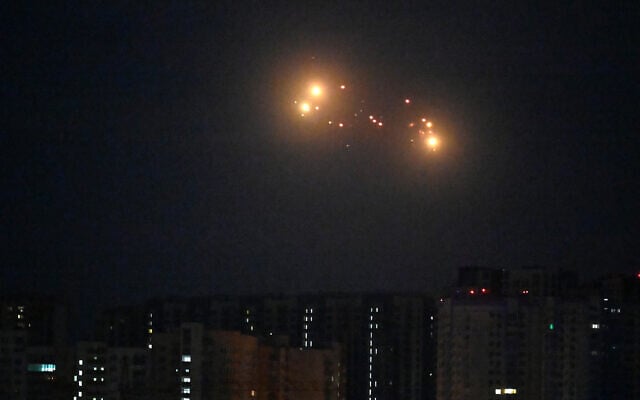
The Ukrainian air defence fires at Russian drones above Kyiv during night mass drone and missile strikes on Ukraine amid the Russian invasion of Ukraine, September 10, 2025. (Sergei Supinsky/AFP)
KYIV — A railway hub near Kyiv was attacked during a large-scale Russian drone and missile attack that damaged the depot and railway carriages, Ukrainian state railway company Ukrzaliznytsia says.
The railway does not report any casualties from the overnight attack in the town of Fastiv.
Russia has intensified its attacks on Ukraine’s energy sector and infrastructure in recent weeks, targeting power stations and railway hubs.
Ukrzaliznytsia says on the Telegram messaging app that it was forced to cancel several suburban trains near the capital and the city of Chernihiv in northeastern Ukraine.
Emergency services report a fire and destruction on the territory of the railway station and depot, but give no more details. The report also cites an attack on infrastructure in the Chernihiv region.
Power and heat generation facilities in Chernihiv, Zaporizhzhia, Lviv, and Dnipropetrovsk regions were targeted in the attack, Ukraine’s ministry for development of communities and territories says.
It says on Telegram that 9,500 customers remained without heat and 34,000 without water supply in the southern Odesa region.
“Port facilities (in Odesa) have also been attacked: part of the infrastructure has been de-energised, and operators have switched to backup power from generators,” the ministry says.
The ministry also reports damage to energy infrastructure in the Kyiv region.
Deni Avdija becomes Israel’s all-time leading NBA scorer after 35-point night

Portland Trail Blazers forward Deni Avdija (left) drives against Detroit Pistons forward Duncan Robinson during the first half of an NBA basketball game in Detroit, December 5, 2025. (AP Photo/Ryan Sun)
Deni Avdija made Israeli basketball history overnight, becoming the country’s all-time leading NBA scorer after a standout 35-point performance in a loss to the Detroit Pistons.
The 24-year-old forward entered the game needing 30 points to surpass former Sacramento Kings forward Omri Casspi’s career tally of 4,642. With an exceptional shooting night, Avdija pushed his total to 4,648 points, cementing a new national milestone.
The achievement adds to a breakout season already filled with personal highs for Avdija, who reached the record far faster than Casspi, the first Israeli ever to play in the NBA.
Afghan authorities say 4 civilians killed in Pakistan border clash
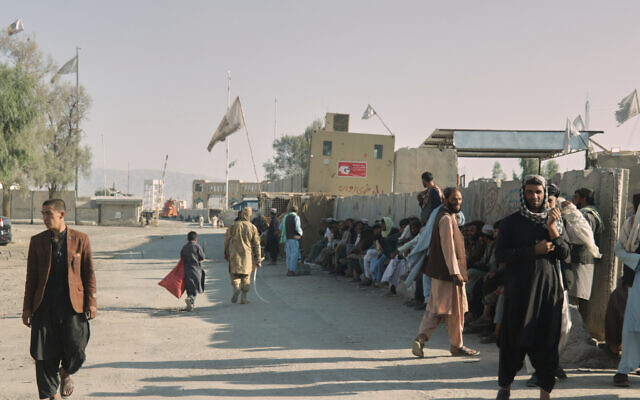
People wait near the closed gate at the Spin Boldak border crossing with Pakistan, after the border was shut for nearly two weeks following clashes between Afghan and Pakistani forces, in Kandahar province, Afghanistan, October 23, 2025. (AP Photo/Sibghatullah)
An overnight exchange of fire at a main Pakistan-Afghanistan border crossing killed four civilians, the governor of Afghanistan’s Spin Boldak district says, in the latest flare-up of fighting between the two countries.
At the Pakistani border town of Chaman, the local hospital said three people had been discharged after suffering minor injuries during the clash, with each side accusing the other of launching an “unprovoked” attack.
New Abu Shabab militia head says he’s not scared of Hamas, vows to intensify fighting
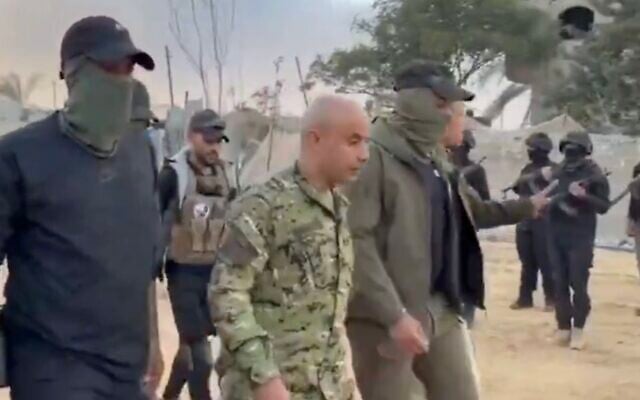
Ghassan al-Dahini, the new commander of the Abu Shabab militia, inspects troops in a video released by the group on December 5. 2025. (X screenshot)
Ghassan al-Dahini, the newly appointed head of the Israeli-backed “Popular Forces” militia in southern Gaza, tells Channel 12 in an interview that he will continue to strengthen the group’s campaign against Hamas following the killing of its previous leader, Yasser Abu Shabab.
Al-Dahini, 39, hails from the Bedouin al-Tarabin tribe — the same tribe as Abu Shabab — and previously commanded the militia’s armed wing under him. Before joining the group, he served as an officer in the Palestinian Authority’s security apparatus until Hamas’s 2007 takeover of Gaza, according to Channel 12.
Later, he reportedly became a commander in Jaish al-Islam, closely tied to the Islamic State, and was at one point arrested by Hamas and listed among the group’s most-wanted individuals.
In the interview, al-Dahini declares he is not afraid of Hamas, saying, “How could I fear Hamas when I am fighting Hamas?”
“I fight them, arrest their people, confiscate their equipment, fight them and push them back. I am doing what they deserve, in the name of the people and the free men.”
Yesterday, the militia published a show-of-force video on a Facebook page affiliated with it, showing al-Dahini in military fatigues inspecting a formation of fighters. Another video showed troops praying in memory of Abu Shabab alongside a call for new recruits to join the fight “until you’re freed from Hamas.”
He says yesterday’s videos were intended to demonstrate that the militia “continues to operate” despite the loss of its commander.
“His absence is painful, but it does not stop the fight against terror,” he says.
Al-Dahini also outlines plans to establish a demilitarized zone in the area under the militia’s control, which he says would serve as a safe zone for civilians who “believe in peace.”
Ex-PMO legal adviser warns Netanyahu government undermining gatekeepers, fueling Oct. 7 failures

Prime Minister's Office Legal Adviser Shlomit Barnea Farago arrives for a cabinet meeting at the Prime Minister's Office in Jerusalem on May 1, 2022. (Yonatan Sindel/Flash90)
Former legal adviser to the Prime Minister’s Office Shlomit Barnea Farago warned that years of political pressure to remove professional gatekeepers contributed directly to government dysfunction during and after Hamas’s October 7 attack, Hebrew media reports.
Speaking for the first time since stepping down from her position six months ago after 24 years in the role, Barnea Farago said at yesterday’s conference of the Association for Public Law that she herself faced attempts by Prime Minister Benjamin Netanyahu’s office to force her out.
She reportedly told attendees that Netanyahu’s chief of staff informed her the premier wanted her dismissed, but she refused, saying, “I replied that I work for the state, and it is the one that employs me. I rejected tempting offers to leave.”
Media reports have previously cited sources close to the prime minister as claiming her departure stemmed from her opposition to renovation requests for the Netanyahus’ private home in Caesarea.
In her remarks, Barnea Farago accused the government of systematically pushing out civil servants who insisted on professional standards and resisted political pressure. She cited multiple cases inside the PMO in which accountants and senior officials were reassigned or removed after clashing with political directives.
“Every dismissal sets a new boundary,” she said, adding that ministries staffed with politically loyal newcomers “failed in providing assistance and care” during the October 7 onslaught and subsequent war, including to evacuees, victims, and hostage families.
According to Hebrew media, Barnea Farago also revealed that Netanyahu sought to dismiss then-Shin Bet chief Ronen Bar on grounds of “loss of trust,” but that she refused to advance the process without factual justification — which she said did not exist.
She described similarly flawed attempts to advance the firing of Attorney General Gali Baharav-Miara, calling the proposed decision “purely for appearances’ sake” and lacking any proper legal basis.
Barnea Farago further accused ministers of routinely disregarding legal opinions and court orders while simultaneously relying on the Attorney General’s Office when convenient. She warned that politically driven appointments were reshaping the civil service “from an independent, non-political service to one based on personal trust and political loyalty.”
Ex-Saudi intel chief: ‘Troublemaker’ Israel is greater threat to regional stability than Iran
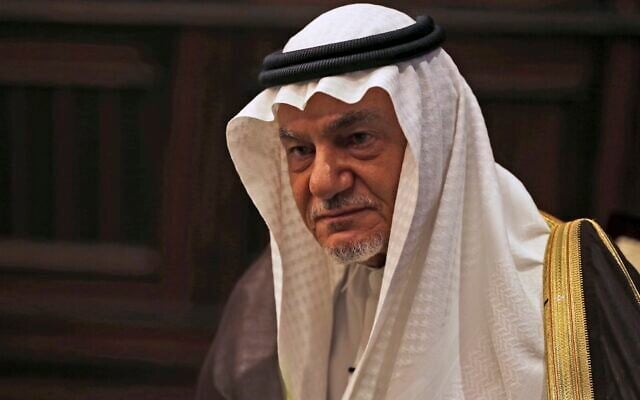
Saudi Prince Turki al-Faisal talks to The Associated Press in Abu Dhabi, United Arab Emirates. (AP Photo/Kamran Jebreili, 2018 file photo)
Saudi Arabia’s former intelligence chief says Israel has become a greater threat to regional stability than Iran.
Asked which is a greater threat to regional stability during an onstage interview at the Milken Institute’s Middle East and Africa Summit in Abu Dhabi yesterday, Saudi Prince Turki Al Faisal responds, “For the moment, definitely it is Israel.”
“We’ve seen that Iran has been dealt a strong hand by the US,” he says, apparently referencing Washington’s strike on Iran’s nuclear facilities. Prince Turki, who as a prominent member of the Saudi royal family, remains influential in Riyadh even after leaving government.
“Events in Lebanon with the diminishing of Hezbollah and the change of the regime in Syria have obviously affected Iran’s ability to affect and influence events in the broader Middle East,” he continues.
“Israel is feeling its oats by bombing Syria on almost a daily basis, continuing to bomb Palestinians — whether in Gaza or the West Bank and also in Lebanon, where there’s supposed to be a ceasefire,” Prince Turki says.
“That is definitely not a harbinger of peace in our part of the world. In my view, it is Israel now that is the troublemaker and should be reigned in,” he says.
His comments further highlight how far Riyadh apparently remains from normalizing relations with Israel, and point to a broader anxiety in the region with Israel’s military actions.
US confirms UN ambassador will visit Israel and Jordan as Trump seeks to advance his Gaza plan
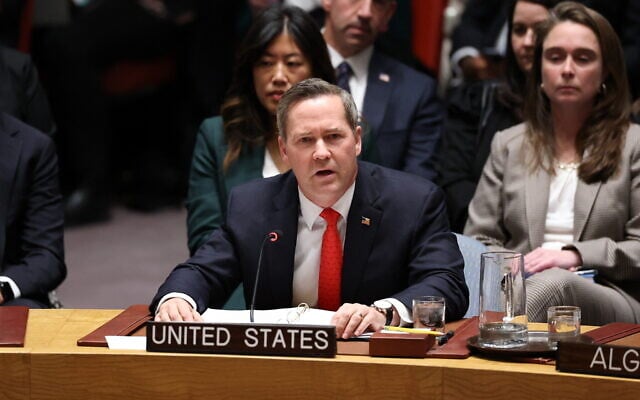
US Ambassador to the United Nations Mike Waltz speaks during a UN Security Council meeting to vote on a US resolution on the Gaza peace plan at the UN Headquarters in New York City, November 17, 2025. The UN Security Council voted in favor of a US resolution bolstering US President Donald Trump's Gaza peace plan that includes the deployment of an international force and a path to a future Palestinian state. (Photo by ANGELA WEISS / AFP)
The US envoy to the United Nations confirms he will visit Israel in the coming days as part of a trip to the Middle East.
A statement from Ambassador Mike Waltz’s office says he will travel to Jordan and Israel between December 6 to December 10, during which he will stress “the United States’ commitment to advancing regional stability, implementing President Trump’s 20-Point Plan for Gaza, and supporting the objectives of United Nations Security Council Resolution 2803, which establishes the way forward for the region.”
In Israel, Waltz will hold talks with Prime Minister Benjamin Netanyahu and President Isaac Herzog “to advance US-Israel cooperation at the United Nations and discuss shared priorities for regional security and humanitarian aid,” according to the statement.
His itinerary in Israel also includes visits to the Kerem Shalom Crossing with Gaza and the Coordination and Monitoring Mechanism for Gaza in Kiryat Gat.
In Jordan, Waltz is scheduled to meet with King Abdullah II and Foreign Minister Ayman Safadi, with the US statement citing the monarchy’s “critical role in facilitating humanitarian aid to Gaza.”
“Ambassador Waltz will also engage with humanitarian organizations to assess ongoing efforts to deliver life-saving assistance to those in need,” the statement adds.
US and Ukraine say ‘real progress’ toward peace depends on Russia, after second day of talks in Miami

In this pool photograph distributed by the Russian state agency Sputnik, US special envoy Steve Witkoff and US President Donald Trump's son-in-law Jared Kushner, accompanied by Kremlin economic envoy Kirill Dmitriev, are seen prior to a meeting with Russia's President at the Kremlin in Moscow on December 2, 2025. (Alexander Kazakov/Pool/AFP)
US and Ukrainian officials will on Saturday continue discussions on a plan to end the war in Ukraine, the US State Department says at the end of the second day of meetings in Miami involving US Special Envoy Steven Witkoff, Jared Kushner and Ukraine’s senior negotiator Rustem Umerov.
“Both parties agreed that real progress toward any agreement depends on Russia’s readiness to show serious commitment to long-term peace, including steps toward de-escalation and cessation of killings,” the State Department says in a statement.
They “also agreed on the framework of security arrangements and discussed necessary deterrence capabilities to sustain a lasting peace,” it adds.
Canada drops Syria from its list of foreign state supporters of terrorism
The Canadian government says that it has removed Syria from its list of foreign state supporters of terrorism and removed Hayat Tahrir al-Sham, the group that spearheaded the rebel alliance that helped oust President Bashar al-Assad, from its list of terrorist entities.
“These measures are in line with recent decisions taken by our allies, including the United Kingdom and the United States, and follows the efforts by the Syrian transitional government to advance Syria’s stability, build an inclusive and secure future for its citizens, and work alongside global partners to reinforce regional stability and counter terrorism,” the Canadian government says in a statement.
Abu Shabab militia announces new commander after namesake’s death; Hamas: ‘Traitors’ should take heed
Ghassan al-Dahini, a deputy of Yasser Abu Shabab, has taken over the slain Gazan tribal leader’s eponymous Israeli-backed militia, says the group, which goes by “the Popular Forces.”
The Abu Shabab group, which operates in an IDF-controlled area of southern Gaza, posts a video on a Facebook page affiliated with it showing Dahini in military fatigues inspecting a formation of troops in gear.
خير خلف لخير سلف
قائد القوات الشعبية الجديد " غسان الدهيني " يتسلم مهامه ويقوم بزيارات تفقدية لجهاز مكافحة الإرهاب.
القوات الشعبية – قطاع غزة pic.twitter.com/O0gboijJ2I
— Yasser Abu Shabab-Popular (@yasserpopular) December 5, 2025
The group also posts a video of troops praying in memory of Abu Shabab, with a caption calling for recruits to join the group while vowing to keep fighting “until you’re freed from Hamas.”
Abu Shabab was killed Thursday as the result of what Israeli defense officials said was an “internal clash.”
Without claiming responsibility for the killing, the Hamas-controlled Gaza Interior Ministry threatens that Palestinians who work with Israel will meet a similar fate to Abu Shabab, urging “traitors” to turn themselves over to the terror group’s security apparatus.
“We call on collaborators… to turn themselves over immediately, before it’s too late,” the Hamas ministry says in a statement, adding that this would help “alleviate” legal procedures against them.
Meanwhile, Gaza’s Palestinian Tribal Committee reiterates its support for Hamas’s crackdown on accused collaborators and commends the ministry for “opening the door of repentance.”
The committee, which comprises representatives of several Gaza clans, says Abu Shabab militia acts as “the guard dogs and mercenaries of the occupation.” It praises the Tarabin clan, from which Abu Shabab hailed, for taking the “national position” and disowning him.
As it reasserts itself on its side of the Gaza ceasefire line, Hamas has killed dozens of people it accuses of collaborating with Israel, residents have told The Times of Israel. While Hamas does not announce these actions on its official social media accounts, Telegram accounts linked to it published several videos of violence against Gaza residents — including public executions, shots to the legs and beatings with stone blocks — in ostensible punishment for alleged crimes including stealing aid, using drugs and collaborating with Israel.
Emanuel Fabian and Nurit Yohanan contributed to this report.
From hospital, severely hurt 18-year-old Palestinian describes kidnapping, beating by settlers near Ramallah
His face and body full of bruises, Owais Hamam, 18, tells Asharq News that four settlers kidnapped him, punched him, and beat him with an M-16 rifle as they threatened to kill him yesterday.
Speaking to the Saudi-owned outlet from his hospital bed in Ramallah Governmental Hospital, Hamam says he was leaving Khirbet Bani Hairth, west of Ramallah, toward nearby hills to pray the Maghrib, the fourth of Islam’s five prayers, when the settlers came at him, surrounding him and firing shots in the air. He turned back but was unable to escape, he says.
“They sat me down on thorns and started hitting my face and head with fists and an M-16,” says Hamam.
They then took him westward to the area of Bab a-Taqa, where the military arrived and took him, he says.
It was unclear how Hamam was taken to Bab a-Taqa. Nor was it clear if the settlers were still present when the army arrived.
The troops who found Hamam detained him for interrogation, during which they also beat him, he says.
“They said to me, ‘Why did you come here?’ And I said I was going to pray the Maghrib,” says Hamam. “They said to me, you’re a liar, you want to be a mujahideen and a shahid,” he says, referring to religious fighters and martyrs in Islam, respectively.
The assault left Hamam in serious condition, the Palestinian Authority’s official news agency WAFA reported yesterday.
The IDF does not immediately respond to a request for comment.
Sharing footage of Hamam on his hospital bed, veteran Arab MK Ahmad Tibi accuses National Security Minister Itamar Ben Gvir and IDF Chief of Staff Lt. Gen. Eyal Zamir of facilitating settler violence.
“Owais Hamam, from the village of Khirbat Bani Harat near Ramallah, was kidnapped and brutally tortured by settlers under the protection of the army and the police of Ben Gvir and Zamir,” writes Tibi on X.
"أجلسوني على الشوك وانهالوا عليّ ضرباً".. الشاب الفلسطيني أويس همام يروي لـ"الشرق" تفاصيل اعتداء مستوطنين عليه قرب رام الله بالضفة الغربية pic.twitter.com/O3QnTgX7rs
— Asharq News الشرق للأخبار (@AsharqNews) December 5, 2025


read more: