

Revised polls see right-wing bloc drop to 59, tempering high hopes for Likud
Official ballot count begins, set to extend throughout night; Netanyahu declares ‘gigantic victory’ for Israel
 Add ToI as a Preferred Source on Google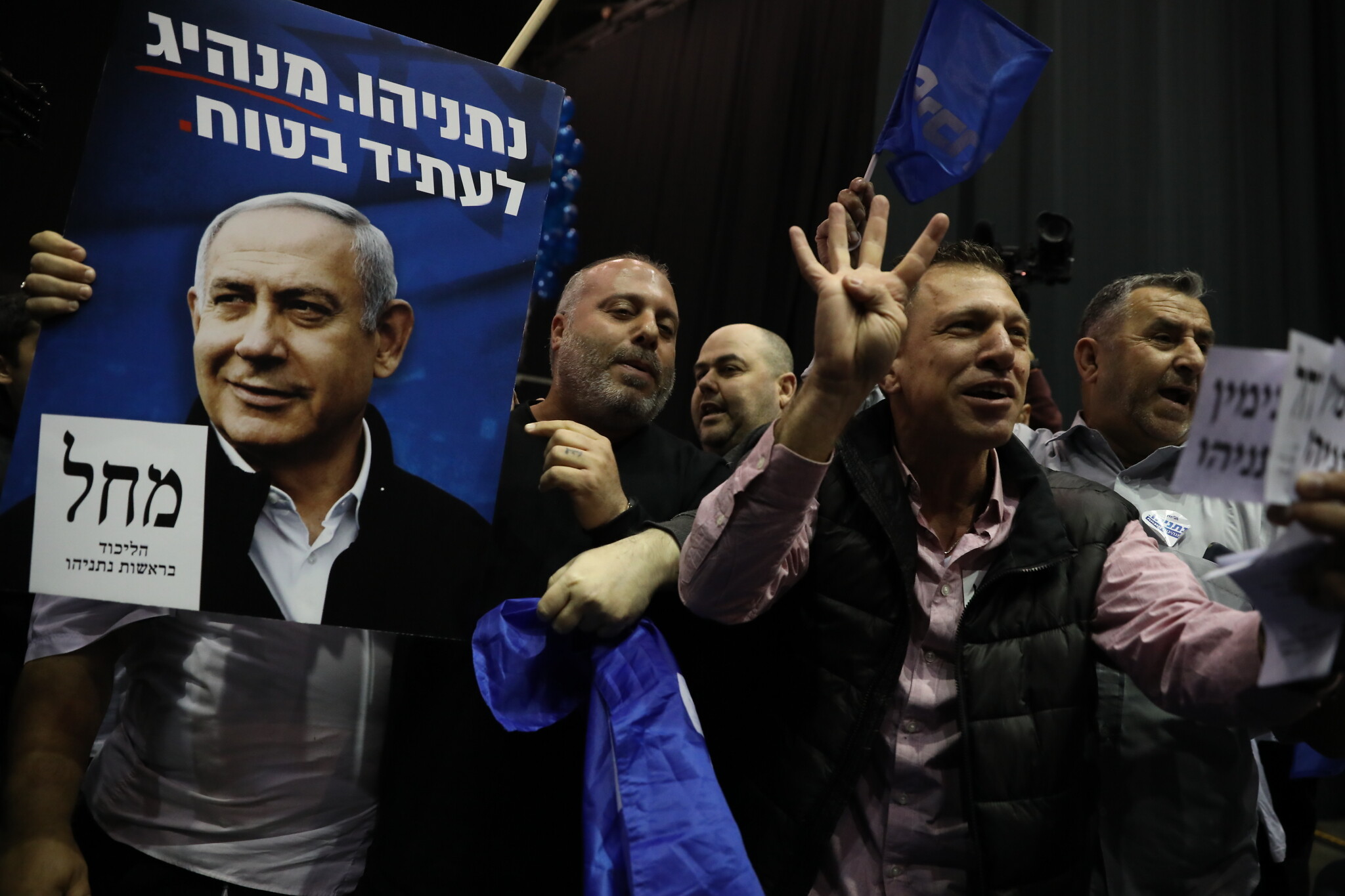
Revised exit polls overnight Monday-Tuesday dented Likud’s initially triumphant declarations of victory in the elections, with the right-wing bloc seemingly dropping from 60 to 59 Knesset seats, putting the prospects of a majority coalition slightly further from Benjamin Netanyahu’s reach although still leaving him firmly placed to remain prime minister.
The three televised polls had originally projected Netanyahu’s right wing-Haredi bloc picking up 60 of the Knesset’s 120 seats, one short of a parliamentary majority.
But by 2 a.m., the networks updated the polls with additional data from polling stations, giving the right 59 seats, and complicating Netanyahu’s prospects for quickly assembling a coalition and ending a year of political deadlock.
However. the polls still showed Likud leading with 36-37 seats, reestablishing itself as the Knesset’s biggest party, with the slight decline on the right in the updated projections coming from smaller parties.
According to the amended Channel 13 poll, Likud was expected to win 37 seats (compared to its 32 in the outgoing Knesset), followed by Blue and White with 34 (compared to 33 in the outgoing Knesset). The predominantly Arab Joint list was poised to clinch 14 seats, followed by Shas with nine, United Torah Judaism with seven, Labor-Gesher-Meretz with seven, and Yisrael Beytenu and Yamina with six each.
The updated Channel 12 poll had Likud ahead of Blue and White by five seats (37 to 32), with the Joint List at 15; Shas at nine; United Torah Judaism, Yisrael Beytenu and Labor-Gesher-Meretz with seven apiece; and Yamina rounding it off with six seats.
The Kan public broadcaster also amended its poll early on Tuesday, giving the Netanyahu-led bloc 59 seats, with Likud in the lead with 36 seats, to Blue and White’s 33.
Tallies of the official results began to trickle in early Tuesday.
Results with some five percent of the vote counted showed Likud leading Blue and White 32% to 24%.
The vote counting was expected to extend through Tuesday morning.
Despite the tempered results, Netanyahu declared a “night of gigantic victory,” at a Likud victory rally in Tel Aviv at 2:30 a.m. Tuesday.
The vote was Israel’s third in under a year after Likud and Blue and White both failed to muster enough support to break a stalemate in two previous tries.
As polls closed at 10 p.m. Monday, Netanyahu swiftly declared “a huge victory for Israel” on Twitter following the release of the initial exit polls results.
Gantz, speaking to supporters in Tel Aviv early on Tuesday night, expressed disappointment, but did not concede.
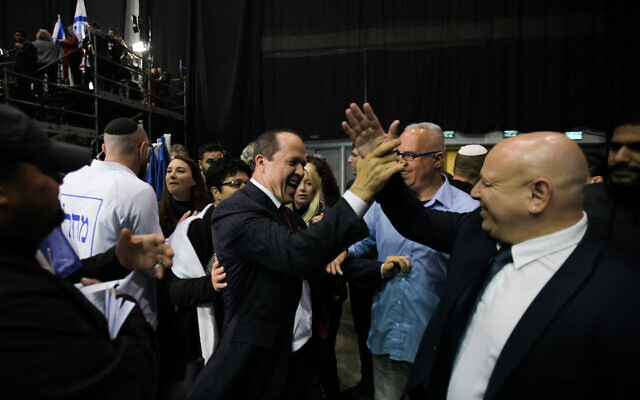
Likud officials had lauded their apparent triumph at the polls and insisted a 60-seat rightist-Haredi coalition would be able to siphon a handful of lawmakers from beyond the coalition to round out a majority.
Exit polls have proven very inaccurate in the recent past. While they managed to reasonably predict the actual outcome of the previous election in September, the three surveys diverged wildly in April, as well as in the 2015 election.
Rumors had been swirling in the hours leading up to the exit polls that Blue and White was poised to suffer a stinging defeat. They were apparently based on leaks from early exit poll results, as well as from officials in various parties.

The vote has largely been seen as a referendum on Netanyahu, who will go on trial on corruption charges, including bribery, on March 17. If Netanyahu is tasked with forming the next coalition, the High Court of Justice will likely have to rule whether someone facing criminal charges can do that. The law currently only says a prime minister must step down if convicted with all appeals exhausted — a process that will take at least three or four years — but a previous ruling by Israel’s top court has prevented ministers from serving if they are facing a criminal indictment, and it could deliver another such precedent.
Avigdor Liberman’s Yisrael Beytenu, which has long urged a unity government with Likud and Blue and White and refused to commit to backing either side, was projected to get between six and eight seats, potentially leaving him in the kingmaker role if no opposition lawmakers defect.
On Monday night, Liberman again ruled out joining a Netanyahu-led government of right-wing and ultra-Orthodox parties.
Voters on Monday had streamed to the polls in higher numbers than have been seen in years, smashing worries about voter fatigue and coronavirus fears. The Central Elections Committee said that 71% cast their ballots in Monday’s race. The total turnout in the September elections was 69.4% and in the April vote, 67.9%.
The final official results are only due on March 10, giving way to weeks or even months of coalition wrangling.
The decision regarding who will be the next prime minister ultimately lies with President Reuven Rivlin, who will meet with the leaders of all the parties that cleared the electoral threshold, hear who each of them recommends as prime minister, and determine which candidate has the best chance of forming a coalition of at least 61 out of the 120 elected Knesset members.
Israel has never had a single-party government, and the next coalition, like the last one, seems certain to be a product of tense negotiations among about half a dozen parties that may take days or weeks.
In addition to the normal polling stations, 16 specially equipped voting booths were opened for the 5,630 voters who were under home quarantine as a precaution against the spread of the coronavirus in Israel. By the time those polling stations closed at 6:45 p.m., 4,076 of those people had cast their ballots — more than 72%.








The Times of Israel Community.