

The trouble with bombing a murderous dictator: Guessing how he’ll react
Analysts assume Syria and Hezbollah won’t retaliate against an alleged IDF airstrike in Hama, but say Israel should get ready just in case

 Add ToI as a Preferred Source on Google
Judah Ari Gross is The Times of Israel's religions and Diaspora affairs correspondent.

Over the past five years, Israel has conducted dozens of airstrikes in Syria, including — according to foreign reports — one early Thursday morning in the country’s Hama province in which two Syrian soldiers were killed.
Many of them have been followed by angry denunciations from Damascus and vows of “consequences,” but for all his bluster, Syrian leader Bashar Assad has never seriously retaliated against Israel.
Yes, on a handful of occasions, the Syrian military has fired air defense weapons at Israeli jets, including in one case in which the IAF launched an Arrow interceptor in order to ensure the Syrian anti-aircraft missile didn’t hit an Israeli community. However, Assad has yet to carry out an attack on Israel hours or days after an alleged strike.
Nor has Hezbollah, with the notable exception of a 2015 anti-tank missile attack on an IDF jeep that killed two soldiers, though that was in response to an alleged Israeli strike that killed Jihad Mughniyeh, a Hezbollah member and son of one of its leaders, not an attack on a weapons convoy or warehouse.
And while analysts say the safe bet is that the Syrian president, still beset by civil war despite recent gains, will keep holding his fire, knowing that Israel can hit him harder than he can hit Israel, the safer bet, they say, is for the Jewish state to prepare for one regardless.

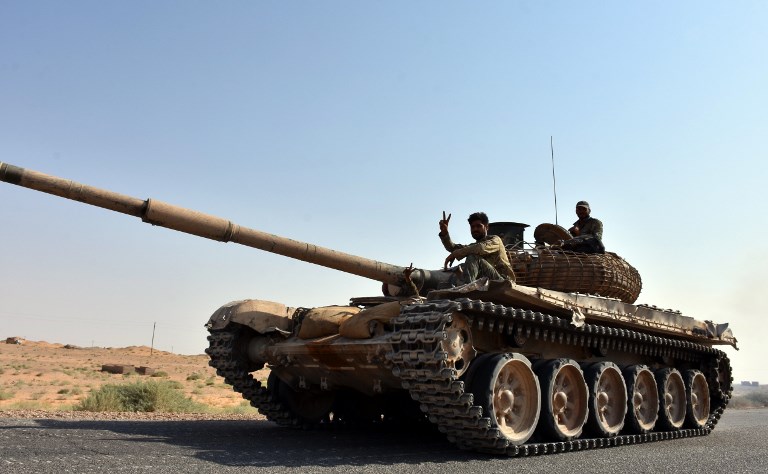
Following Thursday’s alleged Israeli airstrike on the Syrian military’s Scientific Studies and Research Center (CERS) facility near Masyaf, which is used to create and store chemical weapons and precise missiles, Assad’s army threatened that there would be “serious consequences” for the attack.
The Syrian military said the attack was “a desperate attempt to raise the collapsed morale” of the Islamic State group “after the sweeping victories achieved by the Syrian Arab army,” and proved Israel’s “direct support” for IS and “other terrorist organizations.”
The lingering question, nearly 18 hours after the strike, is whether the Assad regime military’s tough words are a serious threat or just that, words.
It’s hard to get inside the mind of a dictator who torched his own country and used [a weapon of mass destruction] against his own people
According to Bilal Saab, of the Washington-based Middle East Institute, Assad’s behavior toward his own people make his plans toward Israel difficult to determine.
“It’s hard to get inside the mind of a dictator who torched his own country and used [a weapon of mass destruction] against his own people,” said Saab, a senior fellow and director of the institute’s defense and security program, in an email.
However, he said, “my suspicion is that the laws of deterrence with Israel, though never foolproof, will hold simply because the level of punishment Israel would inflict on Syria would be severe, should Assad respond militarily.”
Maj. Gen. (res.) Yaakov Amidror, a former national security adviser, took a similar view.
“The assumption should be that there will be some kind of reaction, and I hope that the IDF is ready,” he said.
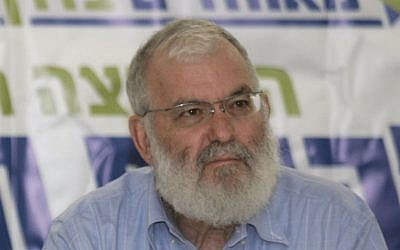
However, the former general added that he doesn’t expect the reaction to be particularly forceful.
“I hope for Assad that he’s not taking any steps that might find him in a very bad situation,” Amidror said, speaking to reporters in a phone briefing organized by the Israel Project.
Red lines
Throughout the Syrian civil war, Israel has maintained that it will not interfere in the fighting, unless certain “red lines” are crossed, namely that advanced weapons are not given to Hezbollah, that Iran is not allowed to take positions on the Golan border and that Israel’s sovereignty not be violated, either deliberately or accidentally.
So when a convoy of precise missiles is on its way from Syria to Hezbollah in Lebanon, Israel takes it out with an airstrike. Or when a mortar shell lands in the Israeli Golan from the fighting across the border, an IDF tank targets a Syrian army position.
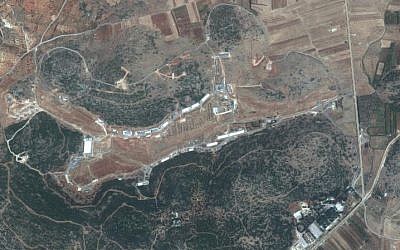
Though Israel has not confirmed its role in Thursday’s attack, the strike has nevertheless been attributed to the Jewish state, with the understanding among analysts that the Syrian weapons facility was being used to violate one of those “red lines.”
But what are Assad’s “red lines”? What will it take for him to strike Israel?
“Assad’s red lines are regime survival,” Saab said.
The question then, he said, is “what constitutes regime survival from his perspective and that of his Iranian allies, beyond the obvious (i.e., his own killing or the bombing of his headquarters).”
According to Saab, it “is anybody’s guess.”
But while Syria and Hezbollah were the two groups directly affected by the alleged Israeli airstrike, they aren’t the only people operating out of the country.

Russia, which has been acting as Assad’s patron, might also voice concern over the strike, according to Maj. Gen. (res.) Amos Yadlin, a former head of Israel’s Military Intelligence and the director of the Institute for National Security Studies think tank.
In a tweet, Yadlin warned that Israel could face “Russian opposition.”
9. Now it's important to keep the escalation in check and to prepare for a Syrian-Iranian-Hezbollah response and even opposition from Russia
— Amos Yadlin (@YadlinAmos) September 7, 2017
However, Amidror said Israel has been clear with Russia about its policies in Syria and that the two countries have a sense of mutual respect.
“Each side understands the other side’s interests,” he said.
Israel’s relationship with Russia, he said, is “an example of good diplomacy: We don’t agree with them, but we respect them.”






The Times of Israel Community.