

Americans largely back Iran talks, poll finds
68% of US citizens say negotiations with Islamic Republic are best way to curb country’s nuclear ambitions
 Add ToI as a Preferred Source on Google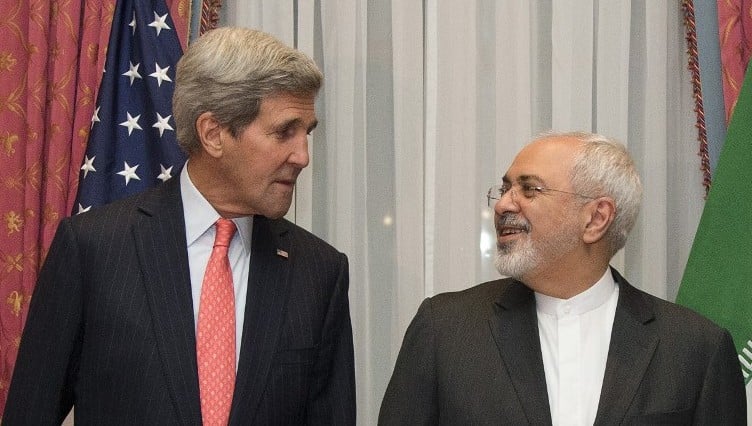
A vast majority of US citizens view ongoing direct negotiations between world powers and Iran as imperative in order to curb the Islamic Republic’s nuclear capabilities, according to a new CNN/ORC poll published Tuesday.
The survey found that 68 percent of Americans favor talks with Iran, while only 29% oppose them. Among Democratic party voters, 77% percent said they support nuclear negotiations, as did 65% of Republicans and 64% of independents.
Close to half of respondents (49%) said they believe Republican senators were wrong to send a letter addressed to Iranian leaders cautioning against a nuclear deal with the United States, but only 39% said the move harmed efforts to hold Iran back from developing nuclear weapons. Sixty-seven percent of Democrats said the letter was inappropriate, while 52% of Republicans agreed with the senators’ provocative move. Among independents, 47% thought the senators had gone too far, and 42% said the letter was warranted.
Forty-eight percent said they had more confidence in President Barack Obama than in Republicans legislators with regard to the Iranian nuclear issue, while 39% put their trust in Obama’s critics in Congress.
The poll was conducted by phone on March 13-15 among 1,009 respondents and claimed a 3% margin of error.
In an unusually upbeat assessment, Iran’s top nuclear official said Tuesday that his government’s main disagreements with the US and its other negotiating partners have been resolved and expressed optimism about meeting a late-March deadline for a framework deal
Now in their second extension, the talks have made headway in recent weeks. The sides have moved closer on limitations on Iran’s nuclear activities that could be retooled to make weapons. In exchange, the West would progressively lift economic and political sanctions.
Still, the comments by Iranian nuclear chief Ali Akhbar Salehi were among the most promising to date. “The main issues have been closed,” he told Iranian state TV. “I hope that in the remaining time we can close this.”
The sides are working to meet two target dates — a framework in the next two weeks that lays down the outlines of a final deal by the end of June.
A senior US official was less bullish, saying the sides had made progress but still had a ways to go in eliminating differences on what Tehran had to do for a gradual end to sanctions.
US Secretary of State John Kerry and Iranian Foreign Minister Mohammad Javad Zarif have taken the lead in what formally remain talks between Iran on one side and the United States, Russia, China, Britain, France and Germany on the other.
Most of the disputes focus on technical issues like the numbers of centrifuges which Iran would be allowed to operate as part of an agreement. The machines can enrich uranium up to levels used for the fissile core of nuclear arms, but Iran says it only has energy, medical and scientific aims.
Salehi and US Energy Secretary Ernest Moniz joined the talks last month to try and iron out the technical differences.
Kerry and Zarif met for nearly five hours in the Swiss city of Lausanne Monday, before the Iranians departed for Brussels for talks with European negotiators.
Republicans argue a deal would be insufficient and unenforceable, allowing Iran to become a nuclear-armed state. To that end, they’ve delivered a series of proposals to undercut or block an agreement, including ones that would require a Senate say-so on a deal and order new sanctions against Iran while negotiations are underway.
Obama and other officials insist they’re not going to make any deal that would allow Iran to acquire nuclear weapons.
The deal taking shape would limit Iran’s uranium enrichment and other nuclear activity for at least a decade, with the restrictions slowly lifted over several years.









The Times of Israel Community.