

US: Row over Iran ambassador won’t harm nuke talks
Tehran’s UN envoy faces possible ban from entering New York over his part in the 1979 takeover of the US embassy
 Add ToI as a Preferred Source on Google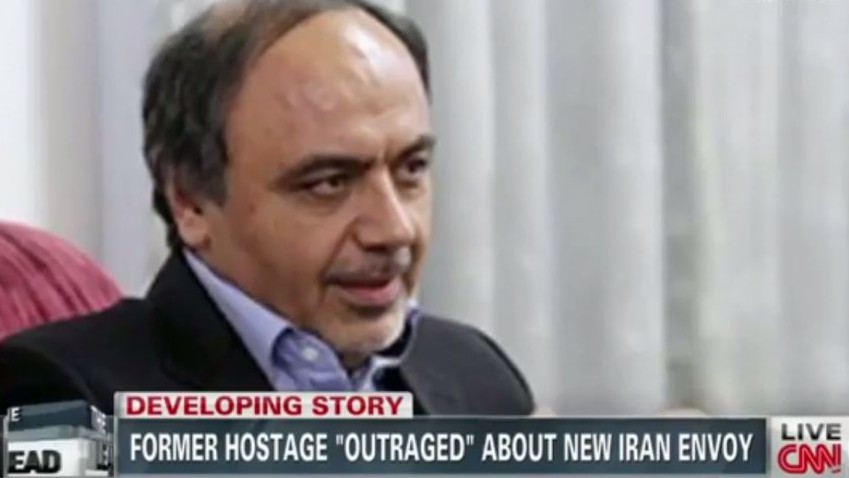
WASHINGTON — The United States’ ambassador to the United Nations says talks about Iran’s nuclear program are continuing undisturbed by Washington’s decision to block Tehran’s ambassador to the diplomatic body.
US Ambassador Samantha Power on Sunday told ABC’s “This Week” that Iran’s selection of Hamid Aboutalebi (ah-boo-TAH’-leh-bee) to be its United Nations envoy is not acceptable. She says Tehran should pick someone else.
President Barack Obama’s administration had previously said only that it opposed the nomination of Hamid Aboutalebi, who was a member of the group responsible for the 1979 takeover of the US Embassy in Tehran as a revolution erupted in Iran. US officials had hoped the issue could be resolved by Tehran simply withdrawing the nomination.
“We’ve communicated with the Iranians at a number of levels and made clear our position on this — and that includes our position that the selection was not viable,” White House spokesman Jay Carney said last week. “Our position is that we will not be issuing him a visa.”
Iran has rejected that suggestion following Washington’s refusal to give Aboutalebi a visa to enter the United States.
Aboutalebi was a member of the group responsible for the 1979 takeover of the US embassy in Tehran that held 52 Americans hostage for 444 days. His nomination has outraged members of Congress, who passed a bill barring entry to the US to an individual found to be engaged in espionage, terrorism or a threat to national security. Aboutalebi has insisted his involvement in the Muslim Students Following the Imam’s Line was limited to translation and negotiation.
Iran has called US rejection of Aboutalebi “not acceptable,” with Iranian state television quoting Foreign Ministry spokeswoman Marzieh Afkham as saying Aboutalebi is one of the country’s best diplomats and arguing that he previously received a US visa.
Iranian officials said they had submitted a visa application for Aboutalebi, but it was unclear whether the US actually denied the request or simply decided not to act on it. State Department spokeswoman Jennifer Psaki has said the administration was prohibited from discussing the matter in detail because visa cases are confidential.
In past problematic visa cases for ambassadors and even heads of state — such as with a previous Iranian nominee in the early 1990s and more recently with Sudanese President Omar el-Bashir — the US has either signaled opposition to the applicant and the request has been withdrawn, or the State Department has simply declined to process the application. Those options, as well as approving or denying the application, are available in the current case.
US immigration law allows broad rejection of visas to foreigners and, in many cases, authorities do not have to give an explicit reason why other than to deem the applicant a threat to national security or American policy.
The law bars foreigners whose entry or activity in the US would “have potentially serious adverse foreign policy consequences for the United States.”
Copyright 2014 The Associated Press.








The Times of Israel Community.