

3 teens’ killing reveals ‘serious flaws’ in police hotline
Official report recommends substantial overhaul of emergency call center procedures, technology and training
Gavriel Fiske is a reporter at The Times of Israel

The results of an official inquiry into Israel’s emergency response phone system, initiated after the failure of emergency operators to properly respond to a call from one of the three Israeli teens kidnapped and killed in the West Bank in June, revealed “serious flaws” that shocked investigators.
In certain areas, call center operators currently work with a system that sharply limits the amount of time they can stay on the phone, leading to dropped or ignored calls. A senior officer told Army Radio that in at least two regional call centers, the situation was so bad that callers sometimes didn’t even have time “to say hello” as many calls were immediately disconnected the moment they were answered.
The inquiry recommendations would yield a comprehensive overhaul and modernization of the system, Israel Police said in a press release Monday.
The investigative commission’s recommendations included setting up a centralized call center instead of the current system, which consists of seven regional and largely independent call centers; a “quantum leap” in technology to allow “100% attention” to callers; and implementing advanced training and international standards for call operators to allow for quicker response times and automatic callbacks for dropped or garbled calls.
The overhaul would result in a “profound change in the perception of the emergency call center, its status, quality of personnel and operators, training, technology, work procedures and service standards,” putting the emergency call centers among the “first rank” of police units, police said.
Police spokesman Mikey Rosenfeld told The Times of Israel that he couldn’t comment on the specifics of the findings, but said that “there was a change in strategy, and [it] will be implemented in general in terms of the emergency call centers, after the incident that took place after the kidnapping of the Israeli students.”
The new recommendations will begin to be applied “immediately,” he said Tuesday, but noted that the new central command for emergency call center operations “will take time” to implement.
Days after the police’s emergency hotline failed to properly handle a call from one of the three teenagers who were abducted in June, Police Commander Yohanan Danino announced the special committee to examine the failure. In the wake of the scandal several senior officers were dismissed.
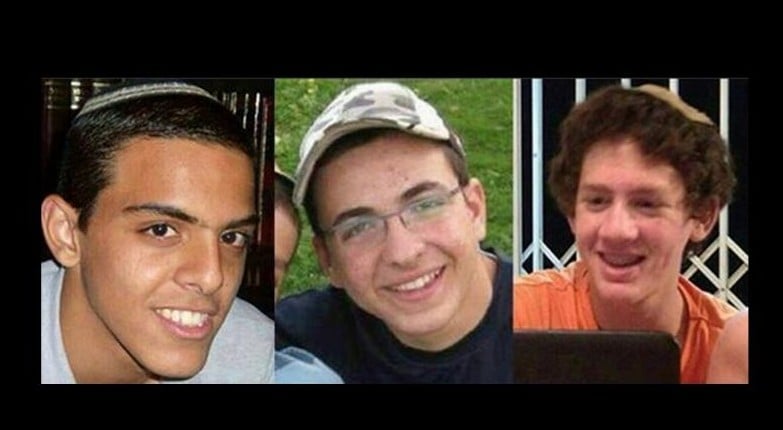
The kidnapping of Eyal Yifrach, 19, Gil-ad Shaar, 16, and Naftali Frenkel, 16, took place on a Thursday evening, June 12, at a hitchhiking post in the West Bank, and police received a call from Shaar a few minutes later. Officials said he was heard whispering, “We’ve been kidnapped,” before the call was abruptly disconnected.
However, the IDF was only informed of the kidnapping hours later, after one of the teens’ parents notified police that he had lost contact with his son. For hours, police had thought it was a prank call. A comprehensive search for the teens only was initiated the following morning.
It was later discovered that three had been shot and killed shortly after they were abducted, their bodies dumped in a field. A subsequent investigation revealed that in the original two-minute phone call, at least 10 shots could be heard.
The kidnapping set off a massive IDF operation in the West Bank, in which hundreds of Hamas members were apprehended, and led to renewed rocket fire from Hamas-controlled Gaza and the 50-day Israel-Hamas conflict of this summer, which concluded two weeks ago in an open-ended truce.
Times of Israel Staff contributed to this report.



The Times of Israel Community.