

4 things to watch at this year’s ultra-fraught AIPAC conference
In partisan US political climate, pro-Israel lobby’s confab will try to weave the complex path between Democrats and Trump-led Republicans, host Israel’s bitter election rivals too

 Add ToI as a Preferred Source on Google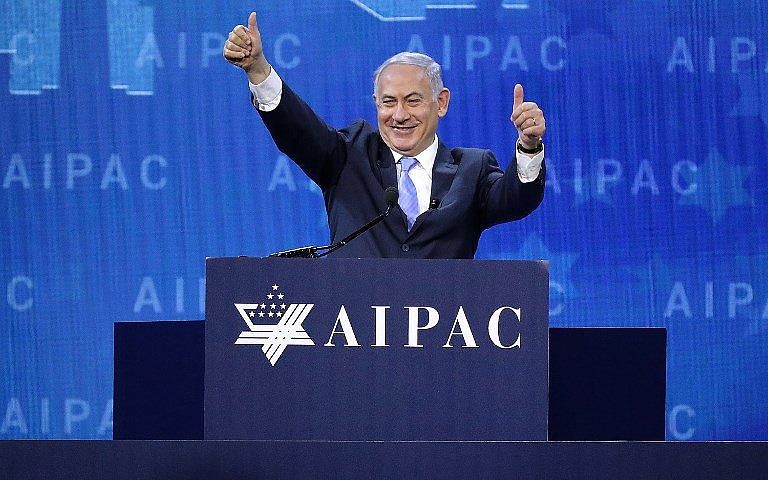
WASHINGTON (JTA) — At the AIPAC policy conference, the theme this year is “Connected for Good” — just as everything appears ready to fall apart.
The pro-Israel lobby’s annual confab begins on Sunday following weeks of vituperative exchanges between Democrats and Republicans over which party is a better home for the Jews — and ahead of an Israeli election dogged by allegations of criminal conduct on one side and political fecklessness on the other.
The American Israel Public Affairs Committee also was pulled into the storm surrounding Rep. Ilhan Omar, the Minnesota Democrat who set off an angry conversation when she appeared to use an anti-Semitic trope to accuse the lobby of buying its influence.
Here are four things to watch at AIPAC 2019.
The Trump factor
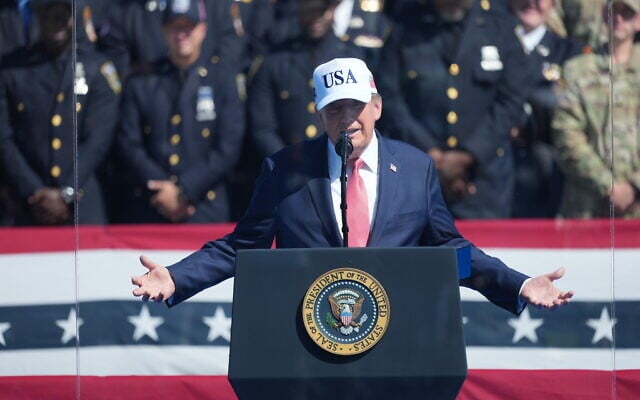
Since the last policy conference, President Donald Trump has moved the US Embassy to Jerusalem and filled the State Department position of special envoy to monitor anti-Semitism. He has made confronting Iran front and center to his Middle East policy, to the extent of effectively rescinding his planned pullout of U.S. troops from Syria, where they act as a bulwark against Iranian influence in the country. Vice President Mike Pence, Secretary of State Mike Pompeo and Ambassador to Israel David Friedman — all with long pre-Trump records of pro-Israel activism — are featured speakers.
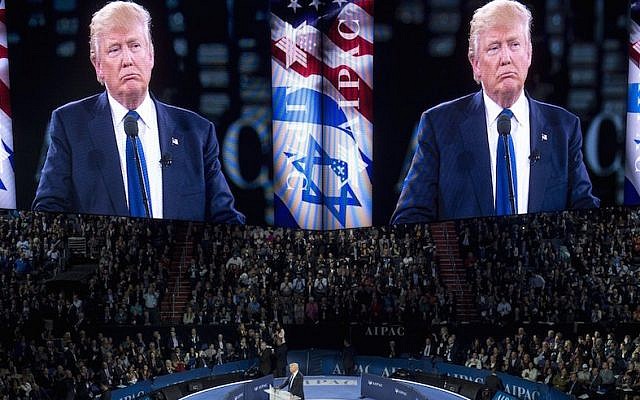
Under any other circumstances, in any other time, the close ties between a president and a sitting Israeli government would be cause for unqualified celebration. There are exigent circumstances, however. And they are … Trump.
The president’s recent broadsides against the Democratic Party as “anti-Jewish” and “anti-Israel” will be hard to accommodate at the signature yearly event of an organization that celebrates bipartisanship. How Trump comes up and how his name is received will be closely watched.
When Pence, Pompeo and Friedman celebrate their boss (as they must), do they echo his claims that pro-Israel no longer has a home among Democrats? Do top Democrats, including Sen. Chuck Schumer, D-N.Y., explicitly go after Trump and repeat their accusations that he has contributed to a climate in which a white supremacist killed 11 Jews at a Pittsburgh synagogue last year and 50 Muslims at two New Zealand mosques last week?
The Omar factor
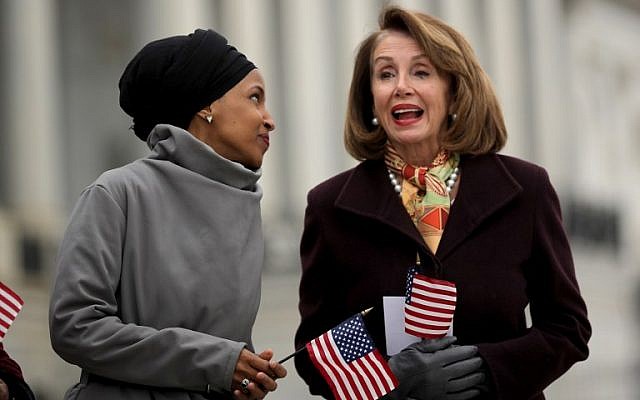
The freshman congresswoman said AIPAC money was behind pro-Israel sentiment in Congress, among other perceived anti-Semitic slanders that led to a congressional resolution earlier this month condemning anti-Semitism, Islamophobia and other hatreds. (Omar has apologized for some of her statements, including the AIPAC mention.)
A number of lawmakers close to AIPAC, including Democrats who are slated to speak at the conference, have complained that the resolution was diluted because it did not exclusively target anti-Semitism.
How does that play out at the conference? Do the Democrats bring it up? Does it come up in the annual comity-fest between the House majority and minority leaders — respectively Reps. Steny Hoyer, D-Md., and Kevin McCarthy, R-Calif.?
Rep. Nancy Pelosi, D-Calif., the House Speaker, found herself under fire from the party’s left during the Omar controversy for not doing enough to protect her from what was perceived as attacks on her fueled by Islamophobia, racism and misogyny. The right accused her of caving to progressives on the bigotry resolution. Last year at the Israeli-American Council, Pelosi effectively advised pro-Israel Democrats to ignore Omar and Rep. Rashida Tlaib, D-Mich., who embraces the boycott Israel movement. Can Pelosi afford to repeat the call?
The AIPAC factor
The lobby’s CEO, Howard Kohr, made news last year when he explicitly embraced the two-state solution at a time when both the US and Israeli governments had retreated from it.
It’s unsteady waters for AIPAC, whose policy is shaped traditionally by what the Israeli government wants done and what the American government is ready to do. Yet the group may not had much choice: American Jews continue to favor the two-state outcome, and so do the Democrats, the party that continues to command the majority of Jewish voters.
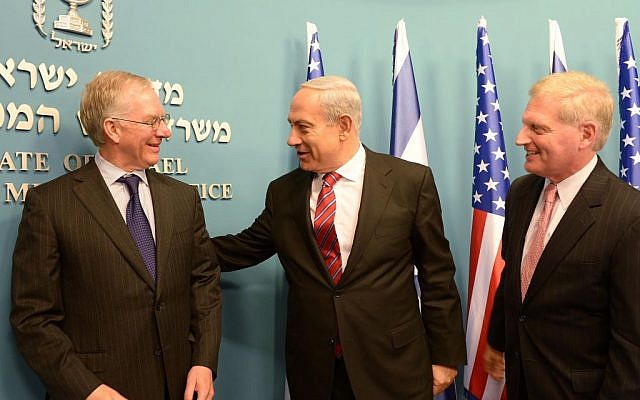
Does AIPAC continue to forge the two-state path at this year’s conference? There are signals that it does. Its website still explicitly backs the two-state solution, and a number of sidebar sessions at the conference consider how best to get there.
AIPAC has yet to set a lobbying agenda for its activists next Tuesday, the last day of the conference, but there are signals — in subtle ways — that it is opposing the administration’s decision last year to cut all funding to the Palestinians. Speaking two weeks ago at a congressional hearing on foreign aid, Kohr said that AIPAC did not oppose assistance to the Palestinians as long as it was not diverted to the Palestinian Authority.
“The idea of trying to find ways to continue to empower Palestinians in the economic sphere and to create economic opportunity is a thing we want to do,” Kohr said.
That, in essence, is a call for the return to the status quo ante. The State Department, when it distributed aid to the Palestinians, included safeguards that made sure funds did not reach government hands.
The Israel factor
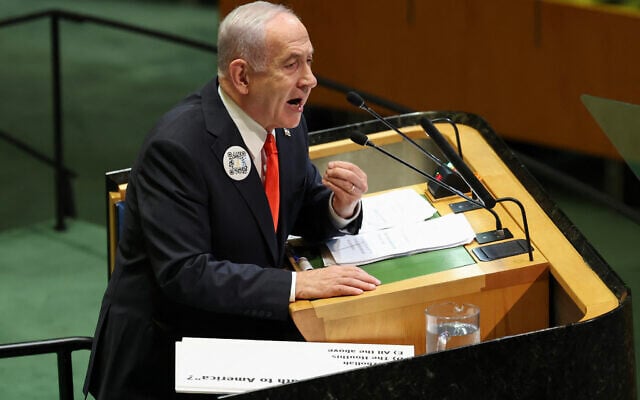
Prime Minister Benjamin Netanyahu is addressing the conference just two weeks ahead of the Israeli election. So is his rival, Benny Gantz, who heads the newly formed centrist Blue and White party.
The corruption allegations lapping at the prime minister barely register among AIPAC activists, who in past years have appreciated Netanyahu’s charisma and English fluency. What does Gantz, little known outside of Israel, do to best Bibi on his home court?
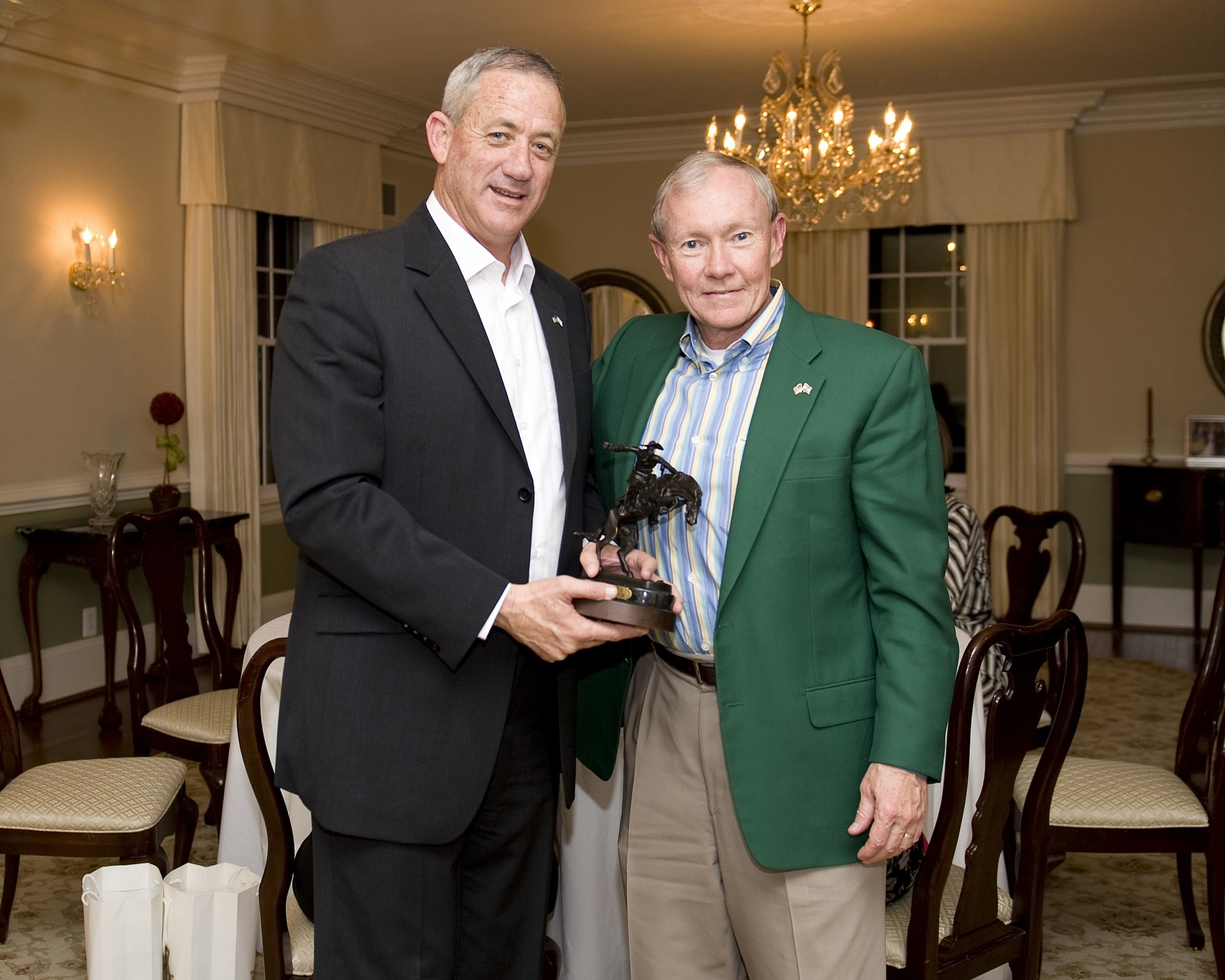
Gantz’s party favors Jewish religious pluralism, a favorite cause of Diaspora Jews, while Netanyahu has angered the non-Orthodox Diaspora majority by reneging on deals that would advance more equal treatment for non-Orthodox Jews. Netanyahu also earned a rare rebuke from AIPAC when he brokered a deal that could bring a far-right party, known as Otzma Yehudit (Jewish Power,) into the Knesset. Gantz has repudiated Jewish Power.





The Times of Israel Community.