

As talks founder again, Netanyahu caught between Gantz and right-wing base
A new government was in hand: Likud had won on annexation, Blue and White on judicial reforms; but a last-minute outcry from the PM’s rightist flank forced a backtrack

 Add ToI as a Preferred Source on Google
Haviv Rettig Gur is The Times of Israel's senior analyst.

Israel came within inches of a new government on Monday afternoon.
Starting at roughly 2:30 p.m., both Likud and Blue and White began to shift from the usual run of strident talking points about their unbending principles to assurances that a coalition agreement — and with it, Israel’s long-delayed 35th Government — would be signed and sealed by the end of the day.
Likud insisted it had won. So did Blue and White. As details leaked from the negotiating room, the grand bargain struck between the two parties became clear.
Likud had won backing for West Bank annexation; Blue and White leader Benny Gantz’s demand for a veto on the move was rescinded. Gantz had won the power to reverse right-wing reforms of the legal system and judiciary, and the removal of Likud’s demand for a veto over judicial appointments.
Both sides could happily claim victory.

Blue and White understandably prioritized the judiciary and the legal system. The party was united on the question of pushing back against what it viewed as the right’s “anti-democratic” legal reforms; it was not similarly united in opposing annexation. Some limited annexation, especially in the large settlement blocs already earmarked for Israel in the two-decade-old Clinton parameters, were well within the consensus position in the party.
(To be sure, the Clinton White House saw the proposed lines as the final results of a bilateral peace process that ensured a Palestinian state, land swaps and other key concessions by Israel, and not as a unilateral move without benefit to the Palestinians; but with hope for a process with the Palestinians growing moribund, there is little opposition in Blue and White to some measure of annexation in some parts of the West Bank.)
Likud understandably prioritized annexation. Its leader Benjamin Netanyahu had made it a key campaign promise, and his party’s rank and file viewed the Trump years — and, crucially, the next six months, before Donald Trump faces a post-pandemic American electorate in November — as a moment of opportunity the likes of which had never been seen before and may not soon return. It was a rallying cry that Netanyahu believed his far-right flank could not resist, and would be sufficient recompense to the Yamina party for the cabinet posts he could no longer give them. It would mark his long-term legacy, he believes, as well as hold together his right-wing bloc when the next election rolls around.
That both sides were accused by their political camps of “surrendering” — Blue and White by former partner Yesh Atid MK Ofer Shelah, Likud by Yamina — only seemed to buttress the notion that a real and painful compromise had been achieved by two willing partners.

The optimism lasted just four hours. By 7 p.m., Likud’s negotiators had received new instructions from Netanyahu: Reopen negotiations on Likud’s now-abandoned demand for a veto on the appointment of judges.
Gantz, incensed at the backtrack, ordered the negotiators to walk away from the table and issued a condemnation: “After understandings had been reached on all issues, Likud asked to renegotiate the procedures of the Judicial Appointments Committee. We have stopped negotiations. We won’t allow any change in the Judicial Appointments Committee’s operations or any harm to our democracy.”
Rebellion on the right
Netanyahu’s backtrack reveals a great deal about the nature and limits of his leadership.
For years, the left has accused Netanyahu of leading a populist rightward shift in Israeli politics. And for years, Netanyahu has believed he wasn’t the cause of that shift but like any good politician was responding and adapting to it.
On Monday evening, a natural experiment was underway that seemed to lean decisively in Netanyahu’s favor on the question.
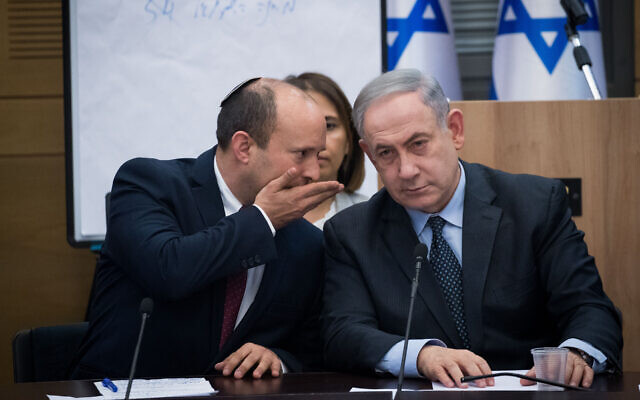
Netanyahu had his coalition, ending an 18-month political melodrama that has seen three consecutive elections and growing partisan rancor. He could finally get the government and Knesset back to full-time work battling the pandemic and its economic fallout.
But as news of the compromises in the new agreement leaked, the bitterness it sparked among Netanyahu’s supposedly most loyal and fervent supporters surprised even him.
“I feel like a betrayed sucker,” declared right-wing pundit Boaz Golan, who anchors a daily broadcast on the right-wing Channel 20, founded the far-right 0404 news site, and is considered close and loyal to the Netanyahu family.
“This poker club” — the new government — “will once again inflict on us the leftism of Israel’s judges,” he accused. The government “is doing us a favor that it’s even talking about sovereignty…. It was an ugly little spin they’ve taken us on…Now we have to keep our heads down and once again receive the permanent and unassailable prime minister of Israel — Mister High Court…. For shame!”
Golan was one of many pundits and Likud activists who came out publicly against Netanyahu’s coalition agreement, and in similarly visceral terms.
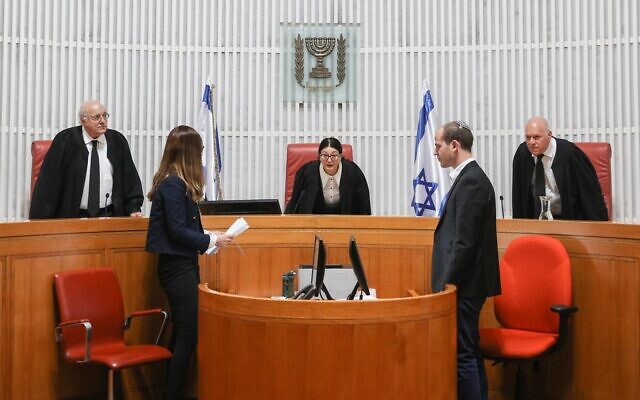
Yamina, the party that should be celebrating most loudly a new government that has committed to some measure of Israeli annexation in the West Bank, also lashed Netanyahu’s “surrender.”
“According to media reports,” the party’s statement read — an implicit complaint about the fact that Netanyahu has yet to negotiate with his right-wing partners — “in the developing agreement Netanyahu has completely surrendered the legal issue to Blue and White. [Former chief justice] Aharon Barak and his judicial revolution are returning to center stage and will continue to appoint its proteges to the Supreme Court…. In ‘exchange’ Netanyahu got some vague statement about sovereignty that says nothing, and worse, delays annexation [by roughly three months] till it’s too close to the American elections, casting a shadow over the possibility of receiving American agreement to the move.”
Netanyahu must condition Gantz’s turn as premier on the annexation, the party insisted, “bringing to the cabinet a decision on applying sovereignty to all settlements in Judea and Samaria before the rotation laws are voted on in the Knesset.” Otherwise, “it’s clear we’ll be left without sovereignty.”
It was a strange position for the famously wily Netanyahu: his most reliable right-wing allies arguing not only that he gave up too much in the negotiations, but that he was outfoxed by the neophyte Gantz.
Netanyahu folded quickly — so quickly that some in Blue and White wondered if Monday’s earlier achievements at the negotiating table were just a delaying tactic by Netanyahu, a way to force Gantz to run out his time as PM-designate, after which the baton is handed to Netanyahu and Netanyahu’s negotiating leverage improves.

While the suspicion is understandable, that’s an unlikely explanation for Netanyahu’s retreat. True, Gantz loses some leverage on Wednesday when the Knesset begins its Passover holiday break and Gantz’s threat of immediately passing legislation to prevent an indicted MK like Netanyahu from becoming premier evaporates.
But it’s unlikely that Netanyahu would play such a delaying game in a way that would anger his base. He could have simply delayed the talks without explanation, and without sparking that anger.
Meanwhile, Gantz’s main source of leverage — his position as Knesset speaker — has not changed. Netanyahu’s many enemies in parliament won’t have any trouble placing anti-Netanyahu bills once more on the plenum’s docket after the parliament returns from the break.
The simpler explanation is the more likely: Netanyahu discovered that his loyal base isn’t loyal to him personally, but to the ideas and policies long advocated by the ideological right, especially when it comes to reforming the judiciary and legal system.
In theory, Netanyahu should have the upper hand in the negotiations. But throughout the past few weeks of talks, Gantz has played his more limited hand skillfully, ensuring that Netanyahu can’t easily abandon either him or the coalition talks.

The agreement nearly signed on Monday bears ample evidence of Gantz’s success. It stipulates that Gantz must be voted in as the next-in-line prime minister not in 18 months when his turn rolls around — and when neither Netanyahu nor any other Likud MK, nor even Gantz’s former partners in Yesh Atid or Telem, would have much reason to vote for him — but now, at the same time as the Knesset votes in Netanyahu as premier, in a package deal on which both men’s terms in office depend.
The agreement also contains a mechanism ensuring Gantz at least a few months as premier even if Netanyahu engineers a budget crisis to topple the government early. Whichever of the two men fails to vote for the state budget bill — failure to pass a budget automatically triggers new elections by law — forfeits the prime minister’s chair during the interim government. If Netanyahu topples the government around March 2021, as the deadline for the 2021 budget’s passage rolls around, in order to avoid handing Gantz the prime minister’s chair in October, then Gantz automatically becomes premier for the 90 days until election day, as well as any time it takes to form the next government.
Those kinds of protections may be partly responsible for Netanyahu’s current predicament. They have convinced some right-wing pundits that Netanyahu may not be trying to trick his rival this time, and Gantz may well sit in the prime minister’s chair some day not too far away. That has naturally led to a more fervent focus and greater concern over the next government’s policy commitments, as articulated in the coalition agreement.
Everything now depends on Netanyahu’s priorities and the political timetable that guides his actions.
If he seeks an emergency government to help stabilize the country during the pandemic, Gantz offers him a stable path out of the political impasse. Gantz’s 19 seats (Blue and White’s 15, Labor’s 2 and Derech Eretz’s 2) mean Netanyahu can ignore Yamina’s threats of heading to the opposition. With the exception of those issues where Gantz obtained explicit commitments in the coalition talks, Netanyahu will probably be more secure and powerful in a unity government than in a narrow right-wing one.
If, however, his eye is focused on the next election, whether it comes before October 2021, upending his promise to Gantz, or at the end of Gantz’s term in April 2023, then he will prioritize preserving his alliance with Yamina and shoring up the fragile loyalty of his angry base.
An answer is likely to come soon. The Knesset and to some extent the news cycle will both go into hibernation in the hours leading up to Wednesday night’s Passover Seder, but the two parties’ negotiators probably won’t. Delaying the signing of an agreement till Wednesday earns Netanyahu two mercifully back-to-back political blackouts, Passover and Shabbat, that he can reasonably hope will blunt the potential for a political storm. That’s assuming, of course, that he actually wants an agreement.




The Times of Israel Community.