Outgoing Chief Commissioner Ofrah Klinger was the second-ever woman to head Israel’s prisons, and the first appointed from within the organization’s ranks
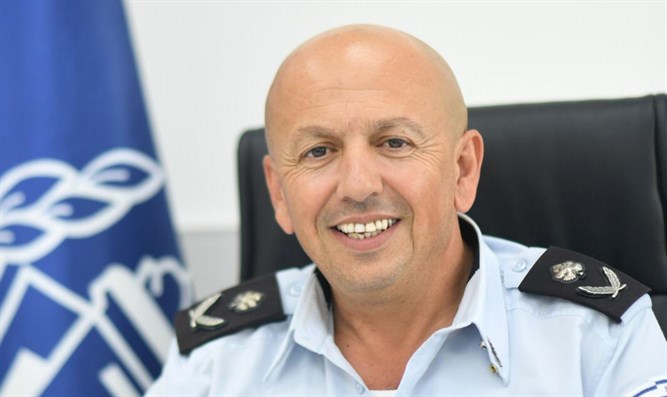
Israel Prisons Service acting chief commissioner Asher Vaknin. (Courtesy IPS)
Cabinet ministers on Thursday approved a temporary head for Israel’s prisons service amid continuing delays in nominating a permanent candidate.
Commissioner Asher Vaknin, the current deputy head of the Israel Prisons Service, will take over as acting chief of the service on January 1, the day after Chief Commissioner Ofrah Klinger finishes her three-year term.
Vaknin’s appointment will last until the end of February, when the cabinet must either appoint a new, permanent chief or renew the temporary appointment.
The appointment process may be delayed by a few months after the Knesset voted to dissolve on Wednesday and go to elections on April 9. Outgoing governments traditionally avoid senior appointments in the public service during an election campaign.
Prisons Service Commissioner Ofra Klinger attends an inauguration ceremony for newly appointed Israel Defense Force judges at the President’s residence in Jerusalem on August 15, 2016. (Yonatan Sindel/Flash90)
Klinger, the second woman ever to head the prisons service — Orit Adato led the organization from 2000 to 2003 — and the first-ever head to be appointed from within the organization’s ranks, will leave her position after 32 years in public service.
Get The Times of Israel's Daily Editionby email and never miss our top stories
Vaknin has served as her deputy since 2017, before which he was head of Megiddo Prison and Ofer Prison.
Vaknin came to the Prisons Service from the Military Police, where he served as head of the army’s Jail 6 and commanded the Military Police’s training school before retiring with the rank of lieutenant colonel.
Advertisement
Help us report truthfully on social media
As a multimedia journalist, my job is to take the quality, fact-based journalism produced by The Times of Israel newsroom and make it accessible across every platform — from Instagram posts to podcasts to short-form videos.
This is how many, especially young people, consume news these days. But misinformation is rampant on social media. Our team at ToI produces accurate, responsible short-form reporting on Israel and the Jewish world.
If you believe in the importance of factual social media journalism, please consider joining our reader support group, The Times of Israel Community. Your financial support is essential to sustain responsible multimedia reporting.
We’re really pleased that you’ve read X Times of Israel articles in the past month.
That’s why we started the Times of Israel - to provide discerning readers like you with must-read coverage of Israel and the Jewish world.
So now we have a request. Unlike other news outlets, we haven’t put up a paywall. But as the journalism we do is costly, we invite readers for whom The Times of Israel has become important to help support our work by joining The Times of Israel Community.
For as little as $6 a month you can help support our quality journalism while enjoying The Times of Israel AD-FREE, as well as accessing exclusive content available only to Times of Israel Community members.
Thank you, David Horovitz, Founding Editor of The Times of Israel


 Add ToI as a Preferred Source on Google