

MK Naama Lazimi wins No. 2 spot after Yair Golan in left-wing Democrats’ primary
Party says 97,000 of 112,376 registered members cast ballots in digital vote; party leader predicts list will draw ‘more than a million voters’; Reform Rabbi Kariv comes in third
 Add ToI as a Preferred Source on Google
Ariela Karmel is a political correspondent at The Times of Israel. She previously reported for Calcalist and Haaretz. She holds an MA in Middle Eastern and African History from Tel Aviv University and a BA in Political Science from the University of British Columbia.

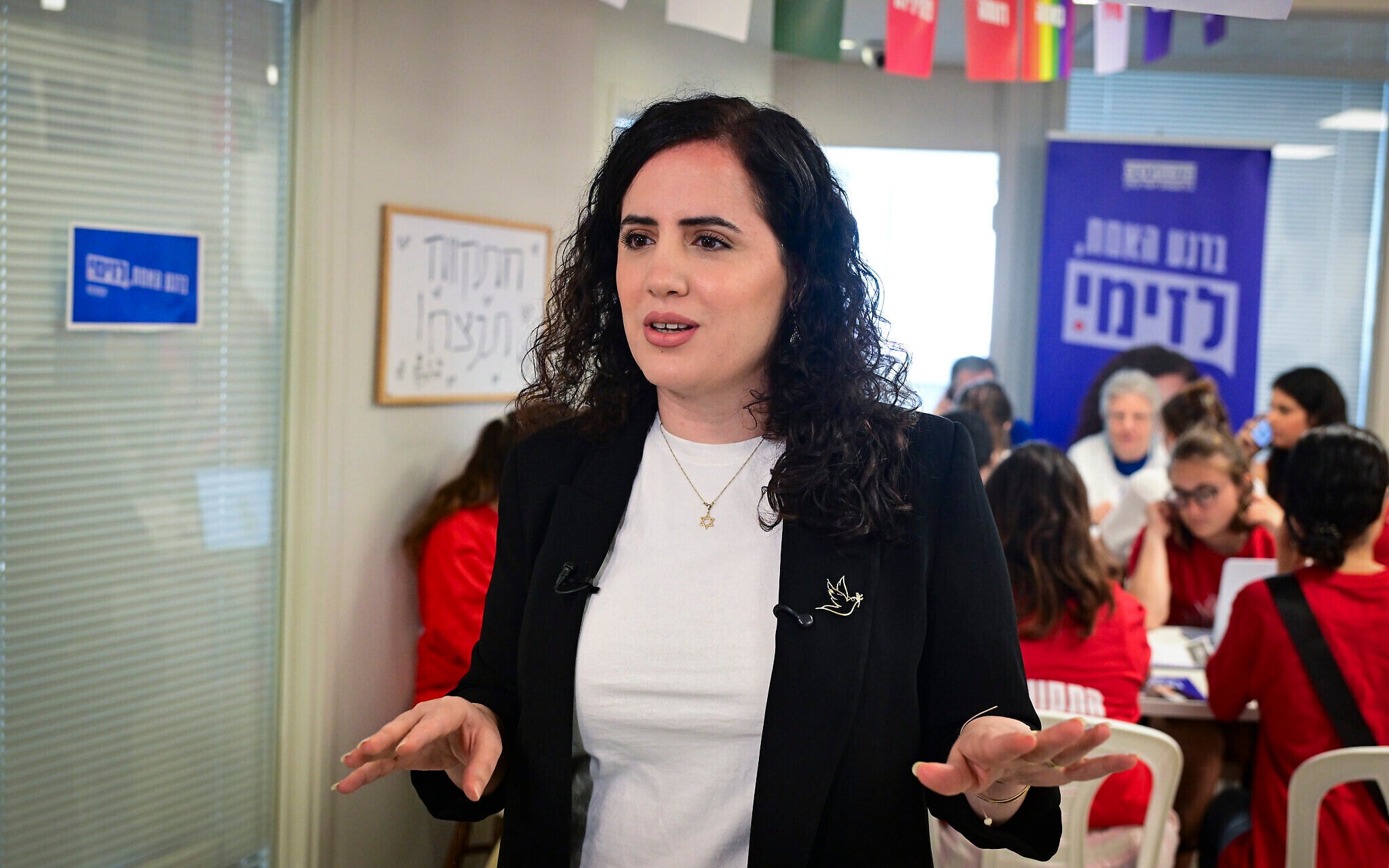
The Democrats party held its primary election Monday, with MK Naama Lazimi taking the number-two spot on the left-wing party’s electoral slate, following leader Yair Golan.
Lazimi is followed by MK Gilad Kariv, a Reform rabbi; MK Efrat Rayten; liberal activist Yaya Fink; former Meretz MK Gaby Lasky; anti-government activist and reservist Omri Ronen; former Meretz MK Michal Rozin; anti-government protest leader Moshe Radman; Muslim Arab coexistence advocate Somaya Bashir; and former Air Force general Nimrod Sheffer, who round out the top 10 elected candidates.
Golan was elected leader of the party in a separate race in 2024 when it formed, following the alliance of the Labor and Meretz parties, and is therefore not competing in today’s primaries. This is the new party’s first-ever primary, and the first election in which it is competing.
Labor, the center-left party whose predecessors once dominated Israeli politics, held primaries throughout its history, as did the left-wing Meretz.
Twenty candidates were elected in Monday’s vote from a field of 51 contenders. The party is expected to win 10 or 11 seats in the 120-seat Knesset ahead of the October 27 election, according to consistent polling by Hebrew media, including The Times of Israel’s sister site, Zman Yisrael.
According to the party, 97,000 of its 112,376 registered members cast ballots, marking an 86 percent turnout in what it described as the first fully online primary in Israeli politics, conducted using a secure digital voting system.

Lazimi has emerged as one of the more prominent and recognizable left-wing lawmakers in Israel and was a staple at anti-government protests for several years, including weekly rallies organized by the Hostages and Missing Families Forum. She has also been physically roughed up and verbally accosted by police officers at a number of protests, and has been the subject of intense criticism, and even threats of violence, from coalition lawmakers.
“Full of gratitude and thrilled,” Lazimi posted on social media following the results of the vote. “My eternal thanks for the trust and partnership.”
Golan vowed that the first act of any government his party joins will be to establish a state commission of inquiry into the failures surrounding the October 7, 2023, Hamas attack, followed by the repeal of “every law tied to the judicial overhaul.”
“This is democracy at its best — alive, vibrant, and ready for battle. And the team standing behind me here tonight will be the choice on the ballot of more than a million voters,” said Golan, unveiling the Knesset slate in Tel Aviv.
“Without strong and influential Democrats in the next government, the entire bloc for change will very quickly slide to the right,” he continued, adding that “this time, we cannot give in, and we have no intention of compromising on our core principles.”
Prime Minister Benjamin Netanyahu has resisted forming a state commission of inquiry, arguing that the judges running it would be biased against him, despite most Israelis seeking such a probe. The judicial overhaul, which aims to weaken Israel’s courts, has also been a priority of his government.

The Democrats are one of only a handful of Israeli parties to use primaries in selecting a Knesset slate, alongside Finance Minister Bezalel Smotrich’s Religious Zionism party.
While Likud also elects most of its candidates through a primary, Prime Minister Benjamin Netanyahu will handpick eight candidates on the party’s list under rules approved this week. Meanwhile, the Arab-majority Hadash party selects its candidates through a vote of party delegates rather than the full membership.
In most other parties, including The Democrats’ allies in the Zionist anti-Netanyahu opposition bloc, the order of candidates is determined by the party leadership or other internal party institutions.
In its announcement, the Democrats said that the first meeting of the party’s new list will be held Tuesday afternoon at Expo Tel Aviv.








The Times of Israel Community.