

Slowed by Hamas’s grip and Israeli politics, Gaza plan advancing in ‘baby steps,’ officials say
Progress on framework remains slow as meager international forces start to arrive; upcoming election makes Israeli leaders extra-cautious, to frustration of some Arab partners

 Add ToI as a Preferred Source on Google
Nava Freiberg is The Times of Israel's deputy diplomatic correspondent.
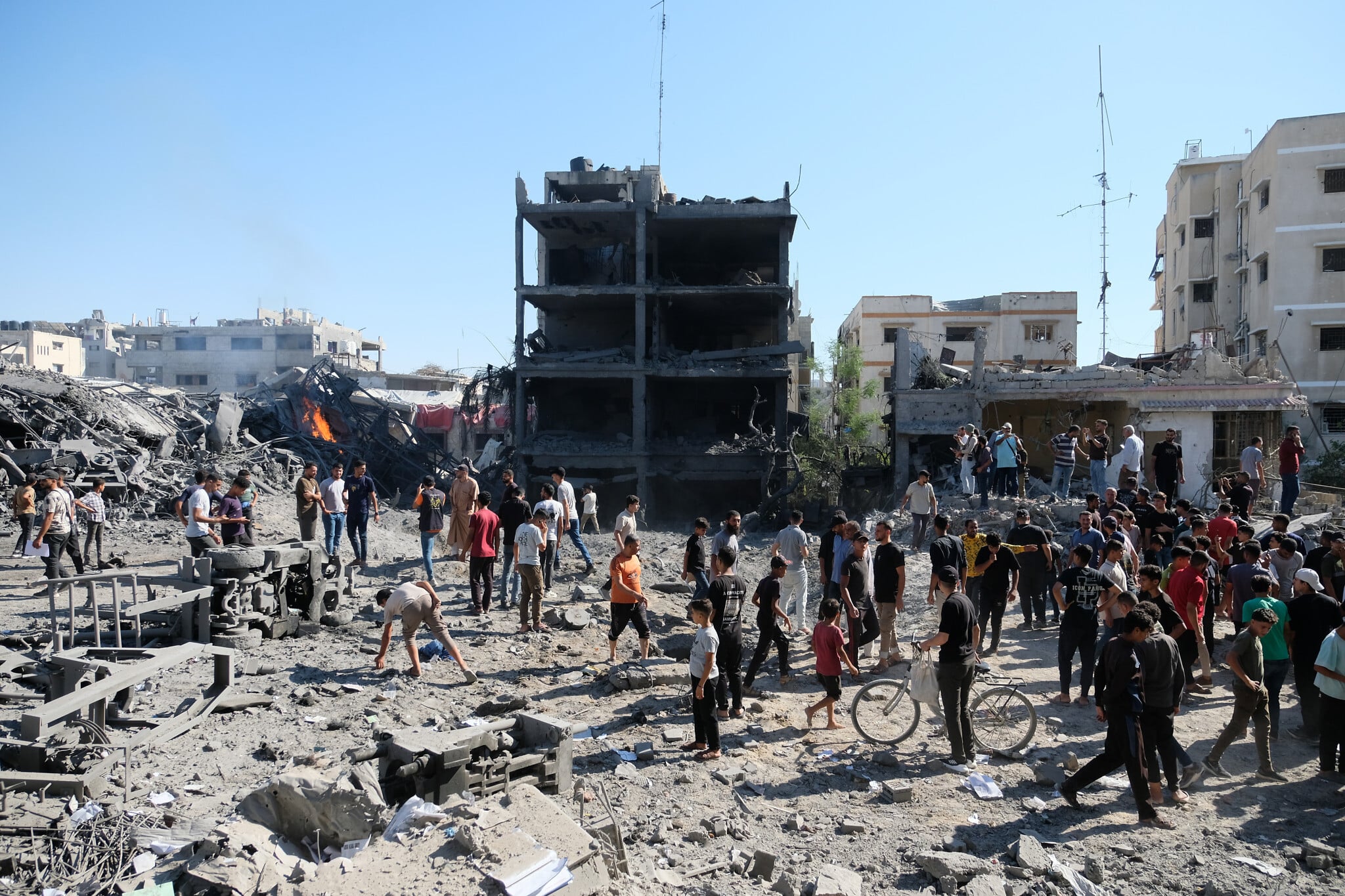
More than nine months after US President Donald Trump’s Gaza peace plan was hailed as an end to the war in the Strip and the first step toward its reconstruction, the framework is only moving forward in “baby steps,” five officials involved in or familiar with the planning told The Times of Israel.
Hamas is still refusing to disarm, which it is meant to start doing before reconstruction begins. In light of that, the US-backed Board of Peace, mediators, and the international community are increasingly focused on a workaround that would secure areas outside the terror group’s control, where aid, the establishment of temporary housing, and, eventually, reconstruction can begin.
But even that workaround is not expected to move quickly, as officials face challenges stemming both from Hamas’s grip on power and Israeli hesitance ahead of its October election, according to two Israeli officials, two Arab diplomats, and a US official.
Hamas’s dissolution of its emergency government this month, in favor of a new US-backed technocratic committee, was seen as a means of creating pressure on Israel, rather than as signaling a real readiness to lay down its arms and relinquish authority, the US and Israeli officials said.
Israel, in the meantime, has yet to approve procedural measures surrounding some parts of the plan — such as the deployment of foreign peacekeeping troops, the vetting of a new Palestinian police force, and humanitarian processes — which officials say are becoming harder to advance as Prime Minister Benjamin Netanyahu’s government seeks to take a more hardline approach during the election campaign.
Still, the plan is moving forward, albeit in “baby steps,” one of the Israeli officials asserted, while admitting that meaningful progress on Hamas’s disarmament, deradicalization, and widespread reconstruction could still be years down the line.
International Stabilization Force ‘creeping toward’ launch
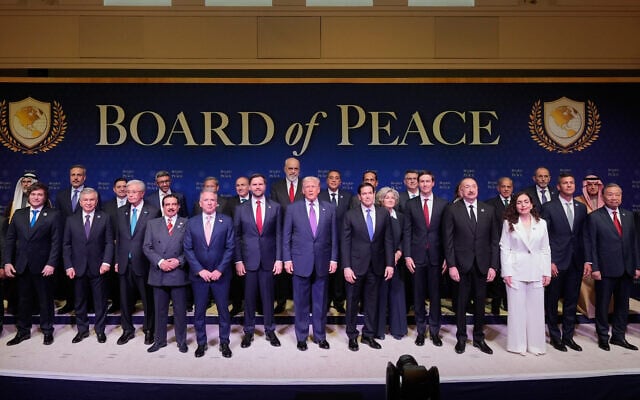
Talks with Hamas in Cairo last week made incremental progress, with consensus reached on almost all 15 points of the Board of Peace’s roadmap for disarmament, a senior Arab diplomat said, while adding that major disagreements remain regarding the exact mechanisms for Hamas laying down its weapons.
In the meantime, the board is invoking Article 17 of Trump’s 20-point Gaza plan, which dictates that if Hamas delays or rejects the framework, certain steps will proceed in “terror-free areas handed over from the IDF” to the International Stabilization Force meant to secure the Strip under the framework.
“Hamas don’t get a veto” on the plan by not agreeing to disarm, the US official said, explaining that the board’s current goal is to draw Palestinian civilians out of the territory controlled by Hamas, where most of them live.
That strategy would begin with a humanitarian pilot zone in the area of the flattened southern city of Rafah, where the fledgling ISF is meant to first deploy along the borders.
The force faces challenges. Originally envisioned to include some 20,000 troops, it is far under that mark, though small delegations from countries such as Morocco, Albania, Kazakhstan, and Kosovo have arrived in Israel in recent weeks, operating out of a base in the southern city of Kiryat Gat.
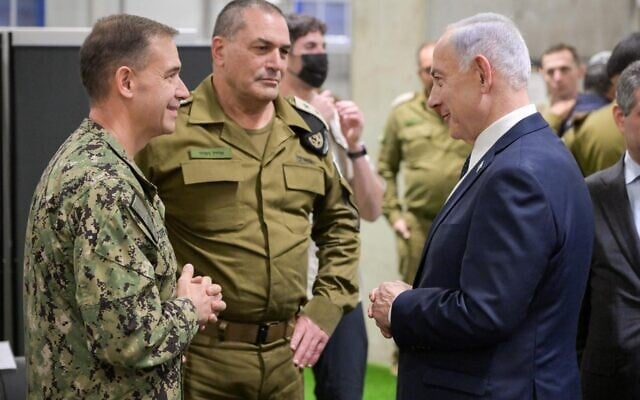
In another sign of limited progress, the Civil-Military Coordination Center in Kiryat Gat has been rebranded as the International Gaza Support Center, as the ISF track becomes more central, officials said.
Some civilian representatives remain, but the structure is increasingly focused on military coordination and logistics as it undergoes a “reconfiguration,” one Israeli official said.
Morocco, which formally signed an agreement to participate in the ISF last week, is slated to be the first among contributing countries to actually deploy troops in Gaza, with the Board of Peace and ISF leadership hailing its planned deployment of senior military officers, gendarmerie, and police personnel, as well as the creation of a military field hospital.
But the total number of those Moroccan troops is estimated to be 20 or fewer.
And while Indonesia had been prepared to send up to 8,000 troops for the force earlier this year, it backed out in March, during the US-Israeli war against Iran amid domestic pushback and concerns about the plan’s progress.
An Israeli official said Jakarta, as well as other countries, had not ruled out the possibility of sending troops in the future, but was waiting to see how initial deployments go as the sides “creep toward” implementation.
Morocco today formally signed its Participating Country Agreement with the International Stabilization Force. Moroccan forces will support humanitarian aid delivery to Gaza and help train the Palestinian Police Force. The Board of Peace and the #ISF thank His Majesty King… pic.twitter.com/FKE1ILWKCY
— Board of Peace (@BoardOfPeace) July 15, 2026
The Arab diplomats, however, predicted that no major progress on the humanitarian zone would begin until after Israel’s elections, amid concern within the government over the optics of facilitating Gaza relief projects with Hamas still in power in part of the Strip.
Among the steps that Israel has dragged its feet on advancing, according to the Arab diplomats, has been the signing of a Status of Forces Agreement with each ISF-contributing country to establish the legal guardrails surrounding foreign military personnel stationed abroad. ISF troops cannot deploy without those agreements being signed.
The Israeli officials acknowledged that SOFA frameworks were still not signed and admitted that the election period has complicated approvals, but one official said they expected the agreements would be approved in the Israeli cabinet before elections take place.
Israel maintains military threat
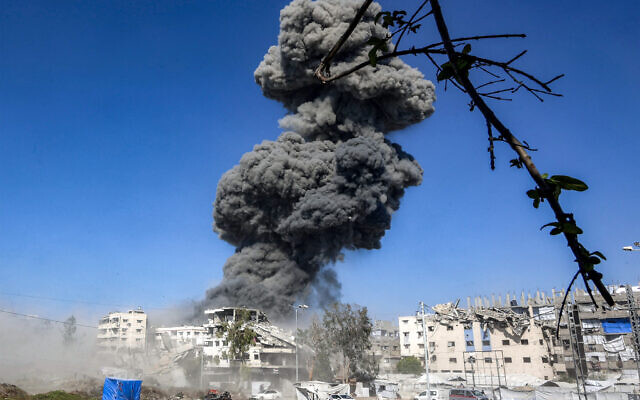
While mediators continue to push for the plan’s advancement, the threat of IDF military force against Hamas remains intact, the Israeli officials said. More than 1,000 people have been killed in Gaza since the ceasefire was signed, according to Hamas-linked officials, and Israel has recently stepped up its campaign against the terror group’s operatives.
Israel’s Central Command chief Maj. Gen. Avi Bluth recently stated that Israel currently controls over 60 percent of the Strip — well beyond the portion of the enclave that Israel was allowed to temporarily continue holding as part of an October 2025 ceasefire deal with Hamas.
In May, Netanyahu said that he ordered the IDF to take control of 70% of the Gaza Strip. At the start of the truce, the military controlled around 53% of the war-torn Palestinian enclave, with Hamas controlling the other 47%, where nearly all of the Strip’s two million residents live.
The longer [Hamas refuses to engage with the plan], the more Israeli activities are going to increase.
One of the Israeli officials described Netanyahu’s call to expand Israeli control to 70 percent as a threat aimed at maintaining Israel’s military leverage over Hamas if it refuses to disarm.
The US official said that while the Board of Peace does not formally authorize Israeli military action or threaten Hamas on Israel’s behalf, it has made clear to the terror group that refusal to engage with the disarmament roadmap could lead to more Israeli military pressure.
“The longer [Hamas refuses to engage with the plan], the more Israeli activities are going to increase,” the official said.
Hamas seeks integration into technocratic body
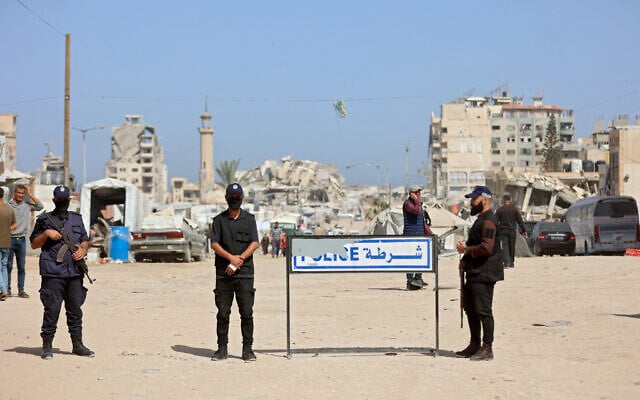
Hamas pushed in last week’s talks for its thousands of civil servants, including members of its civil police force, to either be folded into the technocratic body, the National Committee for the Administration of Gaza, or be compensated in some fashion, the senior Arab diplomat said.
Israel does not distinguish between the military wing of Hamas and the terror group’s police and internal security forces, which it has repeatedly targeted throughout its fighting in Gaza.
The Israeli official pushed back against the Hamas police being integrated into the NCAG police force, but did not rule out the possibility of non-security civil servants previously paid by the Hamas-run government eventually being included in low-level committee roles.
The second Arab diplomat argued that the proposed police force is central to creating an alternative to both Hamas rule and Israeli military control, but that Israel has complicated the process.
“The idea is to inject another armed force [into Gaza], which is the police, which the Israelis are making complicated because they don’t want to move forward,” the diplomat charged.
Many officials involved in the process have been frustrated by a perceived lack of cooperation from Israel, the diplomat said, arguing that the Israeli government is deliberately slowing implementation, fearing domestic backlash during the election campaign.
The US official, however, described “pretty good alignment” with Israel on the broad direction of the plan. He also acknowledged that Israel’s approval of many elements of the plan is practically indispensable — from bringing in equipment and contractors to deploying the ISF and standing up the new police force.
Official Press Release
The National Committee for Administration of Gaza (NCAG) Unveils Comprehensive Recovery Programme to Donors at Brussels Conference, Reiterates Unwavering Readiness to Steward the Next Phase
Brussels – Dr. Ali Shaath, Chief Commissioner of NCAG, took part… pic.twitter.com/sWNPowiKYy
— اللجنة الوطنية لإدارة غزة – NCAG (@NCAG) July 15, 2026
Budget and funding issues also continue to complicate matters, officials said.
Senior officials from the Board of Peace and ISF Commander Jasper Jeffers held meetings last week on Capitol Hill with staff from the US House and Senate foreign affairs and appropriations committees as they sought $200 million in funds for the peacekeeping body, a congressional aide told The Times of Israel.
The officials provided updates on their progress with the initiative and tried to provide more transparency about where things stand amid concerns about a lack of progress, the aide said.
Also last week, senior Palestinian Authority and Board of Peace officials met on the sidelines of a donor gathering in Brussels to discuss coordination on Gaza’s recovery and reconstruction, welcoming a newly launched European Union initiative expected to provide some $1 billion to support Gaza’s recovery efforts.
The Israeli officials stressed that Jerusalem remains committed to the Board of Peace’s vision, even if progress was slower than initially hoped.
“Our collective job is to make sure that the trajectory continues to be upward in the future, even if it is much milder,” one official said.
Jacob Magid contributed to this report.







The Times of Israel Community.