

Cross-border tensions: 7 things to know for April 11
It seems that the pressure-cooker situation in Syria is about to blow, leaving local media fearful as to whether the Jewish state will be dragged into a war in the north
 Add ToI as a Preferred Source on Google
Adiv Sterman is a breaking news editor at The Times of Israel.
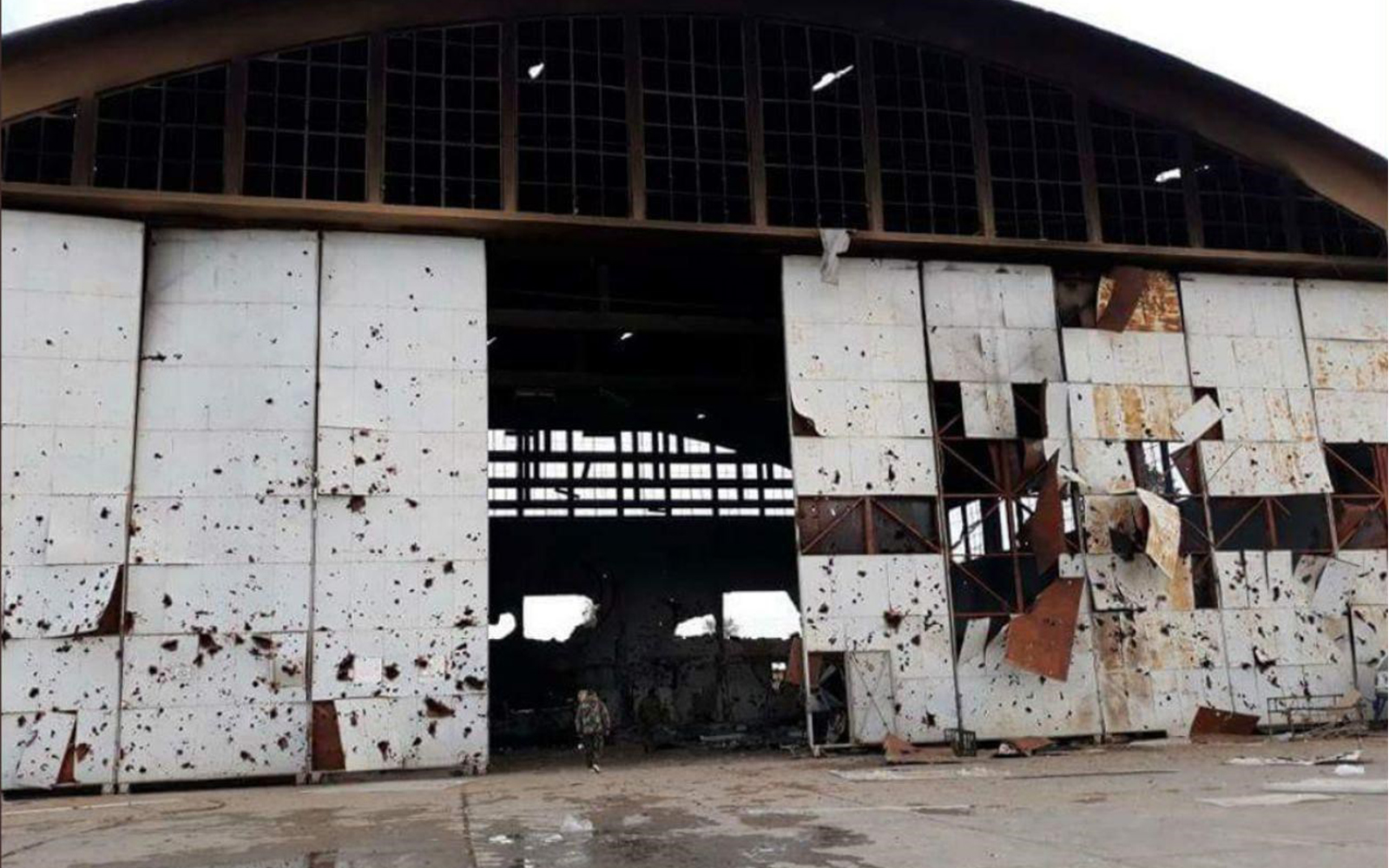
It seems that the pressure-cooker situation in Syria is about to blow, leaving local media to ponder with concern whether the Jewish state will be dragged into a war in the north.
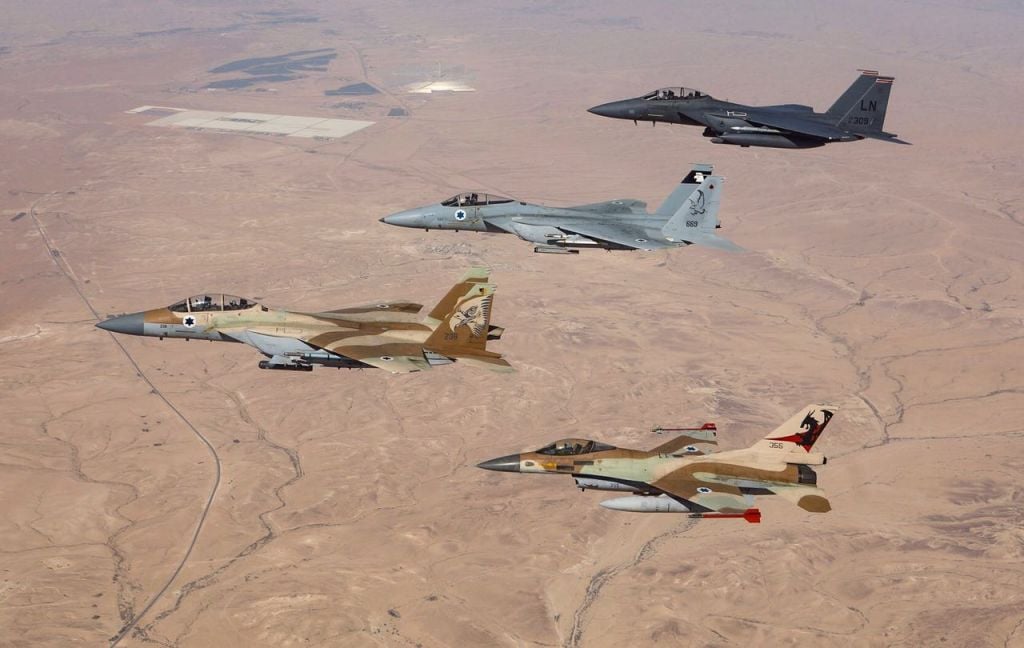
1. All eyes in Israel are looking north amid fears of open confrontation with Iran following an alleged strike by the Jewish state on a Syrian airbase which killed at least 14 people, including seven Iranian military personnel.
- Russia, Syria, Iran and the United States have all claimed that Israel carried out the predawn Monday missile barrage on the T-4 Air Base near Palmyra. Israeli officials, however, refused to comment on the strike.
- A report on Hadashot TV news, quoting what it said were numerous foreign reports, said that the target of the attack was some type of “advanced systems” that could have complicated or undermined Israeli air superiority in the skies of Lebanon and Syria.
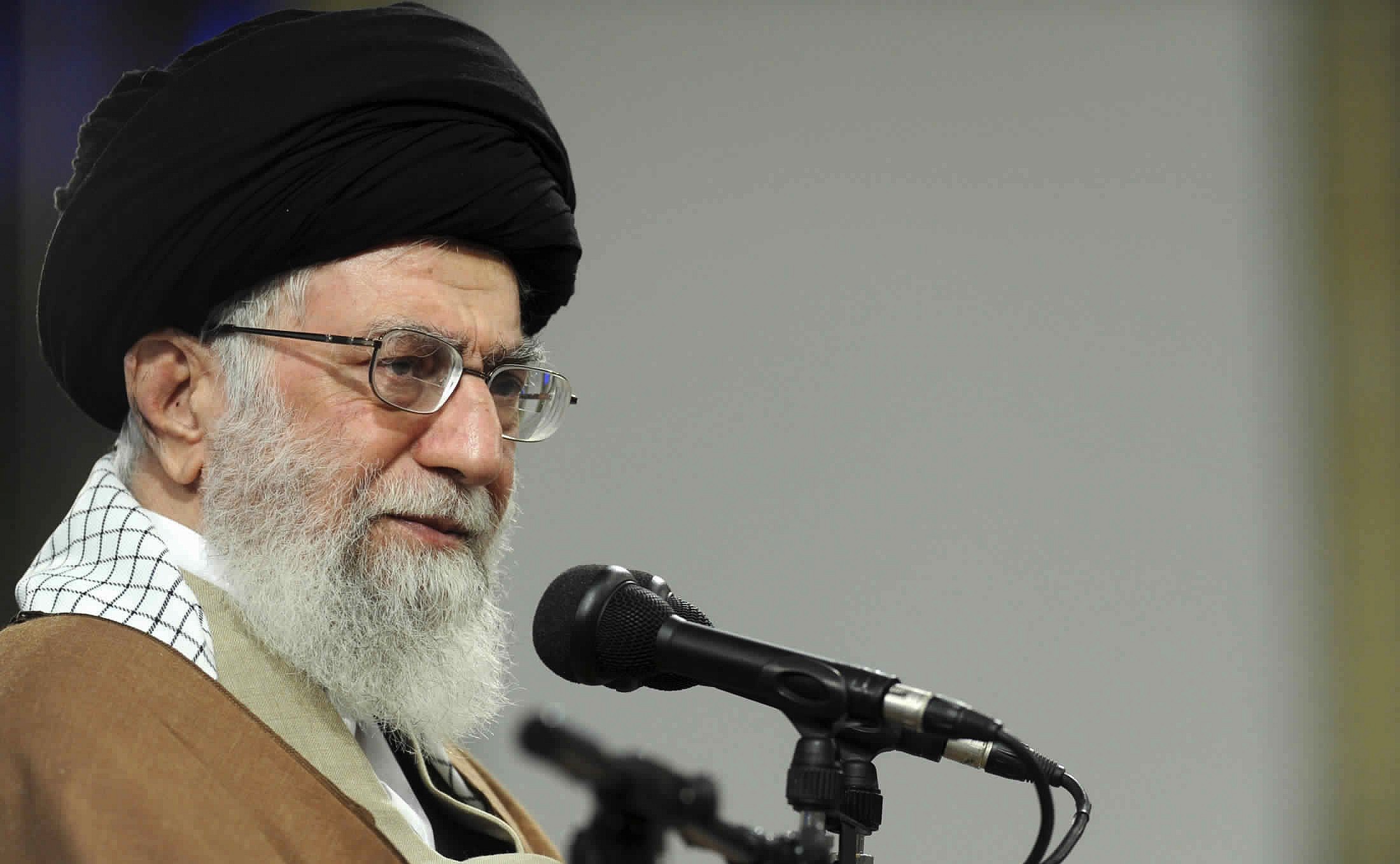
- On Tuesday, a top adviser to Iran’s Supreme Leader Ayatollah Ali Khamenei threatened Israel. “The crimes will not remain unanswered,” Ali Akbar Velayati said during a visit to Syria, according to the official Islamic Republic News Agency.
- In response to the threats, Israel’s military has been put on high alert along the northern border.
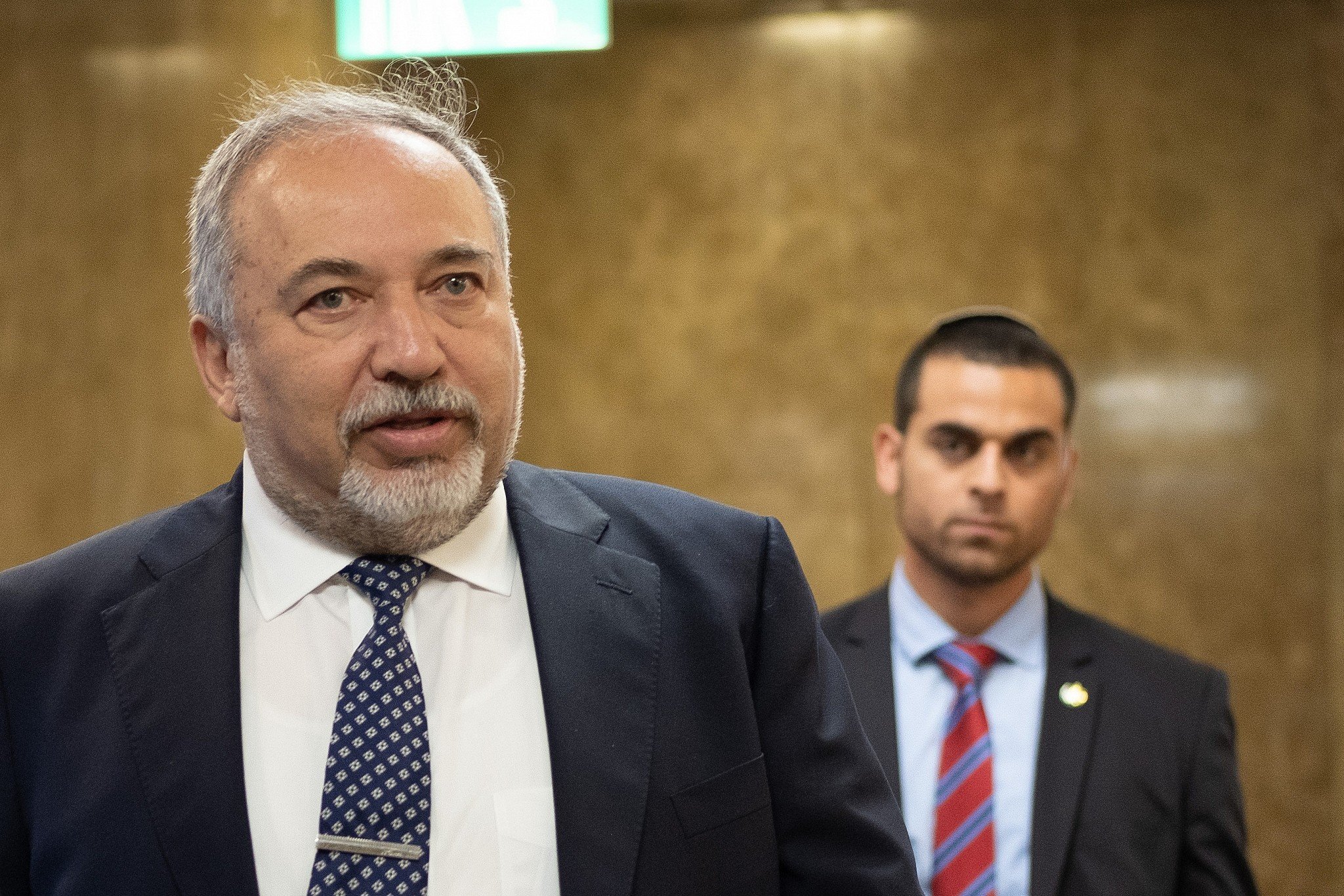
2. Israeli officials have explained that open confrontation between the Jewish state and Iran is of course undesired, but stressed that IDF would not hesitate to ensure the country’s safety by any means necessary.
- Defense Minister Avigdor Liberman on Tuesday said the Israel “will not allow Iranian entrenchment in Syria. Whatever the cost.” He added that “accepting Iranian entrenchment in Syria would be to accept Iranians putting a chokehold on us. We cannot allow that.”
- Prime Minister Benjamin Netanyahu had stated Monday that Israel would hit anyone who intends to harm the country, appearing to indirectly refer to the predawn missile strike. “We have one clear and simple rule and we seek to express it constantly: if someone tries to attack you — rise up and attack him,” Netanyahu said.
- The Israeli security cabinet is set to hold a meeting today to discuss the Iranian threat in Syria.
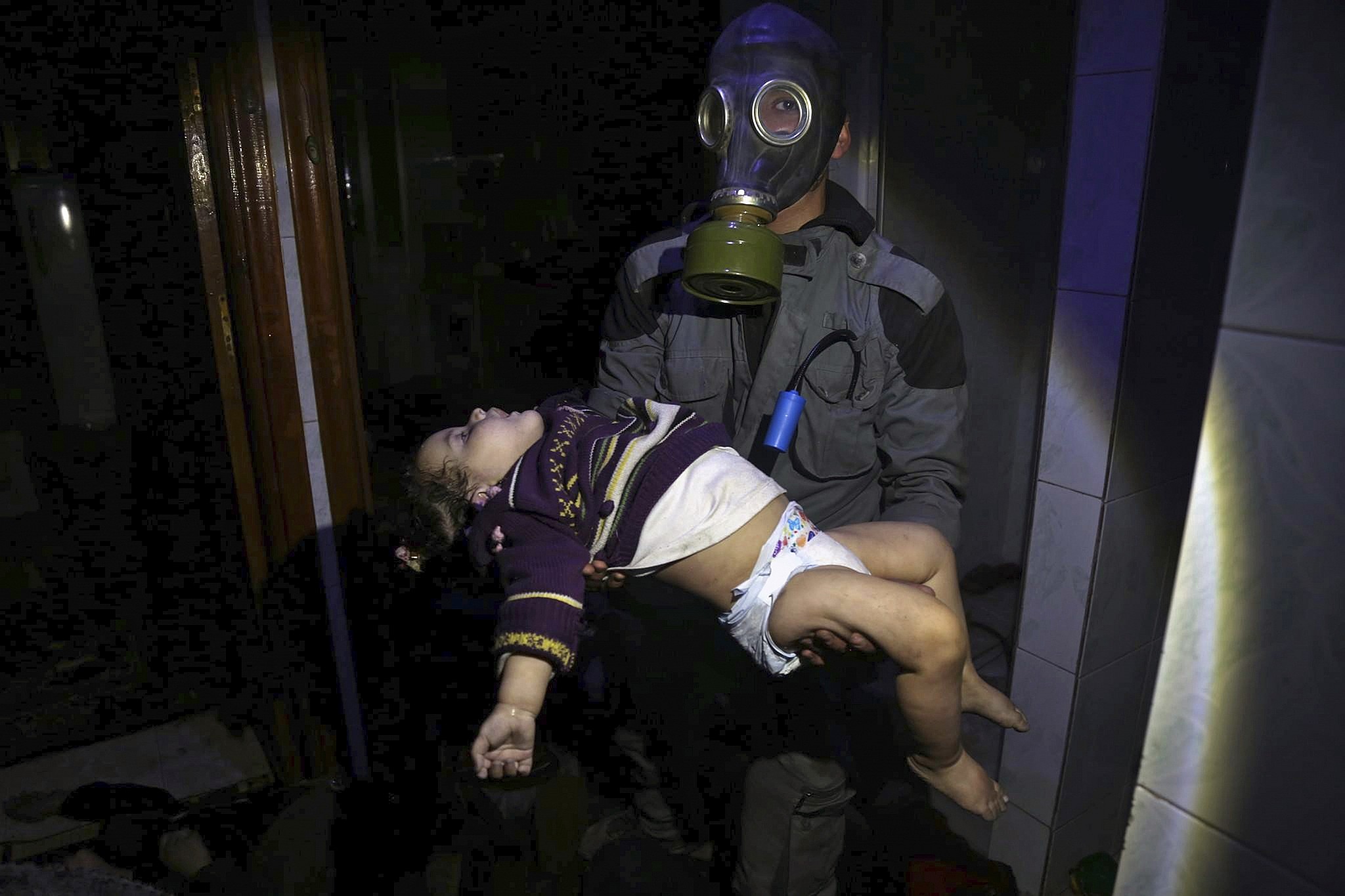
3. Meanwhile, Trump administration officials have reportedly consulted with global allies on a possible joint military response to Syria’s alleged poison gas attack in the town of Douma on Saturday, which Syrian activists and rescuers say killed 40 people.
- US President Donald Trump has made it clear he is all but certain that Syrian government forces were to blame for the alleged chemical attack, but his administration has yet to produce evidence that would back the claim.
- US officials said the US, France and Britain were in extensive consultations about launching a military strike in Syria as early as the end of this week. But none of the three countries’ leaders had yet to indicate that they had come to a firm decision on the matter, according to an official speaking to the Associated Press.

4. Russia, on the other hand, said officers from its military had visited the site of the alleged attack, but could find no evidence to back up reports of poison gas being used.
- It’s important to remember that Moscow has a dog in this fight, as its military has troops in Syria and the country is a firm supporter of Syrian President Bashar Assad.
5. Pundits and analysts in the Hebrew-language media have commented on the rapidly escalating tensions in Syria, as well as on Israel’s response to a possible outbreak of violence along the country’s northern border.
- Ynet’s Ron Ben Yishai, who served for years as a senior military correspondent, ties in the alleged chemical attack in Syria to tomorrow’s marking of Holocaust Remembrance Day in Israel, arguing that the Nazis used lethal gases to kill millions of civilians during World War II because the Germans were not sufficiently punished and deterred over their use of mustard gas in World War II. Ben Yishai goes on to urge the American government to act decisively “in response to the Assad regime’s use of chemical weapons,” and warns that “there will be many more countries to follow in Syria’s footsteps” if no punitive measures are taken.
- Haaretz voices its concerns over an open Israeli-Iranian war in Syria. The paper’s editorial stresses that it is impossible to ignore Iranian aspirations to expand control in Syria, and notes that Israel’s demand that Russia push Iran’s military forces away from the border on the Golan Heights has not been met.
- “Iran’s ability to bring its weapons close to Israel, and perhaps even its missiles, requires a response,” the editorial reads. Nevertheless, the writer continues, Israel must be aware of the dangerous consequences of war on Syrian soil.
- “As has been proven in the past, and not only on the fronts in which Israel was involved, airstrikes do not guarantee the withdrawal of enemy forces or the containment of enemy forces,” reads the editorial.
- “Is Israel ready for a war that also includes ground forces? Can it rely on US involvement or American backing?” These questions are left unanswered by the daily.
6. As the Israeli government seems destined to fail in clinching a final deal to deport tens of thousands African migrants in Israel, mostly from Eritrea and Sudan, to Uganda, the Jewish Home party has indicated it would push legislation that includes a so-called “supercession” or “circumvention” clause, which would make a bill on migrant policy immune to being declared unconstitutional by the High Court of Justice.
- Justice Minister Ayelet Shaked and Education Minister Naftali Bennett’s proposed legislation comes amid a court deadline to the state which calls on it to either forcibly deport the African asylum seekers or allow the release of all those currently jailed for refusing deportation.
- The High Court has blocked previous government deportation plans for African asylum seekers that were to be carried out within the framework of the so-called Infiltrators Law on the grounds that they either included indefinite detention of migrants or that the deportations were to countries deemed unsafe.

7. But as Shaked and Bennett prepare to push the legislation forward, Netanyahu, meanwhile, was reportedly weighing a tougher version of a bill that would more broadly weaken the High Court of Justice’s oversight powers.
- Media reports speculate that the prime minister’s proposal aims to spark a coalition fight with the Kulanu party in order to drum up a pretense for snap elections.
- Kulanu chairman Moshe Kahlon, the finance minister, has said repeatedly he would not lend his party’s votes to weakening the High Court.
- Kahlon has said, however, that he would support a supercession clause limited to the narrow confines of a deportation bill, as he backs a more aggressive deportation policy for asylum seekers.







The Times of Israel Community.