

Google Doodle celebrates falafel
Search giants hails the popular Middle Eastern dish as the ‘best thing that ever happened to chickpeas’
 Add ToI as a Preferred Source on Google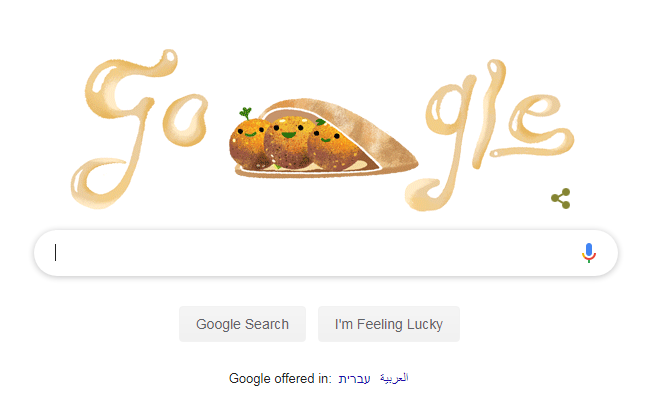
JTA — Google Doodle is celebrating falafel, calling it the “best thing that ever happened to chickpeas.”
Tuesday’s Doodle, or mini cartoon, shows three smiling falafel balls hopping into an open pita after one of them slathers it with hummus (or is that tahini?) and tossing in some cucumbers and tomatoes, which some would call Israeli salad.
Google said in a statement explaining the Doodle that “the exact origins of this spicy street food have been lost to the mists of time,” though there are some that would beg to differ.
In October, for example, a Palestinian reporter speaking on the official Palestinian Authority TV claimed that Israel has launched a “brutal attack on Palestinian heritage, including Palestinian foods,” citing falafel and hummus. A video clip of the report was translated by Palestinian Media Watch.
The Google statement notes that “falafel has been enjoyed for centuries in many different cultures,” and adds that “Israel has a song to celebrate its love affair with the tried-and-true treat, entitled ‘And We Have Falafel.’”
It is believed to have originated in Egypt, with the fried balls made out of fava beans, and then spread to the Levant area of the Eastern Mediterranean, and its name derives from a Levantine Arabic word. Most Middle Eastern countries make their falafel with chickpeas. India, by the way, produces most of the world’s chickpeas.
The world’s largest falafel, according to Guinness World Records, weighing in at 164.8 pounds and measuring 59.8 inches tall, was fried for 25 minutes at the Landmark Hotel in Amman, Jordan, in 2012.








The Times of Israel Community.