

Guatemala lawyer mounts challenge to Jerusalem embassy move
Marco Vinicio Mejia argues decision violates international law and should have been put to a national referendum
 Add ToI as a Preferred Source on Google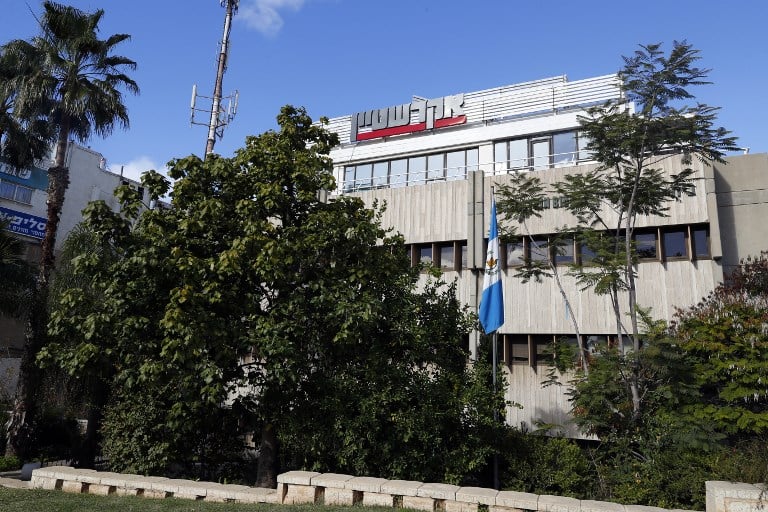
A Guatemalan lawyer is challenging his country’s decision to move its embassy in Israel to Jerusalem, arguing it violates international law.
Marco Vinicio Mejia lodged the complaint with the Constitutional Court on Monday, saying the December 24 announcement of the embassy move went against the principles, rules and practices of international law with regard to the Israeli-Palestinian peace process.
Such a change of policy should have been put to a referendum, he argued.
He also said President Jimmy Morales flouted government standards by making the announcement on his Facebook page rather than leaving it to the foreign ministry to make the announcement through official channels.
The notice makes Guatemala the first — and so far only — country to follow US President Donald Trump’s lead in saying its embassy will be relocated from Tel Aviv to the holy city.
Other countries, including its neighbor Honduras, have been rumored to be intending to follow suit, though El Salvador last week said it would not move its Israel embassy.
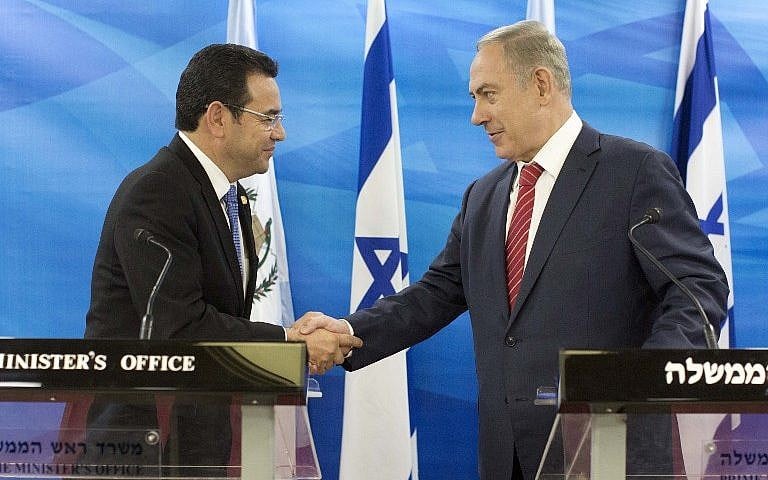
Guatemala has been a close friend and partner of Israel since before Israel’s creation in 1948.
Guatemala was one of the first countries to recognize the nascent State of Israel, and in 1959 became the first Latin American state to open a diplomatic mission in Jerusalem.
In 1978 — more than a decade after the Six Day War but two years before a UN Security Council Resolution calling on all nations to move their embassies out of Jerusalem — Guatemala’s mission there closed and moved to Herzliya, a suburb of Tel Aviv.
In a move that delighted much of Israel’s leadership but ignited protests across the Muslim world, Trump announced on December 6 that the US recognized Jerusalem as the capital of Israel and planned to move its embassy there.
Trump stressed that he was not specifying the boundaries of Israeli sovereignty in the city, and called for no change in the status quo at the city’s holy sites.






The Times of Israel Community.