

Israel is approaching elections in a new era. There aren’t many new faces
The country has undergone seismic changes over the past two-plus years, but many of the politicians vying for votes are the same ones who ran more than a decade ago

 Add ToI as a Preferred Source on Google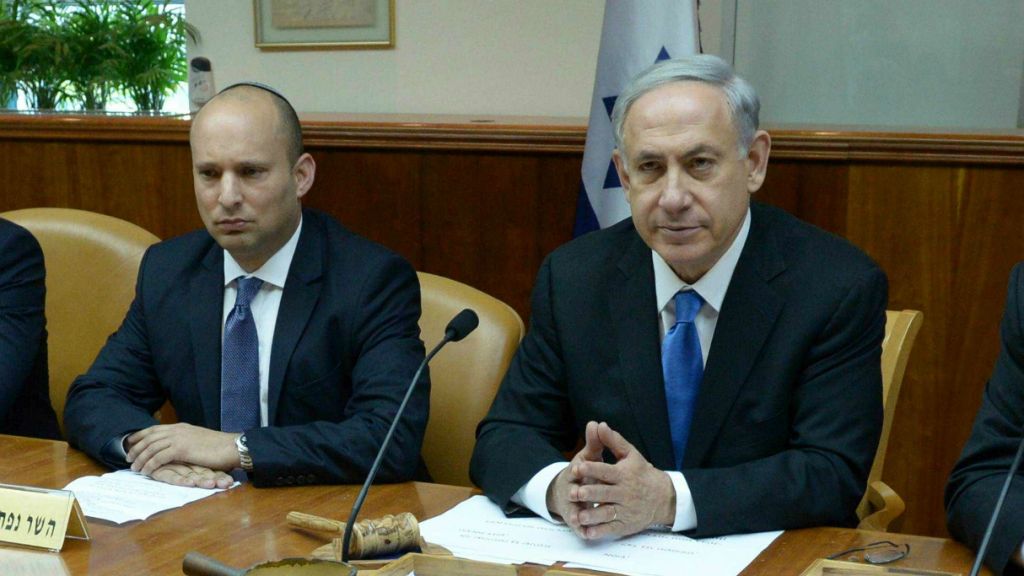
There was a strong sense that the election would be pivotal.
Prime Minister Benjamin Netanyahu had held power for too long, his opponents said, asserting that he had lost touch with the mainstream voter and cared more about his own political fortunes than the national interest. Netanyahu’s camp countered that he was still indispensable as a leader, especially when compared with his milquetoast opponents, and that choosing anyone else would be reckless in the face of the threats menacing Israel.
For many voters, the cast of characters in the mix — Netanyahu, Isaac Herzog, Naftali Bennett, Yair Lapid, Aryeh Deri, Avigdor Liberman — did not inspire confidence. Polls were inconclusive. The election, it seemed, could go either way.
Welcome to 2015.
Netanyahu ended up decisively winning that election and has remained prime minister for nearly all of the time since. This year, he will face the voters yet again.
In the intervening 11 years, and especially since October 7, 2023, the situation in Israel has changed drastically. The country’s social contract, its democratic norms, its regional context, its alliances and even its borders have all shifted or are in flux.
And yet, voters could be forgiven for feeling a queasy sense of deja vu. That’s because, heading into the 2026 election, many of the candidates who ran in 2015 or even earlier are still there. Even though Israel is contending with a new reality, only a smattering of new faces have joined its political scene or are promising a fresh start.
Netanyahu, of course, is still prime minister. The hawkish Bennett, who used to be firmly in Netanyahu’s camp but has consistently locked horns with the premier, is now his most credible threat.
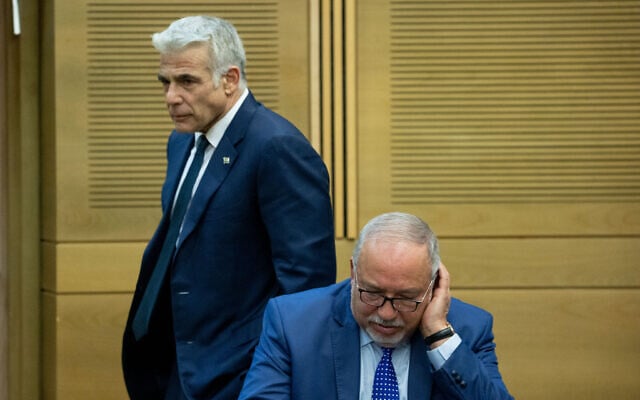
Herzog left the political arena but is hardly out of the scene. As president, he’s responsible, once the election votes are in, for tasking the candidate best placed to do so with forming the next government. He’s also in the midst of determining whether Netanyahu will receive a pardon in his corruption trial. Lapid, Deri and Liberman all helm the same parties they did 11 years ago.
Some politicians have arrived a little more recently, like Benny Gantz and Gadi Eisenkot in the center, Itamar Ben Gvir on the far right, and Yair Golan on the left. But none are (realistically) running for prime minister, and none heralds a shake-up of the existing political map. Other once-novel candidates have come and gone.
Missing from the entire landscape are major parties led by women, a striking gap in a country that elected Golda Meir in 1969 and, 17 years ago, gave Tzipi Livni the plurality of its votes, though not the premiership.
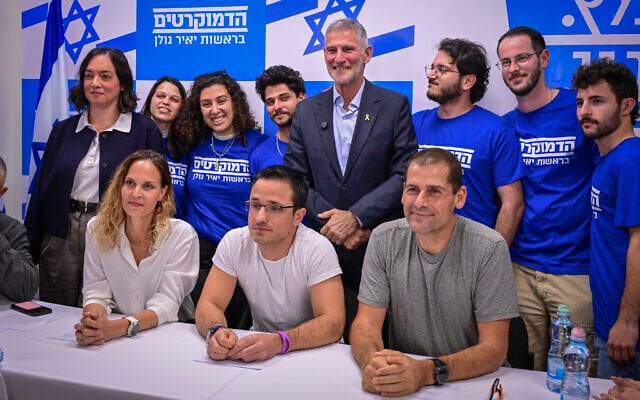
There are some brand-new contenders this time, but they’re all serving as deputies in existing parties, such as retired Gen. Noam Tibon in Yesh Atid, or a group of anti-government protest leaders who signed onto Golan’s left-wing Democrats party. (Even that party, technically new, is really just a merger of two existing parties whose ideologies were converging anyway.)
Einav Zangauker, the mother of freed hostage Matan Zangauker and one of the most outspoken advocates for the captives, is thinking about entering the fray, but it’s unclear whether and how she will.
Tellingly, the biggest electoral drama is happening within the parties. In Likud, will populist firebrands or establishment figures carry the primaries? Who will Bennett choose for his party, and what will the party be called? Will Mansour Abbas’s Ra’am party succeed in shedding its Islamist image?
But no one questions who will lead those parties. Whoever “wins” the internal Likud primaries will be a number two in Netanyahu’s vast shadow. Bennett’s party slate will presumably be handpicked.
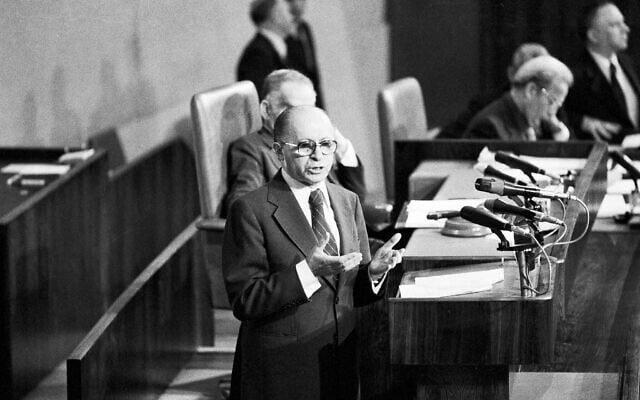
Weathered, or stale, political leaders are themselves an Israeli political tradition. David Ben-Gurion led his party for the first five Israeli elections, and Menachem Begin led his for nine. Shimon Peres ran Labor for more than 15 years in total, losing four elections and tying one.
In the US, where the political system is very different, and there are term limits, this almost never happens. US President Donald Trump is the first person in 80 years to win his party’s nomination three times in a row.
There may be some upsides to the consistency. In recent decades, a litany of flash-in-the-pan parties have lasted for one or two elections and then disappeared. Now, leaders in both the pro- and anti-Netanyahu blocs are urging new, small parties to merge under larger umbrellas rather than go it alone. And whatever can be said about the current candidates, they all have experience in government.
But for the past two-plus years, Israel has confronted challenge after challenge, endured tragedy after tragedy, confronted one new frontier after another.
The country is embarking on a new era, but it won’t be doing so with a new leader. Whoever the next prime minister is, it’ll be someone Israelis have seen before.







The Times of Israel Community.