

Liberman digs in heels on coalition demands, says won’t cave on religion matters
Just before MKs are sworn in to 21st Knesset, Yisrael Beytenu chair says he’s ready to remain in opposition if ‘key issues’ not resolved
 Add ToI as a Preferred Source on Google
Raoul Wootliff is a former Times of Israel political correspondent and Daily Briefing podcast producer.
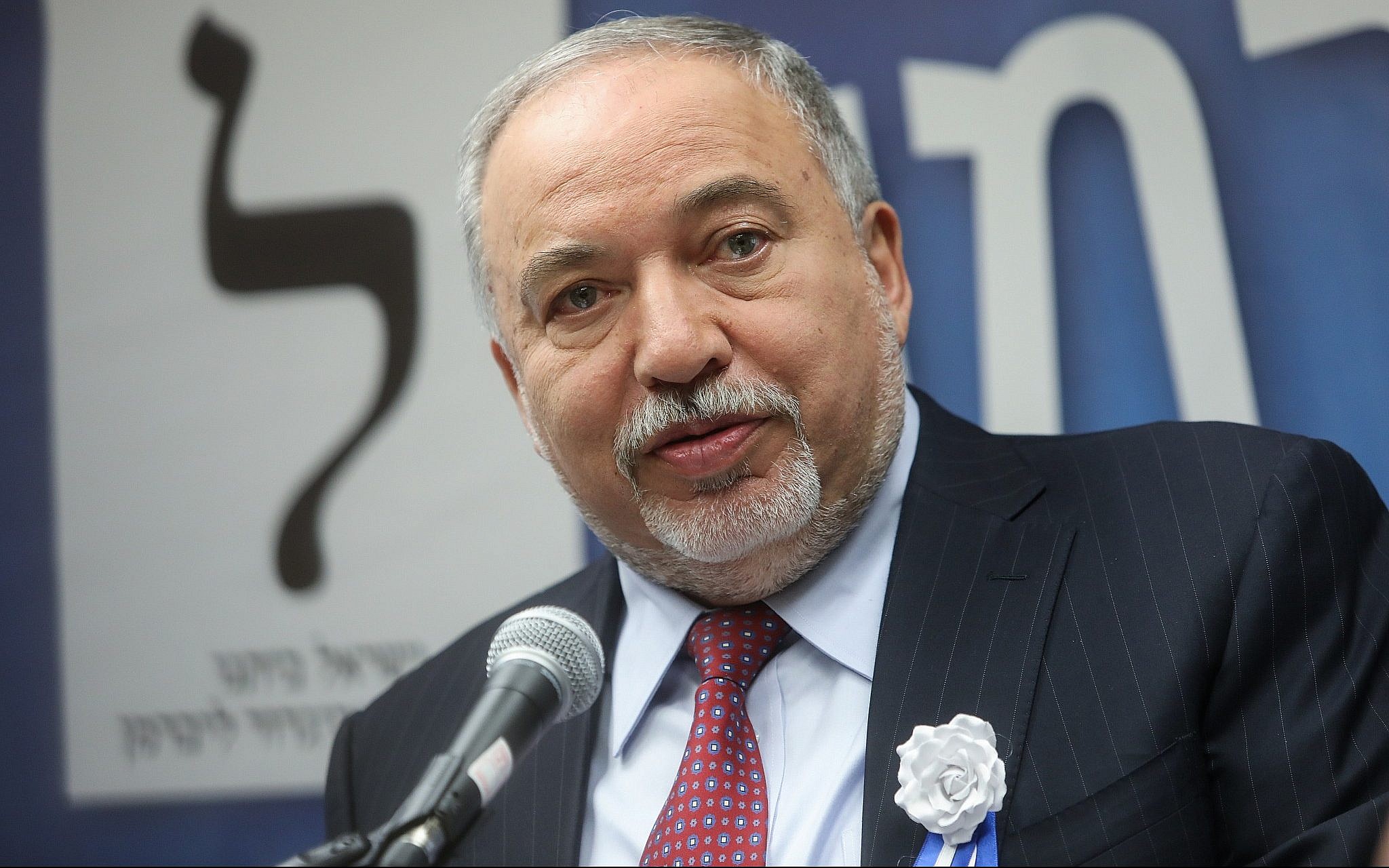
Hours before the swearing-in ceremony for the 21st Knesset, Yisrael Beytenu chairman Avigdor Liberman said Tuesday his party’s five MKs could still end up in the opposition if his policy demands are not met by Prime Minister Benjamin Netanyahu’s Likud.
Without Yisrael Beytenu’s five MKs, Netanyahu would be able to muster only 60 of the 120 Knesset seats for a right-wing/ultra-Orthodox coalition, a fact that gives Liberman significant bargaining power in the negotiations for the new government. Ultimately, despite his threats, Liberman is seen as highly likely to join the coalition, probably as defense minister.
“Everyone agrees that we need to establish a right-wing national government as soon as possible. No one has strength for another election,” Liberman said in the first party press conference of the new parliament.
“But we will not give in on the the demands we have made,” he stressed, reiterating that his party would not join a coalition led by Netanyahu unless his demands are met on security, immigration, and religion and state issues.
Liberman said that his number one priority was setting the state pension and disability benefits at NIS 3,800 per month (approximately $1,050), 70 percent of the current minimum wage. But he admitted that his party’s position on religion and state issues presented a bigger obstacle.
“There are many obstacles. Many, many obstacles,” he said.
Liberman, whose base of supporters is largely made up of secular immigrants from the former Soviet Union, campaigned on opposing “religious coercion,” and supports public transportation and allowing mini-markets to remain open on Shabbat, in addition to ending the Chief Rabbinate’s control over marriage and divorce, and passing the enlistment bill.

“We support and want a Jewish state but we oppose and will not accept religious coercion,” he said Tuesday.
Liberman insisted that he is “not trying to change the status quo. There is an attempt to move this country much closer to a halachic state,” using the Hebrew term for a state based on Jewish law. “We will oppose it.”
One of the thorniest issue is legislation regulating — and limiting — exemptions to military conscription for ultra-Orthodox students, which the secularist Liberman is insisting should be passed without amendment, while ultra-Orthodox parties have said they will not join the coalition if it is advanced without changes. Both Yisrael Beytenu and the ultra-Orthodox are essential for Netanyahu if he is to assemble a governing coalition with a majority of at least 61 seats in the 120-member Knesset.
In 2017, the High Court of Justice ruled that a 2015 version of Israel’s draft law granting most yeshiva students exemptions from service was unconstitutional, telling lawmakers they must pass new guidelines for ultra-Orthodox enlistment. In 2018, the court granted the government another month and a half to pass the bill, extending an early December deadline to mid-January, but the Knesset was then dissolved and elections set for April 9.
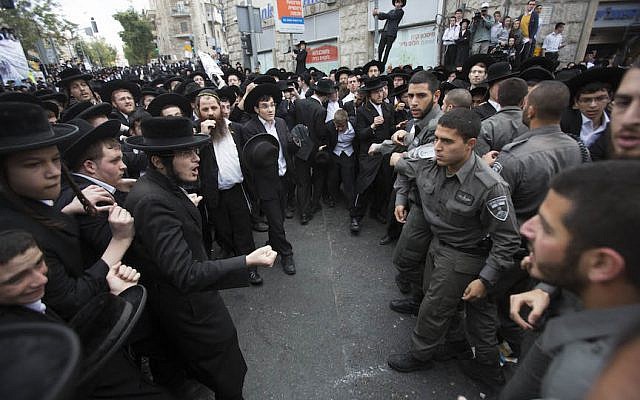
Earlier this month, the leader of ultra-Orthodox United Torah Judaism (UTJ) party insisted that he would not join Netanyahu’s new government if the proposed legislation on drafting ultra-Orthodox yeshiva students into the army isn’t changed, heralding tough coalition-building negotiations for the premier.
Yaakov Litzman, the current deputy health minister, said all his party’s demands were coordinated with fellow ultra-Orthodox party Shas. UTJ and Shas have eight Knesset seats each.
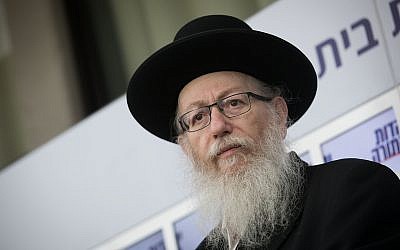
Another condition Litzman mentioned for joining the government was related to construction work on the Tel Aviv light rail and a new pedestrian bridge which has been taking place on Saturdays, the Jewish day of rest. “Shabbat is an important issue, and if it won’t be taken care of, I won’t be in the government,” Litzman said, without elaborating or detailing a specific demand.
Liberman has backed Netanyahu as the next premier, cementing the right-wing coalition at 65 seats. But his party holds five of those seats, just enough to bring Netanyahu to the brink of collapse if he leaves the coalition — as he did in November in a spat over what he said were disagreements with the prime minister’s Gaza policy, shrinking Netanyahu’s coalition at the time to just 61 seats.
Coalition talks were mostly on hold during the Passover holiday last week. Netanyahu technically has 28 days to form a coalition, giving him until mid-May, and he may ask President Reuven Rivlin for a two-week extension.
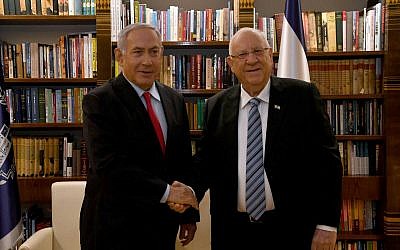
Before the break, negotiators for Yisrael Beytenu and Likud met for the first round of coalition talks, with the former presenting a list of demands on security, immigration, and religion and state issues.
In an official statement, Yisrael Beytenu said the meeting was carried out “in good spirits,” that the party had presented its demands in various areas, and that the teams agreed to hold another meeting soon.
Liberman said last week that he wants to be defense minister again, and also wants the Absorption Ministry for his party, and threatened that issues of religion and state could be a deal-breaker.
On Tuesday he said that portfolios was not being discussed yet.
“Until we have not reached agreement in our key issues, we will not talk about portfolios. That’s the end of it. Once those are agreed the issue of portfolios will become clear,” he said.








The Times of Israel Community.