

Make arms deals, not war: What the press is saying on August 19
Pundits worry over alleged US sale of advanced weaponry to UAE, denied by Netanyahu, but some think it’s a small price to pay for peace
 Add ToI as a Preferred Source on Google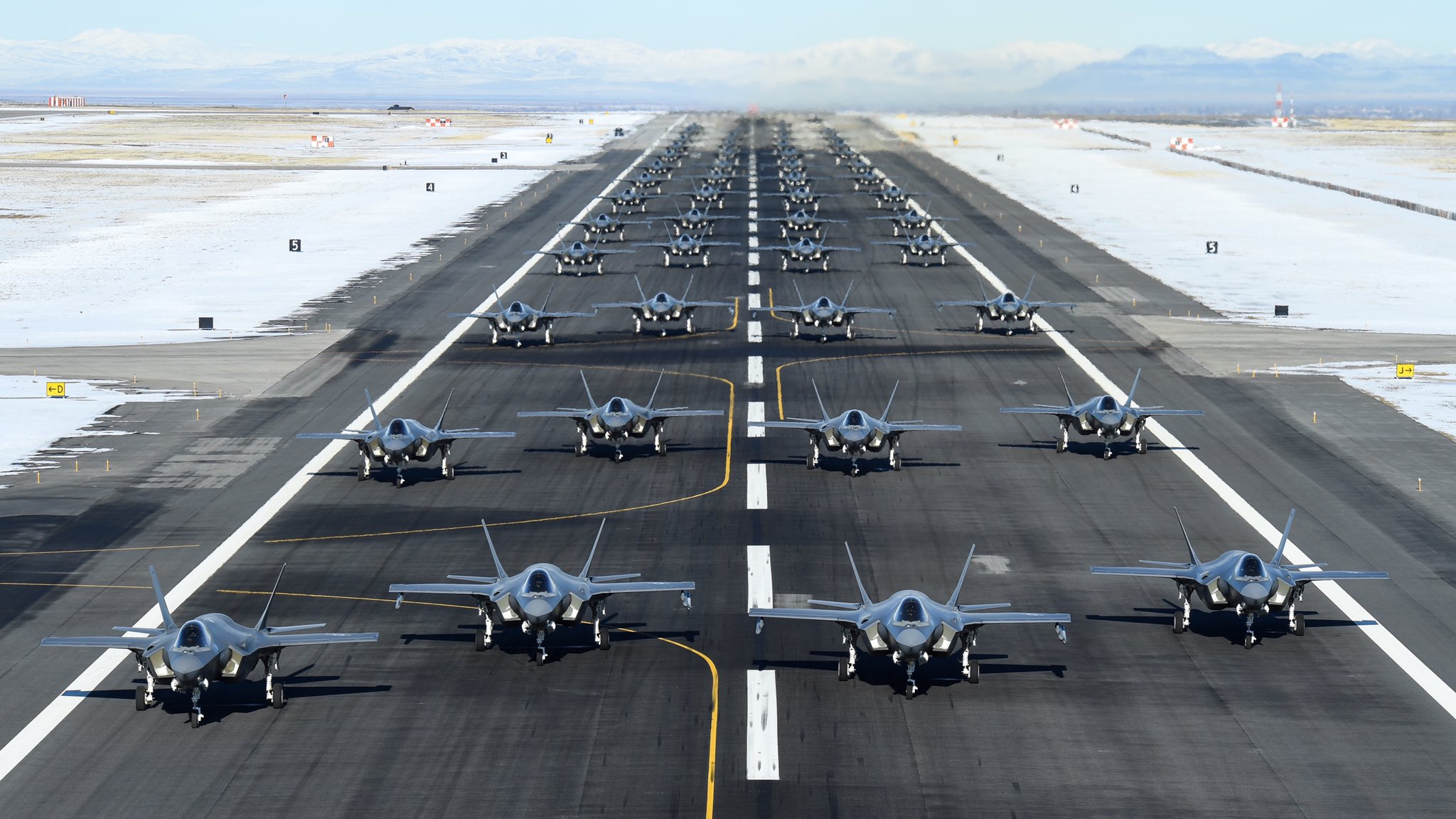
1.What the F-35: A day after the Yedioth Ahronoth daily reports that the UAE will receive a lucrative US arms deal, including American F-35s, in exchange for normalization with Israel, pundits weigh in and fret about the potential loss of the Jewish state’s military edge in the Middle East. Some experts, however, argue that even if such a deal is clinched, it’s a fair price to pay for peace with the Emiratis.
- Netanyahu has flatly denied the Tuesday front-page report by Yedioth’s Nachum Barnea, calling it “fake news.” A White House official cited by Hebrew-language media also said there was no secretive weapons arrangement with Abu Dhabi. But Yedioth is sticking to its story, and quoted an Emirati official on Tuesday night as saying Netanyahu was fully aware of the agreement, and approved it.
- Netanyahu, writes Barnea on Wednesday, is selling Israelis the “lie” that the deal has no cost other than putting off West Bank annexation for an unspecified time.
- “The deal has its costs. One of them is giving up on annexation; the second is giving up the Israeli veto on [weapons] sales to the Emirates. The benefits outweigh the costs. But Netanyahu is under the illusion that there is such a thing as a free lunch. He is telling Israelis: ‘There is no cost. Annexation is just around the corner… There is approval for annexation. And there is no arms deal. They didn’t even discuss it. Well, they discussed it, but it will never happen. I got peace, for free.’ This is a lie, of course. A lie that only Netanyahu believes. He would do better to tell Israelis the truth. There is peace, but it has a cost. This is what Begin did. This is what Rabin did. This is what Churchill did. But Netanyahu is telling stories about hundreds of billions of dollars [in trade] and hundreds of thousands of tourists. These are fairy tales.”
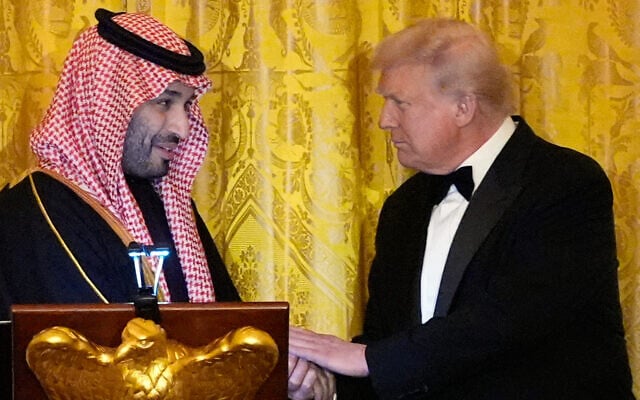
- In Haaretz, Amos Harel writes that a prospective US sale of advanced weaponry to the UAE is not really up to Israel. “In other words, despite what Netanyahu said yesterday, it’s possible the [US] administration will decide to sell the planes based on its future considerations — and that the Israeli government will say, I tried to convince them, I failed. Trump attributes great importance to large contracts, particularly weapons deals, certainly during these days of economic crisis. His candidacy, it bears remembering, opened with an excited visit to Saudi Arabia. In Riyadh, alongside the bizarre ceremony in which he danced with his hosts with a saber that appeared to be taken out of ‘Star Wars,’ the president agreed on deals worth tens of billions with the kingdom.”
- “There is another potential difficulty here,” he continues. “Until today, the sale of the jet was approved to just one other country in the region, Turkey, and this was frozen when Ankara purchased an S-400 air defense system from the Russians. If the Emirates receive approval for the sale, the Saudis and Egypt will quickly get in line. And although these countries are friendly to Israel, it seems this will bring to an end Israel’s qualitative military edge.”
- In the pro-Netanyahu Israel Hayom, by stark contrast, columnist Amnon Lord says the Yedioth report is fake and designed to undermine the Jerusalem-Abu Dhabi normalization deal. “I would approach the Yedioth Ahronoth reports like the responses of [Turkish President] Erdogan and his friends, who are insulting the peace deal,” he writes, accusing them of seeking to undermine the agreement out of anti-Netanyahu sentiment.
- Former National Security Council head Giora Eiland tells Army Radio on Wednesday morning that even if the deal includes a US-UAE deal, it’s still worth it for Israel. “The deal will open up normalization with other Arab countries. There is nothing free in life, certainly not in international relations,” he says.
2. From Khartoum, with mixed emotions: The next Arab country in line to transform its shadowy contacts with Israel into full-fledged diplomatic ties appears to be Sudan. Maybe.
- On Tuesday, Sudan Foreign Ministry spokesperson Haidar Badawi Sadiq told Sky News Arabia on Tuesday that Sudan “aspires towards a peace agreement with Israel… a relationship of equals built upon Khartoum’s interests.”
- “There’s no reason for the enmity to continue,” Sadiq said. “We do not deny the communication between the two countries.”
- His comments, hailed by Netanyahu, were denied by the country’s acting foreign minister.
- Sadiq was fired on Wednesday, Arabic-media reports say.
- Yedioth and Haaretz lead with the Sudanese denial, with the former calling it “too soon to celebrate.”
- But Israel Hayom quotes an Israeli official who says the talks are on, and says the issue of the 7,000 Sudanese asylum-seekers in Israel has come up in negotiations. A solution to the “infiltrator” problem — Israel seeks to expel them to their home country — is expected to be part of a future pact, the official says, with the report making front-page news in the right-wing daily critical of the migrant issue.
- Not so fast, Haaretz says. It also quotes an official on the Sudanese migrant issue coming up in talks, but adds: “Despite the official’s comments, a series of government and diplomatic sources clarified yesterday to Haaretz that even if a peace deal between the countries is reached, the road to returning the asylum seekers to Sudan is long and cast in doubt.”
3. Fourth elections loom: Israel has just five more days to pass a bill postponing the deadline to advance a budget before the country automatically goes to elections, the fourth in under two years.
- The Knesset Finance Committee on Wednesday morning refuses to approve the bill for its final readings, citing conflicts between Blue and White and Likud. Representatives from the two major coalition parties have yet to reach agreements, following several meetings in the past few days.
- “There are five days left. Lunatics — get off the roof and don’t ruin the country,” Channel 12 quotes Derech Eretz MK Zvi Hauser as saying. Hauser proposed the bill to delay the budget deadline by 100 days.
- Reports on Tuesday say the committee’s chairman, Moshe Gafni of the ultra-Orthodox United Torah Judaism, threatened to hold up the vote until the government agrees to earmark NIS 400 million for Haredi yeshivas. Gafni, however, has been hospitalized for a medical procedure for several days and is not running the meetings. Army Radio says that’s part of the reason Likud sought a delay, saying it wants Gafni to run the meeting in which the bill is approved.
- Netanyahu is believed to be seeking another election to avoid a handover of power to Gantz next year under their premiership rotation agreement.
- If all goes wrong, on Monday night, as the clock strikes midnight, Israel could find itself back in election mode.
4. Peace abroad, war at home: Israel and Hamas appear headed for a larger conflict, as balloon-borne attacks, rocket fire, and retaliatory Israeli strikes persist for over a week.
- On Tuesday, Gaza officials announced that the Strip’s sole power station had run out of fuel and would stop operating. Israel last Thursday cut off fuel transfers via the Kerem Shalom crossing as a punitive measure following the rocket ad balloon attacks.
- Earlier Tuesday, Netanyahu said Israel would respond to airborne arson attacks in the same manner it does to rocket attacks, and warned that there could be another major flareup.
- “I regret that we are also preparing, to the extent necessary, for the possibility of a round or rounds. I hope that we will not get there,” he told local leaders of Gaza-area communities.
- Over the past week, terrorists in the enclave have again begun launching balloon-borne incendiary and explosive devices into southern Israel, sparking dozens of fires that caused environmental and property damage in the region.
- Rockets have also been fired at Israel on two occasions this week.
5. Get that sukkah ready for quarantine: Coronavirus czar Ronni Gamzu is also preparing Israelis for the possibility the fall High Holidays will be observed under lockdown.
- Gamzu says he’ll be ordered tight restrictions if infection rates don’t drop, despite Israel’s recession, which is the worst in over four decades.
- Rosh Hashanah falls out this year on September 18 — over two weeks after schools are set to reopen, which will likely affect the decision. The opening of schools was attributed to a resurgence of the virus in May.
- Israel’s death toll on Tuesday night surpassed 700.
- Over 400 are in serious condition. Since the start of the pandemic, there have been 96,996 virus cases, meaning that 1 in 100 Israelis have contracted it.








The Times of Israel Community.