

Mamdani administration won’t use a codified antisemitism definition, representative says
Head of City Hall office for combating discrimination against Jews says IHRA outline junked by Mamdani will not be replaced; NYPD says ‘Kill Zionists’ graffiti not necessarily a hate crime
 Add ToI as a Preferred Source on Google
Luke Tress is The Times of Israel's New York correspondent.
NEW YORK — The head of New York City Mayor Zohran Mamdani’s antisemitism office on Wednesday said that City Hall will not replace a widely used antisemitism definition that Mamdani scrapped on his first day in office.
The International Holocaust Remembrance Alliance (IHRA) definition of antisemitism equates some forms of anti-Israel rhetoric with discrimination against Jews.
The definition is opposed by anti-Israel activists, who argue that the outline conflates political criticism of Israel with discrimination. Mamdani and members of his administration are harsh critics of Israel.
Former New York City mayor Eric Adams, Mamdani’s predecessor, adopted the definition for the city government last year by executive order. Mamdani revoked the order, along with other Adams executive orders, when he assumed office, sparking questions about how City Hall would recognize anti-Jewish discrimination.
The issue is significant because discrimination against Jews is often not clear-cut and is sometimes associated with Israel or “Zionism,” and political rhetoric against Israel is protected speech, even though Jews often experience anti-Zionist activity as discrimination. Mamdani has shown himself ready to condemn “classic” forms of antisemitism, such as swastikas or tropes about Jewish greed, but unwilling to label anti-Zionist activities as discriminatory.
Phylisa Wisdom, the head of City Hall’s Office to Combat Antisemitism, testified before a City Council antisemitism task force on Wednesday, in one of her first public appearances since she took up the role last month.

Adams also established the Mayoral Office to Combat Antisemitism, while the Bipartisan Task Force to Combat Antisemitism was set up by the City Council, which is independent of the mayor’s office. City Council Speaker Julie Menin, who is Jewish, is leading a broad effort to rein in antisemitism in the city, including through the task force. Jews are targeted in hate crimes in the city more than all other groups combined.
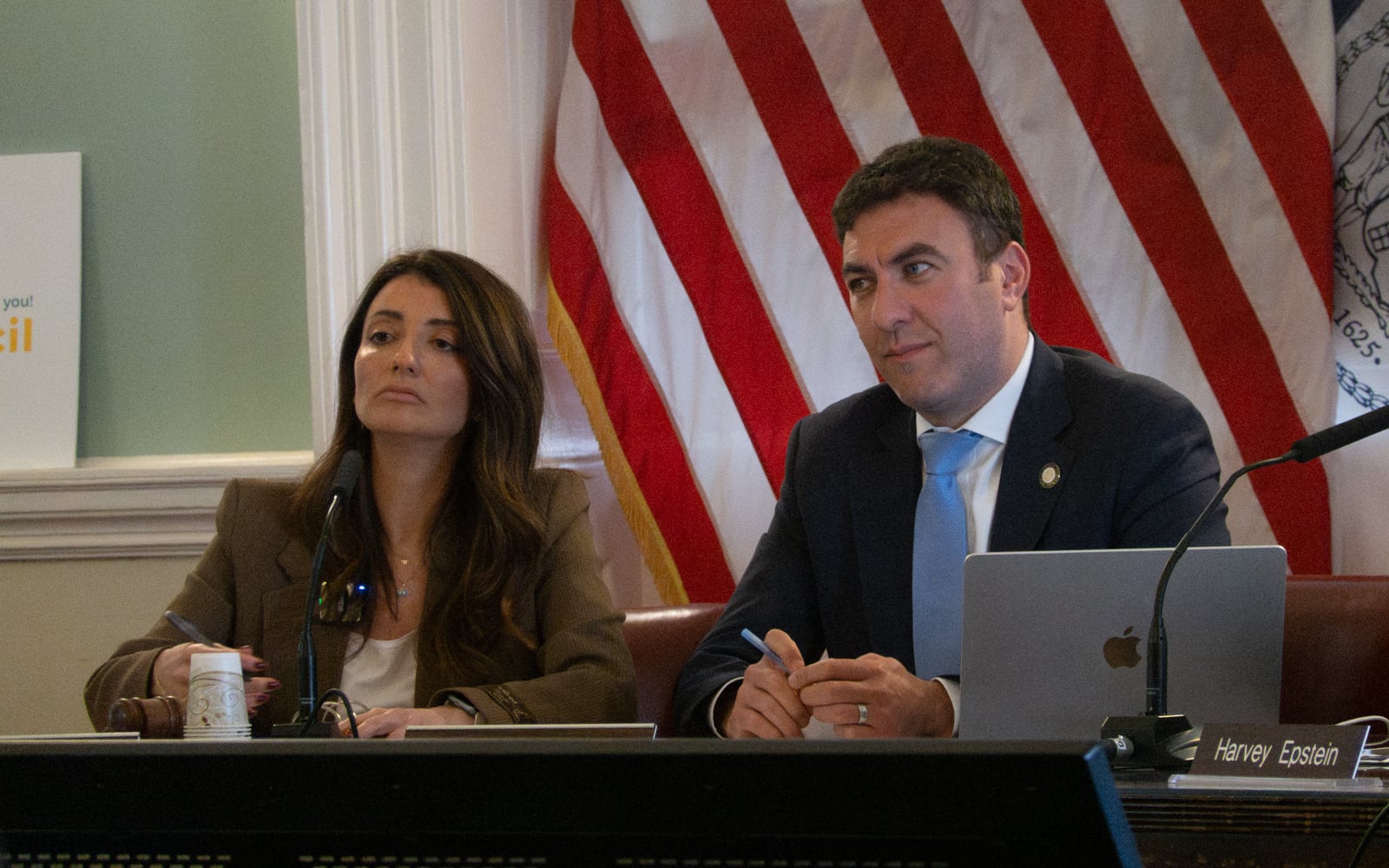
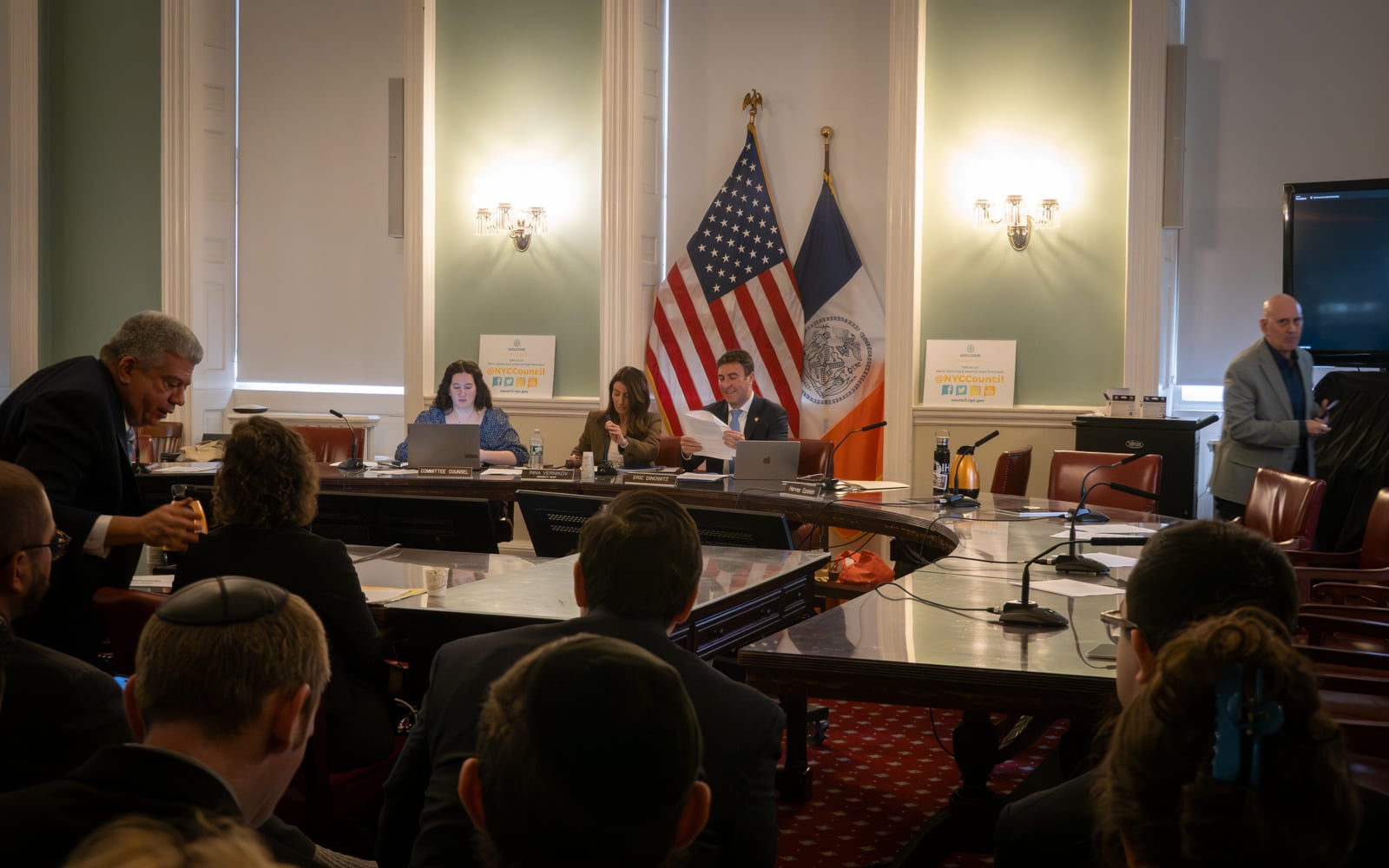
Wednesday’s hearing was the first by the task force, co-chaired by Democrat Eric Dinowitz of the Bronx and Republican Inna Vernikov of Brooklyn.
“We will not be the government that sits silently by. We will not be the government of inaction that allows Jews to be persecuted because we’re looking the other way,” Dinowitz said in his opening remarks.
The hearing focused on the reporting of hate crimes. In addition to Wisdom, NYPD representatives and Brooklyn District Attorney Eric Gonzalez testified before a panel of lawmakers. Vernikov said the district attorneys of each borough were invited to attend the hearing, but Gonzalez was the only one of the five to show up.
Vernikov asked Wisdom about Mamdani’s repeal of the IHRA definition and which definition the antisemitism office would use. In addition to IHRA, there are several other definitions of antisemitism, some of which are more permissive toward anti-Zionism.
“We don’t believe there needs to be a codified definition,” Wisdom said. “The policy of this administration is we will continue to not have any codified definition of any form of hate.”
“Bias and hate, it’s really sticky and extremely serious stuff, and it’s case by case,” she said.
The office will understand antisemitism as “prejudice, violence and discrimination against Jews because they are Jewish,” she said.
Councilmember Simcha Felder, an Orthodox Democrat from Brooklyn, stormed out of the hearing.
“That’s crazy, unconscionable. In the history of New York City, there was never a problem figuring out what hate is. We will have to define each time whether an incident was hateful or not?” he said.

The task force also pressed NYPD representatives about the distinction between anti-Zionism and discrimination against Jews.
Dinowitz asked Michael Gerber, the NYPD’s deputy commissioner of legal matters, about a hypothetical kosher restaurant vandalized with the words “Kill the Zionists.” Gerber said “it’s going to depend” on an investigation to determine whether such an incident would be a hate crime.
“If it wasn’t pure political motivation,” Gerber said, “we have to be able to prove that.”
If a kosher restaurant was vandalized with “Kill the Jews,” though, Gerber said, “That’s a hate crime right there. That is clearly because of a perceived Jewish identity.”
“We’ve seen time and time again the word ‘Zionist’ is used as a proxy for ‘Jew,'” Dinowitz said. “There should be no question that those would be hate crimes and I think what you’ve delivered is sort of the ‘out.’ If you just use the word ‘Zionist’ instead of ‘Jew’ then you might be okay.”
“We have to follow the law, and the law does distinguish between crimes because of one’s religious identity and ones because of political viewpoints,” Gerber said.
Hate crimes are enhancements to underlying crimes that increase punishments because hate crimes are seen as targeting not only an individual, but a protected group. Vandalization of a restaurant, for example, would always be prosecuted as a crime, but an added hate crime enhancement would stiffen the penalty.
Hate crimes are difficult to prosecute because, unlike other offenses, investigators must determine that perpetrators were motivated by animus against a protected group, a high legal bar.
Gerber also said the NYPD does not use a specific definition of antisemitism, but works to determine whether victims of suspected antisemitic incidents were targeted because they were Jewish.
Wisdom’s predecessor, Rabbi Moshe Davis, who was at the hearing, criticized the Mamdani administration for lacking an antisemitism definition.
“You cannot ensure the safety of Jewish New Yorkers while remaining willfully blind to the sources of the hatred directed at them,” he said.
The antisemitism/anti-Zionism fault line is a major battleground in discourse surrounding Jews and Israel in the US, with implications stretching across law enforcement, education, politics and the court system.
Many Jews consider anti-Zionism discriminatory, while opponents view the movement as political advocacy. A growing movement in the Jewish community is pushing to reframe anti-Zionism as the contemporary iteration of discrimination against Jews, using different tropes but the same structures and patterns as past forms of hatred.
Wisdom, who became the head of the antisemitism office six weeks ago, said the office has a staff of two, and plans to expand to three or four. The staffers are conducting a listening tour of Jewish community leaders and when that is finished, will have a framework for the office’s activities and release a report around the end of the summer, she said.
The office is still getting off the ground, and many of its plans and activities, such as public messaging and accessibility to the public, have not yet been determined, Wisdom said.
“I take very seriously the safety of every single Jewish person in this city across religiosity, identity, race and understand very acutely the differences between how they experience antisemitism,” she said.







The Times of Israel Community.