 Add ToI as a Preferred Source on Google
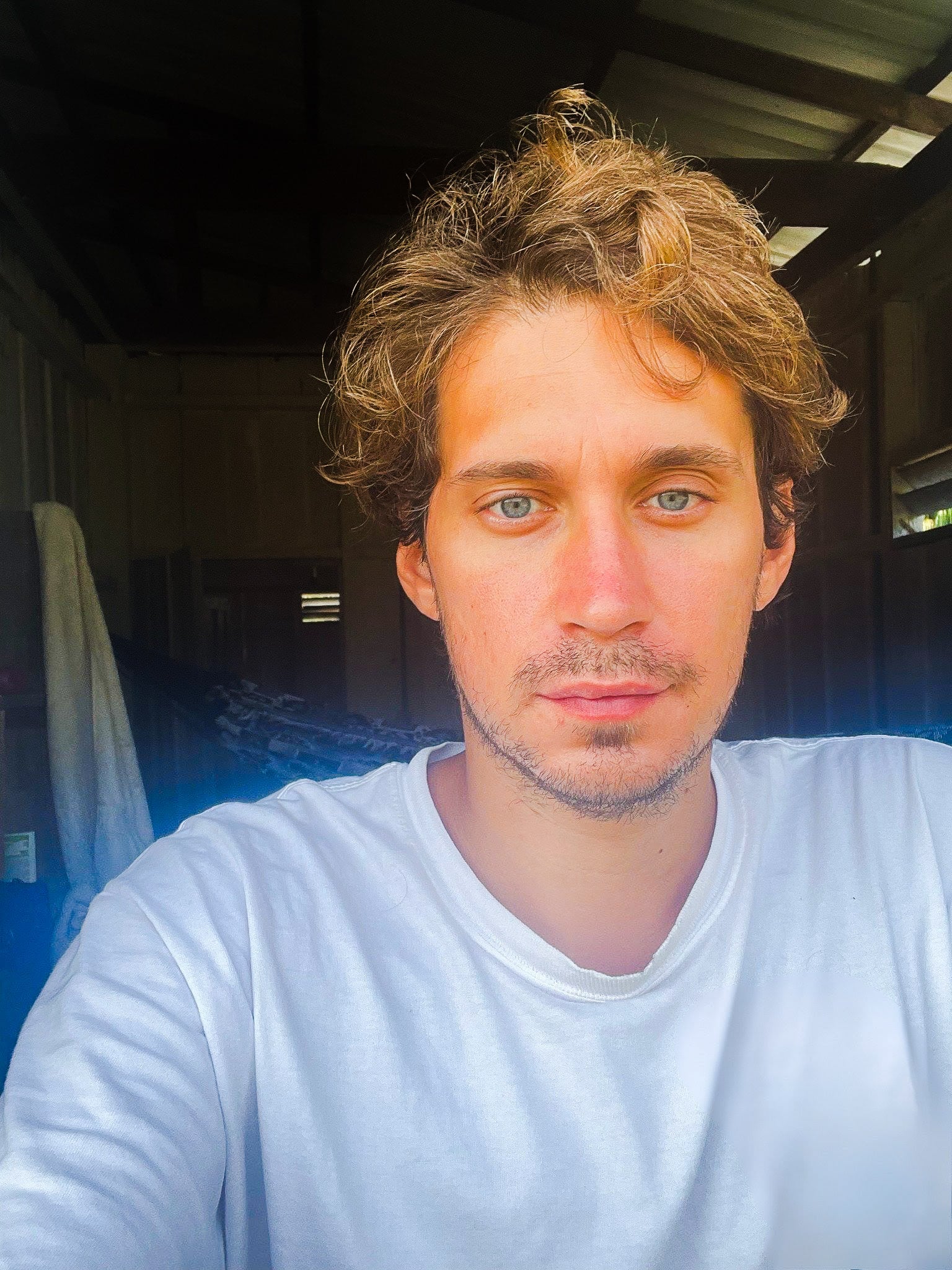
Adam Louis-Klein, a Jewish anthropologist, was living in an indigenous village in Colombia’s Amazon rainforest on October 7, 2023, studying the local Desana people, with no phone service or internet access.
Two days later, he made his way to a nearby town and reconnected to the wider world for the first time in months.
The first thing he saw was news of the Hamas slaughter in Israel. The second was his leftist colleagues justifying the terrorist invasion. He posted “Am Yisrael Chai” on Facebook and was berated for it.
“I was already starting to be purged. I soon lost virtually all of my social and professional contacts in academia,” he said. “I decided that it was important to have an intellectual response.”
Louis-Klein, 32, began to apply his background in philosophy and anthropology to studying anti-Zionism. He came to view the anti-Zionist movement as a new form of an old hatred — not a political ideology that bleeds into antisemitism, but a distinct chapter in the historical discrimination against Jews. He launched the Movement Against Antizionism (MAAZ) earlier this year as part of that effort to push back.
Louis-Klein and MAAZ are part of a network of scholars and activists pushing the Jewish community to tackle anti-Zionism as a hate movement, not as a political ideology. They argue that anti-Zionism has its own history, ideology and tactics that are used to target Jews, but that differ from how most Americans have historically understood anti-Jewish hatred, allowing anti-Zionists to evade charges of discrimination. The activists want American Jews to move on from the antisemitism paradigm as a framework for understanding discrimination against Jews, to stop quibbling about when anti-Zionism crosses the line into antisemitism, and instead confront anti-Zionism head-on.
Academics, activists and professionals are increasingly adopting the message, with statements, protest signs and new groups appearing in recent months decrying anti-Zionism as its own hate movement. An understanding of anti-Zionism also appears to be coalescing, with many of the groups putting out similar messaging.
Jewish roots revived in the jungle
Louis-Klein was raised Jewish, had a bar mitzvah, visited Israel as a youth, and was involved in Jewish life while studying philosophy at Yale University. He later became interested in Communist philosophy, adopted “radical leftist” views and moved away from his Jewish identity and connection to Israel, he told The Times of Israel in an interview.
That changed in the Amazon. Like Jews, the Desana, an indigenous tribe, view themselves as chosen by their God with whom they have “a distinct covenant,” Louis-Klein said. He had studied in an academy steeped in anti-colonial paradigms that he used to understand the Desana, and on October 7, saw those same ideas turned against Jews.
“We were being forcibly redefined as something we don’t define ourselves as — white colonists, European imperialists, people who have no history in the land of Israel,” he said. “Our voices were themselves being silenced. When we spoke back against this ideology, we were told that we were weaponizing antisemitism.”
Louis-Klein, currently a PhD candidate in anthropology at McGill University in Montreal, started engaging with anti-Zionists and studying their “stereotypical behaviors,” such as issuing anti-Israel “libels,” submitting others to litmus tests on Israel and marking out opponents as Zionists. He observed that scholars in his own area, anthropology, “reorganized the whole field around the genocide libel” against Israel since October 7.
He argues that libels, or false accusations of collective guilt against Jews, have been central to the persecution of Jews for centuries, from the medieval blood libel to the contemporary genocide accusation. In a recurring cycle, anti-Jewish societies invent libels, repeat them obsessively to stigmatize Jews, leading to violence, and after the violence, denial, he says.
‘Anti-zionism is not ‘criticism of Israeli policy’ but a movement built on defamation and denial — one that seeks the erasure of Jewish sovereignty and the diminishment of Jewish life everywhere’
“Anti-zionism is not ‘criticism of Israeli policy’ but a movement built on defamation and denial — one that seeks the erasure of Jewish sovereignty and the diminishment of Jewish life everywhere,” MAAZ says on its website. “It does not debate borders or governments; it indicts Jewish existence itself.”
Anti-Zionism is also seen as a threat because societies that have embraced the ideology have become largely inhospitable to Jewish communal life, from the Soviet Union to Iran.
Antisemitism as an outdated model
Louis-Klein and other scholars pushing the message believe the American Jewish community should move on from the antisemitism paradigm, which classifies discrimination against Jews using an outdated model.
While “antisemitism” has become a colloquial catch-all for discrimination against Jews, the term has a specific historical definition linking discrimination to past racial persecution of Jews. Anti-Zionists frame their activism as political advocacy for the Palestinians, and not motivated by race or religion.
When protesters at a synagogue shout at Jews that they are colonizers or settlers, though, they are not making a political argument, but deploying the terms as slurs, Louis-Klein argues, even if those slurs are not traditional antisemitic tropes.
“We think that the current frameworks basically grant them this exemption clause and continue this dynamic of the Jews calling the non-Jews antisemites and the-non Jews, the anti-Zionists specifically, basically libeling Israel and claiming that it’s all some big lie to even talk about antisemitism,” he said. “It doesn’t work, calling them antisemites.”
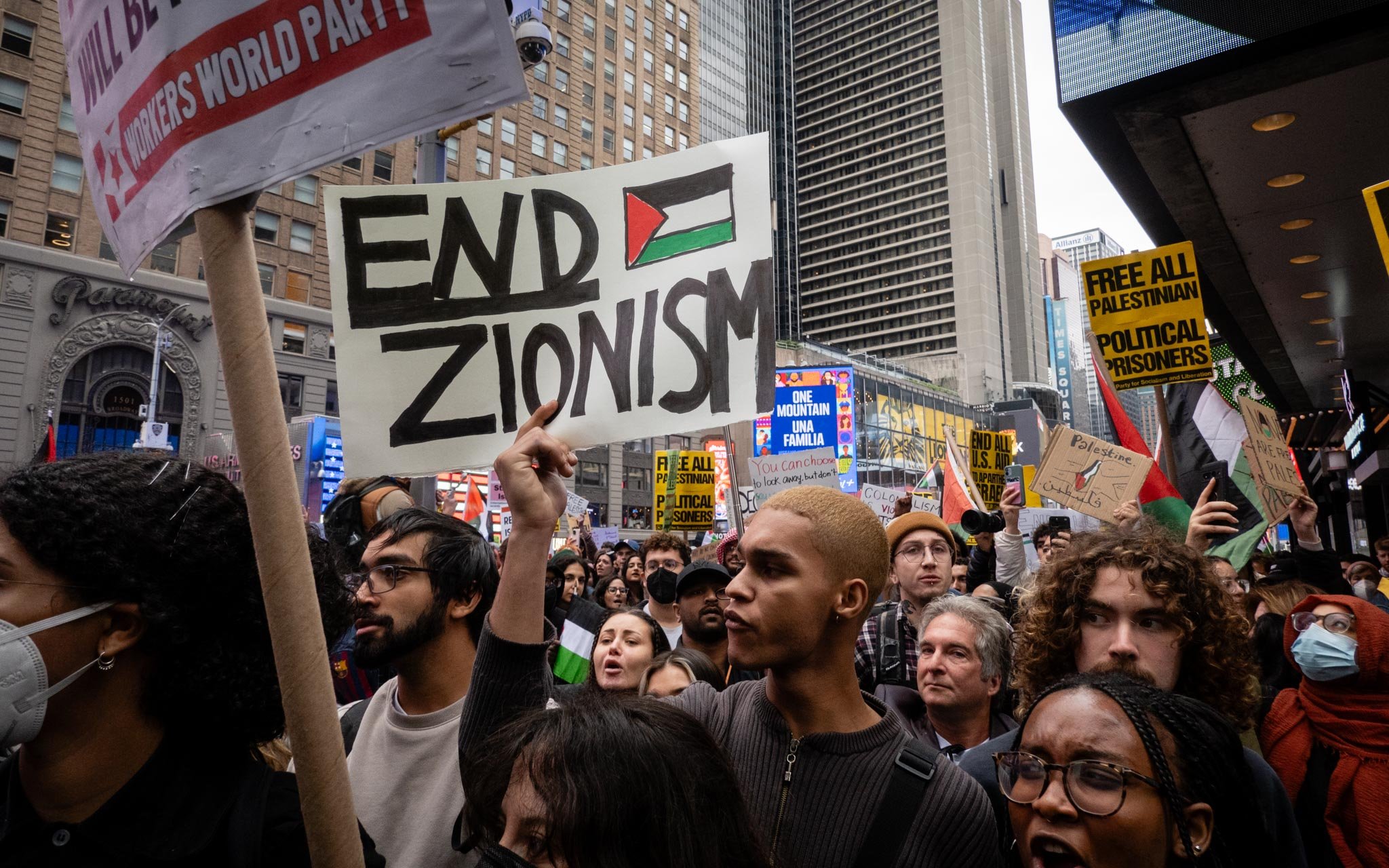
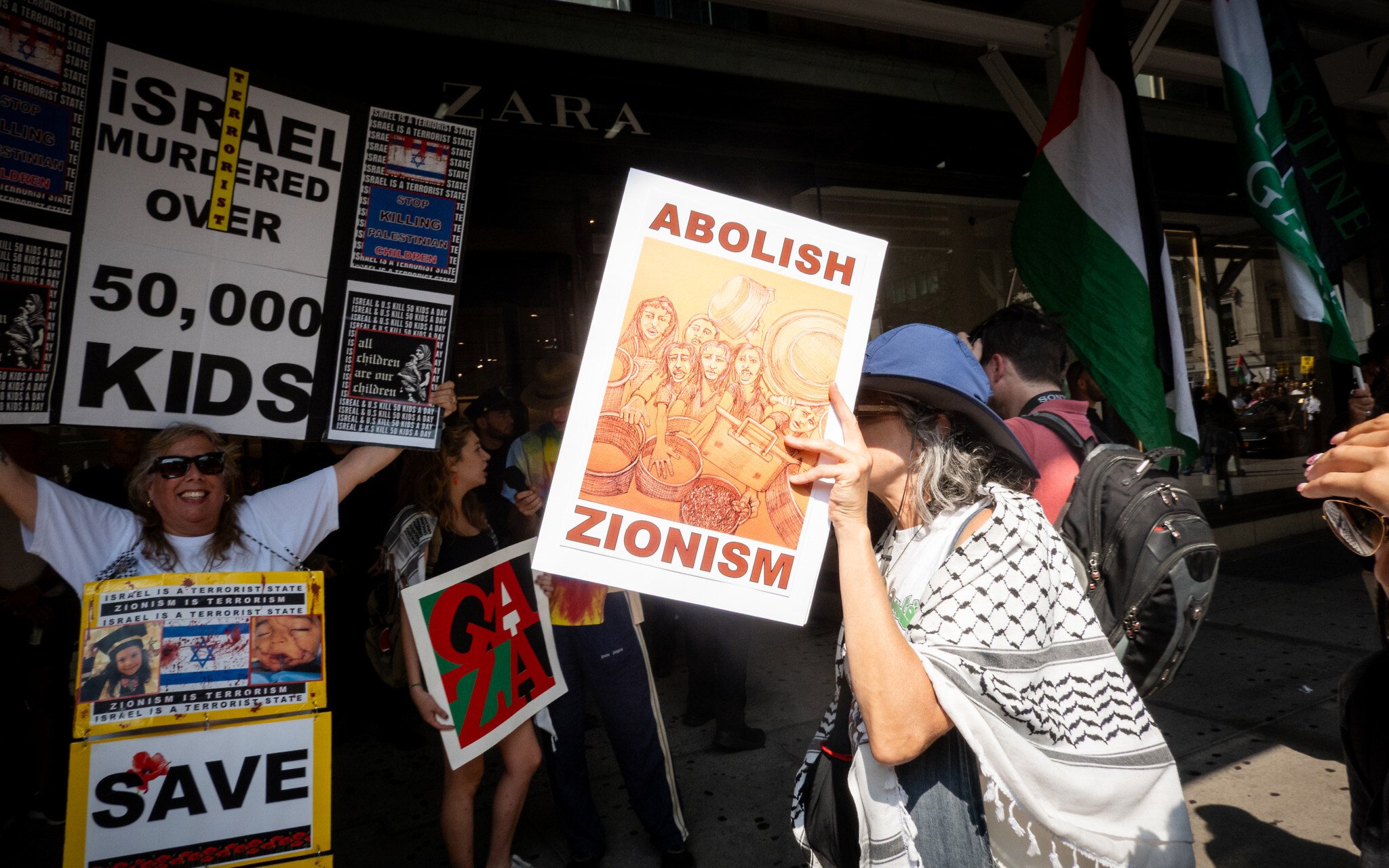
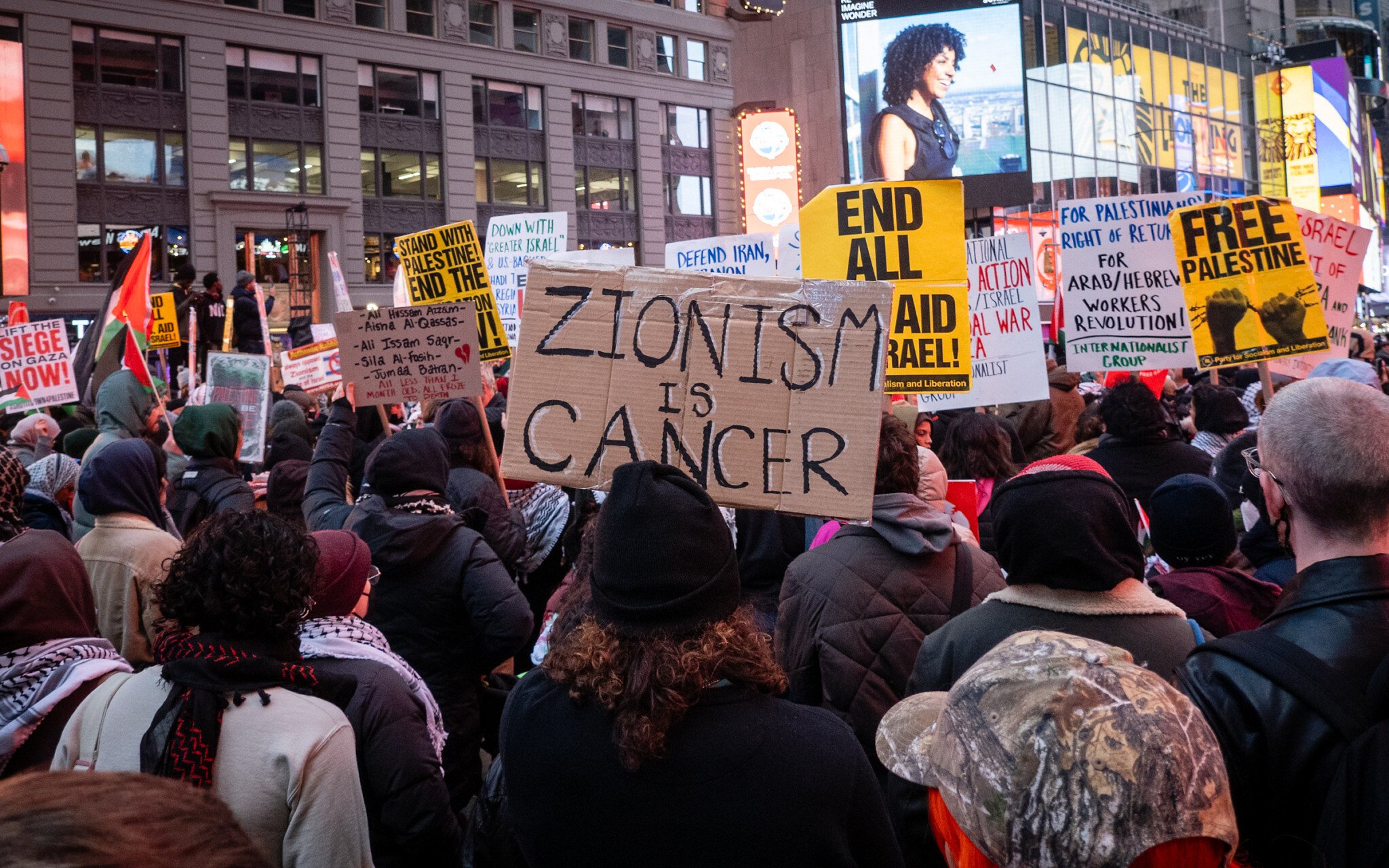
Zionism is defined by Jews as the support for Jewish sovereignty in Israel, a belief held by the vast majority of Jews. “Zionist” has largely become a derogatory term on much of the American left, though. Street protesters often chant “We don’t want no Zionists here” and have berated Jews as “Zionists” outside synagogues and in Jewish neighborhoods.
MAAZ has laid out its understanding of anti-Zionism — that it is based on three core libels that are repeated obsessively by activists, claiming that Zionists are colonizers, guilty of apartheid and committing genocide.
The movement’s ideological foundations lie in the Islamist-Nazi alliance led by Jerusalem’s Haj Amin al-Husseini in the World War II era, anti-Zionist Soviet propaganda, and the settler-colonial theory in Western academia, MAAZ says.
He and other academics advocate for the term “antizionism” — one word — similar to the accepted spelling of antisemitism.
The academics believe that anti-Zionism is the third major iteration in anti-Jewish hatred
The academics believe that anti-Zionism is the third major iteration in anti-Jewish hatred. The first was anti-Judaism, based on the Jewish religion, and the second was “classical” antisemitism, a race-based hatred of Jews exemplified by the Nazis, while anti-Zionism indicts Israel and Jewish peoplehood.
Those frameworks do not meet the moment, the scholars say.
After assailants killed Jews this year in Colorado and Washington, DC, for example, statements denounced the murders as antisemitic. Neither attacker voiced classical antisemitism, though. They did not condemn the Jewish religion or Jews as a race, but both said they killed to “free Palestine.” The Colorado firebomber shouted “end Zionists” during the attack, told police he wanted to “kill all Zionist people,” but said he didn’t discriminate against “all Jewish people.” The terrorists who massacred Jews at a Hanukkah event in Australia this month also said they were targeting “Zionists.”
New York City Mayor-elect Zohran Mamdani last week condemned an appointee’s past statement about “money hungry Jews” — a classic antisemitic trope — but defended other appointees who said “Zionism is racism” and that Zionists are worse than Nazis.
“We must distinguish between antisemitism and criticism of the Israeli government,” Mamdani said.
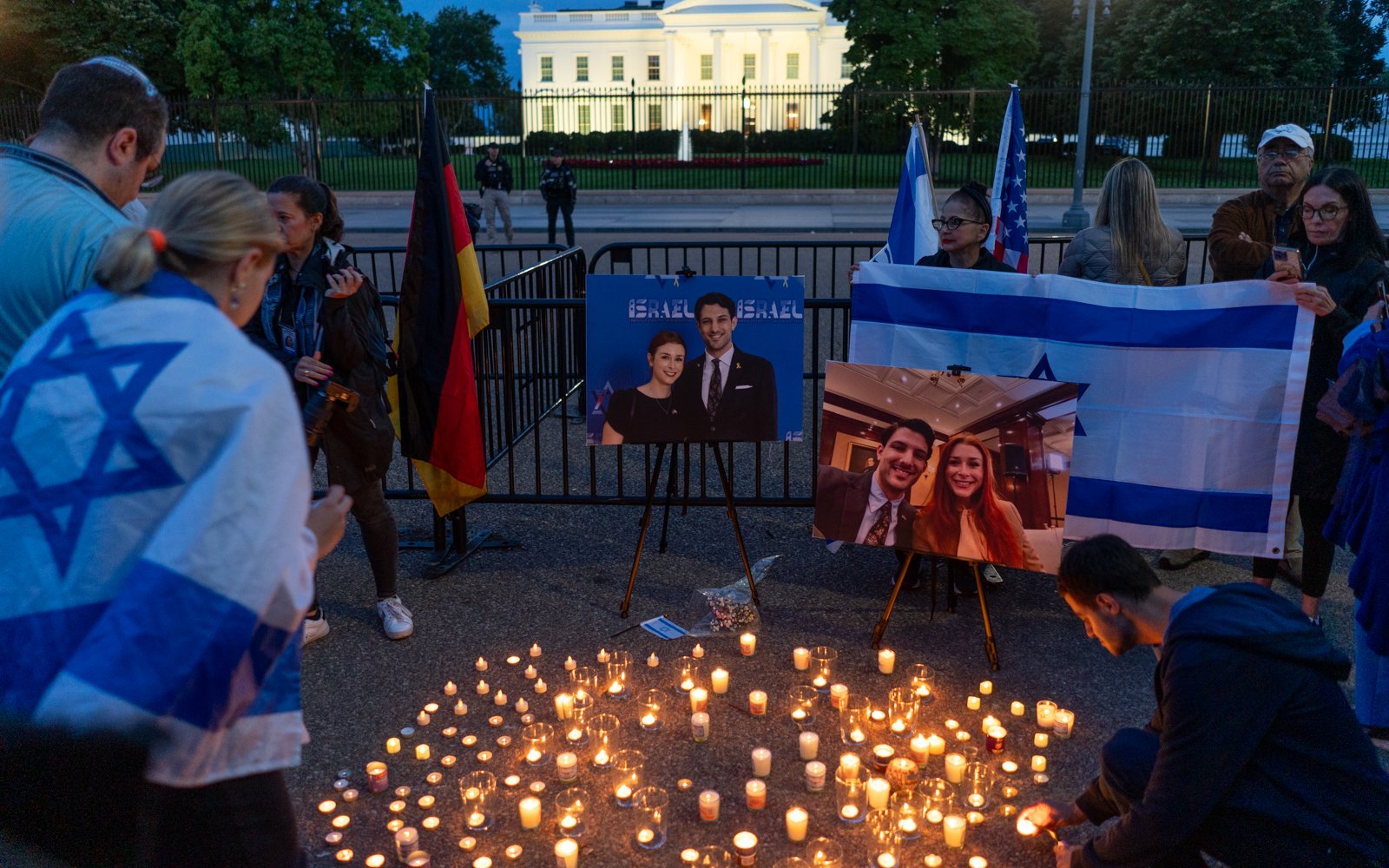
While the iterations are different, the underlying impulse is the same — casting Jews as the enemy, using the moral language of the time, whether it’s religion, race or human rights, said Naya Lekht, a researcher on Soviet history and the Holocaust and the co-founder of a group called Stop Antizionism.
“What’s unifying in all three eras is that this is a villain-constructing project,” Lekht said. “Our villainy is in opposition to what is considered the most moral thing of its time.”
“Today, the moral language is human rights, and so we are constructed as violators of the purity of human rights. The purity of Christianity, the purity of race, to the purity of human rights,” she said.
‘The leadership organizations right now should launch a full-scale campaign against anti-Zionism’
MAAZ argues that, like anti-Zionist Jews today, anti-Jewish movements have used Jews in the past, such as the Yevsektsiya, a Jewish branch of the Soviet Communist Party that persecuted other Jews.
The movement’s aim is to stigmatize anti-Zionism by calling out the libel cycle and educating others about anti-Zionist methods, ideology and history.
“The language needs to be right. It needs to be able to name what anti-Zionists are doing, name their tactics, name their behavior, instead of debating,” Louis Klein said.
“The leadership organizations right now should launch a full-scale campaign against anti-Zionism. They should educate people about anti-Zionism,” he said.
The term “antisemitism” itself was coined by anti-Jewish racists who defined Jews as “semites,” and was later recognized as a hatred and stigmatized.

Not all experts are on board with a paradigm shift.
Deborah Lipstadt, the former US envoy for antisemitism, said she was “skeptical” because antisemitism and anti-Zionism “overlap so directly and share the same tropes and share the same stereotypes.”
“It’s not that I’m against it, but I haven’t been convinced. What would we accomplish?” she said. “I fear it would simply confuse matters.”
She argued that Jews should “stress what Zionism is.”
“It’s the national liberation movement of the Jews. It’s rooted in our ancient traditions,” she said. “We should make the case that Zionism is a very positive, integral part of Jewish history, Jewish tradition, Jewish culture, the identity of being a Jew.”
A growing movement
The framework is increasingly taking root, showing up on the streets, in public statements, and as a topic of discussion. The single-word spelling of “antizionism” is becoming more common.
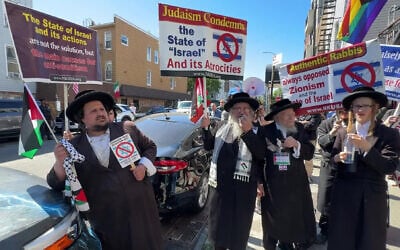
After a caustic demonstration outside a New York City synagogue last month, the Union for Reform Judaism condemned the event as an “anti-Zionist protest.”
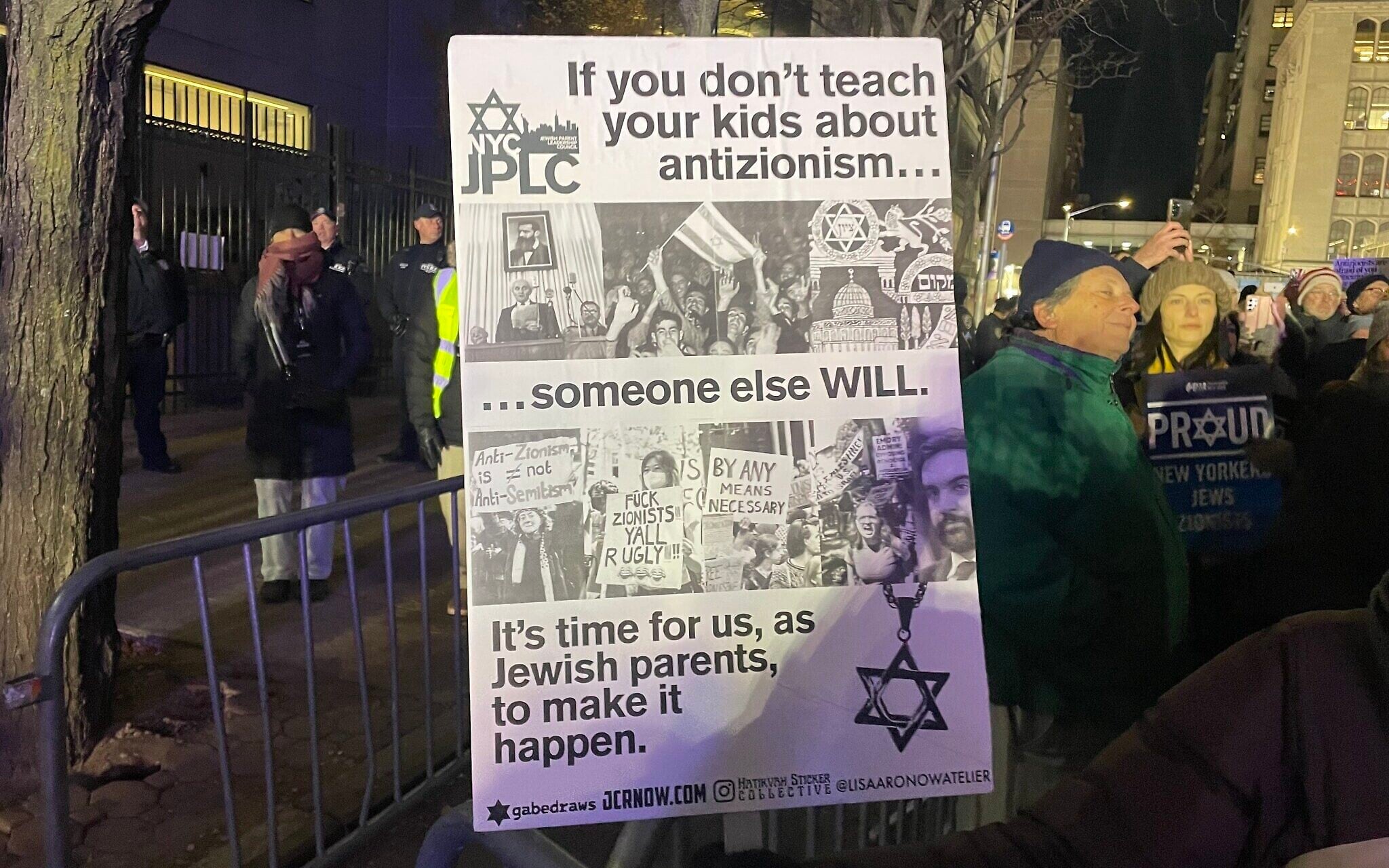
At a rally held in support of the synagogue, Jewish protesters held signs calling out anti-Zionism, not antisemitism. Some of the signs had the MAAZ logo, while others were homemade.
“Antizionists spread libels to mark Jews for violence,” one sign said. “Antizionism is a hate movement,” said another.
Last month, an anonymous group of Jewish medical professionals authored an “open letter on antizionism” in their field. The letter, signed by more than 1,000 health care professionals, said anti-Zionism “perpetuates the same cycle of libel, stigma and violence that has attacked Jews for centuries.”
Dr. Yael Halaas, the founder of the American Jewish Medical Association, was one of the letter’s signatories.
‘There’s a terrible disease state of antisemitism. The current strain is anti-Zionism’
“People who work in medicine and health care, when we see a pandemic, when we see a disease, we have to call out the most recent virulent strain,” Halaas said. “There’s a terrible disease state of antisemitism. The current strain is anti-Zionism, and that’s what we are seeing in health care.”
“Anti-Zionism is a problem and a disease unto itself,” she said.
Stop Antizionism has released a “global declaration” that asks signatories to affirm “that antizionism is the contemporary expression of Jew hatred in its latest form.” Lekht said that more than 10,000 have signed the document, including around a dozen grassroots Jewish organizations.
Andrew Pessin, a philosophy professor at Connecticut College, is launching the Institute for the Critical Study of Antizionism to facilitate academic research on anti-Zionism. Pessin envisions an interdisciplinary group of scholars, each focusing on their own area of expertise, such as Nazi or Soviet anti-Zionism. The institute will start with a series of webinars in February.
The institute is in its infancy, but Pessin said he has spoken to universities about hosting the project and a couple have expressed “keen interest.” Around 70 professors have contacted him about participating, he said.
There are academic centers that study antisemitism around the US, but none focus on anti-Zionism.
MAAZ acts more as an activist group, while the institute will focus on academic scholarship, Pessin said.
‘As is often the case, we Jews are years or decades behind. We’re always playing defense. They’ve captured the academy in large measure’
“As is often the case, we Jews are years or decades behind. We’re always playing catch-up. We’re always playing defense. They’ve captured the academy in large measure, as we all know. This is the dominant ideology in the academy,” Pessin said. “I think scholarship on this issue has become so incredibly corrupted by the dominance of the anti-Zionists that I want to reestablish the correct academic standards for the study of Zionism.”
Louis-Klein has become a common guest on Jewish podcasts and has written about his views for the news and on social media, finding a wide audience. (He has also written on The Times of Israel’s open blogging platform.)
Last month, Louis-Klein hosted an event in the basement of the CUNY Graduate Center in midtown Manhattan. The room overflowed with attendees, many of them academics grappling with activism on their campuses.
“Why are people so credulous about these libels?” one professor asked. Another asked if Jews should stop identifying as Zionists because, now that Israel exists, using that label keeps questions about its continued existence at the surface.
After two hours, as organizers said they had to wrap up the event, hands were still raised around the room.

The Times of Israel Community.