

Population authority chief suggests initial cap on Ukraine refugees was a mistake
Tomer Moskowitz says main impetus for policy change was High Court petition against quota; acknowledges officials unable to know how many people will arrive under new rules
 Add ToI as a Preferred Source on Google
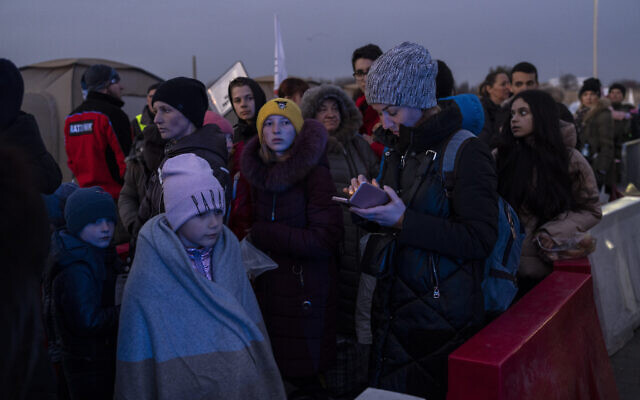
The director of the Population and Immigration Authority on Monday suggested Israel was wrong to initially implement a 5,000-person entry cap for Ukrainian refugees.
“In retrospect, we shouldn’t have implemented it. In fact we changed the decision,” Tomer Moskowitz told Kan public radio. “It was important for us to convey to those in Romania, Moldova and other countries that they should consider more options and not just arrive in Israel.”
His comments came after Interior Minister Ayelet Shaked announced Sunday that those fleeing the Russian invasion with relatives in Israel will be exempt from a 25,000-person quota on Ukrainian refugees who are not eligible for Israeli citizenship.
Prior to the change, Israel limited entry to 5,000 Ukrainian refugees not eligible for citizenship, alongside the approximately 20,000 Ukrainian nationals already in the country when the war began.
Moskowitz defended the previous policy, saying the main objective was prevent people from just getting onto flights and trying to claim asylum once in Israel.
He asserted that it was understood from the beginning that the cap would be in place for a limited time.
Moskowitz also acknowledged officials were unable to estimate how many refugees will arrive in Israel under the new rules.
“However,” he said, “we will be able to stop it at any moment.”
“If in two weeks we see the numbers are at a point the country cannot cope with, we will look into the policy.”
Despite the strident criticism of the policy, Moskowitz said the main reason for Sunday’s change was a High Court petition filed on behalf of the Ukrainian embassy against the cap, which argues the quota conflicts with a visa waiver agreement between Ukraine and Israel.
According to Kan, officials in the Justice Ministry cited possible legal difficulties in maintaining the quota due to this agreement.
On Monday, the High Court said it will hear the petition in a week, rejecting the state’s request to throw the case out.






The Times of Israel Community.