

Ultra-Orthodox said expected to push hard line on Shabbat in coalition talks
Agudath Israel document reportedly calls for party’s MKs to be appointed to Knesset bodies deciding laws to ensure they adhere to religious strictures
 Add ToI as a Preferred Source on Google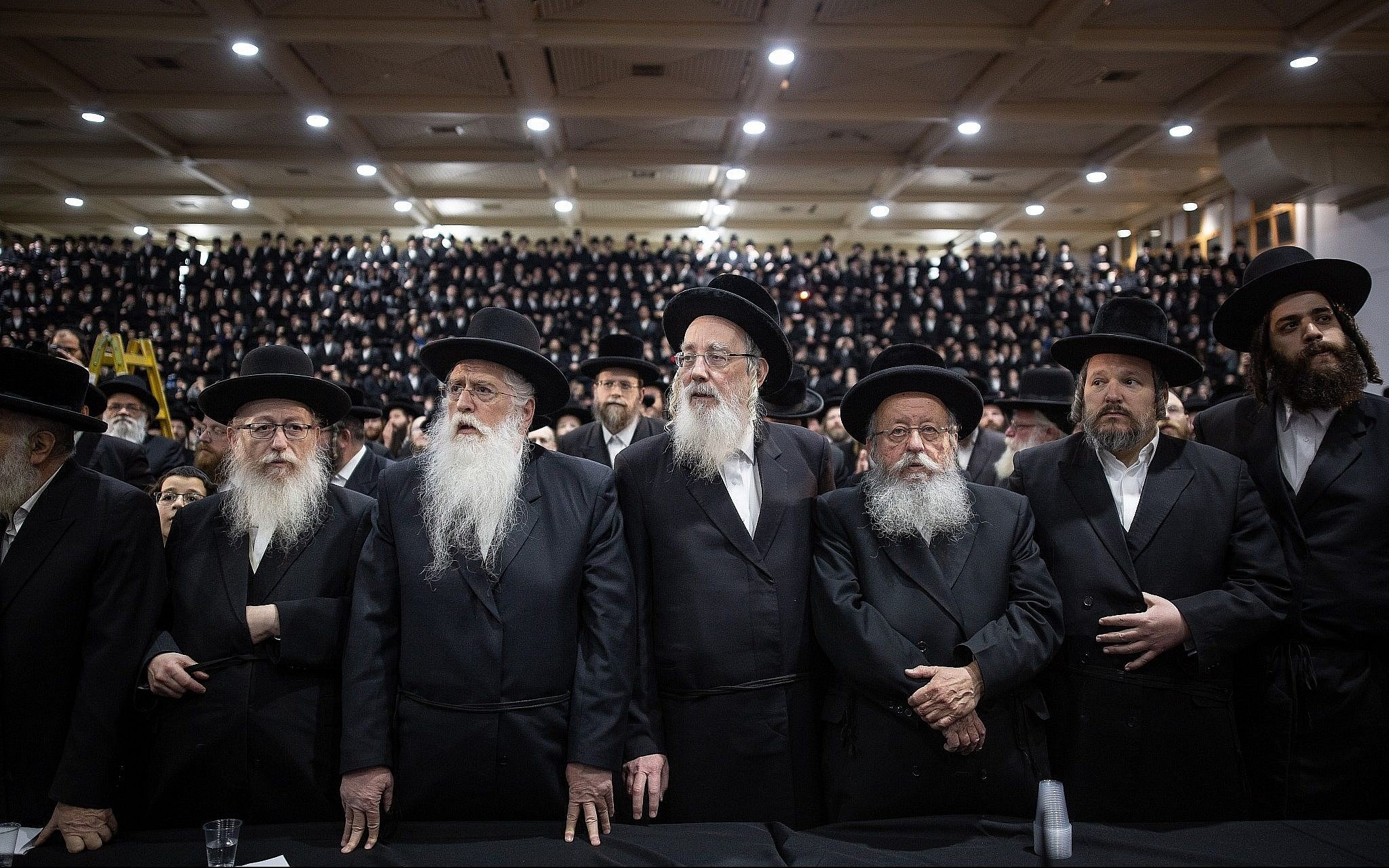
An internal document submitted to leaders of the Agudath Israel party gave a first glimpse into ultra-Orthodox political priorities going into the April elections.
The document outlines major grievances against the state and public sector, mostly related to preserving Shabbat, and recommendations for how to address them, according to a report Friday from the Ynet news site.
A committee called the “Forum for the public Shabbat” submitted the document on Thursday to Agudath Israel, its leader Yaakov Litzman and other party heads while they met in Netanya for two days to discuss a range of issues ahead of the elections.
The committee is an external forum whose position is non-binding, but it represents major ultra-Orthodox organizations and activists and has had significant influence on ultra-Orthodox politicians in recent years.
The committee proposed taking a hard line for their entry into the next government, according to the report, with a focus on cutting back public transportation operations on weekends and stronger enforcement against businesses operating during Shabbat hours.
The committee suggested demanding representatives from United Torah Judaism, an alliance of Agudath Israel and Degel Hatorah, be appointed to the Knesset bodies deciding the laws to make sure they conform to religious restrictions.
The document singled out Welfare Minister Haim Katz — saying he “greatly harmed the public’s Shabbat” for dispersing work permits and Shabbat — and Interior Minister Aryeh Deri, who leads the ultra-Orthodox Shas party, for permitting supermarkets to remain open during Shabbat hours, the report said.
Lawmakers from United Torah Judaism have previously sparked coalition crises over public works projects on Shabbat, during which work is prohibited under Jewish law, including most recently over a pedestrian bridge spanning a major Tel Aviv highway.
Last month, a week after officially splitting in what they called a “procedural” move, the ultra-Orthodox Degel Hatorah and Agudat Yisrael factions signed an agreement to run together in the April elections as the United Torah Judaism party with, for the first time, an equal number of candidates from each side on the slate.
In addition to the new unity deal, January reports claimed that UTJ is also in talks with Shas — whose electoral base is made up largely of ultra-Orthodox Jews of Middle Eastern, or Sephardic, descent — about a possible merger.
Prime Minister Benjamin Netanyahu has also reportedly backed the prospective alliance and offered to mediate between the sides, with the aim of forming a sturdy right-wing bloc after the elections.







The Times of Israel Community.