

Ultra-Orthodox United Torah Judaism splits into two parties, for now
Degel Hatorah and Agudat Yisrael formally part ways, but say the breakup is only ‘procedural’ and won’t prevent them running together in April elections
 Add ToI as a Preferred Source on Google
Raoul Wootliff is a former Times of Israel political correspondent and Daily Briefing podcast producer.
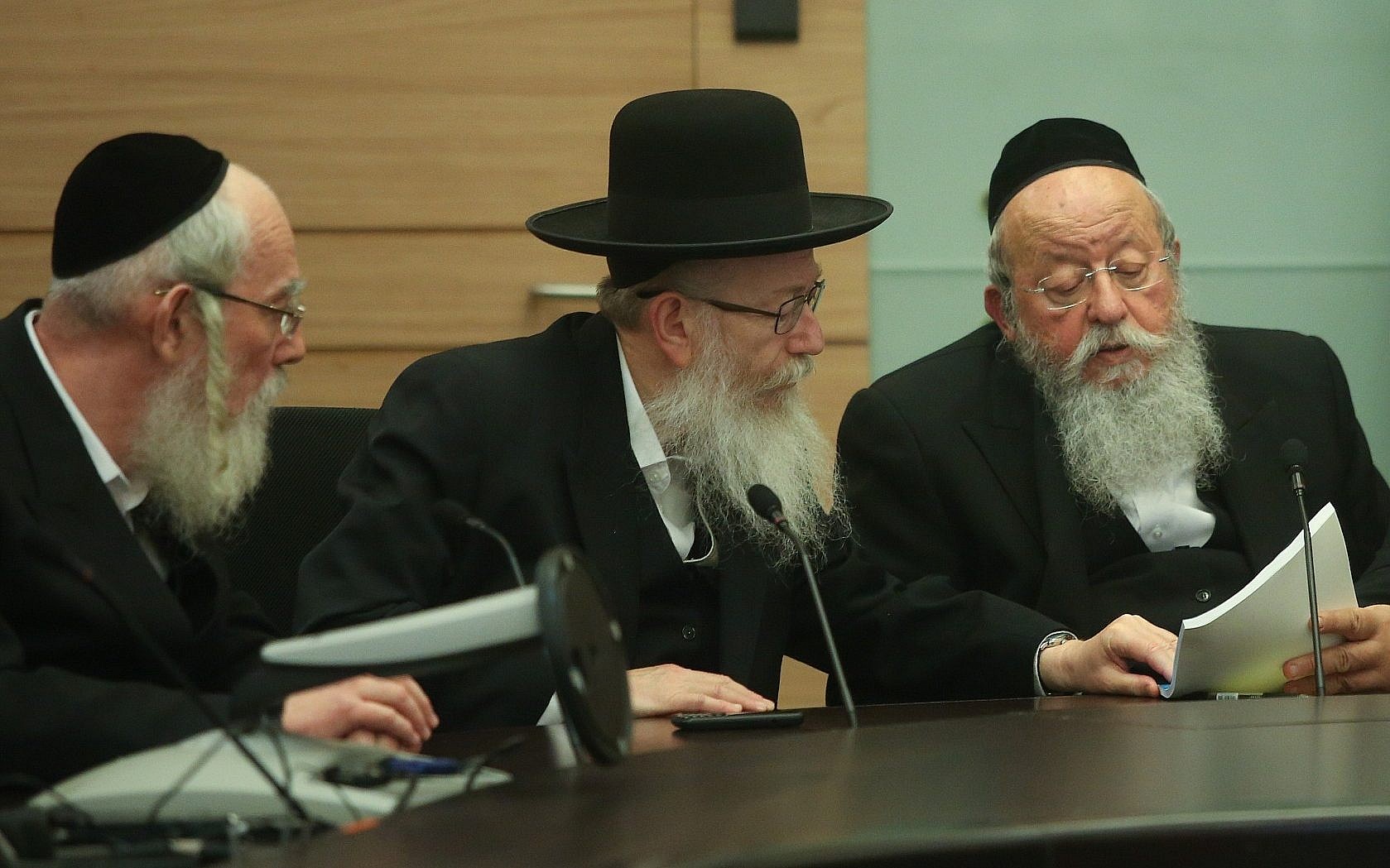
With parties from across the political spectrum seemingly engaging in molecular cell division in recent days, the ultra-Orthodox United Torah Judaism party announced Wednesday morning that it would also be splitting in two. Still, it stressed, the breakup was only “procedural” and would not prevent the separate elements from running together in April’s elections.
In a letter to Knesset House Committee Chairman MK Miki Zohar Wednesday morning, UTJ said that in accordance with an agreement made before the previous election, its two separate factions — Degel Hatorah and Agudat Israel, representing Ashkenazi Jews from the Lithuanian (non-Hasidic) and Hasidic communities, respectively — would formally split.
Speaking at a House Committee session, which was originally called to formalize the breakup of the Joint (Arab) List party, the head of the Degel Hatorah faction, MK Moshe Gafni, underlined that the ultra-Orthodox split was not permanent.
“The request to split the factions… is a well-known, prearranged, procedural move between the factions, without any significance for the manner in which we will run in the coming elections,” he said.
A party spokesperson told The Times of Israel that the move allowed the two factions to receive their state election funds separately instead of jointly.
In the 2015 elections, Agudat Yisrael held 60 percent of UTJ’s electoral list, with Degel Hatorah candidates filling the remaining 40%. In the united Knesset party of six seats, that works out to four and two seats, respectively.
The two Haredi factions went head-to-head in the local elections in October, backing different candidates in various cities in campaigns that frequently turned acrimonious. Surprising many in the ultra-Orthodox community, Degel Hatorah vastly outperformed Agudat Yisrael, winning almost double the number of municipal seats nationwide.
Some in the Lithuanian faction have since called to change the ratio between the two parties on the national unified list.
Regardless of Tuesday’s split, reports emerges earlier this week that UTJ was in talks with the Shas ultra-Orthodox party — whose electoral base is made up largely of ultra-Orthodox Jews of Middle Eastern, or Sephardic, descent — about a possible merger.
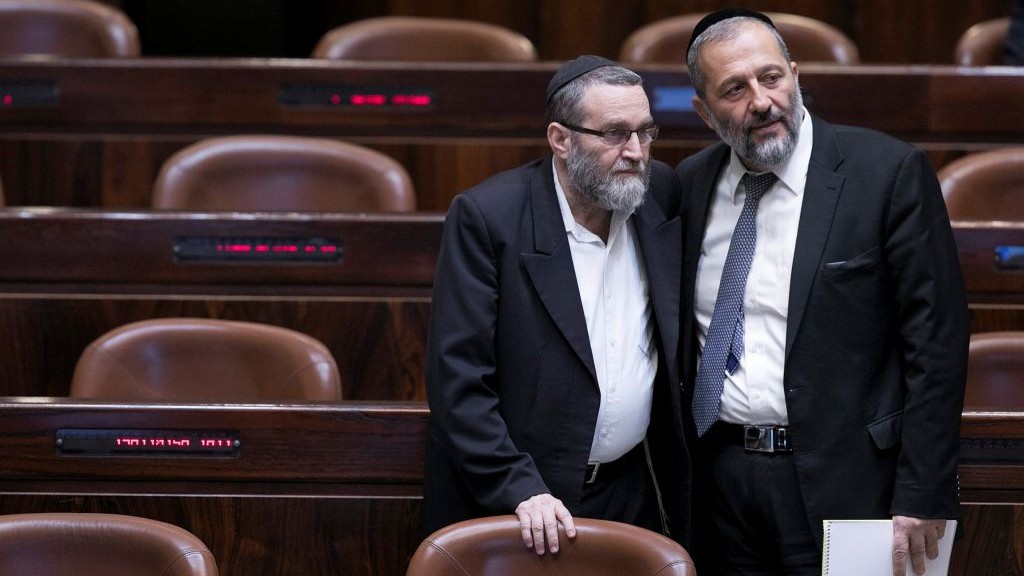
The initiative is reportedly being supported by a number of rabbis, among them Rabbi Chaim Kanievsky, a leader of the Lithuanian community who is considered close to Interior Minister Aryeh Deri, who leads Shas.
Prime Minister Benjamin Netanyahu has also reportedly backed the prospective alliance and offered to mediate between the sides, with the aim of forming a sturdy right-wing bloc after the elections.
Once considered a kingmaker in Israeli politics, Shas won 10 Knesset seats or more from 1996 until the 2015 elections, when it dropped to seven seats following the death of its longtime spiritual leader, Rabbi Ovadia Yosef. Recent polls have put Shas at four to five seats, just above the minimum vote threshold needed to enter the Knesset.
The electoral threshold may also cause problems for the now separate factions of the Joint (Arab) List, which also formally split in Wednesday’s committee meeting, a day after after veteran Israeli Arab lawmaker Ahmad Tibi announced that his Arab Movement for Renewal party would sever ties with the Joint List alliance, indicating the party could run independently in the elections.
The Joint List was formed in January 2015 after the Knesset raised the electoral threshold, increasing the percentage of votes a party must win to earn a seat in the 120-seat parliament from 2 to 3.25 percent. The Joint List, a coalition of communists, Palestinian nationalists, religious Muslims and feminists, won 13 seats in the March 2015 Knesset elections, becoming one of the largest factions in the opposition.








The Times of Israel Community.