

Urging end to Iran deal, Netanyahu envisions march of the sanctions
Mostly doing away with quips and metaphors, PM’s UN speech partially lays out plan for how to ‘fix or nix’ the nuclear pact, though holes in scheme remain

 Add ToI as a Preferred Source on Google
Raphael Ahren is a former diplomatic correspondent at The Times of Israel.
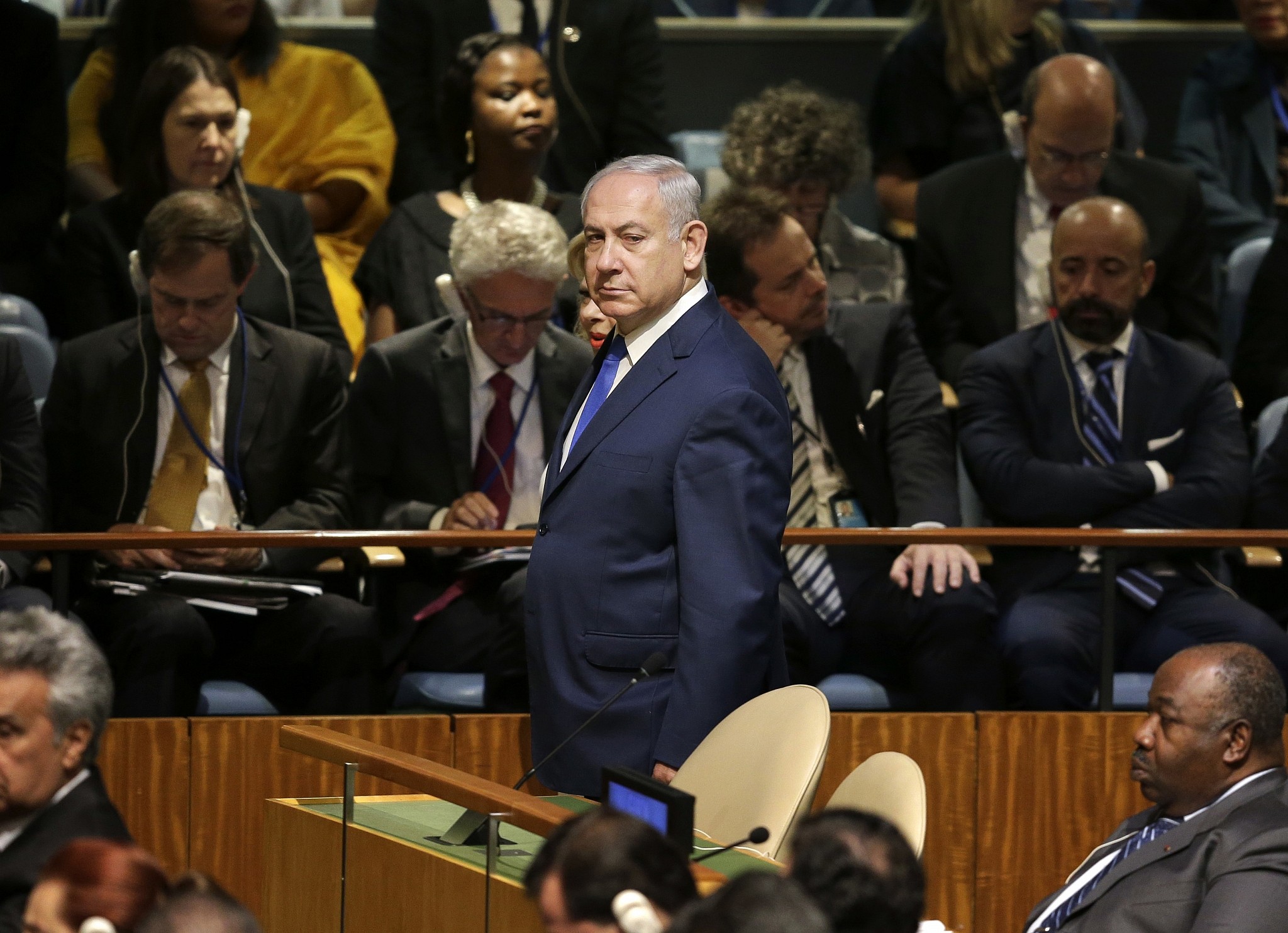
NEW YORK — In 2012, it was the nuclear duck. A year later the Iranian president wanted to have his yellow cake and eat it, too. And now it is the penguins who can recognize that some things are black and white, are right and wrong.
When Prime Minister Benjamin Netanyahu delivers major policy speeches, the metaphors are manifold, colorful, often humorous — but the core messages are usually the same: Iran is a danger to the free world, we have no stronger friend than the US, and Israel is ready for peace with the Palestinians and indeed the entire Arab world (though his commitment to the principle of “two states for two peoples,” expressed last year, was absent from Tuesday’s speech.)
Tuesday’s address was different. Mostly discarding the cartoon bombs and other cutesy quips his speeches have been remembered for (aside from the penguins), Netanyahu got down to brass tacks on what to do about the hated nuclear deal, emboldened by the presence of US President Donald Trump in the Oval Office.
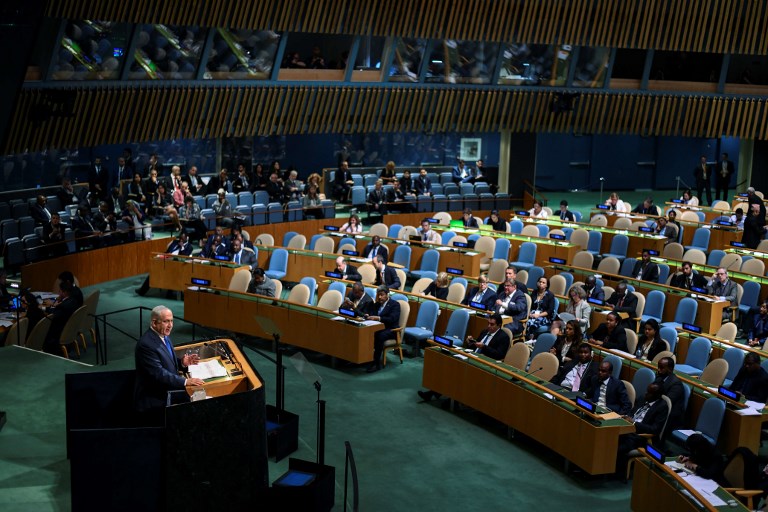
He railed last year too against “Iran’s aggression and Iran’s terror” and vowed not to let the regime ever obtain nuclear weapons, but he could not dream about having an American president who would talk about canceling or amending the deal.
This year, though, Netanyahu went all in. Israel’s policy vis-a-vis the nuclear accord is very simple, he declared: “Change it or cancel it. Fix it or nix it.”
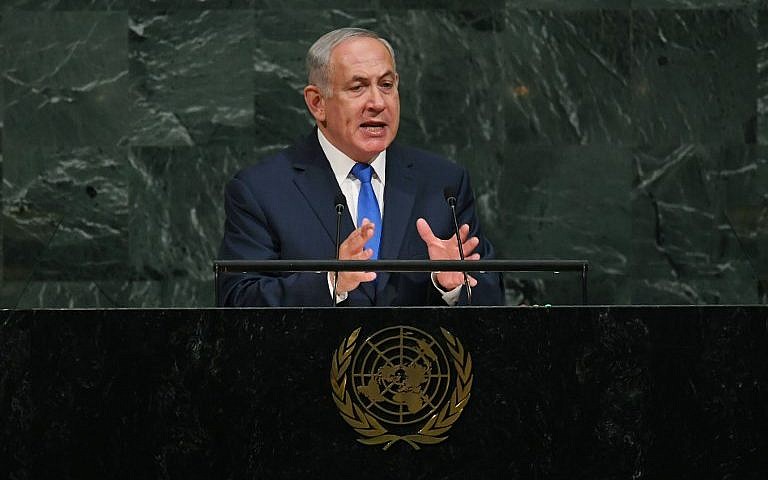
A clever soundbite, to be sure, but Netanyahu also explained what that means, at least partially.
“Nixing the deal means restoring massive pressure on Iran, including crippling sanctions, until Iran fully dismantles its nuclear weapons capability,” he said. “Fixing the deal requires many things, among them inspecting military and any other site that is suspect, and penalizing Iran for every violation. But above all, fixing the deal means getting rid of the sunset clause.”
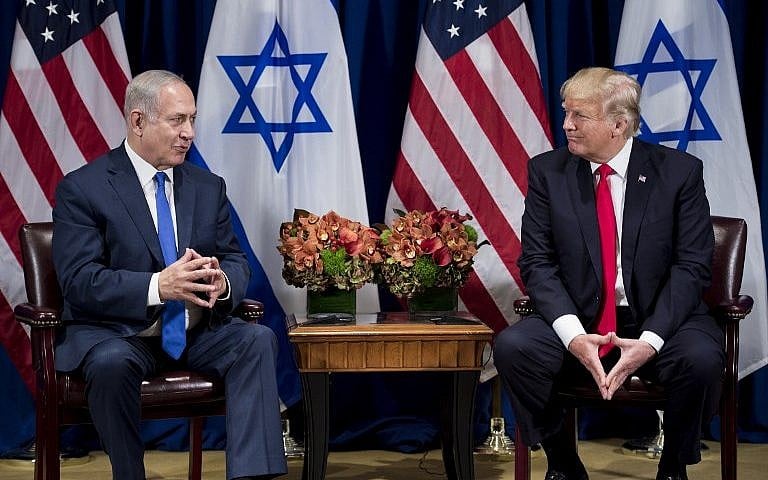
In advocating to reopen the Iran deal, Netanyahu — who said he had discussed with Trump ways to “fix” the agreement — is betting mainly on the power of sanctions. It was crippling sanctions that brought Iran to the negotiating in the first place, his thinking goes, and with even harsher sanctions, the Islamic Republic can be forced to entirely dismantle its nuclear ambitions.
Supporters of the deal, which Iran signed with six world powers, disagree. They posit that it took years and many rounds of tough negotiations to create the sanctions regime, and that it would be impossible to do the same thing over again.
Even if the US were to unilaterally withdraw from the deal, and again impose harsh sanctions on Iran, other major players — such as Russia, China, Japan and others — are unlikely to follow suit, neutering the impact of US sanctions to a degree.
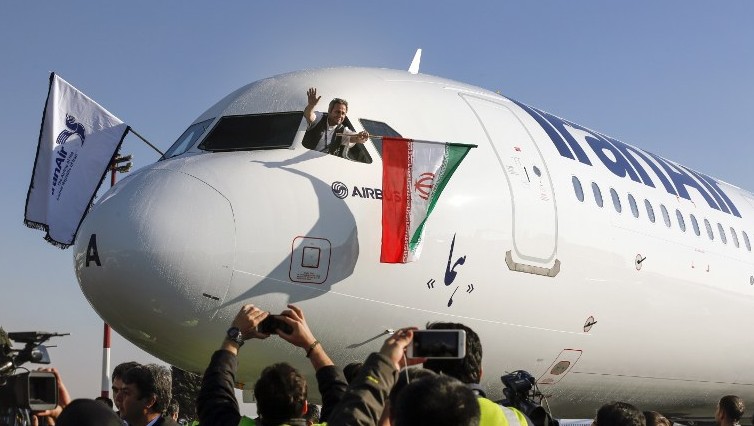
With international sanctions removed, corporations in Europe and elsewhere have happily re-entered the Iranian market, and countries are unlikely to cease trade with Tehran just because Netanyahu and Trump don’t like the deal, supporters of the pact say.
In his speech, Netanyahu did not address such concerns. But during a briefing for reporters Monday, he expressed his full conviction that if the US were to rip up the deal — as Trump has indicated he might do — other world powers would follow suit.
What gives Netanyahu the confidence to believe the entire world will fall in line with the US position is the supremacy of its financial power.
Just as he did before the deal was signed, Netanyahu still believes that the world’s largest economy has significant leverage over all other countries. If the White House threatened to cease or limit trade with countries that don’t join its anti-Iran policies, the nations of the world would be sure to quickly join a new international sanctions regime, Netanyahu’s thinking goes.
As one senior Israeli official put it this week, “To have Iran’s economy — that’s nice. To have the American economy — is a must.”
Sanctions of that type are incredibly rare and can backfire by isolating the sanctioning regime, so its not clear why Netanyahu thinks Trump, in the midst of a drive to make the American economy great again, would be willing to punish every country that does not impose sanctions on Iran.
The senior official did not offer any clarity on the issue.
As much as Trump loathes the nuclear accord — he called it an “embarrassment” on Tuesday — it remains to be seen if he will risk hurting America’s own economy by potentially barring crucial trade partners from its markets.
Sometimes, unlike penguins, things are not so black and white.








The Times of Israel Community.