

A second wind for Montefiore’s magnificent Jerusalem windmill
After over a century of inaction, the formerly functional landmark — built at an optimal site, above the city’s main water source — is restored to its full, four-bladed glory
- See more Times of Israel on Google - add us as a Preferred Source
Jessica Steinberg, The Times of Israel's culture and lifestyles editor, covers the Sabra scene from south to north and back to the center
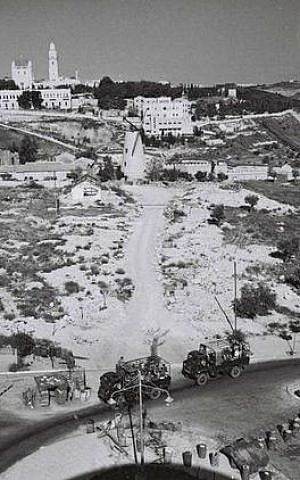
The Montefiore windmill is one of those quintessential Jerusalem landmarks. It’s a cupola-capped English-styled mill located in Mishkenot Sha’ananim, part of Yemin Moshe — the first Jewish neighborhood built in the late 1800s outside the walls of the Old City by Moses Montefiore, the English banker and philanthropist.
Montefiore was a fan of Jerusalem, visiting the city seven times and donating money to build Yemin Moshe and the mill, styled after those in his Ramsgate, Kent hometown. He wanted the poor, 19th century Jerusalem residents to have their own mill in order to become self-supporting, but it closed after just 18 years of operation.
Over the last 100 years, locals were rarely able to say whether it ever had functioned as a windmill, grinding wheat into flour for those earlier holy city inhabitants. But they knew it was a cool, breezy spot, a popular backdrop for bridal couples being photographed or anyone seeking a good view of the ancient city walls.
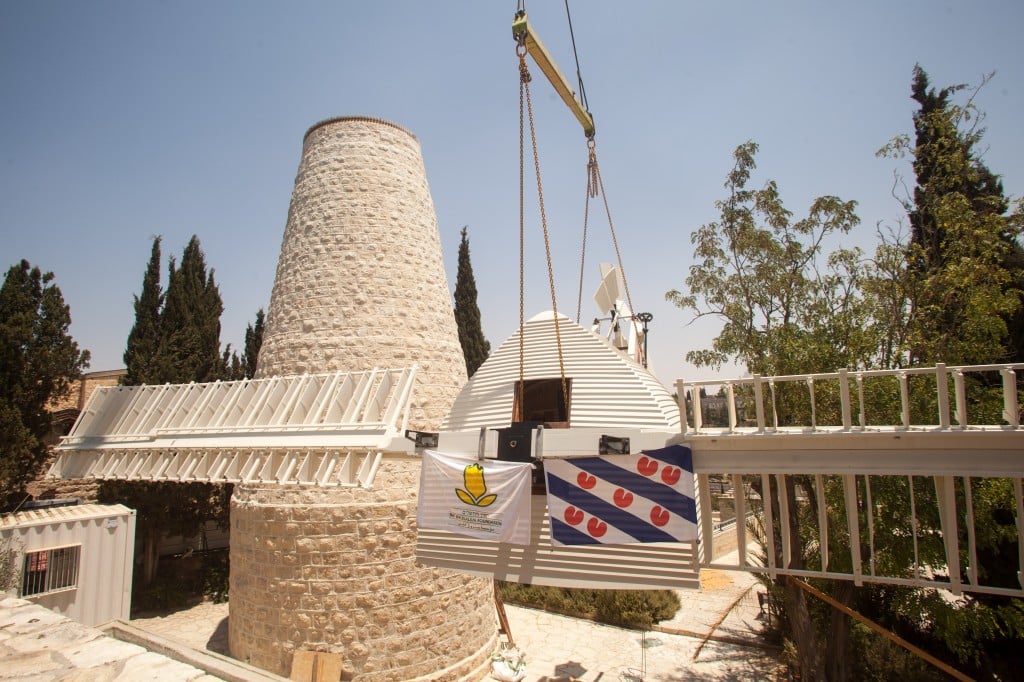
It required the efforts of one Dutch windmill enthusiast and frequent Jerusalem visitor — D.G. Schutte — to help restore the windmill to its full, four-bladed glory and potential flour-grinding abilities. The project cost NIS 5 million ($1.25 million), raised by the nonprofit Jerusalem Foundation from Jewish and Christian philanthropists, the Prime Minister’s Office, the Ministry of Tourism and the Jerusalem Municipality.
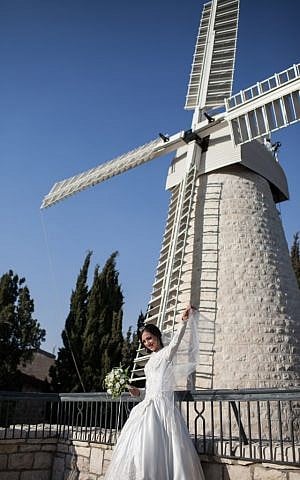
Now, as the windmill was rededicated this week, with those blades turning again, and a series of activities designed to reintroduce the site to Jerusalemites, visitors are hearing the true story of the capital city’s one and only aerogenerator.
“Montefiore had two goals, to get the Jews to work and to produce their own food,” said Professor Shaul Sapir, a geographer and historian at the Hebrew University who tends to scoff at the rumors of bad winds and other “bubbe meise” claims that the mill was only used briefly. “They sent someone to build it who knew what they were doing. Everyone brought their wheat here.”
The windmill was built at an optimal site, said Sapir, above Jerusalem’s main water source. But it was closed when it broke in the late 1800s, and wasn’t fixed because the replacement parts were too costly, having been built by the Holman Company in England.
One hundred and thirty-five years later, the restoration required efforts similar to Montefiore’s back in 1855, when he had the windmill built. The project leaders had to locate the only people “alive who understand English windmills,” says Alan Freeman, the Jerusalem Foundation vice president who helped guide the project.
Several experts from Holland and one master windmill craftsman in Britain, including the still-existing Holman company, which located the windmill’s original designs, helped restore the structure. Now, as before, it includes the white cupola at the top, weather vane behind and four vanes, although it will be electrically powered in this latest state of renewal.
“It was serendipity,” said Freeman. “Most of the work was carried out in a small workshop in Holland, and then sent here. They then worked here, restoring the inside of the windmill which had been an empty shell.”
Next April, four floors of the windmill will be open to the public, demonstrating how wheat was stored and ground, the grains collected and gathered. Freeman views it as a natural tourist site, one which demonstrates an old technology — windmills for flour, not wind energy like the wind generators up north — that doesn’t otherwise exist in Israel, and telling the narrative of Jewish Jerusalemites at the turn of the century.
To that end, children and families flocked to the windmill late Wednesday afternoon, taking part in activities aimed at reintroducing the beloved landmark to Jerusalem residents.
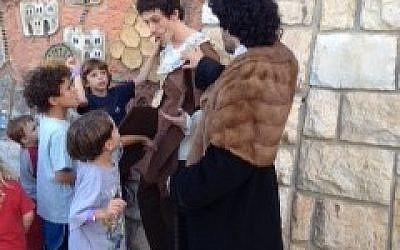
They made pinwheels, baked bread, were photographed in period costumes or had portraits drawn by two caricaturists. Costumed street players entertained the crowd, one channeling Moses Montefiore in a fur cape, chatting and chasing children around the area.
There was also a Train Theater puppet show, tours of the next-door Yemin Moshe neighborhood (named for its benefactor: the “right hand of Moses”), and a theatrical tour of Yemin Moshe for adults.
The final event of the evening was a literary talk with Simon Sebag Montefiore, a great-great nephew of Moses Montefiore, on his book “Jerusalem, The Biography,” which spans 3,000 years of the city’s history. It includes a brief mention of the “Kentish” windmill and English-styled cottages of Mishkenot Sha’annaim, styled after Montefiore’s hometown in England.
In talks about his 620-page tome, Sebag Montefiore often mentions his family crest, which is the word Jerusalem, in Hebrew, scribbled over a lion of Judah. Jerusalem was a passion for his ancestor, who was a hero to his descendants, and whom Sebag Montefiore and his cousins often referred to as “Uncle Mo.”
To Jerusalemites, however, he is renewed again as the man behind the mill.








The Times of Israel Community.