

Bill to limit Law of Return shot down despite support from ultra-Orthodox MKs
Controversial legislation would have revoked right of non-Jewish grandchildren of Jews to immigrate to Israel and automatically obtain citizenship
 Add ToI as a Preferred Source on Google
Sam Sokol is a former political correspondent at The Times of Israel. He was previously a reporter for the Jerusalem Post, Jewish Telegraphic Agency and Haaretz. He is the author of "Putin’s Hybrid War and the Jews"
Lawmakers on Wednesday voted down a controversial bill intended to deny non-Jews the right to immigrate to Israel and automatically obtain citizenship even if they have at least one Jewish grandparent.
The bill, which would have changed Israel’s longstanding rules on who is eligible for citizenship, was rejected 18-54 in its preliminary reading, despite the support of ultra-Orthodox lawmakers, who broke a boycott on coalition bills to vote for the measure.
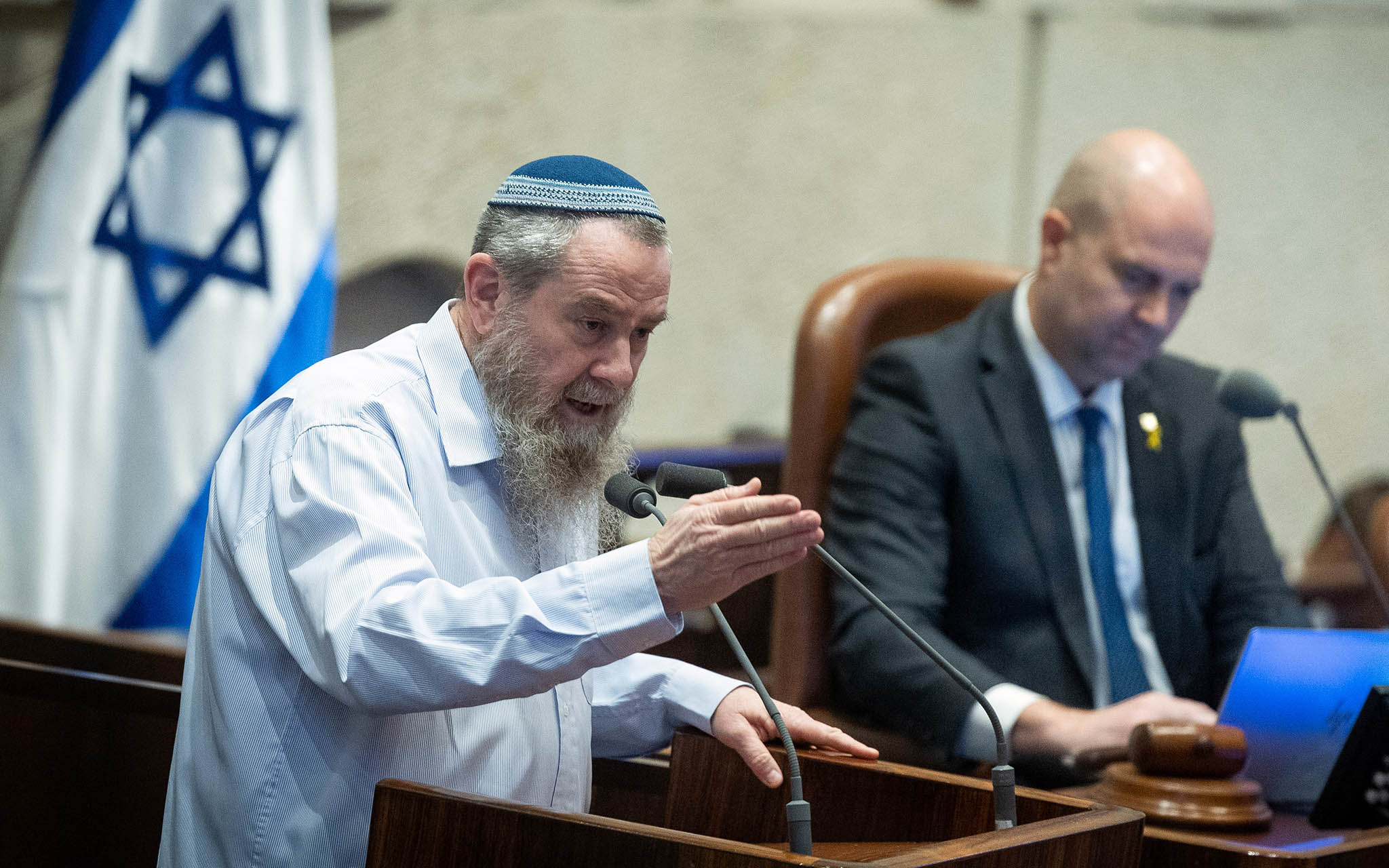
Religious Services Minister Michael Malkieli (Shas) announced ahead of the vote that he would support Noam MK Avi Maoz’s legislation, which had failed to receive backing from the Ministerial Committee for Legislation on Sunday. The bill was also backed by the ultra-Orthodox United Torah Judaism party.
Both Shas and UTJ are currently boycotting coalition bills in a bid to pressure Knesset Foreign Affairs and Defense Committee chairman Yuli Edelstein to finally present his revised Haredi conscription bill to lawmakers.
If passed, the bill would have amended the Law of Return, removing a clause allowing any grandchild of a Jew to immigrate even if they themselves are not Jewish.
“In its current form, the Law of Return also allows the grandson of a Jew to receive immigrant status and rights, even if he himself, and sometimes even if his parents, are no longer Jewish,” the bill’s explanatory notes read.
“This situation means that the law is being exploited by many who have severed all ties with the Jewish people and their traditions, and in effect empties the law of its original intention, which was to open the country’s gates to Diaspora Jews.”
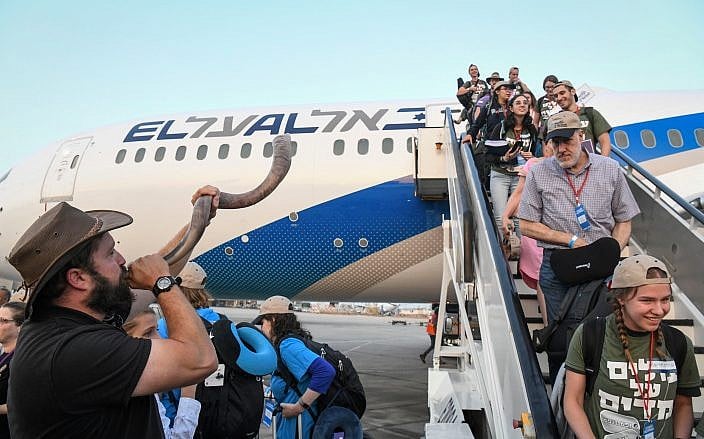
The Law of Return was formulated in 1950, two years after the State of Israel was established, giving every Jew from around the world the automatic right to immigrate to the Jewish state. While Orthodox religious authorities traditionally only recognize as Jewish those who have a Jewish mother or who converted to Judaism through an Orthodox track, the law was expanded in 1970 to also allow any grandchild of a Jew to immigrate even if they themselves are not Jewish.
Previous proposals to change the grandchild clause were submitted in late 2022 and early 2023 and were part of coalition deals ahead of the current government’s formation.
There are currently hundreds of thousands of Israelis who are not considered Jewish by the Chief Rabbinate.
Arguing against the bill ahead of the vote, Yisrael Beytenu MK Evgeny Sova told lawmakers on Wednesday that many of those critical to maintaining Jewish communities abroad are the grandchildren of Jews and that changing the Law of Return would harm many in the Diaspora.
This bill would tell them “you are not part of the Jewish family,” he said.
Hitting back at critics who argued that his bill was racist and devalued soldiers fighting for Israel who are not Jewish according to Orthodox halacha, Maoz told lawmakers that he would not engage in “demagoguery” at the expense of the troops.

“Maoz’s efforts were simply a provocation,” said Rabbi Seth Farber, the director of the ITIM nonprofit, which helps Israelis navigate their country’s religious bureaucracy.
“If we are going to change the law of return, the holy of holies of the Zionist enterprise, it should be done with deliberation, with consultation of with all the streams of Judaism and most importantly not at a time which undermines the unity of the Jewish people,” Farber told The Times of Israel.
“I am glad that the coalition rejected Maoz’s inappropriate initiative and rejected it outright.”
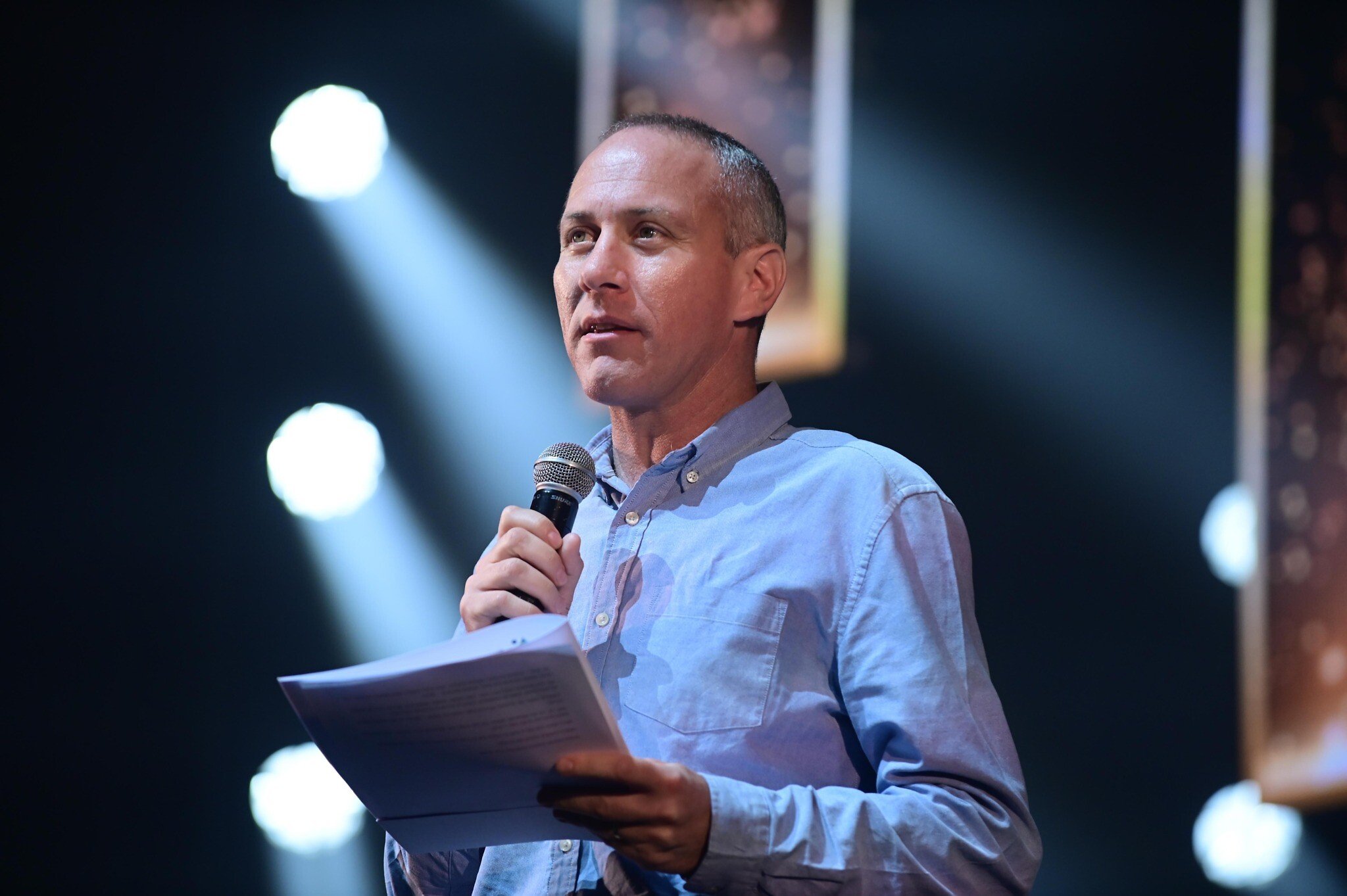
Lawmakers also rejected a proposed bill by Blue and White MK Chili Tropper, which would have allowed victims of terrorism who are not halachically Jewish to be buried in regular Jewish sections of cemeteries, at the request of their families.
“This is another indication that we haven’t learned the lessons of October 7,” said Farber.
“As early as the Talmud, our tradition recognized the importance of burying non-Jews alongside Jews in the name of peace. Over the past decades, halachic solutions have already enabled the burial of non-Jewish soldiers in military cemeteries. This bill simply seeks to extend the same dignity to victims of terrorism. It is sad that political battles are fought on the backs of those killed for the sanctification of the divine name.”









The Times of Israel Community.