 Add ToI as a Preferred Source on Google
A winding dirt road leads to Gefen Ami, a small farm in the Hebron foothills, in territory described either as the West Bank or Judea — depending on who you ask.
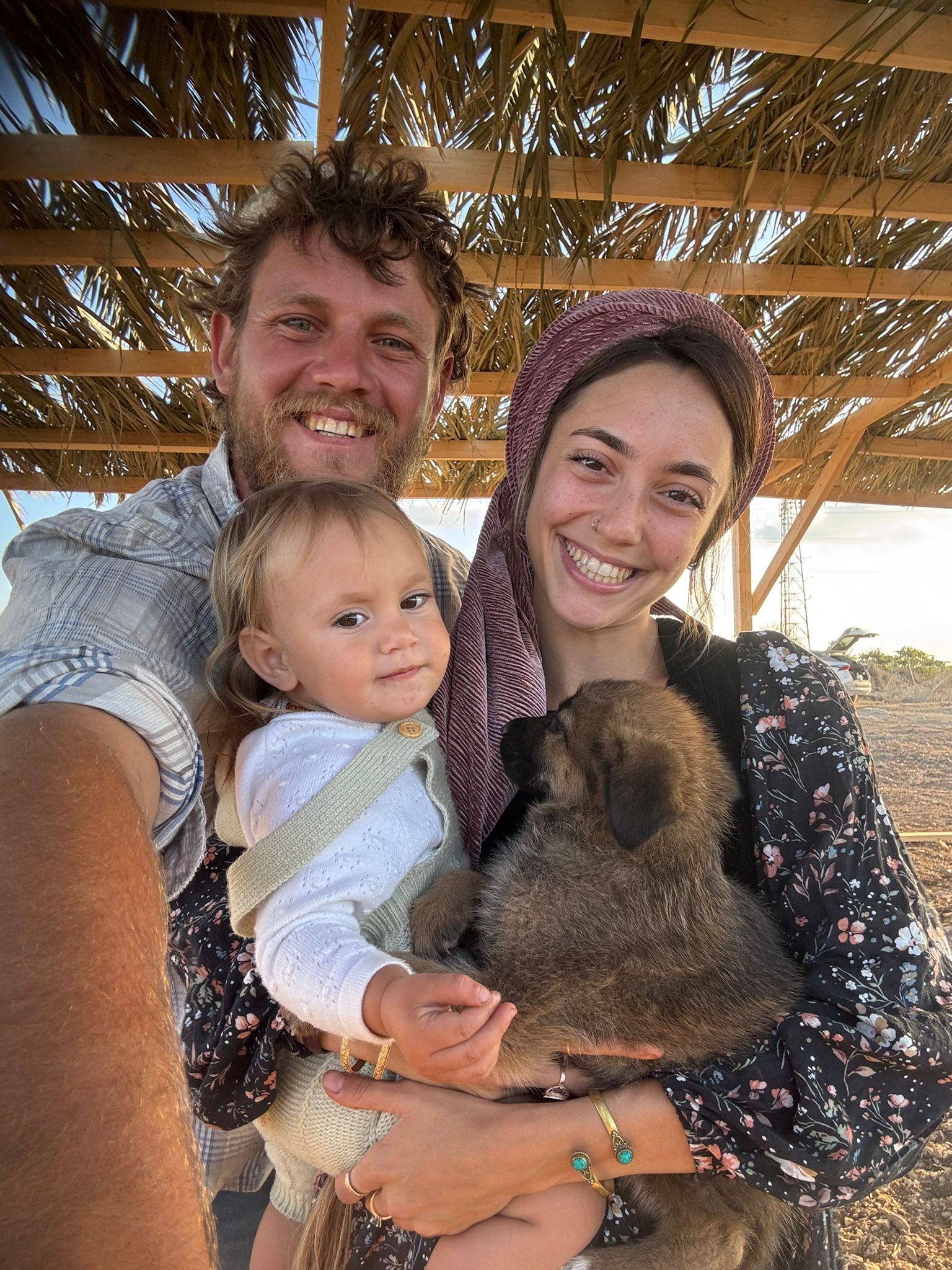
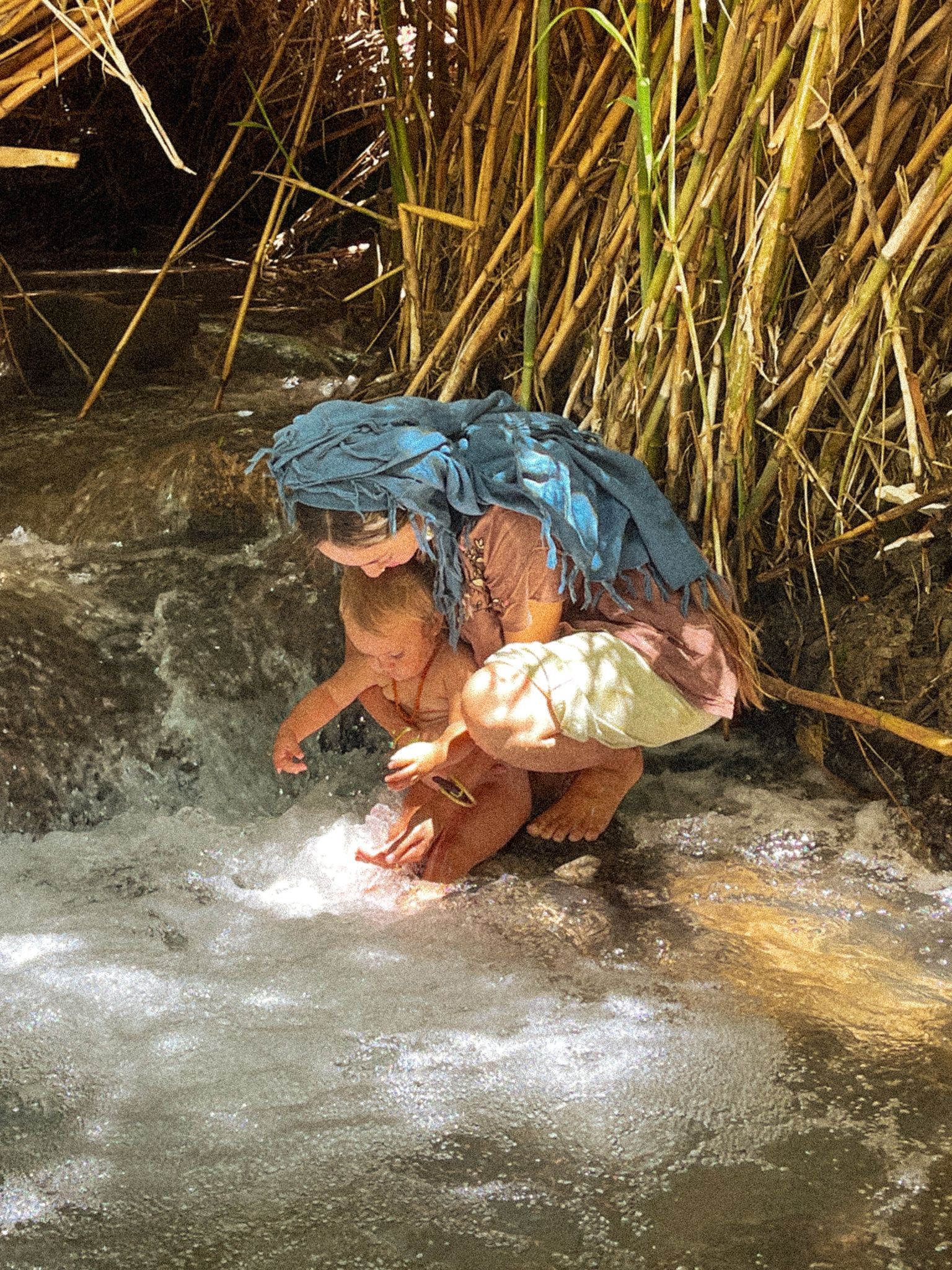
Under a canvas awning, a woman wearing loose earth-toned clothes and an expertly tied headscarf nurses her baby. A few steps away, a man in dusty jeans and a large knit kippa tends to their sheep, completing the tableau of a young family farming the Judaean Hills.
The woman is Ayala Ben-Baruch, an up-and-coming influencer with nearly 40,000 followers and the farm’s co-founder, with her husband, Yair. She is part of a growing cohort of women using social media to showcase daily life beyond the Green Line.
The live scene echoes snapshots from her first viral reel, which garnered over 1 million views — their baby plucking a guitar string, a tethered donkey, young men dozing under a makeshift pergola, Ben-Baruch stirring a pot over an open flame. The caption includes a recipe for the dish she’s cooking, oshplau, an Uzbek-style rice-and-meat pilaf.
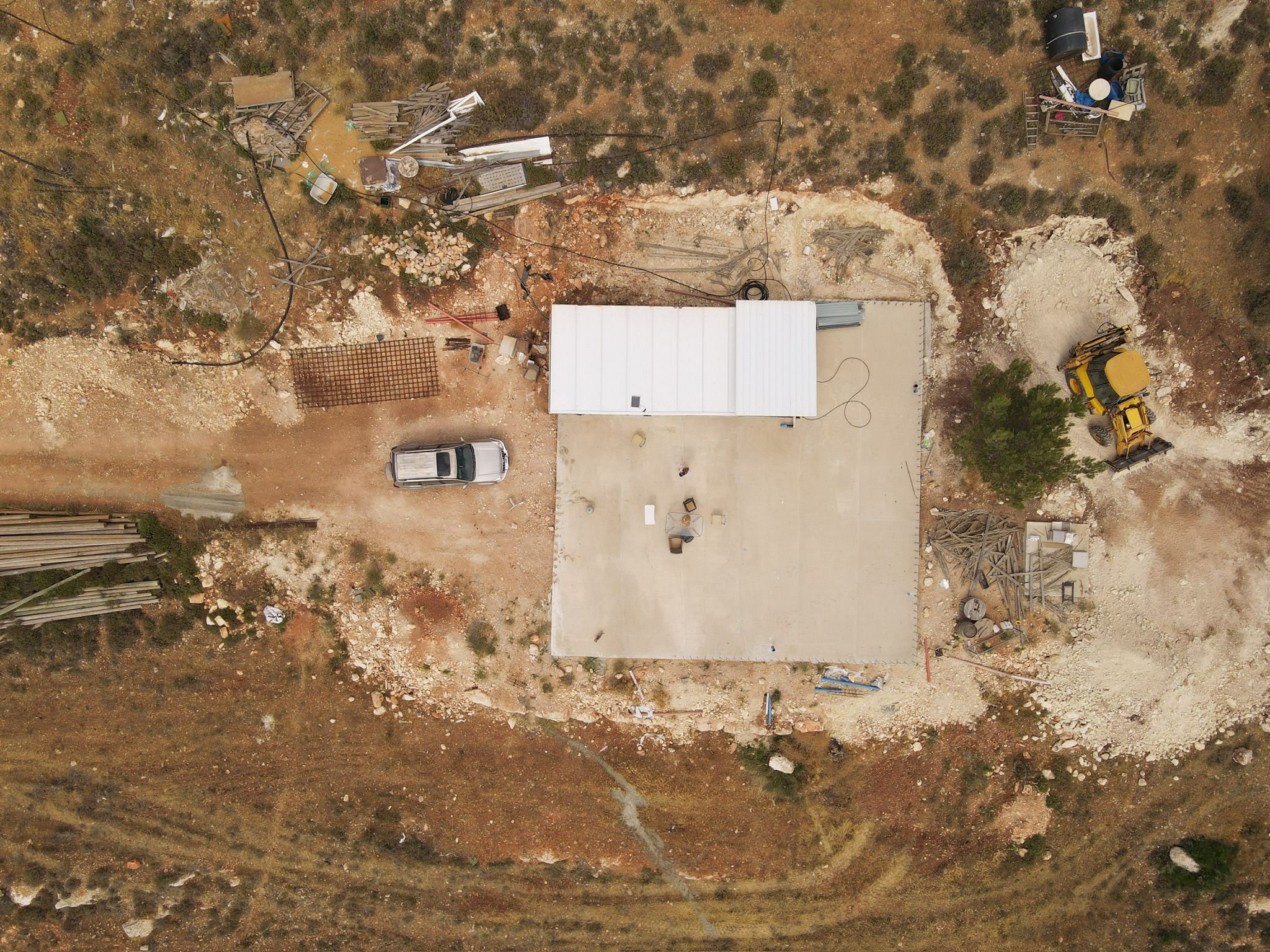
What the clip doesn’t reveal is how rudimentary life at Gefen Ami remains: no electricity, no running water, and a tarp-covered shelter for sleeping. Yair says that for now, infrastructure is bare-bones because the farm is an unauthorized outpost under Israeli law — meaning the army can dismantle it without warning, as it has twice already.
But neither does Ayala Ben-Baruch’s content resemble the images dominating recent West Bank news coverage: masked extremist settlers torching property, Palestinians hospitalized after beatings, and, more recently, settlers attacking IDF soldiers attempting to quell the surge in violence.
And that’s purely by design.
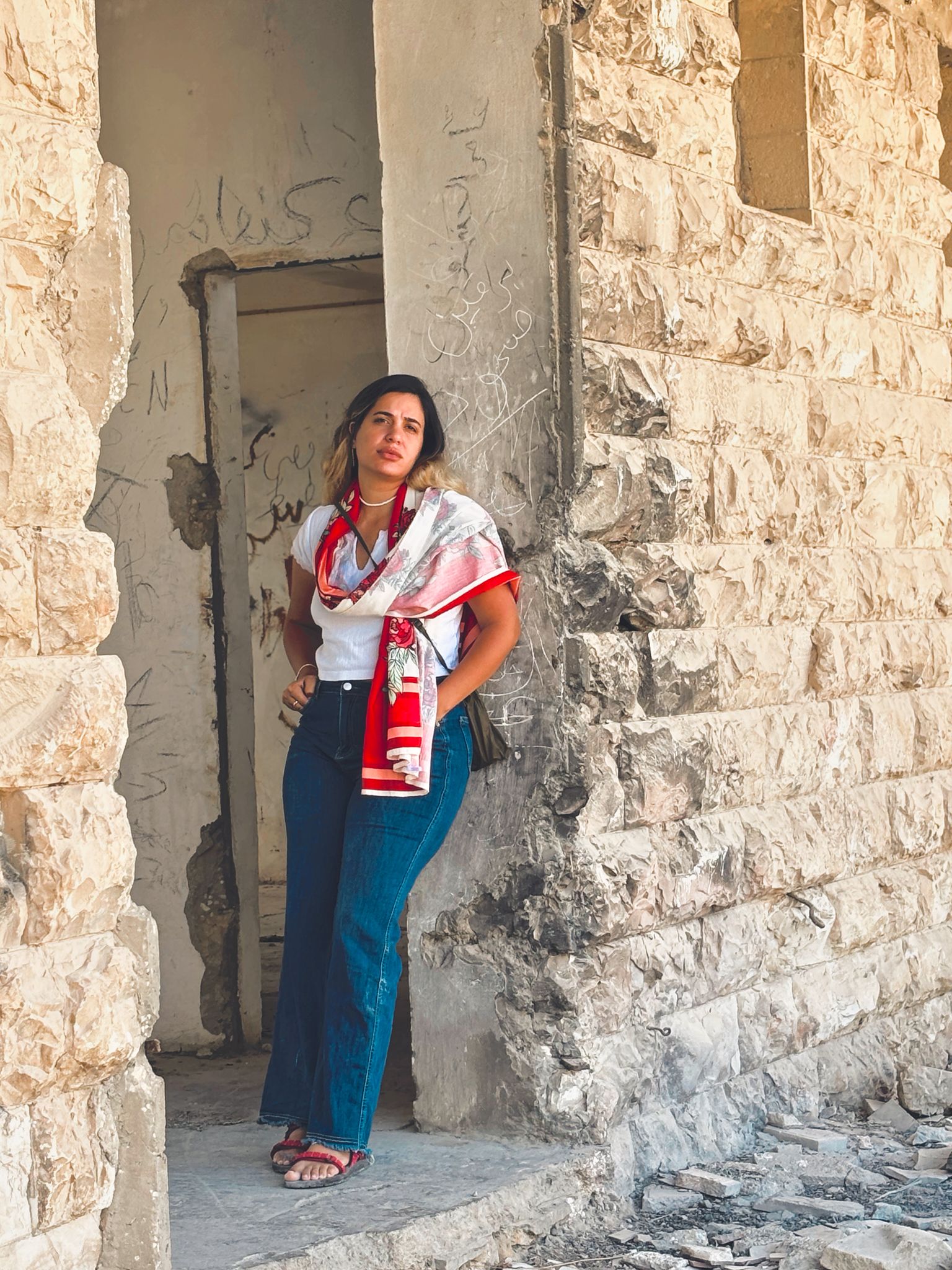
Chronic Instagram scrollers might recognize the settler-influencer aesthetic from another global trend: the “trad-wife” movement. Rooted largely in Christian conservatism, trad-wife content idealizes hyper-domestic femininity through pastoral visuals, large families, modest fashion and homemade meals.
As the politically charged right-wing movement in the United States takes off on social media, a growing number of Israeli women settled in the West Bank are likewise taking to Instagram to depict their own “little house” on the hilltop.
A video of Ben-Baruch kneading sourdough could easily be mistaken for content from BallerinaFarm, one of the trad-wife movement’s most iconic and polarizing accounts. Both genres rely on motifs of simplicity, nature and maternal calm — though here, they’re anchored in an explicitly Israeli religious-nationalist frame.
According to Dr. Neta Kligler-Vilenchik, associate professor of communications and journalism at Hebrew University, the resemblance is not a coincidence.
“The settler influencers are adhering to — but also playing with — what we call the platform vernacular,” she says. “Each social media platform has its own language that we collectively understand as the way to express ourselves in that specific space. If X is overtly political and TikTok is realistic or silly, Instagram is highly aesthetic and polished, yet framed as authentic.”
“Their lives are meant to look totally natural, but a natural that is very beautiful,” Kligler-Vilenchik adds.
When coming from the settler movement’s more militant personalities, that aesthetic can create a jarring contrast. Rivka Lafair, a Shiloh-based yoga teacher, mixes serene family footage with appeals to “stop showing mercy” toward the Palestinian enemy.
In a clip that landed her on the radar of several pro-Palestinian outlets and accounts, Lafair addressed soldiers directly following the Nasser Hospital attack that killed 22 people in Gaza in September, thanking them for “blowing up that hospital” and urging them, “Don’t break cameras, break people.”
The video reportedly got her blocked on Instagram, though she is now rebuilding her following on TikTok.
And breaking from tradition
Alongside creators who embody the classic “hilltop girl” image, a parallel cohort is emerging: women who are pushing back against the narrow expectations traditionally placed on settler wives.
Among them is Lital Chezi, who lives with her husband and newborn daughter in an outlying hilltop outpost linked to the settlement of Itamar. Like Gefen Ami, it is considered unauthorized, though it functions as part of the broader Itamar community. Chezi’s feed, which has some 15,000 followers, blends mainstream lifestyle content with settlement-specific material, such as photos of herself in military uniform and street interviews asking passersby what they know about Judea and Samaria.

“Our biblical connection to the land — and feminism,” Chezi says. “Those are the two most important messages I want people to take from my content.”
Though traditionally observant, Chezi’s fashion choices depart from Orthodox norms; her “fit checks” favor power suits over flowing dresses. She is also more politically explicit than many of her peers and has held meetings with several well-known figures in the settlement movement, among them Daniella Weiss, often called “the grandmother of the settlement enterprise,” MK Gila Gamliel, and Shomron Regional Council head Yossi Dagan.
Chezi attributes her diplomacy skills to her involvement with Young Women in Politics, a nonpartisan group promoting women’s leadership.
“That’s where the feminism kicks in,” she notes. “And it has nothing to do with whether you align with me politically. We need more women in leadership roles. Period.”
Many influencers are aiming to represent a more mainstream version of life in the West Bank: suburban, middle-class communities rather than remote caravans.
Naama Kazes, who has nearly 5,000 followers, doesn’t live on a hilltop — though she jokes that she’d like to one day. Born into an ultra-Orthodox family in Tel Aviv, Kazes left religious life for a time and met her secular, left-leaning husband during that period.
“During the judicial reform protests [in 2023], our kids went to the pro-reform demonstrations with mommy and the anti-reform ones with daddy,” she laughs, referring to the government’s controversial plans to overhaul the justice system.
After the devastating Hamas-led invasion and massacre of October 7, 2023, Kazes convinced her husband to move to Leshem, a well-developed village approved as an independent settlement in 2025 after years as a neighborhood of Alei Zahav.
Kazes hopes her nature-focused content will encourage outdoorsy Israelis to plan their day trips and weekend hikes in the region.
“So many Israelis, even religious right-wingers, just don’t come here,” she says.
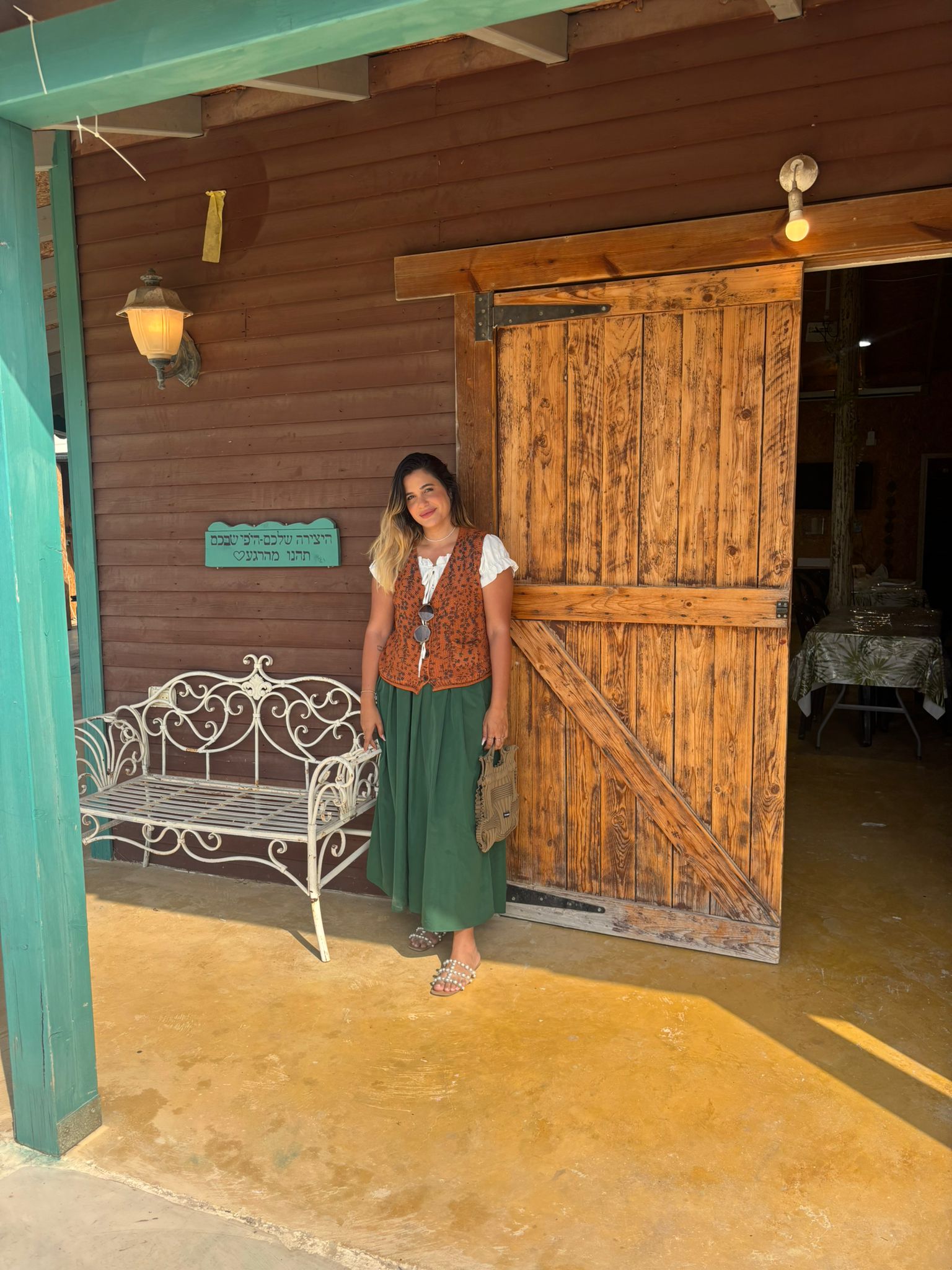
“I want to show them there’s nothing to be afraid of. How incredible it is to walk in the path of our ancestors — and how short the drive is from Tel Aviv,” she adds with a smile.
Identity/politics
Aside from outliers such as Chezi and Lafair, most of these influencers steer clear of overt political declarations, a pattern Hebrew U’s Kligler-Vilenchik says aligns with broader trends in online political expression.
“For young people in particular,” she says, “there’s a move away from explicitly political speech toward content that is more identity-based. The idea is to approach issues through personal experience rather than policy debate.”
As Sheefah Levy of Peduel puts it, “I don’t need to stand in front of the camera and shout about settlements. The fact that I’m living here says enough.”
“Instead of explicit commentary, many rely on coded symbols; hashtags, emojis and common phrases in their bios. All of these signal a shared identity,” Kligler-Vilenchik says. “Despite individual differences, they’re collectively engaged in an effort to reclaim what it means to be a settler, to retell a story that differs from mainstream coverage.”
For Levy, her most viral clip, which got 162,000 views, revolved around one such symbol: an oversized Gush Katif T-shirt in orange, the signature color of the movement opposing Israel’s 2005 Gaza disengagement. The video is jokingly captioned with a reference to girls who “keep every shirt [forever].”
On the surface, it’s a light joke about hoarding old clothes. But the clip, posted on the 20-year anniversary of the disengagement, carries a much deeper resonance for viewers; an unspoken nod to a formative trauma within the settler movement, expressed through the soft-focus language of a lifestyle reel.
Attention grabbing
Political opinions aren’t the only thing left unsaid. Since the October 7 onslaught, the West Bank has seen a sharp rise in settler assaults on Palestinians, from the torching of olive groves to shootings and property destruction. Security officials warn the violence could soon spiral out of control. Yet this reality appears almost nowhere on influencer feeds. Asked why, the women offer familiar explanations: fringe extremists, missing context.
“No one ever shows Palestinians throwing rocks,” Kazes claims.
Chezi describes the assailants as “lost, high-risk kids” exploited by ideological actors and political opponents alike.
“Settler groups lure them into committing violence with promises of food or a place to sleep,” she says. “And the left uses them to paint all 500,000 people here with the same brush.”
But organizations tracking West Bank violence dispute those claims. Hagit Ofran, director of Peace Now’s Settlement Watch, argues that settler attacks are “a tool for pushing Palestinians off their land” — and, she posits, “it has been effective,” citing the 2022 forceful displacement of the Bedouin community of Ras al-Tin.
Violence is only one method that’s employed, Ofran adds. Another is establishing outposts like Gefen Ami and Givat Itamar, which often begin with loosely defined “grazing contracts” issued by the World Zionist Organization’s Settlement Division.
“Technically, these areas are classified as state lands,” she says, “but with almost no oversight, settlers expand far beyond what’s in the agreements.”
A 2025 report by Peace Now estimates that of the roughly 786,000 dunams (about 194,000 acres) of shepherding outposts now controlled by settlers in the West Bank, only about 40 percent actually fall under Israel’s definition of state land; the rest includes military firing zones, land under Palestinian Authority administration, and privately owned Palestinian land.
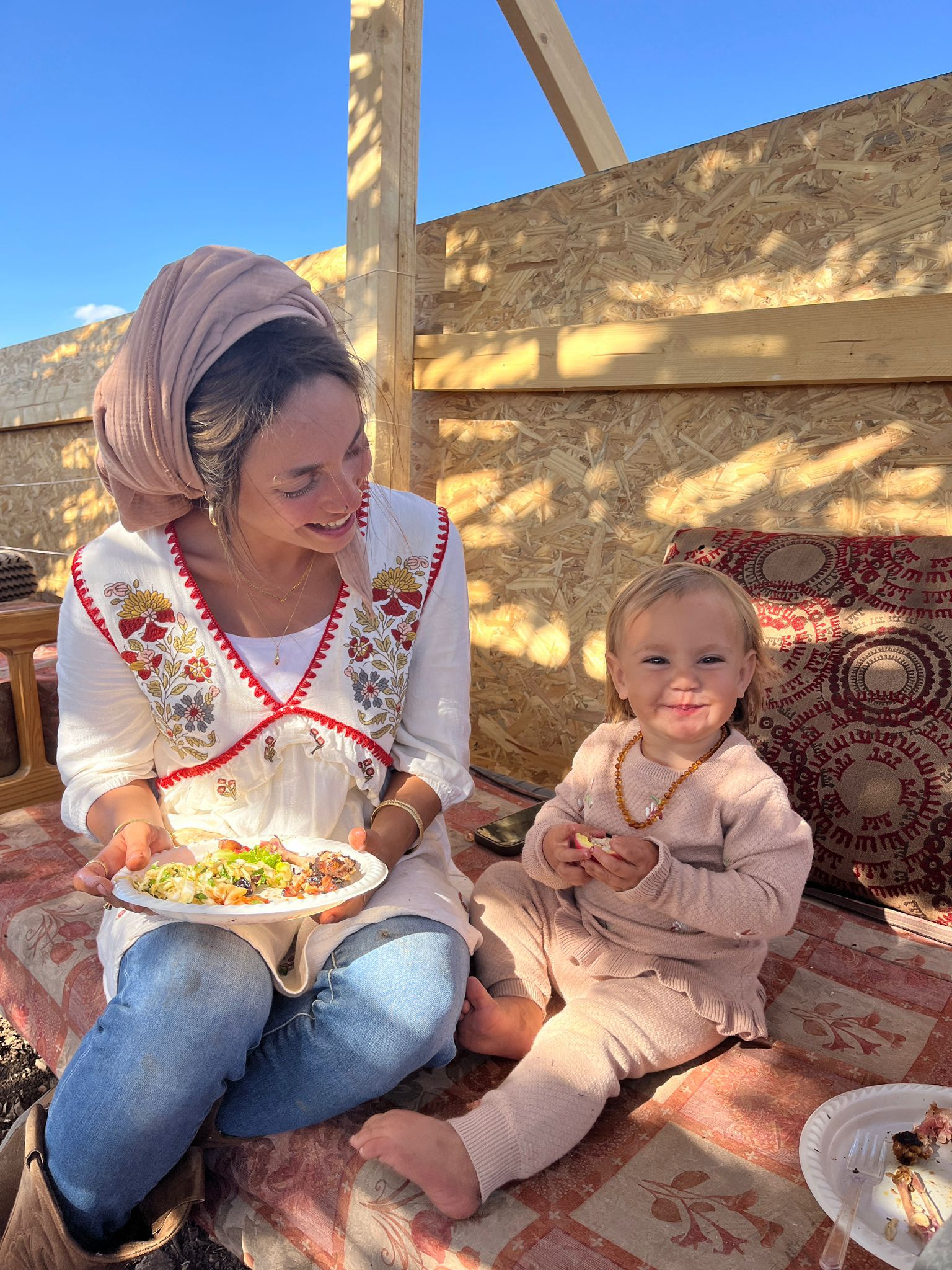
“These places may look rustic and spontaneous on social media,” Ofran says, “but they’re part of a coordinated, well-funded project. And much of that money ultimately comes from taxpayers.”
Meanwhile, on Gefen Ami, Yair Ben-Baruch gestures toward the Palestinian villages surrounding the outpost, his young daughter toddling ahead of him.
“People don’t realize we’re completely surrounded by people who want to kill us,” he says. “There may be a few incidents of unprovoked violence, but we have a right to protect ourselves.”
Parroting a familiar refrain among the settler influencers, Ayala Ben-Baruch adds: “This is the picture you won’t get from the news.”

The Times of Israel Community.