 Add ToI as a Preferred Source on Google
LONDON — It is a story of courage and resistance, as well as one of betrayal and brutality.
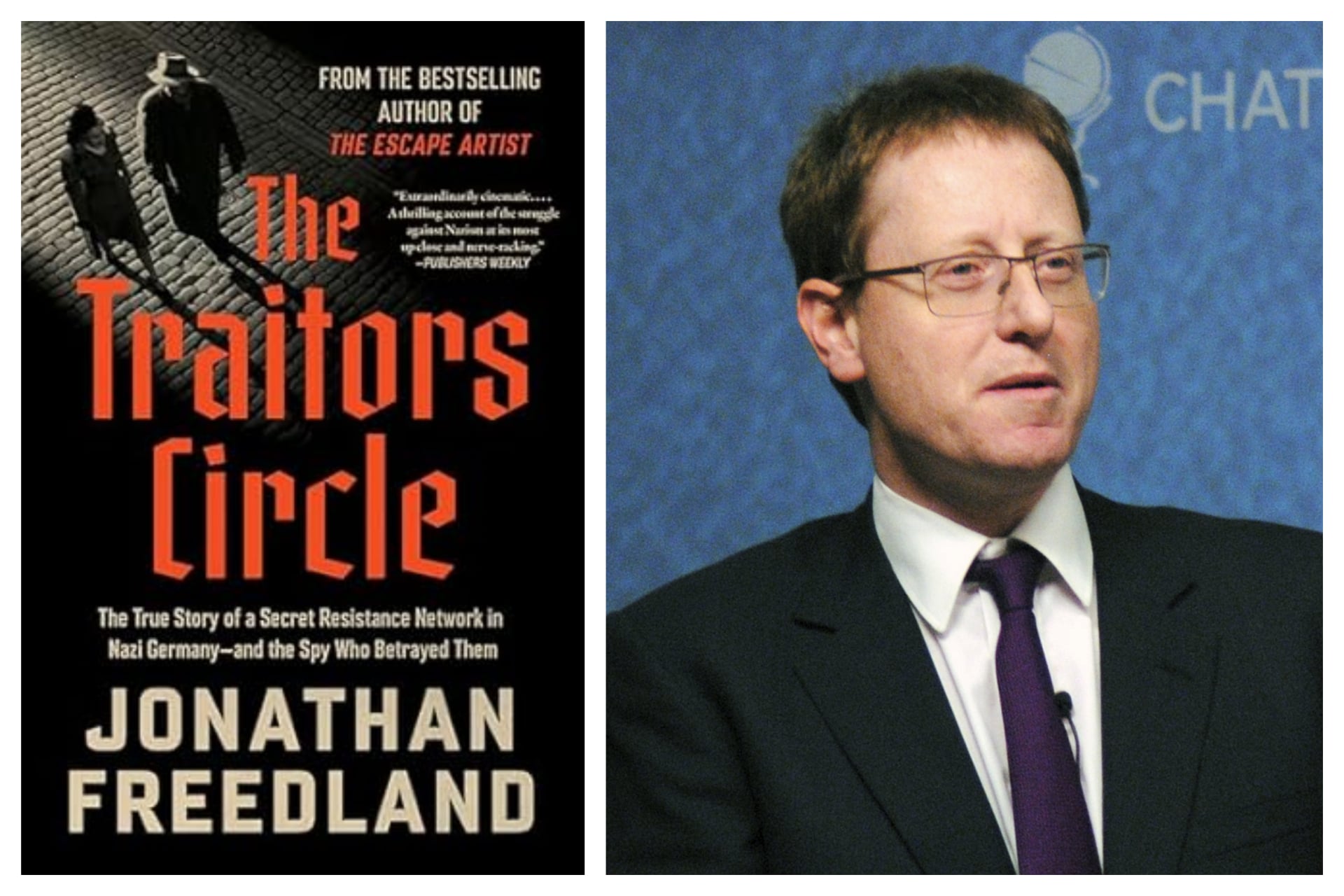
British author and journalist Jonathan Freedland’s new book, “The Traitors Circle,” is the story of a group of high-society German dissenters who abhorred the Nazis, rescued Jews, and sought an end to the regime that had disgraced their country and plunged Europe into war.
Countesses, diplomats, high-ranking officials and former politicians, the members of what became known as the “Solf Circle” came from a world of elite boarding schools, vast country estates and glittering dinner parties.
“They are conflicted, they’re inconsistent, they’re flawed, and they make judgments that we as readers might [think were] never going to work,” Freedland tells The Times of Israel. “But they are feeling their way … and, on a human level, I found myself very empathetic to them and admiring of them because of the sheer human, improvised nature of their opposition.”
Infiltrated and betrayed, many ended up in Gestapo torture chambers, infamous concentration camps and facing the gallows.
Freedland says the book complements “The Escape Artist,” his award-winning 2022 account of Rudolf Vrba, who escaped Auschwitz and helped reveal the truth about the Holocaust.
“They bookend each other. This is a companion to the other and an antidote. ‘The Escape Artist’ required me to stare deep into pitch black darkness — Auschwitz-Birkenau, the site of the greatest crime of the 20th century,” Freedland says.
“In ‘The Traitors Circle,’ I was being drawn to the light, to people who did good and, crucially, unnecessary good,” he continues. “These were people at the very peak of German society, and they did things that were so much against their own interests that could only bring them risk, and yet they did them anyway. And that to me is extraordinary and, obviously, incredibly inspiring.”
Faces of resistance
The cast of characters who frequented the Solf Circle political salon included former Foreign Ministry official Dr. Richard Kuenzer, who was involved in planning a plot by German generals to oust Hitler in 1938; Dr. Herbert Mumm von Schwarzenstein, a gay diplomat fired by the Nazis, and Nikolaus von Halem, a young industrialist who later became involved in attempts to assassinate Hitler; and Count Albrecht von Bernstorff, who was forced out of the diplomatic service for his opposition to Hitler and used a new career in banking to help Jews transfer their assets out of the country.
But at the center of Freedland’s account are four figures who epitomize the bravery — and complexity — of the German opposition to the Nazis.
Hanna Solf, who hosted the informal soirees at which these upper-class opponents of national socialism gathered, was, like many of her guests, an unlikely rebel. The widow of Wilhelm Solf, a former colonial governor and the last foreign minister of Imperial Germany, she was also one of the best-connected people in Berlin. Her contact book included aristocrats, diplomats, military officers, intellectuals and Weimar-era politicians.
Visiting embassies and consulates in Berlin almost daily, Solf pulled strings to get the visas and emigration affidavits Jews required to get out of the country. Nor was Solf averse to acquiring forged visas and Aryan papers if she couldn’t get her hands on real ones. Solf was proud of the fact that her gatherings were also regularly attended by foreign diplomats, allowing the Nazis’ opponents to mix freely with US and European ambassadors, ministers and charges d’affaires posted to Germany.
As the plight of German Jews became more perilous, many of those who had not managed to leave the Reich went underground, becoming known as “U-boats.” Solf’s daughter, Lagi — whose husband, the Silesian noble, Count Hubertus von Ballestrem, was also a hardcore opponent of the Nazis — then took the ultimate risk of helping to shelter Jews in her home.
Unlike the Solfs, Elisabeth von Thadden, the conservative daughter of landed Protestant aristocrats, was not initially ill-disposed to national socialism. Indeed, the headmistress of a pioneering boarding school for young women had even taken a group of pupils to hear Hitler speak.
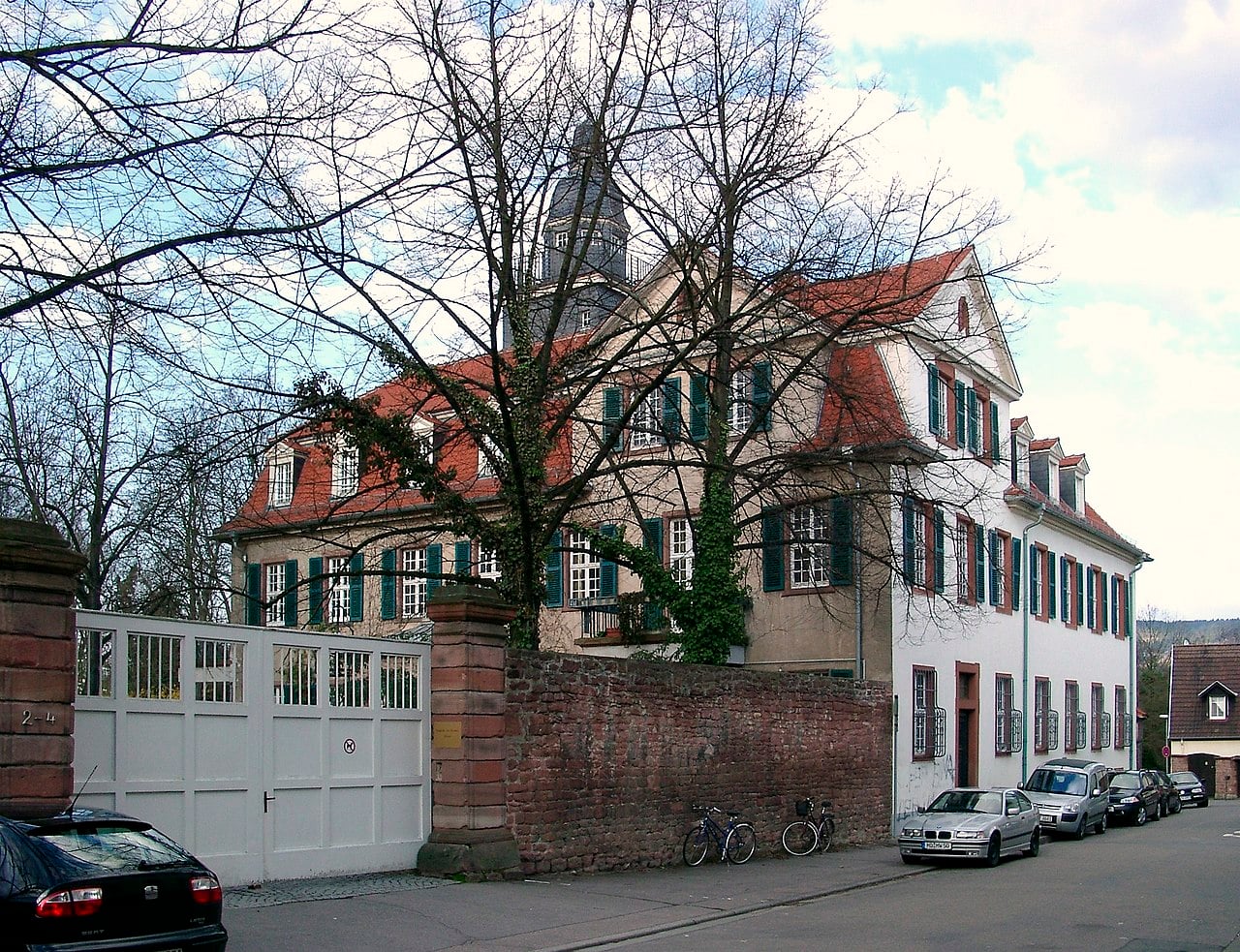
But the Nazis’ antisemitism and their determination to neuter German Christianity soon soured her on the regime. Determined to protect her school, which attracted pupils from prominent families, she avoided direct confrontation with the Nazis while attempting to do all she could to defy them. She began surreptitiously admitting “non-Aryan” girls to the avowedly Christian school, providing their parents with a place of shelter for their daughters as they made plans to get out of Germany.
Eventually, in 1941, von Thadden’s luck ran out. After a parent (quite accurately) reported her for “deficiencies of conviction,” a Gestapo inspector was sent in. His report concluded that national socialism was not “openly” opposed at the school but had instead been “abolished” by the disloyal headmistress. Von Thadden was swiftly removed. “I don’t have to burden my conscience with any more dishonesty,” she concluded.
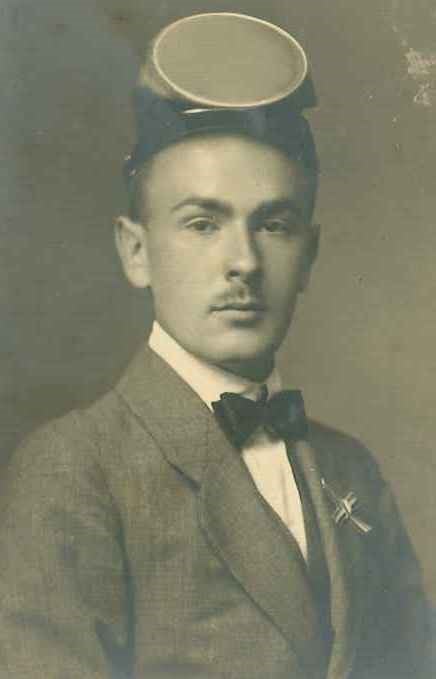
New York-based diplomat Otto Kiep’s response to the Nazis’ arrival in power was rather less subtle than von Thadden’s. Weeks after Hitler became chancellor in January 1933, he decided to attend a joint Hebrew University-Jewish Telegraphic Agency fundraiser at the Waldorf Astoria, where he delivered a speech lauding the guest of honor: Albert Einstein. Miraculously, while he was recalled to Berlin and carpeted by the Foreign Ministry, Kiep was not dismissed. Although Kiep resigned his position when the Nazis abolished all other political parties that summer, he sought to maintain influence within the system, leading overseas trade missions and even opting to join the Nazi party in 1937.
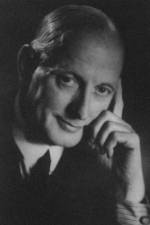
But Kiep’s growing conviction that he could serve Christ or Hitler but not both — and his disgust at the events of the Kristallnacht pogrom in November 1938 — solidified his opposition to the regime. When Germany invaded Poland in September 1939, he feared the horror it would wreak, presciently telling his wife: “The shame of it will be remembered for a thousand years.”
With a home in London and his children at school in England, Kiep could have opted for exile. Instead, he determined that not only must Hitler be removed, but that he could only play his part from within Germany. Kiep joined the army, believing it to be the one place from which change might come, and was recruited to the higher echelons of the Abwehr. There, he joined a powerful faction within Germany’s military intelligence of committed opponents of the regime, whose numbers included Abwehr head Admiral Wilhelm Canaris and his deputy Major General Hans Oster.
Kiep, whose job gave him access to foreign newspapers such as The New York Times, believed it was his patriotic duty to share what he knew — however uncomfortable it might make fellow guests at dinner parties and social gatherings. “We are surrounded by lies,” he would say. “People must know there are still Germans who love the truth.” As Freedland writes: “To be informed, to know the truth and to share it — in a republic of lies like Hitler’s Germany, these were acts of resistance.”
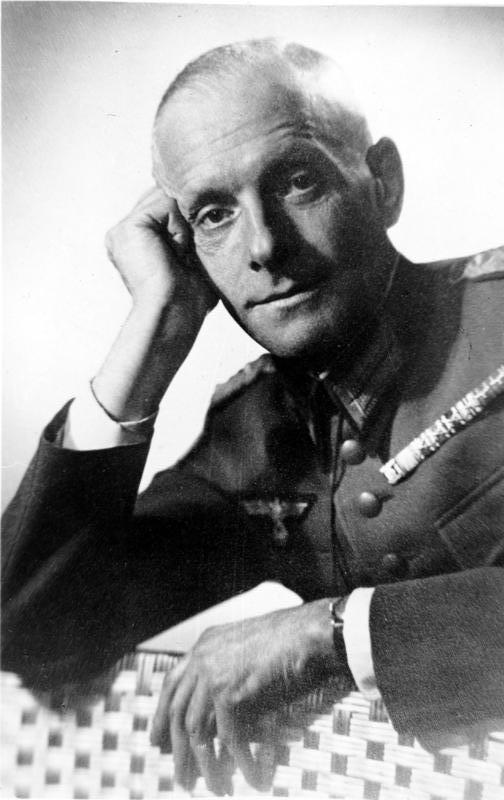
Twenty-four-year-old Countess Maria von Maltzan was also determined to resist the Nazis. As early as 1934, she helped smuggle information critical of the regime out of Germany, earning her a broken jaw from the Gestapo. But von Maltzan continued to display a combination of disdain and defiant aristocratic hauteur towards the Nazis. Her home became a refuge for political prisoners released from concentration camps and Jews, including her lover, Hans Hirschel.
Freedland believes that von Thadden and Kiep typified the liberal and conservative middle and upper classes who formed the bulk of the resistance to Nazism after Hitler crushed much of the left-wing, ideologically driven opposition to national socialism swiftly after coming to power.
Defiance betrayed
Unfortunately for its members, the Solf Circle was faced with an utterly ruthless and cold-blooded opponent. Serving in Poland, SS officer Herbert Lange had pioneered the gas chamber — first introducing the mobile variety, then, as the founding commandant of Chełmno, the first extermination camp — and was responsible for the deaths of thousands of Jews and those deemed unworthy of life by the Nazi euthanasia program.
By summer 1943, Lange was a senior figure in a Gestapo unit working to break any links between the German resistance domestically and anti-Nazi networks in France, Belgium and Switzerland. He had his suspicions about a number of high-society Berliners with links in Switzerland and deployed a new agent to investigate and come up with evidence.
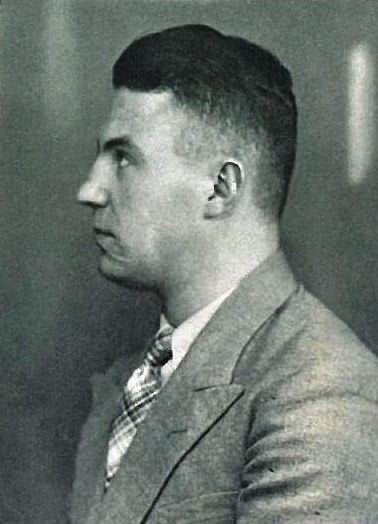
Freedland, the author of a number of thrillers, keeps readers in suspense as to the identity of “Agent Robby” and the Solf Circle’s eventual fate. The agent, he believes, was “amoral and self-serving” but also “someone who had a very inflated sense of themselves and was drawn to the idea of being a player.”
This was not an unusual motive for Gestapo agents and informants, he says.
“Sometimes it was the money and sometimes it was because they were compromised, but very often [these] people had delusions of grandeur and thought they were having a role in history,” says Freedland.
Posing as a fellow anti-Nazi, “Robby” used a family connection to finagle an invite to a tea party attended by a number of key players in the Solf Circle. Their conversations — which were dutifully reported back to Lange — were, as Kiep later put it, “absolutely lethal.” Aside from his own defeatist talk about Germany’s “black” prospects in the war, fellow guests talked of a coup against Hitler and the country’s future after they had, as Hanna Solf gleefully put it, “put him against a wall.”
In a wave of arrests in January 1944, the Solf Circle was swept up by the Gestapo and dispatched to the Ravensbruck concentration camp, where Lange – wrongly convinced he had uncovered a major conspiracy – conducted brutal, hours-long interrogations of the accused.
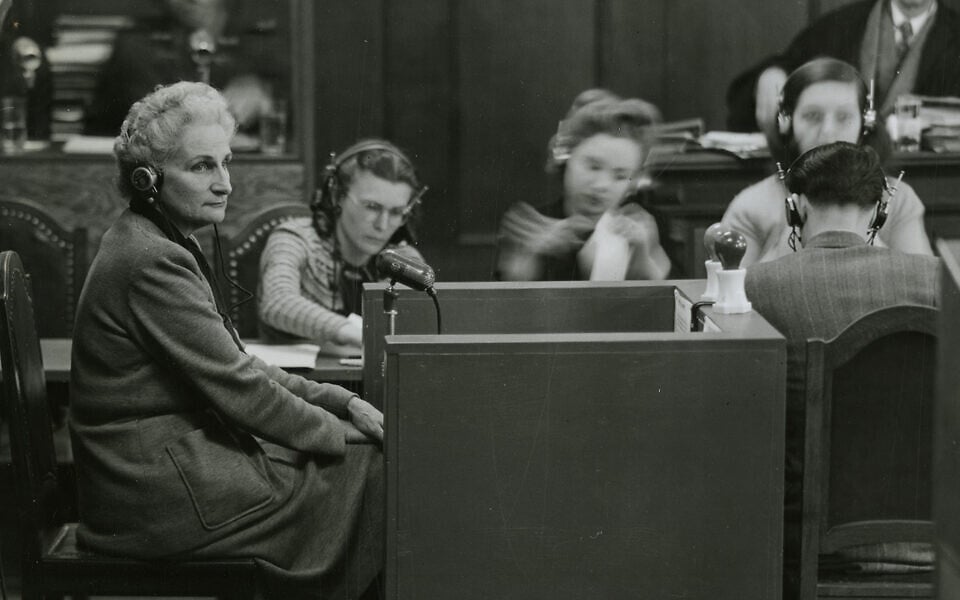
Hauled before the notorious “hanging judge,” Roland Freisler, at the People’s Court, Kiep and von Thadden were convicted of treason and sentenced to death following a trial lasting a day. Hanna Solf, who had also been charged with treason, was, at the last minute, taken away for further investigation.
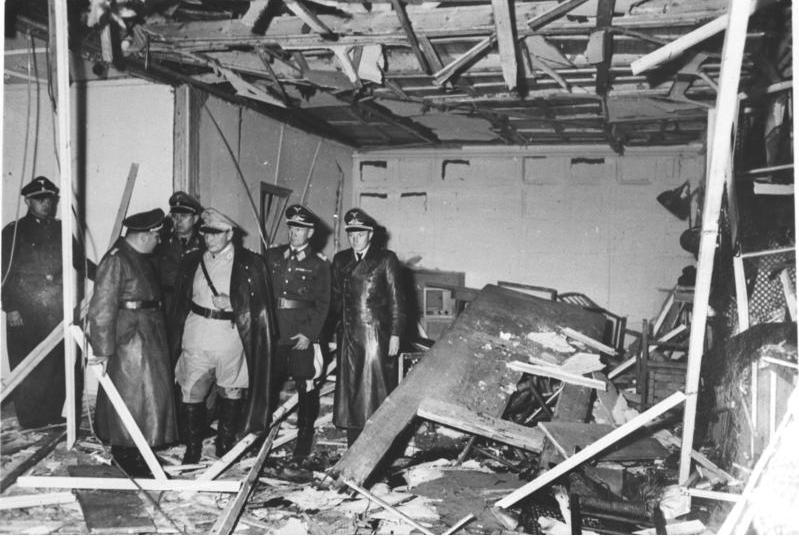
Any slim hope of clemency disappeared three weeks later when, in the aftermath of the failed “July plot,” Himmler reported that his agents had uncovered a “Baroque conspiracy” against the Reich; one which encompassed everything from the Berlin tea party to those who had come close to killing Hitler at his East Prussian wooded headquarters, the Wolf’s Lair.
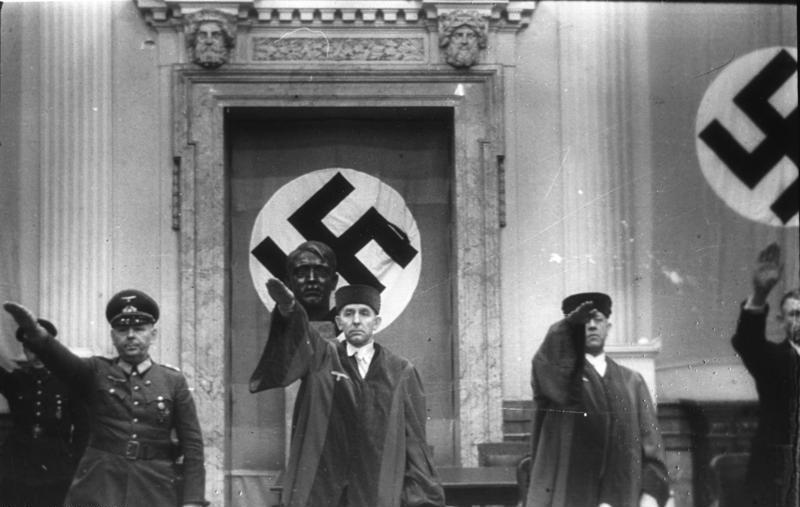
A stroke of poetic justice saved Solf and her daughter, who, in a later indictment, were accused of being “servants of our enemies in war,” from the fate which befell Kiep and von Thadden. Five days before their trial, which had been repeatedly postponed in the war’s closing months, was finally due to commence in February, a direct hit on the People’s Court killed Freisler as he stopped to gather files during an air raid.
The Solf Circle, believes Freedland, played a vital role in discreetly connecting foreign diplomats to the German opposition, ensuring that, at least before the outbreak of war, they were able to confirm reports and suspicions about the horrors unfolding under Nazi rule. How many diplomats, he wonders, returned to their embassies and legations newly willing to assist those trying to flee Germany?
“It’s incremental, it’s measured in individual lives saved,” Freedland says.
That, too, goes for the Jews saved by members of the Solf Circle itself: the young Jewish women temporarily sheltered in von Thadden’s school or Lagi and Hubertus von Ballestrem’s home. Von Maltzan — who had intended to attend the tea party but, thanks to an uneasy feeling, chose not to at the last minute — managed to escape the Gestapo’s clutches and redoubled her efforts to save Jews. She became a “black swimmer,” helping them to cross Lake Constance to Switzerland; led Jews to safety through Berlin’s sewers from the crypt of a church in which they had been sheltered; and played a critical role in an audacious escape effort which saw 20 Jews spirited to Stockholm in two sealed freight cars which were carrying furniture from the Swedish embassy in the German capital.
Freedland’s focus on this small group illustrates the wider, somewhat forgotten, story of those Germans who took a stand against Hitler. Resistance, he argues, took all kinds of forms, ranging from Lagi’s habit of always carrying two shopping bags to avoid having to give the Heil Hitler salute to those who repeatedly sought to kill Hitler and bring the war to a close.
The overwhelming majority of Germans did not actively oppose the Nazis. But some did. As one Allied investigator estimated after the war, some 3 million were imprisoned for dissent during the Third Reich’s 12-year reign of terror — 500,000 of whom paid the ultimate price for their unwillingness to bow to the Nazis’ will.
Among their number were the members of the Solf Circle.

The Times of Israel Community.