

In the Iran-Saudi Arabia conflict, a clash of civilizations
The cold war between the two regional powers is likely to heat up, reviving an age-old sectarian war between Sunni and Shiite Islam in which every country and group in the Middle East will have to choose a side

 Add ToI as a Preferred Source on Google
Avi Issacharoff, The Times of Israel's Middle East analyst, fills the same role for Walla, the leading portal in Israel. He is also a guest commentator on many different radio shows and current affairs programs on television. Until 2012, he was a reporter and commentator on Arab affairs for the Haaretz newspaper. He also lectures on modern Palestinian history at Tel Aviv University, and is currently writing a script for an action-drama series for the Israeli satellite Television "YES." Born in Jerusalem, he graduated cum laude from Ben Gurion University with a B.A. in Middle Eastern studies and then earned his M.A. from Tel Aviv University on the same subject, also cum laude. A fluent Arabic speaker, Avi was the Middle East Affairs correspondent for Israeli Public Radio covering the Israeli-Palestinian conflict, the war in Iraq and the Arab countries between the years 2003-2006. Avi directed and edited short documentary films on Israeli television programs dealing with the Middle East. In 2002 he won the "best reporter" award for the "Israel Radio” for his coverage of the second intifada. In 2004, together with Amos Harel, he wrote "The Seventh War - How we won and why we lost the war with the Palestinians." A year later the book won an award from the Institute for Strategic Studies for containing the best research on security affairs in Israel. In 2008, Issacharoff and Harel published their second book, entitled "34 Days - The Story of the Second Lebanon War," which won the same prize.
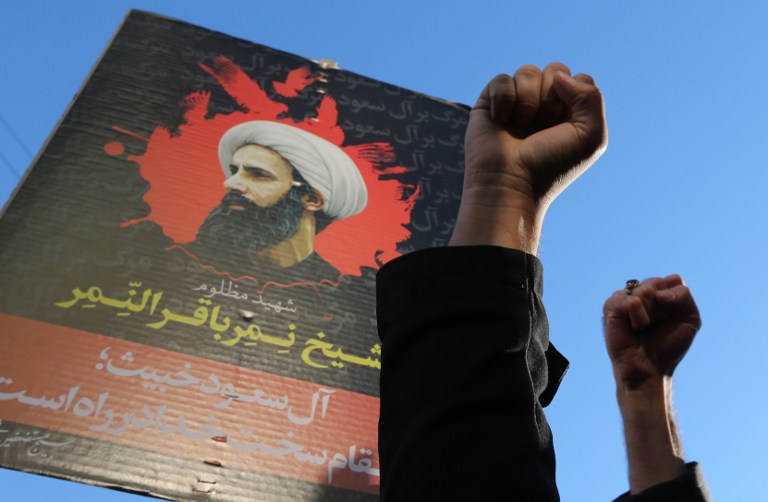
The attack by an angry Iranian mob on the building of the Saudi Embassy in Tehran appears to be the opening salvo in an escalating battle between Iran and Saudi Arabia.
Only a few hours later, the official website of Iran’s spiritual and supreme leader Ali Khamenei published a summary of his speech to Shiite religious figures in the Iranian capital, in which he clearly said that Saudi Arabia could expect revenge for the execution of the Shiite religious figure Nimr al-Nimr. The Revolutionary Guard Corps also published a similar announcement shortly after Sheikh Nimr was executed along with another 46 “terror suspects.”
Monday morning headlines in all the major Arab media outlets dealt with the Iranian-Saudi dispute, and by the time the afternoon rolled around several Arab countries had severed or downgraded their ties with Tehran. One report dealt with American fears of the expected escalation between the two countries.
And indeed, nearly all the actors in the Middle Eastern arena now understand that the Iranian declarations are not hollow and that Tehran will try to give them substance in the form of an attack on the Saudi kingdom.
Any revenge attack via Shiite actors will draw a Saudi response. Which means, as the London-based site Al Araby Al Jadeed wrote Monday, the cold war will heat up suddenly into a more much more dangerous confrontation between the two countries.
It has to be said that this crisis, which is likely to lead to a clash of the two civilizations, Shiite and Sunni, does not come as much of a shock.
In all, what’s come to light here is the depth of the loathing between the two local powers, which have for years been fighting behind the scenes for years for regional hegemony.
There’s hardly a country or a region in which the fingerprints of the hostility between Tehran and Riyadh cannot be seen; or more precisely, between the representative of Sunni Islam — Saudi Arabia — and Iran, its competitor in the Shiite world.
Consider the list: Lebanon, where for more than a year and a half there has been no president, partly because of the tension between Saudi Arabia and Iran; Yemen, where a civil war is being waged with the direct intervention of Saudi forces and Iranian advisers; Syria, of course, where Iran’s Revolutionary Guards are fighting militias funded by Riyadh; Iraq (which is in many ways similar to Syria in that regard); and even the West Bank, where the Iranians give financial support to the Islamic Jihad, to the A-Sabireen movement in Gaza and, to a limited extent, to Hamas.
The problem that Hamas will have from now on is that this battle between Iran and Saudi Arabia will force it to take a side.
Hamas is not alone. From now on, the name of the game in our region is that every country or organization will have to choose a side. The Israeli-Arab conflict no longer interests decision-makers in Riyadh or Cairo; rather the battle for the future of the Middle East between Shiites and Sunnis occupies center stage.
Almost 1,400 years have passed since the first battles broke out within the Muslim world between the inheritors of the Prophet Muhammad, which led to the schism between Shiites and Sunnis, and it seems little has changed here: We are returning to the same very old sectarian war, which is likely to lead to severe ongoing bloodshed that will once again shape the face of the region.






The Times of Israel Community.