

It’s Bibi’s world, we’re just living in it: 9 things to know for April 11
With Netanyahu set to retake power, the only questions are if New Right can finagle a way in, how he’ll fight to stay out of legal trouble, and what went wrong for everyone else
 Add ToI as a Preferred Source on Google
Joshua Davidovich is The Times of Israel's Deputy Editor
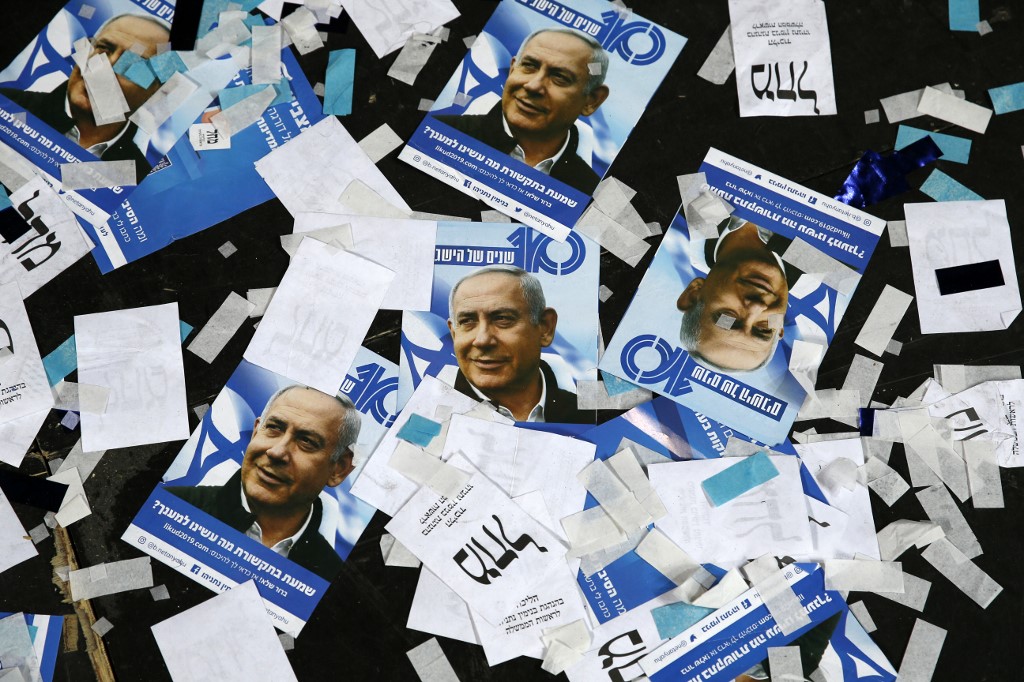
1. New Right fight: With the dust finally almost totally settled from elections, the big picture seems clear although still unknown is how exactly the government will look and whether or not the New Right party will enter the Knesset.
- While the Central Elections Committee website showed New Right barely squeaking into the Knesset Thursday morning, officials say that it is due to a bug and the party remained just a smidge below the threshold with just a few thousand votes left to be counted. (Update: Later Thursday, the committee said New Right was still below the threshold with all votes counted — even those of the soldiers on whom the party had been pinning its hopes — amid confusion and technical glitches that were affecting the committee’s website.)
- With the New Right the only big drama left, most news sites Thursday morning are focused on the fate of the tiny (or likely nonexistent) faction, including its demand of a recount and other funny business.
- “Something very strange is happening now in the elections committee. Someone is stealing the votes of the right. They are not letting us come in to observe,” a party source is quoted alleging in Channel 13.
- The elections committee says given the importance of each vote, it’s making like Santa and checking everything twice.
- According to Haaretz, the final tally also means UTJ will lose a seat and Meretz will jump up to 5, slightly weakening the assumed right-wing coalition.
- Globes, meanwhile, reports that Kulanu will get a fifth seat, boosting the likely coalition.
2. Glitching and moaning: The confusion continues over ballots left to be counted and wrong numbers being posted on the Central Elections Committee vote-tallying website.
- The website also displayed turnouts over over 100 percent in some places. In hard-line settlements Itamar and Bat Ayin, it showed hundreds of votes for Arab parties and none for Zehut, despite people in both those places saying they had voted for Moshe Feiglin’s party.
- Yonaton Behar, who tells the far-right Jewish Press news site that he ran the polling station in Itamar, says the actual vote count there included 52 votes for Zehut and none for the Arab parties.
- Haaretz political correspondent Chaim Levinson notes on Twitter that the committee spent much time on dispelling fake news, but the website glitches are “damaging public trust in the democratic process a thousand times more. … That’s what invites conspiracy theories and it’s too bad that [Elections head Hanan] Melcer didn’t worry about having a working website.”
3. Cameras are the new buses: Even worse is what appears to be a Likud-backed intimidation campaign that was meant to keep Arab voters away from polling place.
- A Facebook post Wednesday from PR agency Kaizler Inbar, alongside a picture of the group with Prime Minister Benjamin Netanyahu and his wife backstage at the Likud victory celebration Wednesday morning, said it organized the placement of some 1,200 cameras, some hidden on Likud activists, at Arab polling stations.
- Kaizler Inbar crowing that Arab turnout was “the lowest that was seen in recent years!” appears to reveal the true purpose of the cameras.
- Yedioth Ahronoth quotes a Likud source saying that the cameras were there to prevent voter fraud and the lower turnout numbers were just a coincidence.
- But MK Aida Touma-Sliman is quoted in Walla saying that the campaign “was meant first and foremost meant to scare Arab voters away from exercising their basic right to choose representation, create provocations and stain a whole community with fraud allegations. The prime minister and head of the ruling party has admitted to meddling in the democratic process. We ask the attorney general to open an investigation.”
- ToI’s Adam Rasgon notes that he spoke to 22 residents of Arab towns, and while they were disturbed by the cameras, they weren’t scared off by them from voting.
On election day, I asked 22 Arab residents of Tamra and Shfaram if the cameras Likud placed in polling stations intimidated them from voting
All 22 resoundingly said the cameras didn't, but they were very critical of them
— Adam Rasgon (@adamrasgon) April 11, 2019
- Referring to the whole election, mud-slinging, tricks and all, Netanyahu social media adviser Yonatan Urich tells Army Radio that “it was an aggressive campaign. It’s time they understood that this is how you win in 2019.”
4. The winner takes it all: Bennett and Feiglin are out, the Arabs didn’t show up, the center-left seems to be in shambles. From Netanyahu’s perspective it seems thinks could not have gone better.
- Israel Hayom appears to go balls to the walls in celebration, adorning the top of each page with a waving Netanyahu (or “waiving,” as US president Donald Trump might put it).
- “Once every few years, parties run in an election, and in the end, Netanyahu always wins,” the paper’s editor Boaz Bismuth ballyhoos.
- Former Likud minister Limor Livnat writes that Netanyahu stood down three generals and Yair Lapid, a pending indictment and unfriendly media. “He brushed them aside and won.”
- “By reelecting the prime minister for an unprecedented fifth term, and electing Likud to again form the government, the people have spoken loud and clear about the future they want for the country. The people have chosen a strong, right-wing leader, because they know only the right will move the economy forward and keep their children safe,” Likud minister Tzachi Hanegbi writes in The Times of Israel.
5. Nobody but Bibi: Even non-Likudniks and critics can only marvel.
- Walla’s Tal Shalev compares Netanyahu to a joker card that can’t be beat. “All the game-changers were burned in one fell swoop by the winning ace — Netanyahu himself.”
- Netanyahu “seems to have succeeded again this time for the same reason he has dominated Israeli politics for most of the past 25 years: because when it comes to Israel’s national security, he is a leader with strategy and vision. And that is what many voters want,” Shmuel Rosner notes in the New York Times. “They can forgive the prime minister for often being a small man, because they appreciate him as a great leader.”
- In the same paper, dovish author Dorit Rabinyan says Israelis, even some who loathe him, have grown so used to Netanyahu that they fear his exit as if they would be “orphaned.” “I’m anxious about it at the very same time that I’m hopeful about it,” she tells the paper.
6. What went wrong: It’s Netanyahu’s win, but pundits are also looking at what went wrong for everybody else.
- ToI’s Raoul Wootliff notes that Blue and White’s refusal to work with the Arab parties may have hurt the chances of building a center-left bloc.
- “For the center-left to have a realistic chance of winning elections in today’s Israel, it might need to embrace at least some of the Arab parties as real partners, and not just complain about the injustices facing the Arab sector,” he writes. “Politically, such a partnership could potentially match the right’s de facto support from ultra-Orthodox parties (some of whose members and voters also, incidentally, oppose the notion of a Zionist state).”
- “Gantz and other Kahol Lavan figures are talking about the ‘great achievement’ of building a new party from scratch and achieving the same number of seats as Likud. But Kahol Lavan was formed to replace Netanyahu, which it failed to do. Instead, it cannibalized the Labor and Meretz parties,” Anshel Pfeffer writes in Haaretz.
- Yoaz Hendel, who will enter the Knesset on the Blue and White slate, criticizes his own party for declaring victory too early: “We could have waited. We are political greenhorns,” he tells Army Radio.
- Yedioth jokingly calls the party “Black and White,” and notes that it is “a swirl of emotions” after managing to snag 35 seats but failing to unseat Netanyahu.
7. What went wrong part 2: Blue and White is also blamed for the Labor party hitting a historic low, though many are pointing a finger squarely at party leader Avi Gabbay and calls for him to make like Omar al-Bashir and step down are growing by the moment.
- A new leader is needed in order to “begin the work of rebuilding,” party secretary general Eran Hermoni says in a letter to supporters.
- Channel 13 news’s Matan Hodorov notes that Gabbay is being criticized for, among other things, failing to seriously consider joining with Meretz, and both parties are having to regroup after “their dreams of a revolution disappeared.”
8. What went wrong probably: And of course there is the shocking collapse of Bennett and Shaked’s New Right, which is being criticized for taking votes from the right and then failing to enter the Knesset.
- “This will be a stinging defeat, even if their New Right does make it in. The two stars of the young guard on the right saw themselves as potential prime ministers,” writes Natan Sachs in the Atlantic. “Their hope was to move toward the center of secular society and offer a general right-wing alternative to the Likud rather than the sectarian Jewish Home, thereby creating a platform for national leadership. Even if they do make it into the Knesset after all votes are counted—still quite possible—their gambit will have failed.”
- “The religious voters didn’t buy Shaked’s perfume and Bennett’s dove,” Ynet writes, referring to videos by the party that some have said made them look clownish.
- “Assuming their electorate was religious-traditional-right-normal, the campaign messages were not aimed accurately enough at that electorate,” former Bennett spokesman (and former ToI breaking news editor) Aaron Kalman writes on Twitter.
9. So what’s next for Netanyahu? Mostly, making sure he stays out of the slammer, it seems.
- “There’s no doubt that the raison d’etre of Netanyahu’s political existence today is to save himself from the indictments that await him,” Yossi Verter writes in Haaretz, noting that with 35 seats and a victory against formidable opponents he’ll be more emboldened than ever.
- ToI editor David Horovitz notes that the direction Netanyahu intends to take on avoiding charges and the peace process will become clear as he appoints ministers to certain slots.
- “The roles he negotiates with those parties’ would-be ministers will likely give broad indications of the policies and strategies he’ll be pursuing in his fifth term,” he writes. “Were Netanyahu to indeed entrust the Justice Ministry to [URWP No. 2 Bezalel] Smotrich, or indeed to any of his own Likud colleagues who favor limiting the power of the Supreme Court, such an appointment would represent the open declaration of political war against the court, and it is not clear whether Netanyahu intends to take that path.”





The Times of Israel Community.