

 From the Liveblog of
Monday, October 12, 2026
From the Liveblog of
Monday, October 12, 2026
At tech summit, Bennett says Israel must lay out plan to stop brain drain
 Add ToI as a Preferred Source on Google
Sharon Wrobel is a tech reporter for The Times of Israel
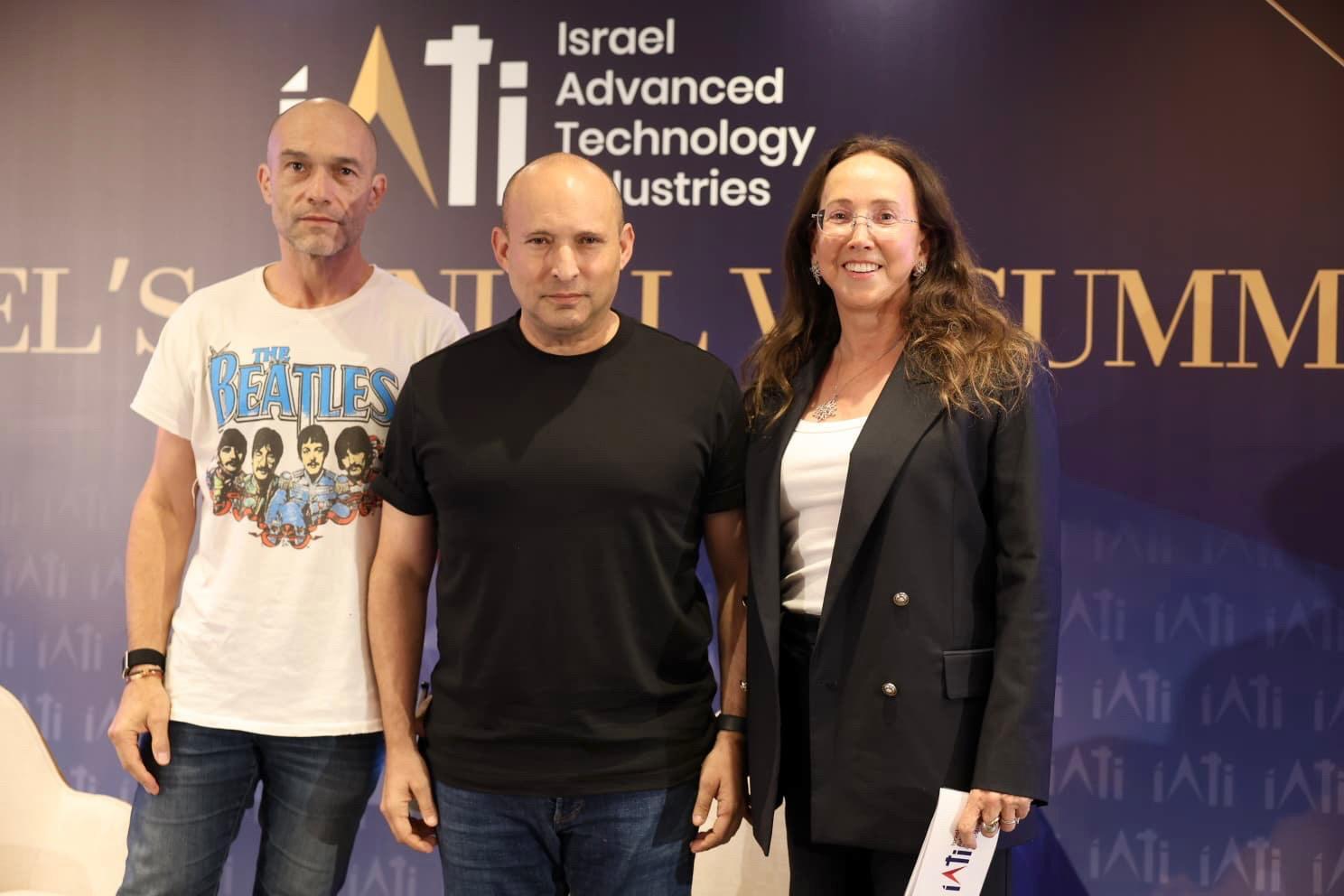
Former prime minister and B’Yachad party chair Naftali Bennett says one of the main goals of the next government is to position Israel as a “good place” for doing business and stem the growing trend of Israeli entrepreneurs and highly skilled talent moving abroad.
Speaking at the annual venture capital summit organized by Israel Advanced Technology Industries (IATI) in Tel Aviv, Bennett lays out his vision for preserving the future of Israel’s vaunted high-tech industry as a growth engine for the economy.
“The question is not how to help the high-tech sector, but rather how to make Israel the best place to start a company and halt the exodus of firms,” says Bennett. “We will launch a massive plan to stop the brain drain and bring back talent to Israel.”
“The rise in antisemitism around the world is a tremendous opportunity for the next government to create conditions for Jewish talent to come to Israel,” he added.
Bennett’s comments come just two weeks out from election day on October 27.
Bennett, a former tech entrepreneur, notes that the key to retaining entrepreneurs in Israel and fostering high-tech growth lies in creating a “better, stable and well-functioning government.”
If elected, Bennett pledges to advance policies to increase access to advanced-level (five-unit) studies in mathematics, English, and physics in the periphery, integrate artificial intelligence into the education system, and improve transportation links between the periphery and the center.
Also speaking at the Tel Aviv summit, Yisrael Beytenu party leader Avigdor Liberman demands “a conscription law for all — Jews, Muslims, Christians, Druze and Circassians — in two tracks, military and civilian,” meaning that those who do not draft to the military could instead perform national service.
Karin Mayer Rubinstein, CEO of the Israel Advanced Technology Industries, says that the high-tech industry is grappling with “one of the most complex and challenging periods it has ever known.”
“High-tech serves as the economy’s primary growth engine; however, to continue fulfilling this role in the years ahead, the industry requires certainty, a competitive business environment, and conditions that enable entrepreneurs, companies and investors to keep choosing Israel,” says Mayer Rubinstein. “The next incoming government must place high-tech at the top of the national agenda, recognizing that Israel’s ability to retain capital, technology, intellectual property and human capital domestically will directly impact the nation’s growth, productivity and economic resilience.”
“In a world where nations compete for the industries that will lead the future, Israel must continue to strengthen its advantages and ensure that the high-tech industry’s center of gravity remains here,” she adds.










The Times of Israel Community.