

France criticizes Iran over ballistic missile program
FM Le Drian calls on Tehran to comply with nuke deal, as Tillerson cites progress getting European support for new sanctions
 Add ToI as a Preferred Source on Google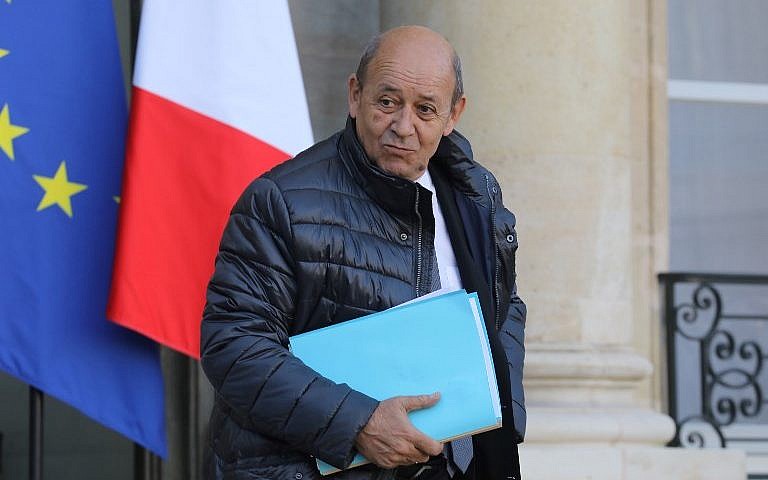
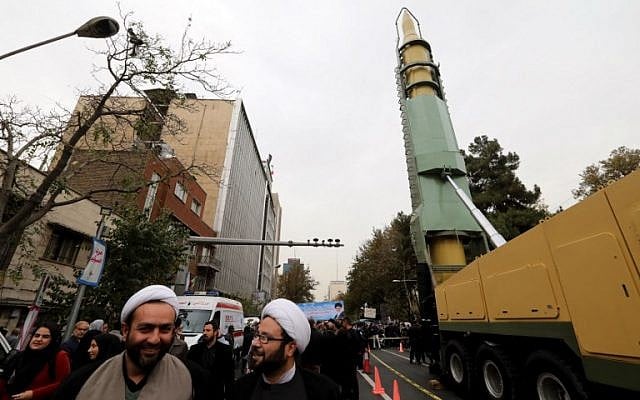
France’s foreign minister on Monday criticized Iran for its development of nuclear-capable ballistic missiles, which he said violates the United Nations resolution cementing the 2015 nuclear deal.
Speaking at a meeting of EU foreign ministers in Brussels, Jean-Yves Le Drian said talks would focus, among other things, on Iran’s military activities in Yemen, Lebanon and Syria.
“We will also have the opportunity of underlining our firmness on Iran’s compliance with United Nations Resolution 2231, which limits access to ballistic capacity and which Iran does not respect,” he said, according to Reuters.
The resolution’s appendix on ballistic missiles, which expires in 2023, calls on Iran “not to undertake any activity related to ballistic missiles designed to be capable of delivering nuclear weapons, including launches using such ballistic missile technology.”
Iran has said its ballistic missile development is not in violation of the resolution, as it claims to have no ambitions to acquire a nuclear weapon.
Le Drian’s criticism of Iran came as US Secretary of State Rex Tillerson said that he sees progress in getting European support for tough new penalties against Iran that could prevent a US withdrawal from the nuclear deal.
After meeting in London on Monday with British Prime Minister Theresa May, national security adviser Mark Sedwill and Foreign Secretary Boris Johnson, Tillerson said they had agreed to set up a working group of experts to fix flaws in the landmark 2015 agreement that US President Donald Trump has warned he will walk away from this spring unless they are completed to his liking.
“I think there’s a common view among the E3 that there are some areas of the (nuclear deal) or some areas of Iran’s behavior that should be addressed,” Tillerson told reporters after talks with Johnson. The E3 are Britain, France and Germany, which are all parties to the deal.
Tillerson specifically highlighted concerns about Iran’s ballistic missile program and provisions in the agreement that allow Iran to gradually resume advanced atomic work.
The working group will begin to meet as early as next week to discuss how to address the flaws, “through some type of another side agreement perhaps or a mechanism that would address our concerns,” Tillerson said.
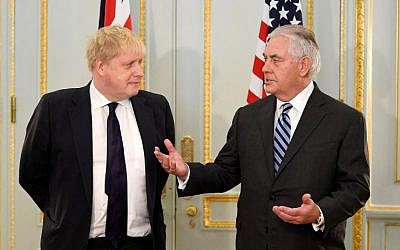
Johnson said that Britain was committed to doing what it could with its partners “collectively to constrain that activity and to make a big difference there. We think we can do that; we think we can do that together.”
But, he stressed, “it is important that we do that in parallel and don’t vitiate the fundamentals of the Iran nuclear deal.”
Tillerson will be carrying a similar message to Paris, his next stop in Europe on Tuesday.
The nuclear deal gave Iran billions in sanctions relief in return for curbs on its atomic program.
But earlier this month, Trump vowed to stop waiving US sanctions unless the Europeans agreed to strengthen its terms by consenting to a side deal that would effectively eliminate the provisions that allow Iran to gradually resume some advanced atomic work. Trump also wants tighter restrictions on Iran’s ballistic missile program.
Iran has rejected any renegotiation. Britain, France and Germany have expressed some willingness to work with the US to prevent the deal from collapsing.








The Times of Israel Community.