

Jerusalem of go
As runners gear up for the capital’s 4th marathon Friday, a look at how running culture is transforming the city
- See more Times of Israel on Google - add us as a Preferred Source
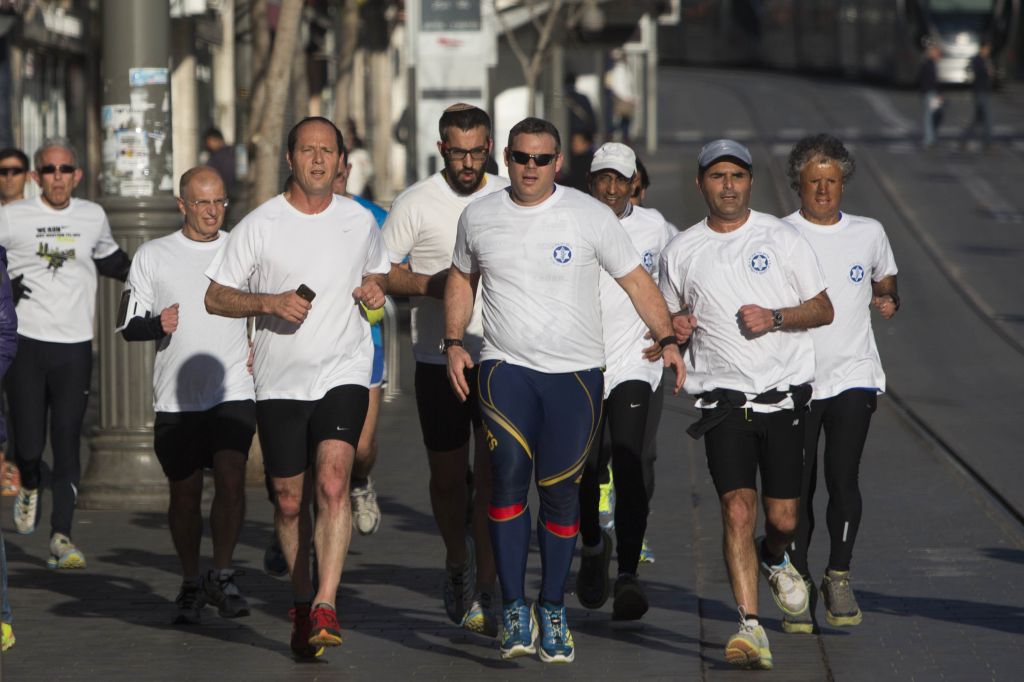
Jerusalem is in the final countdown to its fourth full marathon, its largest in the 14 years since former mayor Ehud Olmert began the tradition of racing in the winding, hilly streets of the city.
It was current mayor and runner Nir Barkat who turned that minor, 10-kilometer annual run into one of the world’s notable marathons, known for its difficult, challenging course.
“It’s by far the hardest in Israel and one of the hardest in the world,” said Guy Gordon, a local Jerusalem marathon runner. “In marathon tourism, there’s the bucket list of the classic five and a few wild cards, and Jerusalem has become one of the wild cards.”
With more than 25,000 runners participating — including 2,460 from 54 countries — preparing to race from ten kilometers to 42 kilometers during Friday’s event, it is noteworthy how the annual marathon has transformed the face of Jerusalem.
“The whole concept is growing exponentially around the world, so it’s a global trend, and the train track park brought running into a social context,” said Gordon. “It draws people from the neighborhoods and everyone’s out running; you meet everyone from everywhere.”
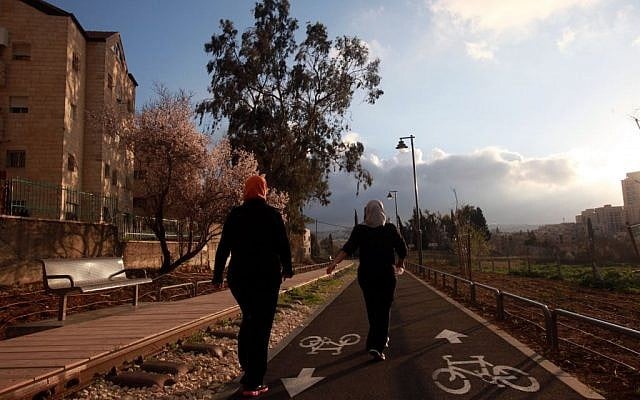
Gordon was referring to the six-kilometer train track park, built on the remains of the city’s Turkish-era train tracks, now a wide swath of urban ecological bike and running paths, grass and trees reaching from the First Station complex at the start of the German Colony’s Emek Refaim, along through Baka and the Katamonim neighborhoods.
“Jerusalem is more difficult to run because there are no cycling paths, like in Tel Aviv, where you have the boardwalk and the cycling paths,” said Gordon. “You don’t really have that here which is why having the paved train track park is so key.”
Still, running the full marathon, the half or the 10k requires more than a little training. For someone like Gordon, who is running the full marathon, training requires 50 to 80 kilometers each week for the last few months, sometimes in the early morning hours or at night after his kids are asleep.
A Irishman who moved to Jerusalem in 1996, Gordon began running as part of his “early mid-life crisis,” he said, dared by a former boss who didn’t like his smoking and told him to do the Tel Aviv night run. He loved that 10k, held annually in November, and then found himself training for the Jerusalem half-marathon, the Tel Aviv half and then his first full marathon in Amsterdam to celebrate his 40th birthday. His next target was his hometown marathon.
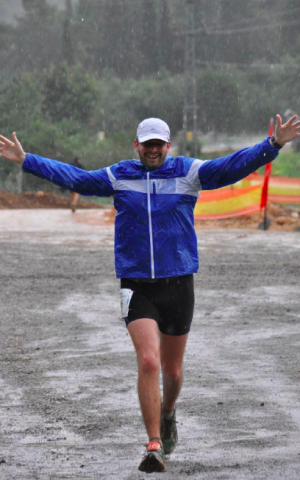
“It takes up a lot of your life,” he said. “It’s a lot of time and devotion.”
Maybe that’s why there still aren’t all that many full marathon runners in Jerusalem — or in Israel, for that matter. The 10k is attainable, remarked Gordon, and offers an easier entrance to the sport.
“It’s really a community of runners in Israel because it’s not that many people, maybe a couple of thousand and you recognize many of them by face,” said Jacob Ner-David, who has run in the Tel Aviv, Jerusalem and Tiberias marathons. “And while the half-marathon runners have grown in size, the full marathon runners are still a very small group.”
Ner-David, a serial high-tech entrepreneur who first lived in Jerusalem when he moved to Israel nearly 20 years ago, began his running career with Jerusalem’s first half-marathon 14 years ago, having signed up and then forgotten about it until the morning of the marathon.
“I was kind of in shape, but I forgot about it because there was no publicity,” said Ner-David, who now lives up north in Kibbutz Hanaton. “Someone reminded me it was that day and I ran over there and ran it.”
Ner-David remembers that very few people showed up, and none of the drivers understood why the streets were closed. The marathon route also didn’t go through the more interesting parts of the city, such as the Old City and Mount Scopus.
That first race turned him on to the sport, and he now runs marathons regularly, along with two of his older daughters, one of whom also participates in triathlons.
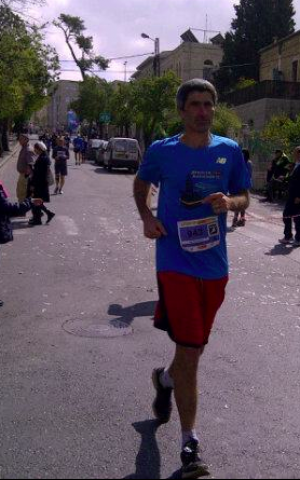
There are those who run the Jerusalem marathon because it’s a wonderful if difficult course, and others who want the experience of running through their city. But, warn the true marathon runners, if they’re running the 10k or the half marathon, they’re not technically marathon runners. This point was noted by Joshua Kulp, a regular marathon runner and Ironman competitor from Modiin who will be running this year’s Jerusalem marathon.
The Jerusalem marathon has always felt like “take back the city day,” Kulp wrote in a Facebook message. “Running is the day that we make it a normal city. I like that, and that’s part of why I run it every year.”
That’s part of the idea, said Ilanit Melchior, tourism director for the Jerusalem Development Authority.
“It’s about repositioning Jerusalem as an international community, so it influences the local community, Israelis outside the city and incoming tourism,” she said. “Our goal was to enlarge the number of tourists coming to Jerusalem, but coming from segments and communities that haven’t visited before but are coming for the marathon.”
Of course, not everyone feels the same about the marathon, given the havoc it wreaks upon the city.
Kindergartens and schools are closed on Friday, the third day of vacation this week following the Purim holiday, and traffic will come to a standstill from 5:30 in the morning through 1:30 in the afternoon. The finish line on Haim Hazaz Boulevard alongside Sacher Park has been up for days, while signs warning Jerusalem residents about streets closures on the morning of the marathon dot the city.
“You can’t get anywhere for hours on Friday,” said one Baka resident who preferred to remain anonymous.
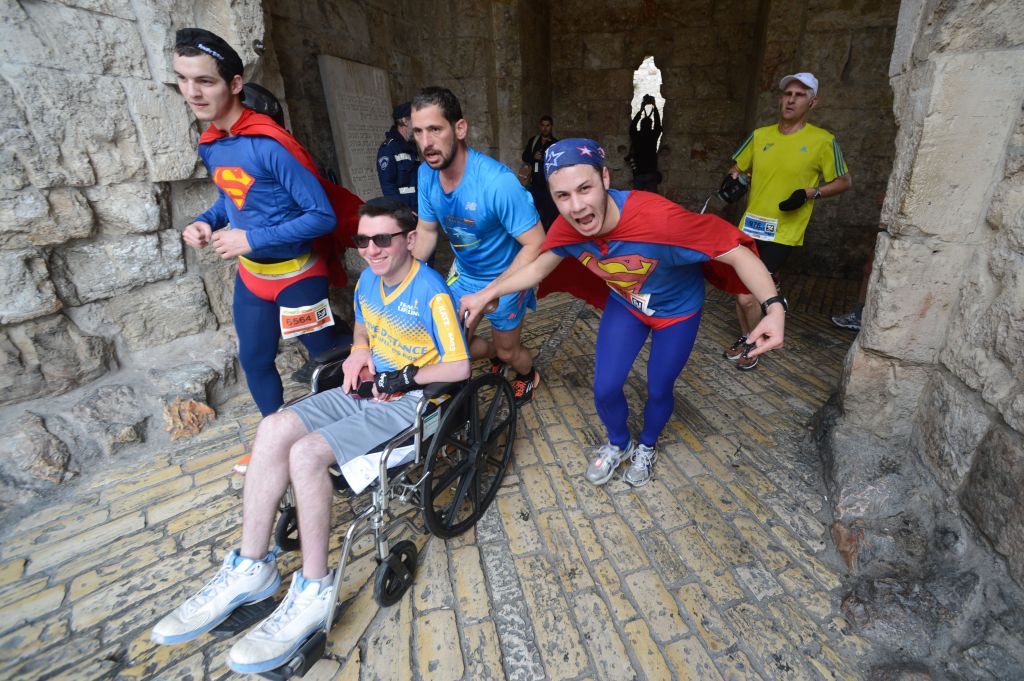
Then again, perhaps it’s all about attitude. The city of Tel Aviv, when announcing traffic changes for their recent marathon on February 28, called it a “Marathon Holiday,” in which everyone gets a day off to celebrate.
In Jerusalem, there’s plenty of places to stand or sit and enjoy the show. The 10k begins downtown, curves around the Old City, then along Hebron Road, down to King David Street, into Talbieh and Rehavia and then down to the finish line on Ben Zvi Boulevard. It’s a similar, longer run for the half marathon, adding Emek Refaim and the German Colony, the train track park as well as a stretch toward East Talpiot, along the Tayelet overlooking the Old City, and over to Katamon before heading toward the finish line.
The full marathon starts near the city’s museum row, heads into Hebrew University’s Givat Ram campus and then toward downtown, the Old City, King David Street, the German Colony, the train track park and over toward East Talpiot before heading back toward the finish line at Sacher Park.
“You really get a sense of Jerusalem,” said Ner-David.
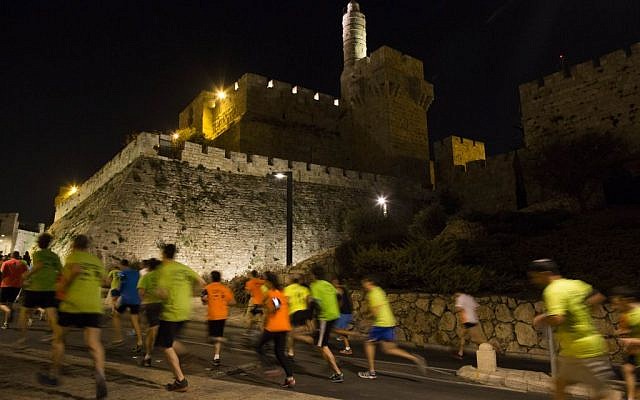
It’s a considerably harder route than Tel Aviv’s, but more interesting, said Hadi Aslan, a 34-year-old orthodontics resident, who has been running for 10 years and will run his first half-marathon this year. He’s been training for six months.
“I’m used to the hills,” he said. “I like them better than running by the sea in Tel Aviv.”
He added, though, that he’d like to see improved infrastructure throughout the city for runners, and a better turnout of people cheering on the runners.
“I think there should be more,” he said. “It’s not enough — but it’s progressing.”
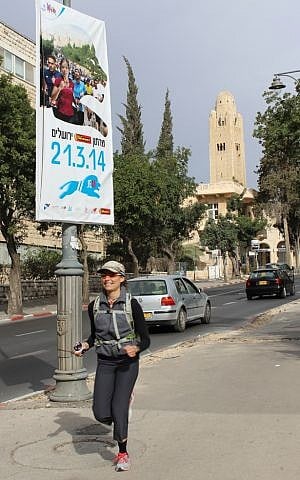
The marathon still hasn’t become part of the city’s fabric, nor is it a celebration similar to those that take place in other cities, like New York, Amsterdam and Boston, agreed Ner-David, who ran in last year’s New York City Marathon.
“From the first second you’re out there, you feel like a rock star,” said Ner-David about the New York City marathon. “There are millions of people lining the street from beginning to end, and because of the euphoria of the crowd, you run much faster than you trained to run. When I got back to Manhattan, I was an hour ahead.”
But Jerusalem is a tougher race, said Gordon. And Jerusalem runners? They’re hard-core.
“In Tel Aviv, they were all dolled up in equipment and they go for a little trot around HaYarkon Park,” he said, pointing out the addition of Jerusalem’s religiously observant Jewish female participants running in skirts. “But Jerusalem runners are tougher, because this is one of the most challenging circuits in the world in terms of elevation. It’s been an interesting evolution.”




The Times of Israel Community.