

Syria asks UN to investigate chemical weapons use
Washington says it has no evidence to back allegation that rebels deployed weapons of mass destruction
 Add ToI as a Preferred Source on Google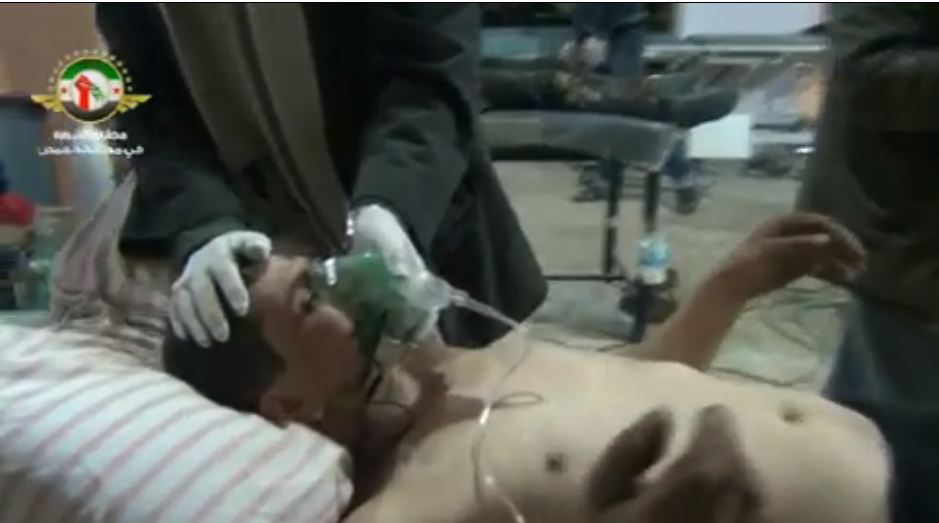
AP — The Syrian government on Wednesday asked UN Secretary-General Ban Ki-moon to appoint an independent mission to investigate an alleged chemical weapons attack by rebels in northern Syria.
Rebels in the north have denied the government claim and blamed regime forces for Tuesday’s missile attack on Khan al-Assad village in northern Aleppo province.
The US ambassador to Syria, Robert Ford, said Wednesday the Obama administration has no evidence to support Syria’s claims.
Syria’s UN Ambassador Bashar Ja’afari told reporters Wednesday morning that he had just requested Ban on behalf of the government “to form a specialized, independent and neutral technical mission to investigate the use by the terrorist groups operating in Syria of chemical weapons yesterday against civilians in the town of Khan al-Assad in Aleppo.” The Syrian government refers to the rebels as “terrorists.”
Ja’afari said Syria asked the secretary-general for assistance “in a sign of good faith, good will, good intentions” to the international community, international public opinion and the Syrian people.
He recalled that the Syrian government had sent a letter to the secretary-general and the UN Security Council in December warning of the possible use of chemical weapons and chemicals by rebel groups who would then accuse the government of a chemical weapons attack.
“The Syrian government, if it has such weapons, will never use it against its own population,” Ja’afari said.
He stressed that Syria a party to most UN conventions on chemical, biological and nuclear weapons and had proposed a Security Council resolution in 2003 when it was a council member that would have required the Mideast to be free of all weapons of mass destruction. He said it was blocked by the threatened veto of an “influential member,” an apparent reference to the United States, Israel’s closest ally.
The US ambassador to Syria said the Obama administration has no evidence to support President Bashar Assad’s claims that US-backed rebels used chemical weapons in northern Syria, but is looking carefully at the conflicting reports.
“So far we have no evidence to substantiate the reports that chemical weapons were used yesterday,” Robert Ford told the House Foreign Affairs Committee. He later added that the administration was extremely concerned and trying to verify reports that such weapons were used in the Aleppo province and the Damascus suburbs.
The administration on Tuesday disputed Assad’s claim, and a US official said there was no evidence that either Assad’s forces or the opposition had used chemical weapons in an attack.
President Barack Obama has declared the use, deployment or transfer of the weapons to be his “red line” for possible military intervention in the Arab country. Ford said Wednesday that an increasingly besieged Assad regime might be tempted to use its stockpile of chemical weapons, the largest in the region.
Hours before Ford’s testimony, the chairman of the House Intelligence Committee, Rep. Mike Rogers, said he feared a “stain on our national credibility” if the United States determines Assad is using chemical weapons to remain in power but fails to intervene.
Rogers said there was a “high probability” that a chemical agent was deployed Tuesday in northern Syria.
Rogers told “CBS This Morning” the US knows “there has been some forensic evidence that at least small quantities” of chemical weapons may have been used. Rogers also said the United States had “lost the faith” of the opposition forces, adding, “This is the time to act. Don’t wait until we have 5,000 dead.”
In his testimony, Ford described an untenable situation as the Syrian civil war grinds on into its third year. The United Nations has estimated 70,000 have been killed, more than 1 million refugees have fled to neighboring countries and 2.5 million have been displaced internally.
The Syrian people “face a new level of ruthlessness from the Assad regime, which is raining Scud missiles down on residential neighborhoods, destroying hospitals and schools, and sending its thugs rampaging through the streets to terrorize their fellow citizens. The carnage is appalling,” Ford said.
He insisted that the ideal outcome is a “negotiated political transition” to the crisis without Assad.
Ford said the military balance is turning against the Assad regime, which has lost some critical strategic locations such as the borders with Turkey and Iraq. The ambassador also said there has been heavy fighting in Damascus “right up close to where the president lives.”
Ford was pressed repeatedly about what military action the United States might take but declined to speculate at the public hearing. Lawmakers uneasy with military involvement — or even the prospect of arming the opposition — reflected a war weariness after more than a decade of conflicts in Iraq and Afghanistan.
Ford underscored that Obama has said there will be consequences if chemical weapons were used and said he was certain that there have been discussions within the administration about possible steps.
“I do want to underline how seriously we take the reports,” he said.
Rep. Scott Perry, who noted the 10th anniversary of the invasion of Iraq this week, repeatedly tried to get Ford to elaborate for Congress and the American people about what could happen next in Syria if chemical weapons were used.
Ford declined. Perry, alluding to Iraq, said, “We don’t want the current administration making the mistake of past administrations.”







The Times of Israel Community.