

75 years after World War II, Russian volunteers search for fallen soldiers
Soviet soldiers withdrawing under Nazi onslaught had little time to properly bury comrades. Now various volunteer groups across Russia are working to locate remains and pay tribute
 Add ToI as a Preferred Source on Google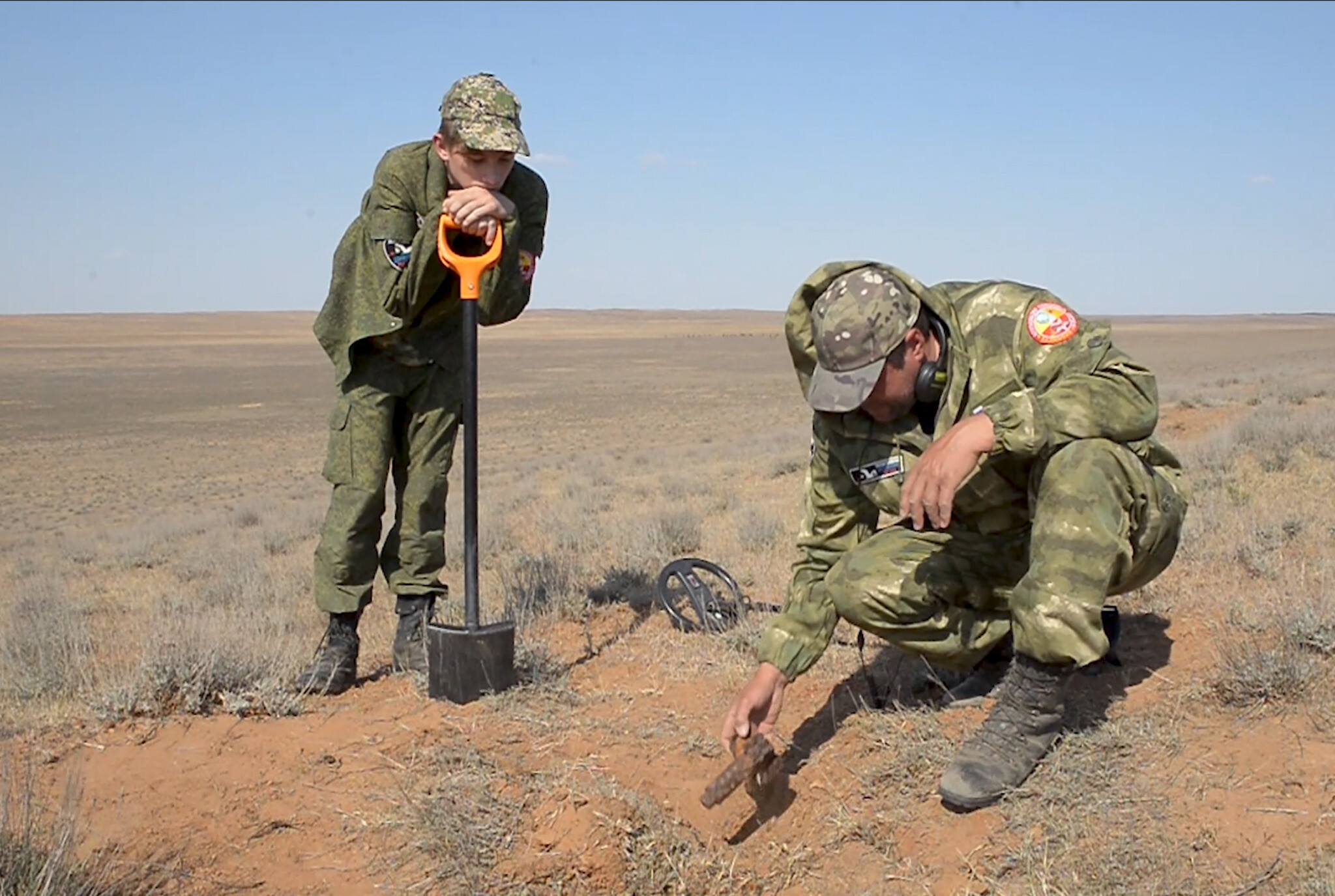
KHULKHUTA, Russia (AP) — Crouching over the sun-drenched soil, Alfred Abayev picks up a charred fragment of a Soviet warplane downed in a World War II battle with advancing Nazi forces.
“You can see it was burning,” he says, pointing at the weathered trace of a red star.
Abayev and members of his search team rummage the steppe for remains of the Red Army soldiers who fell in the autumn of 1942 in fierce fighting with Nazi troops pushing toward the Caspian Sea south of Stalingrad.
Stiff resistance by the Red Army stopped the Wehrmacht onslaught in the steppes of Kalmykia, and months later the enemy’s forces were encircled in Stalingrad and surrendered, a major defeat for the Nazis that marked a turning point in WWII.
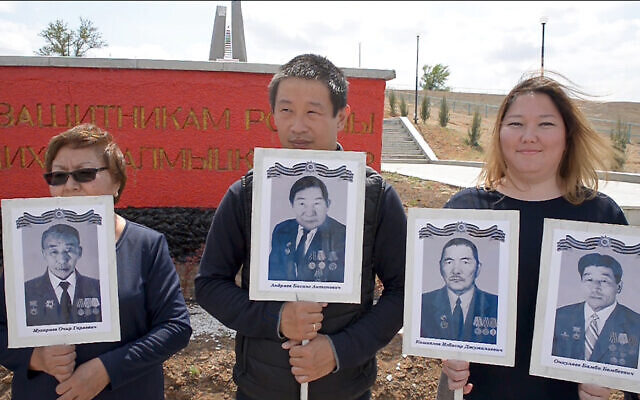
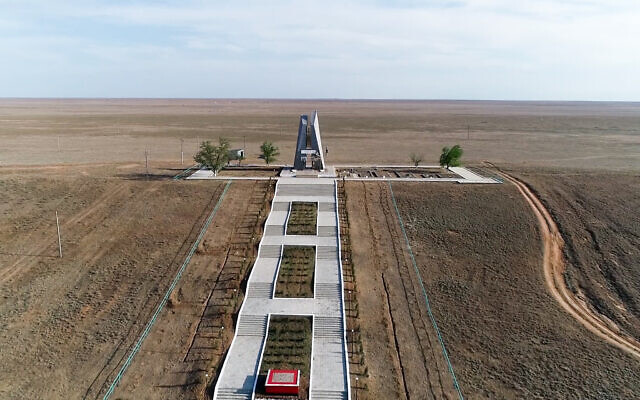
The search for remains of fallen Red Army soldiers near Khulkhuta, in Kalmykia, a southern province that lies between the Volga River and the Caspian Sea, is part of a broad effort by myriad volunteer groups across Russia to pay tribute to fallen WWII soldiers.
Russia’s losses stood at a staggering 27 million, and the war’s enormous suffering and sacrifice has been deeply engraved in the nation’s psyche.
The defeat of the Nazis, which Russia marks on May 9 as Victory Day, is the nation’s most important holiday, lavishly celebrated across the country with annual military parades, fireworks and other festivities.
The coronavirus pandemic has scuttled President Vladimir Putin’s plan to mark the 75th anniversary of the end of WWII in Europe with a massive Red Square parade involving top foreign leaders. The big show was intended to emphasize a decisive role the Soviet Union played in the war and underline Moscow’s global clout.
The Russian capital will still mark the anniversary Saturday with a flyby of dozens of warplanes over Red Square and lavish fireworks. Similar celebrations will be held in other cities across the country as most Russians have remained in lockdown since late March to stem the coronavirus outbreak.
Putin has vowed to hold a full-fledged Red Square parade later this year once the spread of contagion slows down.
While authorities have focused on festivities, numerous volunteers across the country have continued to search WWII battlefields for soldiers’ remains.
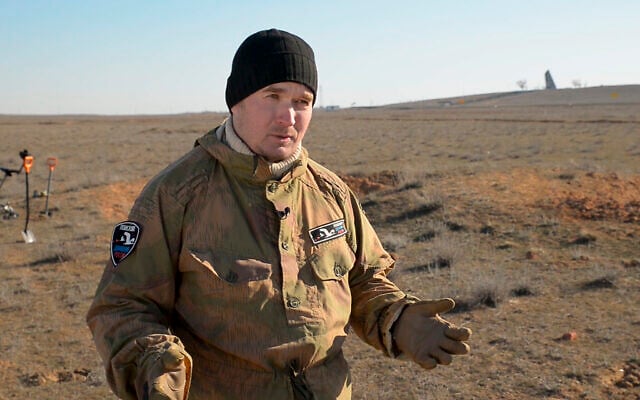
Abayev, who leads the volunteers in Kalmykia, sees it as his duty to bury the fallen soldiers.
“We believe it’s necessary to do this,” he said. “It’s important for me because my ancestors fought here.”
Abayev said that his group have found the remains of more than 4,500 troops, most of them Red Army soldiers, but also some Wehrmacht troops. Some Germans visited Khulkhuta to see the place where their ancestors died, he said.
The remains that can’t be identified are buried in a mass grave in Khulkhuta under an austere, gray monument.
The head of Khulkhuta’s local administration, Galina Nasurova, sees paying tribute to the fallen soldiers as an important mission.
“This place is sacred. They call it ‘Small Stalingrad’ because of fierce battles that took place here,” she said.
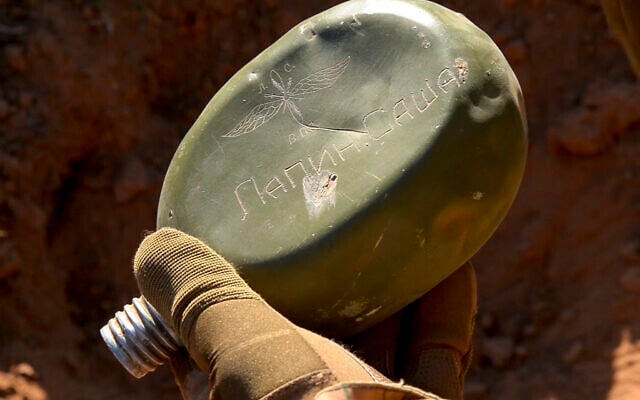
The sun-dried steppes of Kalmykia made it easier for volunteers to find personal items helping identify at least some of the dead.
But the task is much more daunting in the forests and marshlands of western Russia that became the arenas of fierce battles with the Nazi armies that invaded the Soviet Union on June 22, 1941.
The Wehrmacht quickly overtook huge chunks of Soviet territory, advancing as close as 30 kilometers (about 20 miles) from Moscow in October 1941.
A successful Soviet counter-offensive pushed the Nazis back from the outskirts of the Soviet capital at the end of 1941, but the Red Army continued to suffer a string of devastating defeats in the following year until the battle of Stalingrad reversed its fortunes.
According to official estimates, the Red Army’s casualties stood at 8.7 million, but many historians have argued that the figure was significantly higher.
As the Soviet soldiers were rolling back under the Nazi onslaught, they had little or no chance to give their fallen comrades a proper burial.
Some were hastily buried in collective graves that later lost their markings, and remains of countless others were left in the fields and forests of the western part of the Soviet Union. Millions were taken prisoner and died of starvation and from slave labor in Nazi concentration camps.
Ever since, their families have lived in gnawing uncertainty about when and how they died, and volunteers see it as their patriotic duty to determine the fallen soldiers’ fate.
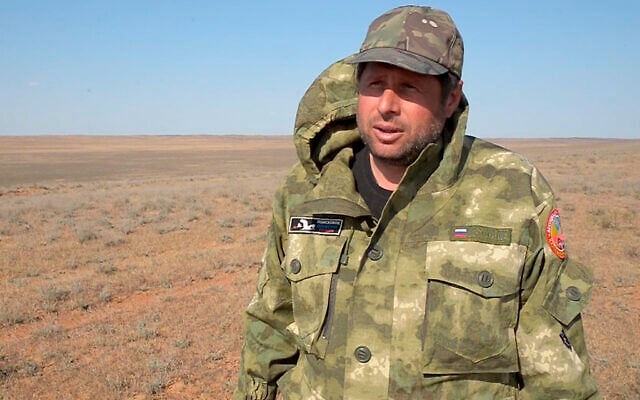
Alexander Trubakov, the leader of a group of volunteers from the southern Astrakhan region next to Kalmykia, said so far this year his team has managed to identify two fallen soldiers whose remains were found in the steppe near Khulkhuta.
One carried his Red Army ID in his purse, and another had his “death medallion,” a tiny Bakelite cylinder with a tiny piece of newsprint containing personal data, he said.
“We are searching for relatives to invite them to a burial of those who fought here,” Trubakov said.




The Times of Israel Community.