

Live updates (closed)
 Add ToI as a Preferred Source on Google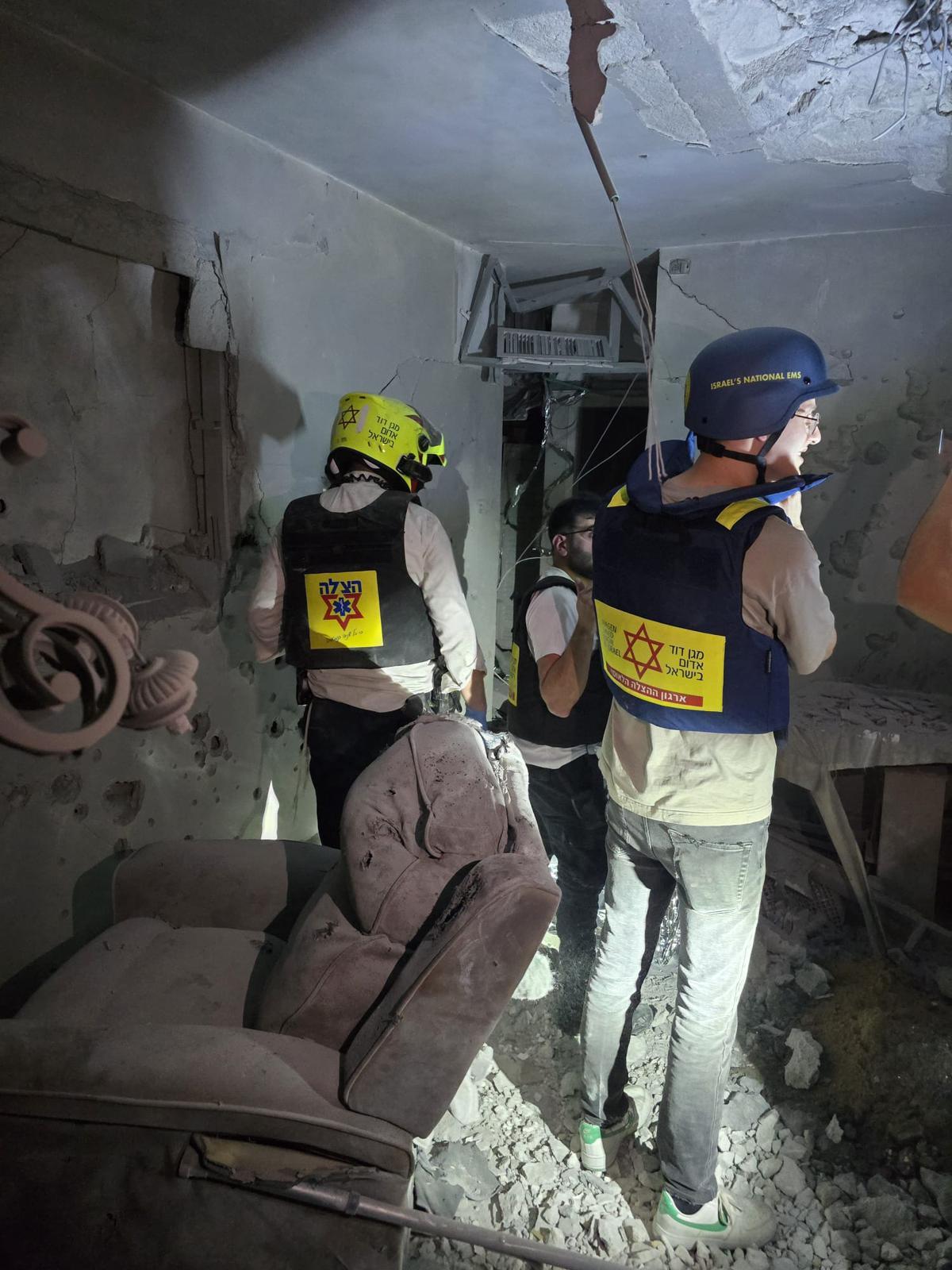
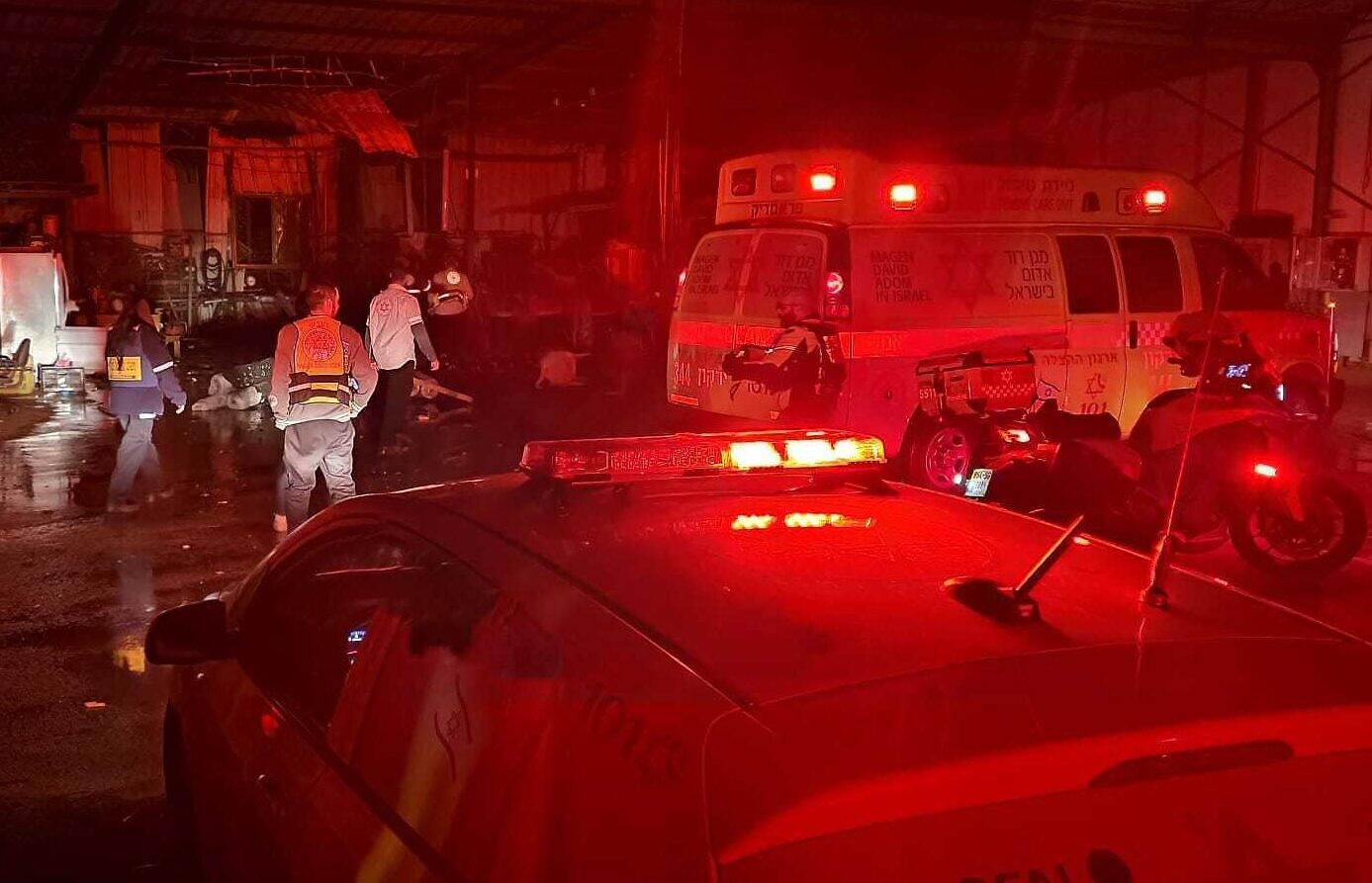
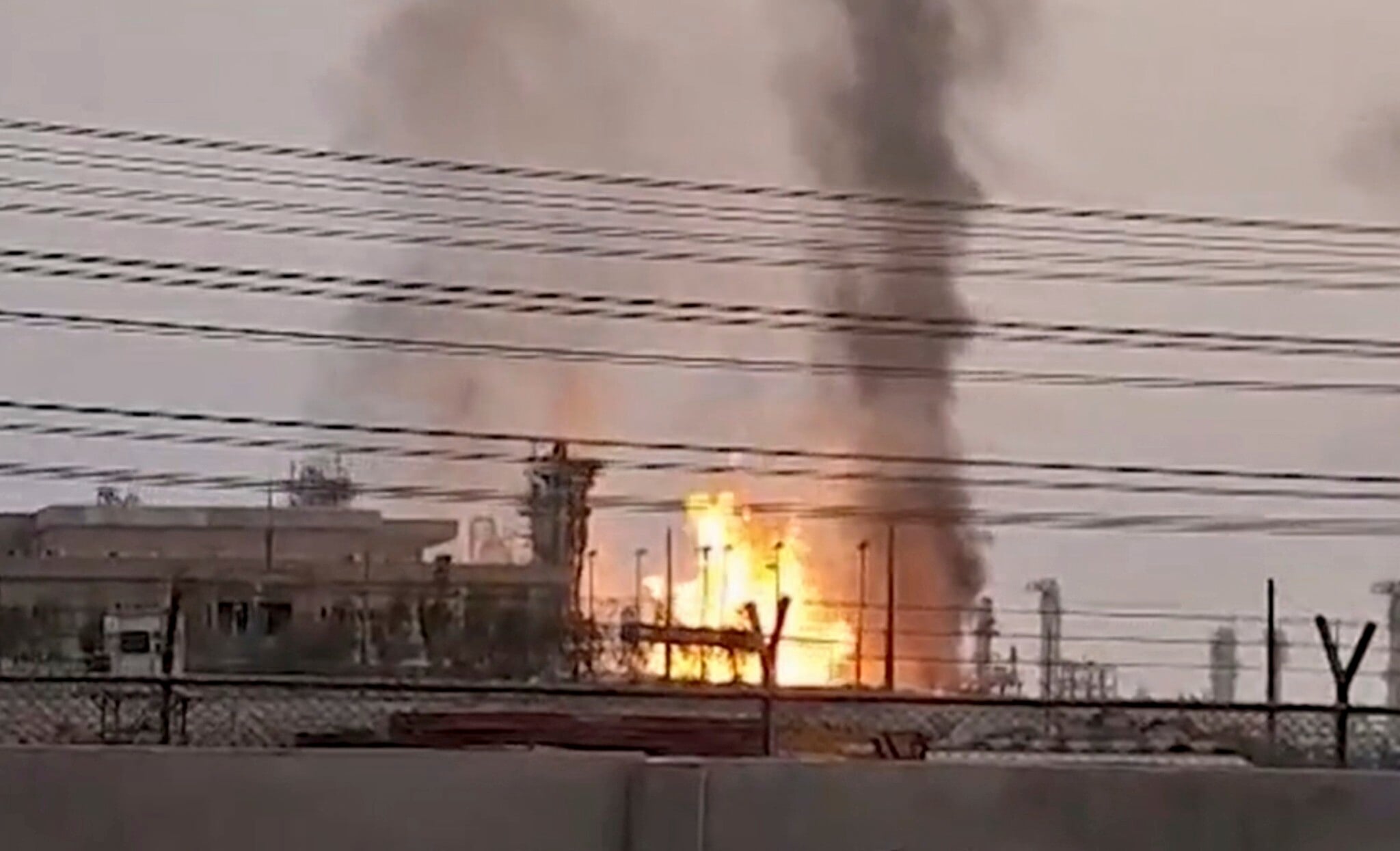
The Times of Israel liveblogged Wednesday’s events as they unfolded.
Iran’s IRGC warns it will destroy Gulf energy industry if its own attacked again
Iran’s Islamic Revolutionary Guard Corps warns that it will destroy the oil and gas industry of its Gulf neighbors, which it considers American interests, if its own energy sector is harmed again.
“We warn you once again that you made a big mistake in attacking the energy infrastructure of the Islamic Republic, the response to which is being implemented,” the Revolutionary Guards announces, in a statement carried by Iranian media. “If it is repeated again, further attacks on your energy infrastructure and that of your allies will not stop until it is completely destroyed, and our response will be much more severe than tonight’s attacks.”
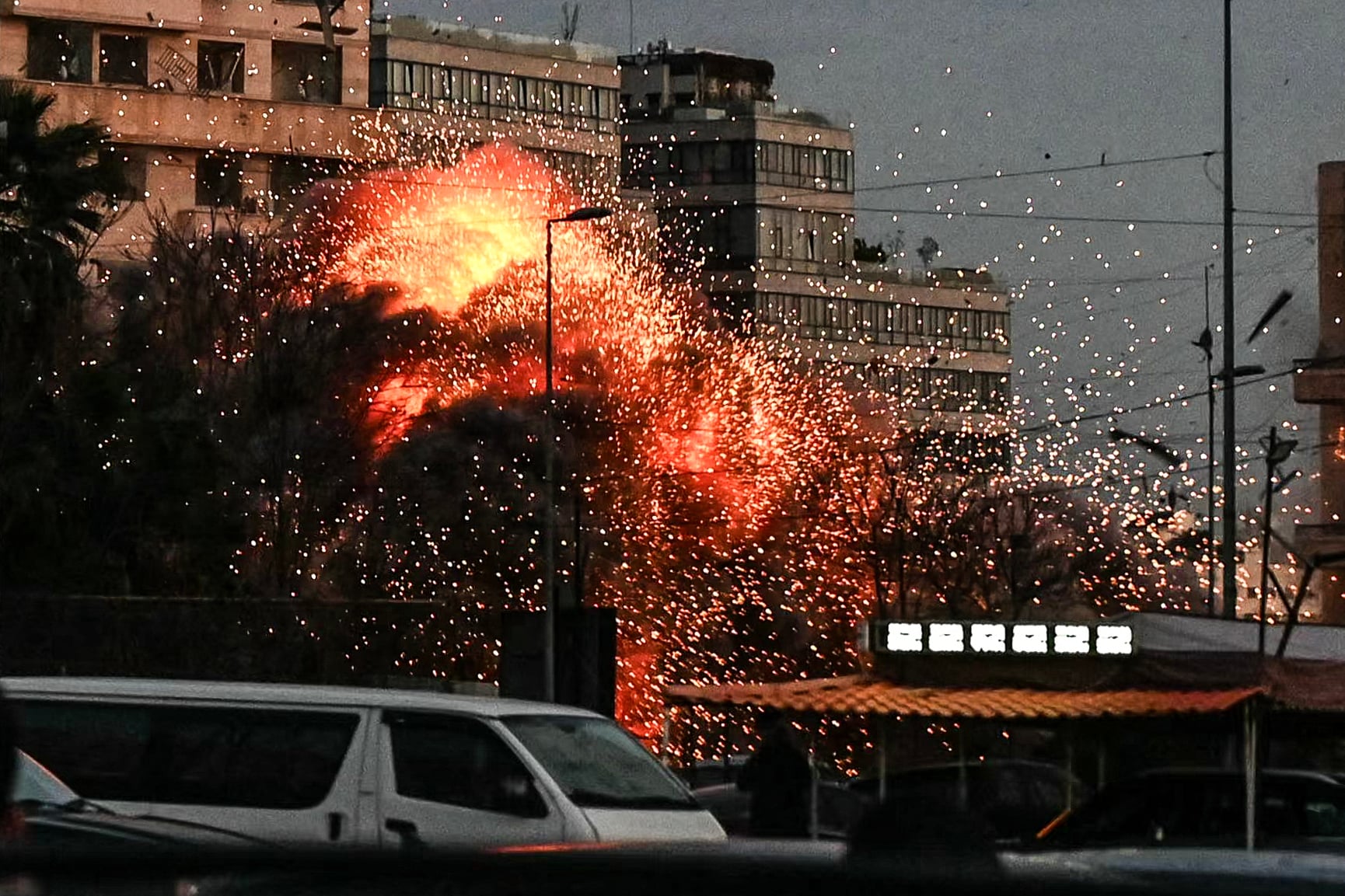
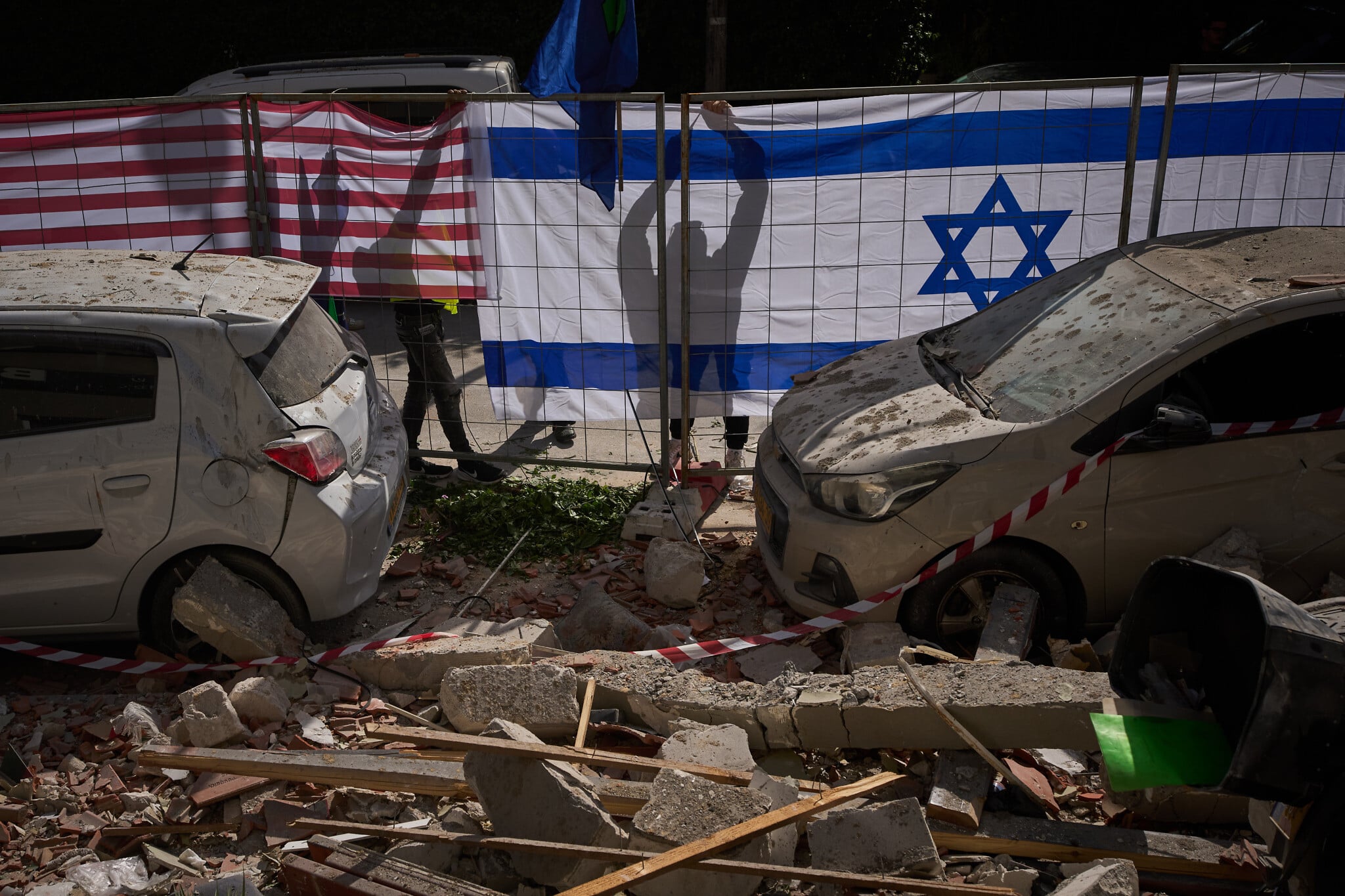
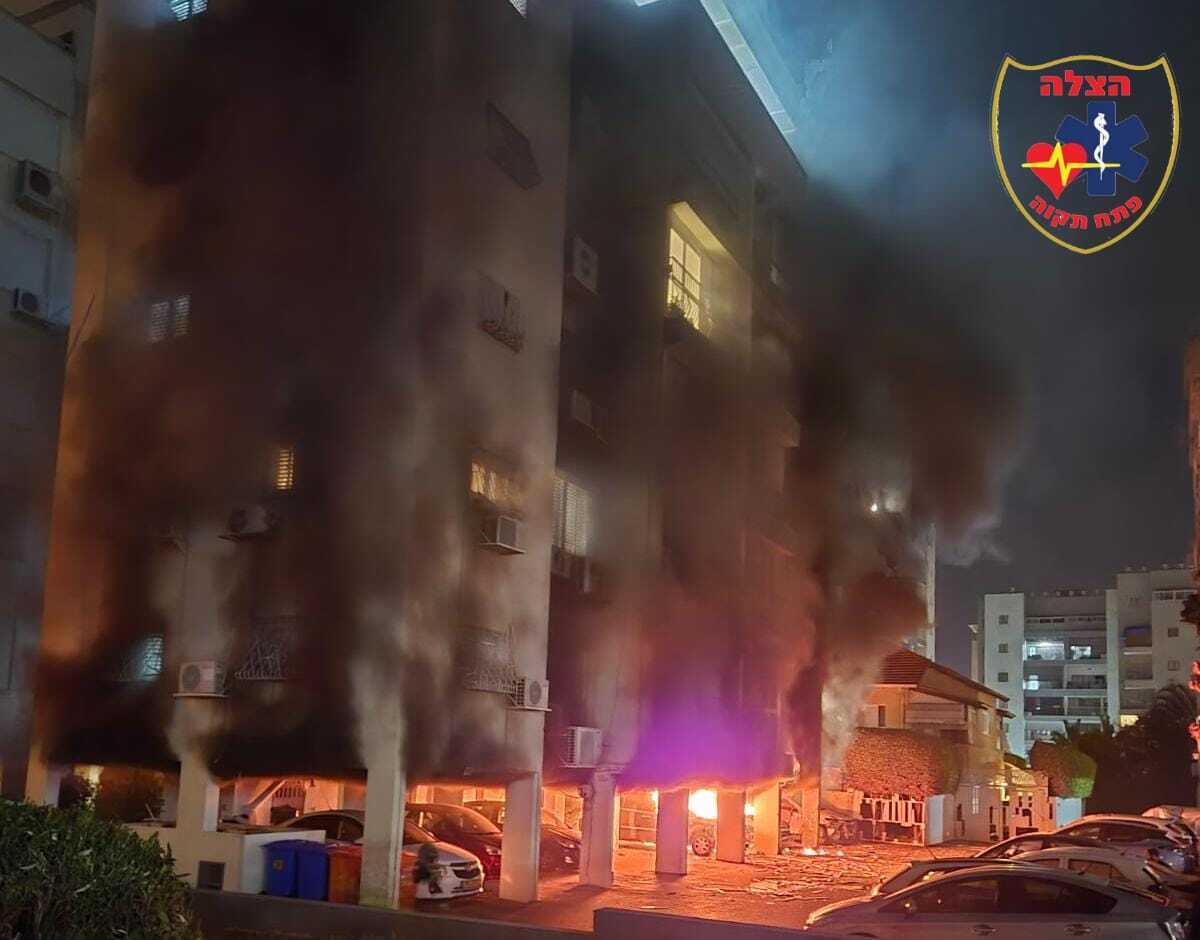
Impacts reported in Iranian cluster bomb attack in central Israel
Police and medics say they’re responding to reports of impacts in central Israel after Iran’s latest ballistic missile attack.
The missile had carried a cluster bomb warhead.
UK charges 2 with Iran-linked national security offenses as part of probe into surveillance of Jewish community

Illustrative: Metropolitan police stand in front of protesters at an anti-Israel, pro-Palestinian demonstration in support of the group Palestine Action as the UK government gears up to ban it, in Trafalgar Square, central London, Great Britain, June 23, 2025. (HENRY NICHOLLS / AFP)
British prosecutors say they have charged two men with engaging in contact that is likely to assist a foreign intelligence service, following a counter-terrorism policing investigation.
The country to which the investigation relates is Iran, the Crown Prosecution Service says in a statement.
The men were arrested and detained earlier this month as part of an investigation into alleged surveillance of locations and individuals linked to the Jewish community in the London area.
Death toll in Iranian missile strike that hit West Bank Palestinian town rises to four
The death toll in the Iranian missile impact that hit the West Bank Palestinian town of Beit Awwa rises to four, medics tell AFP.
Latest ballistic missile fired at central Israel carried cluster bomb warhead
The ballistic missile launched from Iran at central Israel a short while ago carried a cluster bomb warhead, footage shows.
Around half of Iran’s ballistic missiles fired at Israel amid the war have been armed with cluster bomb warheads, according to the IDF.
The ballistic missile launched from Iran at central Israel a short while ago carried a cluster bomb warhead, footage shows. pic.twitter.com/JZyoq7AivU
— Emanuel (Mannie) Fabian (@manniefabian) March 18, 2026
Iranian missile attack detected, sirens set to sound in central Israel
The IDF has detected another ballistic missile attack from Iran.
Sirens are expected to sound in central Israel in the coming minutes.
At least 3 women said killed in Iranian missile attack near Hebron, first Palestinian deaths of war
At least three Palestinian women were killed in the Iranian missile impact that hit Beit Awwa, a Palestinian town near Hebron in the West Bank, the Red Crescent on Wednesday.
The Palestinian Red Crescent said it had responded to “three fatalities and five injuries, one of them very critical,” in the area, marking the first Palestinian deaths in the ongoing Middle East war.
The casualties were reported after an apparent cluster munition from an Iranian ballistic missile struck the area.
Number of passengers per flight reduced after damage at Ben Gurion Airport from Iranian attack
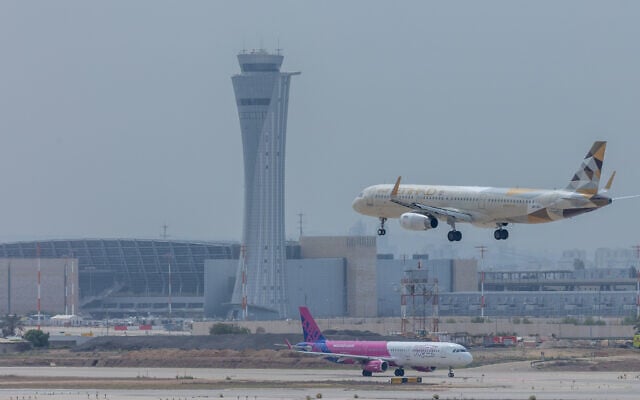
Illustrative: An Etihad Airways plane departs from Israel's Ben Gurion International Airport, on April 7, 2025. (Yossi Aloni/Flash90)
Israel’s Transportation Ministry decides to tighten passenger quota restrictions on outbound flights after three private jets parked at Ben Gurion Airport were damaged by debris following the interception of an Iranian ballistic missile, according to Hebrew media reports.
The ministry is reducing the number of passengers per flight permitted to board large wide-body aircraft to 130 people, down from the 260-270 that were recently approved to board long-haul flights from Ben Gurion to the US, according to Ynet.
The new restriction will come into effect at midnight and last until Saturday night, according to Channel 12.
For departing flights on narrow-body aircraft, the current limit of 120 passengers per flight remains unchanged.
Israel’s airspace has been shut to most commercial traffic since February 28 following the US-Israel attack on Iran.
Earlier this month, Ben Gurion Airport gradually reopened for limited inbound and outbound flights operated solely by Israeli airlines El Al, Arkia, Israir and Air Haifa, in order to repatriate Israelis stuck abroad and help travelers inside the country leave.
In response to the change, Israeli flagship carrier El Al announces that half of the passengers registered for flights to the US are expected to receive cancellation notices.
“We apologize for the inconvenience, and recommend that those customers who wish to depart as soon as possible find other alternatives for leaving the country,” El Al says.
Several said critically hurt in Palestinian West Bank town from Iran missile attack; home damaged in Israel
Several women were critically injured in the West Bank town of Beit Awwa after an apparent cluster munition from an Iranian ballistic missile struck the area, the Palestinian Authority’s Wafa news agency reports.
Another cluster munition hit an Israeli community just over the Green Line, damaging a home but causing no injuries, according to rescue services.
Footage shows the moment the cluster bomb hit a home in the community of Neta, located around four kilometers (2.5 miles) from Beit Awwa.
תיעוד דרמטי: רגע פגיעת רסיס היירוט במבנה ביישוב נטע שבחבל לכיש, בעקבות שיגור מאיראן >>>>@Itsik_zuarets pic.twitter.com/BA9OQE3mK7
— כאן חדשות (@kann_news) March 18, 2026
IDF confirms conducting airstrikes in northern Iran for first time in current war
The IDF confirms carrying out airstrikes in northern Iran a short while ago, after Israeli officials said the Israeli Air Force was striking Iranian Navy vessels at the port city of Bandar Anzali, on the coast of the Caspian Sea.
The military says the strikes were carried out by the Israeli Air Force, following intelligence provided by the Naval Intelligence Division and Military Intelligence Directorate.
It marks the first time in the current war that the IDF is striking in northern Iran, according to the military.
The IDF says it will provide further details on the strikes later.
Qatar orders departure of two Iranian diplomats over gas facility attack

High-rise buildings are pictured in the Doha skyline, in Qatar, on September 15, 2025. (Mahmud HAMS / AFP)
Qatar’s foreign ministry orders Iran’s military and security attachés, along with their staff, to leave the country within 24 hours, following an attack on the Gulf state’s massive natural gas facility.
“Both the military attaché and the security attaché in the embassy, in addition to those working in the two attaché offices, [are] persona non grata, and [Qatar] requests that they leave the state’s territories within a maximum period of 24 hours,” the ministry says in a social media post.
Iranian cluster bomb attack suspected in southern Israel; no injuries reported
Rescue forces are responding to reports of a suspected cluster bomb impact in an Israeli community in southern Israel, following Iran’s latest ballistic missile attack.
There have been no reports of injuries.
Likud comes out in support of prison service chief facing potential indictment

Israel Prisons Chief Commissioner Kobi Yaakobi speaks to the Knesset National Security Committee on December 16, 2025. (Noam Moskovitz/Knesset Spokesperson)
Prime Minister Benjamin Netanyahu’s Likud party publicly backs Prison Service chief Kobi Yaakobi, who is facing a possible indictment over alleged ethical violations.
Yaakobi is suspected of informing Avishai Muallem, a former senior police detective in the West Bank, about a covert probe involving him.
Yaakobi “is a respected officer who dedicated his entire life to the security of the country and its citizens,” Likud says in a statement. “Since taking office as Commissioner of the IPS, Yaakobi has carried out a true revolution that has received overwhelming praise from all ranks of the organization and even from the rest of the country’s security agencies.”
Last week, Attorney General Gali Baharav-Miara and State Attorney Amit Aisman gave Yaakobi a three-week deadline to decide on a hearing date as they weigh whether to indict him for suspected ethical violations. The prison chief is being granted a hearing to present evidence in his defense before prosecutors decide whether to formally charge him with breach of trust and obstructing an investigation.
Baharav-Miara’s decision “to prosecute him, especially in the midst of a war, is delusional,” the Likud statement says.
Muallem, who has himself been indicted, allegedly obstructed investigations into Jewish nationalist violence in a bid to curry favor with far-right National Security Minister Itamar Ben Gvir.
Bennett condemns attacks by ‘violent gangs’ of Jewish extremists in the West Bank

Former prime minister Naftali Bennett speaks at the Conference of Presidents of Major American Jewish Organizations in Jerusalem, on February 17, 2026. (Yonatan Sindel/Flash90)
Former prime minister Naftali Bennett condemns settler violence against Palestinians, saying that “we did not establish a Jewish state so that violent gangs could operate within it.”
“I strongly condemn any manifestation of nationalist violence by Jewish extremists in Judea and Samaria,” Bennett says in a statement, arguing that “the vast majority of [settlers] abhor violence and crime” and that it is supporters of the settlement movement, like him, who “must denounce the rioters and eradicate all violence from within ourselves.”
Bennett is a longtime supporter of Israeli West Bank settlements and is the former director of the Yesha Council, an umbrella body for the settlements.
Bennett’s comments come after extremist settler activists, stymied by authorities in an attempt to rebuild the illegal settlement outpost of Kol Mevaser in the central West Bank, attacked a nearby Palestinian town. Security camera footage showed several attackers setting a fire by a fence protecting a chicken coop. Activists later found burnt cloth that had been used to try to set the coops on fire.
The incident came amid a wave of rising extremist settler violence against Palestinians in the West Bank.
Bennett calls the attack “another failure of governance” and demands that the government “let the IDF and police work.”
Trump, PM in close coordination but US, Israeli war aims aren’t identical — report

US President Donald Trump, right, shakes hands with Prime Minister Benjamin Netanyahu during a news conference at Mar-a-Lago, in Palm Beach, Florida, December 29, 2025. (Alex Brandon/AP)
US President Donald Trump is the senior American official most aligned with Israeli objectives in the war on Iran, US officials tell the Axios news site.
Coordination between Prime Minister Netanyahu and Trump is closer than ever, and the two talk almost every day, according to the site. The two countries’ intelligence services are also working in tandem.
Israel and the US are focusing on different targets, however. The US is focused on military targets, says Axios, while Israel is conducting assassinations and creating the conditions for the Iranian people to overthrow the regime.
Despite the coordination, there isn’t 100% overlap in the goals, senior US officials say.
“Israel has other focuses and we know that,” says a White House official.
Trump will end the war when the military objectives are accomplished, and reportedly sees regime changes as a bonus.
“Israel is going to try to kill their new leader. They’re much more interested in that than we are,” says a second official.
“Israel doesn’t hate the chaos. We do. We want stability. Netanyahu? Not so much, especially in Iran. They hate the Iranian government a lot more than we do,” says a White House official.
According to the Axios report, the US has asked Israel not to target Iran’s oil facilities again without approval from Washington.
Missile launched by Iran at southern Israel had cluster bomb warhead, footage shows
One of the ballistic missiles launched from Iran at southern Israel a short while ago carried a cluster bomb warhead, footage shows.
There are no reports of injuries, Magen David Adom says. Sirens had sounded in towns north of Beersheba, including Gaza border communities and several settlements in the southern West Bank.
More footage of the cluster bomb missile over southern Israel. pic.twitter.com/GXnUg0XX19
— Emanuel (Mannie) Fabian (@manniefabian) March 18, 2026
New Iranian missile attack detected, sirens set to sound in southern Israel, Jerusalem area
The IDF has detected a new ballistic missile attack from Iran.
Sirens are expected to sound in southern Israel and the Jerusalem area in the coming minutes.
4 injured from missile shrapnel in Riyadh as fragment falls near refinery
Four people were injured when shrapnel from a ballistic missile interception fell on a residential area of the Saudi capital Riyadh, the country’s civil defense says.
“Four residents sustained injuries, and limited material damage occurred, as a result of shrapnel falling onto a residential area in Riyadh following the interception of a ballistic missile,” says a civil defense statement on X.
Altogether, Saudi Arabia intercepted four ballistic missiles today, with a fragment falling near a refinery south of Riyadh, its defense ministry says, as Iran threatened Gulf gas facilities following US-Israeli attacks on its own infrastructure.
“Four ballistic missiles launched toward the city of Riyadh were intercepted and destroyed; a fragment of one of the ballistic missiles landed near a refinery south of Riyadh,” the ministry says in a statement on X.
Israeli strikes on Iran’s South Pars gas field coordinated with US, sources tell ToI
WASHINGTON — Israel coordinated its Wednesday strikes on Iran’s South Pars natural gas field with the US, a US official and a second source familiar with the matter tell The Times of Israel.
The source familiar with the matter says the US was aware of the attack, but did not take part in it.
Iran’s president warns of ‘uncontrollable consequences’ if strikes on energy facilities continue
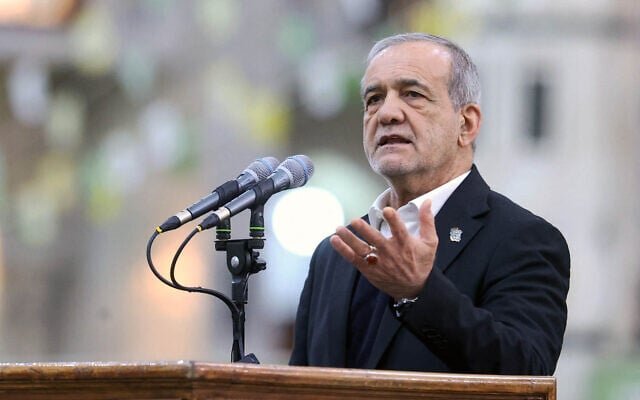
In this handout picture provided by Iranian presidency, Iran's President Masoud Pezeshkian addresses cabinet members, as they visit of the tomb of the late Iranian revolutionary leader ayatollah Ruhollah Khomeini, in Tehran on January 31, 2026. (Handout/Iranian Presidency/AFP)
Iranian President Masoud Pezeshkian warns that targeting Iran’s energy infrastructure “could lead to uncontrollable consequences.”
“These aggressive acts will not achieve any gains for the Zionist–American enemy and its supporters,” writes Pezeshkian on X after Israel strikes Iran’s South Fars gas field. “On the contrary, they will complicate the situation and may lead to uncontrollable repercussions whose effects extend to engulf the entire world.”
Explosions reported in Iranian city on Caspian Sea as Air Force strikes Iranian Navy
Multiple explosions are reported in the Iranian port city of Bandar Anzali, on the coast of the Caspian Sea, as the Israeli Air Force carries out strikes in the area.
According to Israeli officials, the strikes are targeting Iranian Navy vessels.
Qatar warns Iran hitting gas facility a ‘direct threat’ to its national security

This undated file photo shows a Qatari liquid natural gas (LNG) tanker ship being loaded up with LNG at Ras Laffan Sea Port, northern Qatar. (AP Photo)
Qatar says Iranian attacks on its main gas facility situated on its north coast are a “direct threat to its national security.”
“Qatar expresses its strong condemnation and denunciation of the brutal Iranian attack targeting Ras Laffan Industrial City… Qatar considers this assault a dangerous escalation, a flagrant violation of its sovereignty, and a direct threat to its national security,” the Gulf state’s foreign ministry says in a statement.
Qatar’s state-run energy company says that the fires set by Iranian strikes on its main gas facility had caused “extensive damage,” after Tehran had said it would retaliate in kind for an attack on its own energy infrastructure.
“QatarEnergy confirms that Ras Laffan Industrial City this evening has been the subject of missile attacks,” the firm says in a statement. “Emergency response teams were deployed immediately to contain the resulting fires, as extensive damage has been caused. All personnel have been accounted for and no casualties have been reported at this time.”
No injuries reported in Hezbollah fire targeting Gaza border area
No injuries are reported after Hezbollah fired missiles toward southern Israel, setting off sirens in Ashkelon and several communities near the border with the Gaza Strip.
The long-range projectiles struck open areas, according to the military.
It apparently marks the first time Hezbollah has targeted the Gaza border area, located some 200 kilometers (124 miles) from Lebanon. Hezbollah has been known to possess missiles that can reach practically everywhere in Israel.
Meanwhile, a rocket impact is reported in Kiryat Shmona, with damage caused but no injuries, according to rescue services.
Syria unveils plan to eliminate Assad’s chemical weapons
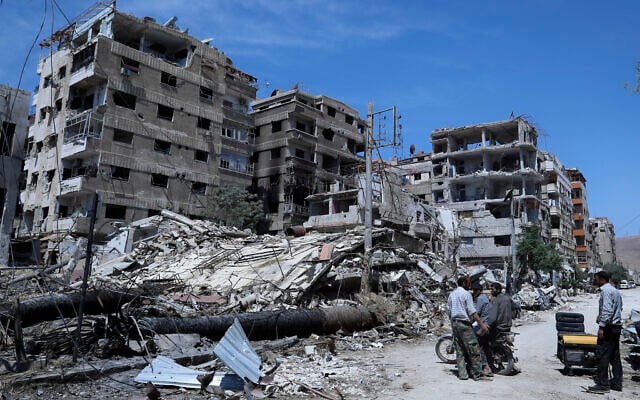
People stand in front of damaged buildings in the town of Douma, the site of a suspected chemical weapon attack, near Damascus, Syria, on April 16, 2018. (Hassan Ammar/AP)
Syria launches a plan supported by Washington to rid the Middle Eastern country of legacy chemical weapons that were used against its people under ousted leader Bashar al-Assad.
For decades, Assad ran a large-scale program for chemical weapons, the use of which killed and injured thousands during Syria’s long-running civil war.
Despite Damascus’s signing onto the Chemical Weapons Convention in 2013 and declaring a 1,300-ton stockpile, prohibited use continued and the size of the program remains unclear.
An international task force backed by the United States, Germany, Britain, Canada and France, among others, will track down all remaining elements of the program and destroy them under the supervision of the Organization for the Prohibition of Chemical Weapons, Syria’s ambassador to the United Nations, Ibrahim Olabi, says in an interview.
As many as 100 sites in Syria need to be inspected to determine what toxic munitions remain and how they should be destroyed, OPCW experts have said.
It will require a time-consuming and costly operation to prevent the proliferation of weapons of mass destruction in a region fraught with conflict and political turmoil. The expanding US-Israeli war on Iran and broader regional security concerns will make the timing of the mission uncertain, but all the more necessary to prevent future use, officials say.
“We don’t know what’s remaining. It was a secret program,” Olabi says. “The job is on Syria to basically look for these things and then declare them.”
A diplomatic source, who speaks on condition of anonymity to discuss the sensitive matter, says the 100 sites could be anything from military bases to laboratories or offices.
“It will probably take many months if not years to get it done, and of course, the current situation in the Middle East doesn’t help the process move forward to the actual destruction of any remnants of Assad‘s chemical weapons program,” the source says.
Hezbollah rocket fire targets Gaza border area for first time in current conflict
Sirens sound in several Gaza border communities amid long-range Hezbollah rocket fire from Lebanon. It is the first time during the current conflict that the Lebanese terror group has targeted the Gaza border area in southern Israel.
Alerts are also activated in the Galilee.
Qatar says Iran attack sparks fire in area hosting major gas facility
Qatar’s interior ministry says that an Iranian attack set a fire at the Gulf state’s main gas facility, situated on its north coast.
“Civil defense is dealing with a fire in the Ras Laffan area following an Iranian targeting,” the ministry says in a statement after Tehran said it would target energy infrastructure across the Gulf following a US-Israeli attack on its own gas facilities.
No injuries reported in Hezbollah rocket attack on central, north Israel
No injuries are reported in the Hezbollah rocket attack on central Israel and the Galilee.
A small number of projectiles were fired, which were intercepted or struck open areas, according to the IDF.
Sirens had sounded in Tayibe, Qalansawe, Kfar Saba and other nearby towns northeast of Tel Aviv, as well as in several communities in the Galilee.
Saudi intercepts 4 ballistic missiles launched at Riyadh ahead of foreign ministers’ meeting
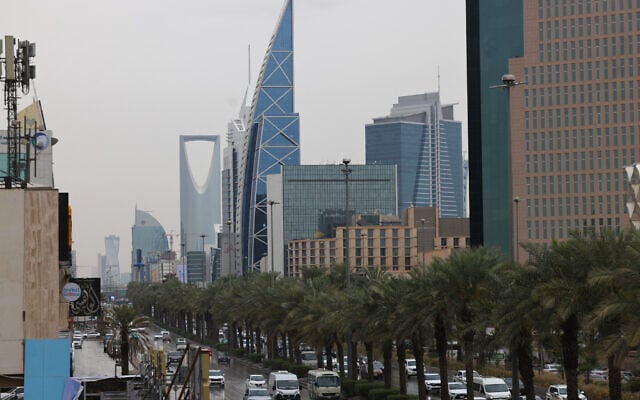
Vehciles drive along the King Fahad road, a principal transport arteries that links the city's southern and northern districts, in the Saudi capital Riyadh on March 3, 2026. (Fayez Nureldine / AFP)
Saudi Arabia intercepts and destroys four ballistic missiles that were launched toward Riyadh, the kingdom’s defense ministry says, just ahead of a meeting of regional and Islamic foreign ministers in the Saudi capital.
“Scattered debris fell across various areas of the capital, with initial assessments indicating no casualties or damage,” the ministry says.
Several loud booms are heard and some of the city’s residents receive phone alerts for the first time, warning them of a hostile aerial threat.
Saudi air defenses dealt with a “ballistic threat” in Riyadh, state TV says.
The Gulf kingdom has come under attack from hundreds of Iranian missiles and drones since the US-Israeli war with Iran began on February 28, the vast majority of which authorities say have been intercepted.
But Wednesday’s attack marked the first time many in the city had heard blasts or received a warning.
Two witnesses say they saw what appeared to be missile interceptions on the city’s western edge, near the Diplomatic Quarter housing foreign missions.
The attack came hours before Saudi Arabia was set to host a consultative meeting of foreign ministers from a number of Arab and Islamic countries to discuss ways to support regional security and stability amid the Iran war.
A Turkish diplomatic source says that representatives from Azerbaijan, Bahrain, Egypt, Jordan, Kuwait, Pakistan, Qatar, Syria, Turkey and the United Arab Emirates would attend the meeting.
Israeli attack on Iranian gas field was threat from Trump to open Hormuz – report

US President Donald Trump speaks during a meeting with Irish Prime Minister Micheál Martin in the Oval Office of the White House, on St. Patrick's Day, Tuesday, March 17, 2026, in Washington. (AP Photo/Alex Brandon)
Israel’s attack earlier today on Iran’s South Pars gas field — the largest in the world — was fully coordinated with the US, reports Channel 12, and was meant to be a message from US President Donald Trump that he is losing his patience with Iran over its threats to shipping in the Strait of Hormuz.
According to the report, further strikes were threatened on Iranian energy facilities.
“Israel assisted operationally in order to send an American message,” a senior Israeli official tells Channel 12. “Either the Strait of Hormuz will be opened and the mines will be removed by the Iranians, or the entire [natural gas] facility will be destroyed, as will other energy facilities.”
Sirens sound in central Israel due to long-range rocket fire from Lebanon
Rocket sirens sound in central Israel following long-range rocket fire from Lebanon.
The alerts are activated in Tayibe, Qalansawe, Kfar Saba and other nearby towns northeast of Tel Aviv.
Alerts also sound in the Galilee.
United Airlines said to extend suspension of nonstop routes to Israel until June 14

Illustrative: A United Airlines plane taxis at Newark International Airport, in Newark, New Jersey, on January 11 2023. (Ket Betancur/AFP)
United Airlines extends its suspension of nonstop flight services to and from Tel Aviv’s Ben Gurion Airport through June 14, according to Hebrew media reports and ticket availability on its website, as Israel’s airspace remains closed to foreign airlines amid the war with Iran.
The US carrier previously put the Tel Aviv route on hold through April 19 following the closure of Israel’s airspace on February 28, the first day of the war. Online ticket sales on the non-stop route between New York and Ben Gurion Airport via United’s website are now halted through June 14. Meanwhile, US rival Delta extended the suspension of its Tel Aviv route through May 31.
“Our flights to TLV remain suspended,” United EMEIA communications manager Samir Nador says in an e-mailed statement to The Times of Israel. The statement did not address the extension of the suspension through June 14.
Israel’s airspace has been shut to most commercial traffic since February 28. Earlier this month, Ben Gurion Airport gradually reopened for limited inbound and outbound flights permitted to operate solely by Israeli airlines El Al, Arkia, Israir and Air Haifa to repatriate Israelis stuck abroad and help travelers inside the country leave.
Sirens sound in Western Galilee due to Hezbollah attack
Sirens sound in the Western Galilee amid a Hezbollah attack from Lebanon.
The alerts are activated in several border communities, warning of a suspected drone infiltration and rocket fire.
There are no immediate reports of injuries.
Turkish crowds protest in support of jailed Erdogan rival one year after arrest
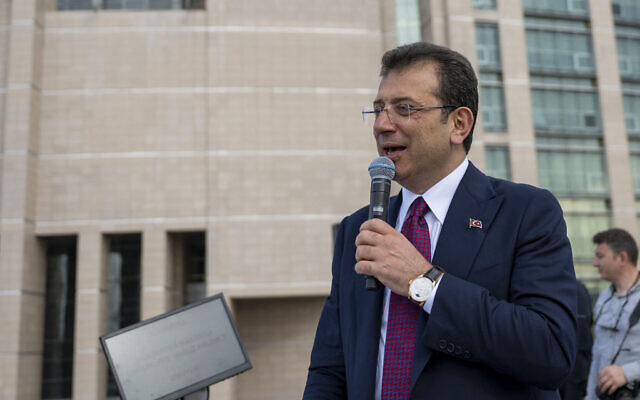
Istanbul Mayor Ekrem Imamoglu of the main center-left opposition Republican People's Party (CHP) receives official mandate to serve five more years in Istanbul on April 3, 2024. (Yasin Akgul/ AFP/ File)
Thousands of Turks gather in central Istanbul in support of jailed Mayor Ekrem Imamoglu at an opposition rally, one year after President Tayyip Erdogan’s main rival was arrested on corruption charges.
Supporters waving red party banners and Turkish flags gather at city hall for the rally by Imamoglu’s party, the main opposition Republican People’s Party (CHP), which has been the target of an unprecedented judicial crackdown since late 2024.
“Rights, law, justice,” the crowd chants as Imamoglu’s wife speaks at the rally.
The crackdown on the party is overshadowing Turkish politics ahead of elections expected by many to be held late next year. Imamoglu, the CHP’s presidential candidate, is now on trial in a corruption case that could extinguish his ambition of succeeding Erdogan as president.
Erdogan and the government deny political interference and say courts operate independently. They have not commented on the arrest anniversary.
Prosecutors accuse Imamoglu, 55, of leading a criminal organization through tender-rigging and bribery, charges he denies. His pre-trial imprisonment has drawn sustained protests from opposition supporters and criticism from rights groups, who say the case exemplifies the erosion of judicial independence in Turkey.
Opinion polls show Imamoglu performing strongly against Erdogan in any presidential race, while polling also suggests a tight race between the secularist CHP and Erdogan’s Islamist-rooted AKP in parliamentary elections set to be held at the same time.
Home Front Command extends wartime guidelines until at least tomorrow night
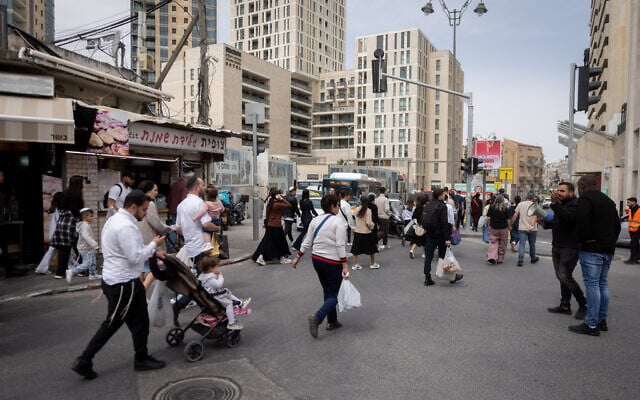
Shoppers evacuate Jerusalem's Mahane Yehuda market and seek shelter as an air raid siren goes off on March 13, 2026. (Chaim Goldberg/FLASH90)
The IDF Home Front Command says its current wartime guidelines are being extended until tomorrow night at least, meaning schools will remain closed in most parts of the country.
By Thursday at 8 p.m., another assessment will be conducted by the Home Front Command.
Under the current guidelines, educational institutions in certain areas can operate, provided there is an adequate shelter that can be reached in time. The areas include: the Beit Shean Valley, Jordan Valley, West Bank, Dead Sea area, West Lachish, Gaza border communities, Western Negev, Southern Negev and Arava.
Gatherings of up to 100 people indoors and 50 people outdoors are also permitted, under the same conditions in those areas.
In the rest of the country, educational activities are still prohibited. Gatherings are limited to 50 people, provided a shelter can be reached in time, and workplaces can operate under the same conditions.
Iran war, Hormuz closure blocking vital aid to over 400,000 children, Save the Children says
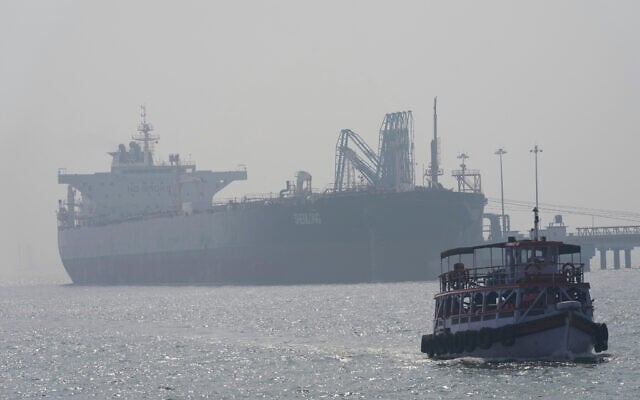
Liberia-flagged tanker Shenlong Suezmax, carrying crude oil from Saudi Arabia, that arrived clearing the Strait of Hormuz, is seen at the Mumbai Port in Mumbai, India, March 12, 2026. (AP Photo/Rafiq Maqbool)
The US-Israeli war with Iran is obstructing key delivery routes for humanitarian supplies, delaying shipments of lifesaving aid for nearly half a million children far beyond the region, the Save the Children nonprofit says.
The charity warns that the war is disrupting key air, sea and land routes, with dire ripple effects on global aid supplies.
Since US-Israeli strikes on the Iranian regime began on February 28, Tehran has responded with attacks throughout the Middle East and threats that have nearly halted shipping in the Strait of Hormuz, through which one-fifth of global oil supplies normally passes.
Aid deliveries have been heavily impacted, with shipping costs soaring up to 50 percent in some cases as the shipments are rerouted, Save the Children says.
This has left lifesaving aid intended for at least 410,000 children and their families in crisis-ravaged Sudan, Afghanistan and Yemen stuck in the Middle East.
“The escalating conflict is having grave ripple effects for children far beyond the region,” Willem Zuidema, the NGO’s head of global supply chains, says in a statement.
One shipment of medical supplies bound for Sudan is stuck in Dubai due to the closure of the Strait of Hormuz, the charity says. This is putting more than 90 primary health care facilities across Sudan at risk of running out of essential medicines, it adds.
Those medical supplies include antibiotics, antimalarials, deworming treatments and pain and fever medicines intended to support over 400,000 children in Sudan, it says.
The charity says it is exploring alternative routes to Sudan, including by road across Saudi Arabia to Jeddah and then by sea to Port Sudan.
This, it warned, “could add $1,000–$2,000 per container in costs.”
Critical nutrition supplies intended to support 5,000 children and 1,400 pregnant and breastfeeding women in Afghanistan have also been impacted, Save the Children says.
The charity says it also has a shipment of medicines, including antibiotics, for around 5,000 children in Yemen, which remains stuck in Dubai.
Zuidema calls on all parties to the conflict to “facilitate the safe passage of humanitarian assistance to children.”
IDF says strike in Beirut killed commander of Iranian militia that works with Hezbollah
The latest commander of the Imam Hossein Division, an Iranian militia which operates alongside Hezbollah, was killed in an Israeli airstrike in Beirut yesterday, the IDF announces.
Hassan Ali Marwan was killed a week after the previous commander of the militia was killed in an Israeli airstrike.
The IDF says Marwan, who previously served as the militia’s operations officer, entered the role following the killing of Imam Hossein commander Ali Musallam Tabaja in Beirut last Wednesday.
The strike last week also killed the deputy head of Imam Hossein, along with other top officials. Tabaja, the previous commander, had entered the role after the commander before him was killed by Israel in October 2024.
Sa’ar to French FM: We want peace with Lebanon but it must take ‘meaningful’ steps against Hezbollah
Foreign Minister Gideon Sa’ar speaks with French Foreign Minister Jean-Noel Barrot about the war in Iran and “particularly about Lebanon” amid intensifying fighting with the Iran-backed terror group Hezbollah, according to a post on his X account.
Sa’ar tells his French counterpart that “since March 2nd, Israel has been attacked from Lebanese territory more than 2,000 times with missiles and drones. Israel has an interest in Lebanon joining the circle of normalization and peace in the region. The obstacle to this is Hezbollah.”
Beirut must take “meaningful action against Hezbollah on all fronts,” including military, socioeconomic, and legal action, Sa’ar continues, reiterating that Israel is “committed to defending itself and its citizens against this terror state that… is acting according to the Iranian regime’s interests.”
He tells Barrot that Iran’s blocking of the Strait of Hormuz “is not an American or Israeli issue — it’s a global one,” amid efforts by US President Donald Trump to gain international assistance in opening the key pathway for oil.
“The community’s de facto acceptance of this grave phenomenon will encourage harm to the freedom of navigation and global economy,” Sa’ar says.
There was no immediately available French readout of the call.
Spoke with my French counterpart FM @jnbarrot, about the war in Iran and particularly about Lebanon.
I emphasized that the issue of the Strait of Hormuz is not an American or Israeli issue – it's a global one. This is naval terrorism that harms the global economy. It began with… pic.twitter.com/wTH2JJQikK
— Gideon Sa'ar | גדעון סער (@gidonsaar) March 18, 2026
Hezbollah condemns Israel’s ‘cowardly’ killing of Iranian security chief Larijani
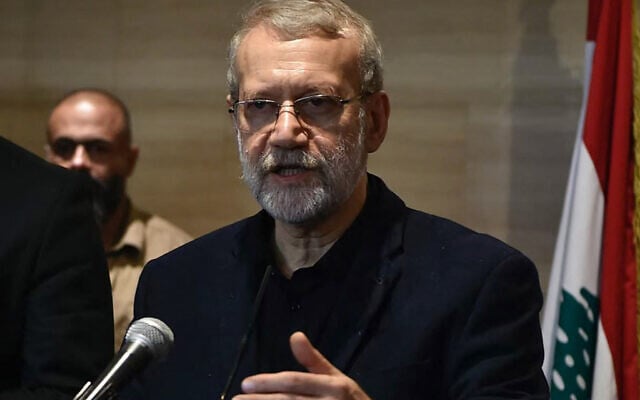
Ali Larijani, a senior adviser to Iran’s Supreme Leader Ali Khamenei, delivers a statement after meeting with Lebanon's parliament speaker in Beirut on November 15, 2024. (AFP)
Lebanese terror group Hezbollah, which is backed by Iran, condemns Israel’s killing of Iranian national security chief Ali Larijani, calling it “cowardly.”
“We in Hezbollah, as we condemn this cowardly assassination and the ongoing criminal American–Israeli aggression, affirm that the assassination of leaders will neither break the will of the Islamic Republic nor undermine the determination of its leadership, its people and its fighters,” the group said.
Hezbollah has been firing rockets and drones at Israel since March 2, amid the US-Israeli war with Iran. Israel has conducted heavy strikes on Hezbollah in response and has expanded its presence in southern Lebanon.
Larijani, one of the most powerful men in Iran, was killed in an Israeli airstrike, Tehran confirmed yesterday.
IDF says Air Force hit over 200 targets in west, central Iran in past day
The Israeli Air Force hit over 200 targets in western and central Iran in the past day, the military says.
According to the IDF, the targets included storage and launch sites for ballistic missiles and drones, as well as air defense systems and weapons production sites.
Top Vatican cardinal urges Trump, Israel to end war ‘as soon as possible’
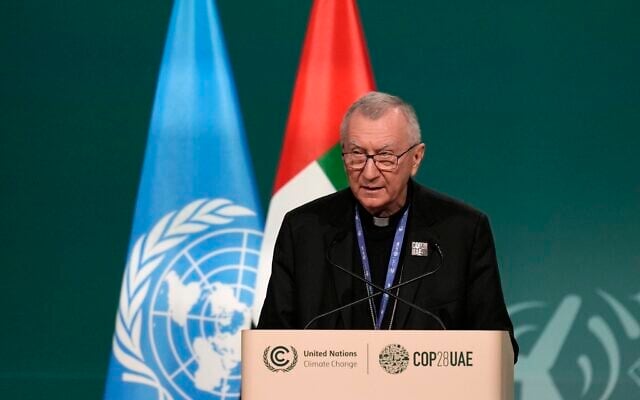
Vatican secretary of state, Cardinal Pietro Parolin, speaks during a plenary session at the COP28 UN Climate Summit, Saturday, Dec. 2, 2023, in Dubai, United Arab Emirates.(AP Photo/Rafiq Maqbool, File)
The Vatican’s top diplomat calls on US President Donald Trump to end the expanding Iran war as soon as possible and suggests Israel should also stop its strikes against Lebanon.
“I would say to finish it as soon as possible … and to leave alone Lebanon,” Italian Cardinal Pietro Parolin, the Vatican secretary of state and a senior advisor to Pope Leo XIV, says in an unusually direct appeal.
“This message also goes to the Israelis,” he adds, speaking to journalists at an event at the Italian parliament.
Vatican diplomats do not usually make direct appeals for action by foreign leaders, preferring to work behind the scenes. Parolin, the Vatican’s secretary of state since 2013, is known for speaking in muted tones and seeking to avoid the spotlight.
Leo, who is also known for speaking diplomatically, has been ramping up calls for an end to the Iran war in recent days.
On Monday, he urged journalists to highlight the suffering caused by war, cautioning against news reports that risk sliding into propaganda by glorifying conflicts.
Parolin says he is worried that the conflict will continue to escalate. He calls on Trump and other world leaders “to resolve problems … through the peaceful ways of diplomacy and dialogue.”
IDF confirms strikes on two Lebanese bridges used to move Hezbollah operatives, arms
The IDF confirms bombing two bridges on the Litani River today, saying they were used by Hezbollah to move operatives and weapons into southern Lebanon.
“The Hezbollah terrorist organization uses these crossings to transfer thousands of weapons, rockets and rocket launchers, which it uses to carry out terror attacks from the area south of the Litani [River] against IDF troops and Israeli civilians,” the military says.
The IDF says it struck the bridges to “prevent harm to Israeli civilians as well as to Lebanese civilians.”
IDF publishes more footage of strikes on Iranian soldiers
The IDF publishes another video showing strikes on Iranian soldiers in western Iran yesterday.
According to the military, the Iranian soldiers were identified by the Israeli Air Force at a military site, and a short while later, were targeted in a strike.
The military says the Air Force tracked several more soldiers who fled the military site and targeted them as well in a series of strikes.
חיל-האוויר ממשיך לאתר ולחסל חיילים של משטר הטרור האיראני באתרים צבאיים ברחבי איראן:
אתמול זוהו חיילים של משטר הטרור האיראני שפעלו באתר צבאי במערב איראן.
מיד לאחר הזיהוי, חיל-האוויר תקף וחיסל מספר חיילים באתר.לאחר מכן, חיל-האוויר עקב אחר חיילים נוספים באתר, כאשר חלקם ברחו… pic.twitter.com/YUAlPE9PcA
— Israeli Air Force (@IAFsite) March 18, 2026
Foreign press group slams police for reportedly breaking CNN journalist’s wrist
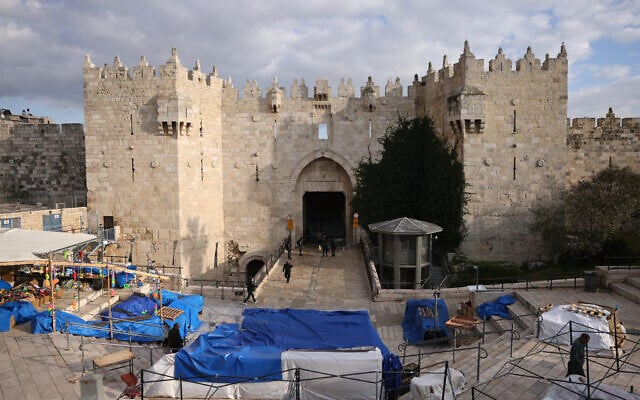
Israeli security check residents as they enter through the Damascus Gate which leads into Jerusalem's Old City on March 1, 2026. (HAZEM BADER / AFP)
An international media association criticizes what it calls an “unprovoked assault” by Israeli police on journalists in Jerusalem, which it said left a CNN producer with a fractured wrist.
The Foreign Press Association (FPA) says police officers last night “unnecessarily and aggressively repelled a group of journalists who were doing their jobs, documenting individuals who were praying outside the walls of the Old City.”
It says police detained several journalists, damaging photographic equipment and confiscating memory cards.
“During the assault, one Israeli officer fractured the wrist of a CNN producer,” the FPA says in a statement.
“None of this is acceptable,” adds the association, which represents hundreds of journalists in Israel and the Palestinian territories.
An AFP photographer at the scene says a small group of journalists had been documenting Muslims trying to perform the evening Taraweeh prayers outside the Old City walls, when a group of police suddenly arrived and “violently attacked the worshipers and journalists covering the event.”
A foreign journalist tells AFP that police “beat the CNN producer and some other journalists with batons,” adding that “at least one Palestinian was detained.”
AFP has asked the police for comment on the incident.
Israeli authorities have closed holy sites in East Jerusalem’s Old City for security reasons since the outbreak of the war with Iran on February 28.
The FPA calls on police to “immediately take action against the officers involved in this unprovoked assault and to act in the future to safeguard press freedoms, rather than trample upon them.”
In an X post, the Union of Journalists in Israel says it is “appalled” by the police conduct and urges the police commissioner to “immediately suspend the officers involved.”
Times of Israel staff contributed to this report.
US intel chief pressed on Trump claim that Iran posed ‘imminent nuclear threat’
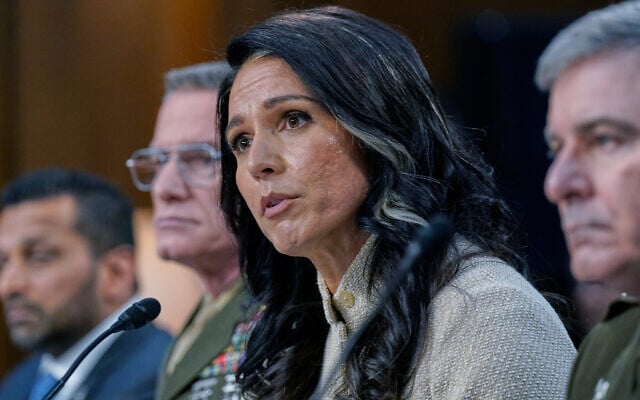
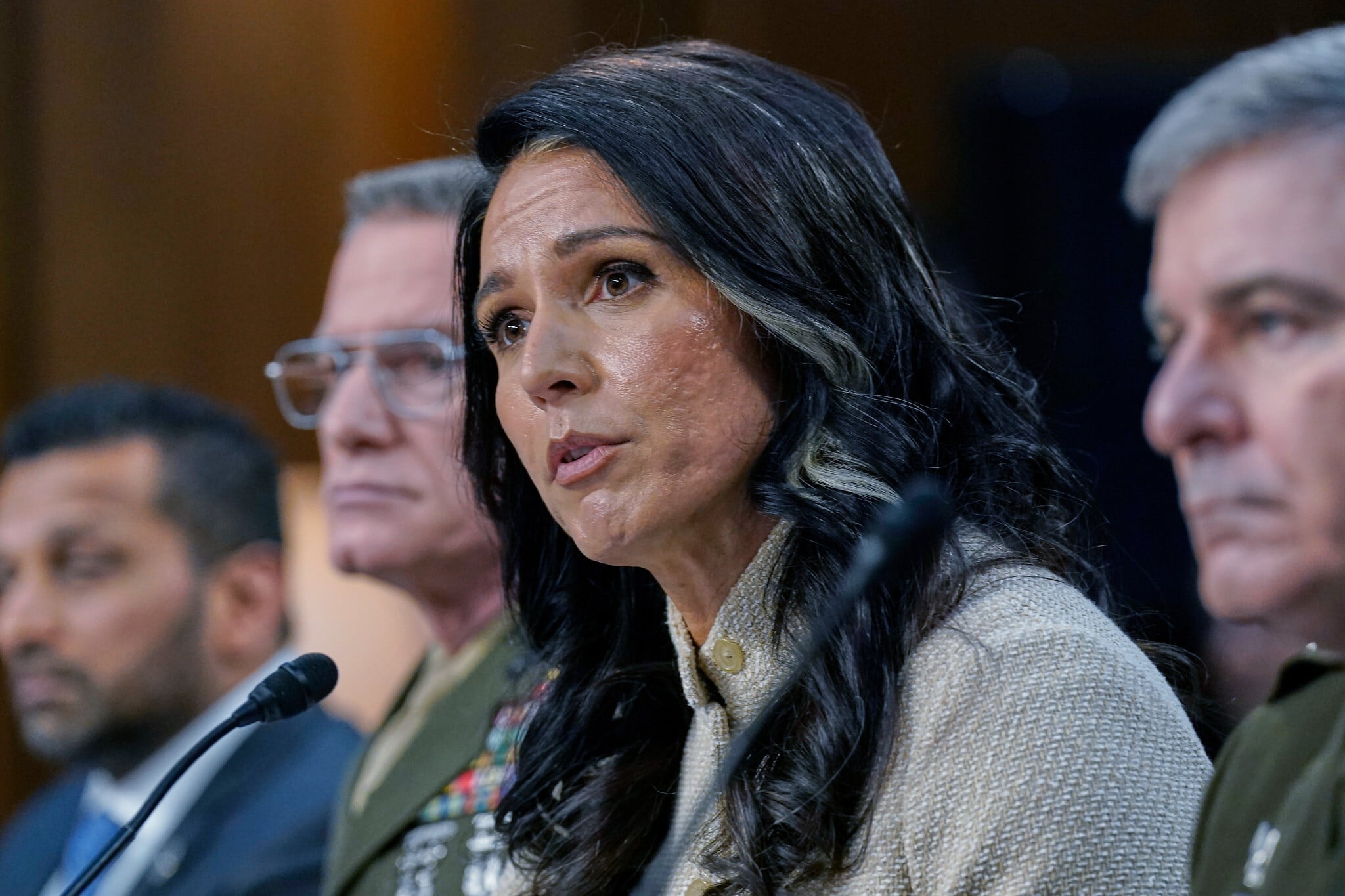
US Director of National Intelligence Tulsi Gabbard testifies during the Senate Committee on Intelligence hearings to examine worldwide threats on Capitol Hill, March 18, 2026, in Washington, DC. (AP/Jose Luis Magana)
WASHINGTON — US Director of National Intelligence Tulsi Gabbard is pressed by Democratic lawmakers to defend the White House’s assertion that Iran posed an “imminent nuclear threat” after she testified that Tehran had not tried to rebuild its nuclear enrichment program since the war in June between Israel and Iran.
The US struck Iranian nuclear sites at the end of that war.
“The intelligence community assessed that Iran maintained the intention to rebuild and to continue to grow their nuclear enrichment,” Gabbard says in response to questioning from Democratic Sen. Jon Ossoff of Georgia during a Senate Intelligence Committee hearing.
Ossoff presses Gabbard to explain how merely possessing an intention to rebuild its nuclear program can lead the White House to conclude that Iran posed an imminent nuclear threat justifying the launch of Operation Epic Fury on February 28, especially given that the US insists that it completely obliterated Iran’s nuclear program in last year’s strikes.
“The only person who can determine what is and is not an imminent threat is the president… based on a collection and volume of information intelligence that he is provided with,” Gabbard responds.
“That is false,” Ossoff responds, noting that the title of today’s session is the “worldwide threats hearing” and that Gabbard, in her opening statement, said she would be providing the US intelligence community’s “assessment of threats.”
Riyadh residents get phone alerts for 1st time warning of hostile threat amid Iran war
Several loud bangs are heard in the Saudi capital Riyadh and some of the city’s residents receive phone alerts for the first time warning them of a hostile aerial threat, a Reuters witness in the city says.
Countries propose safe corridor to free 20,000 seafarers stranded in Gulf amid Iran war
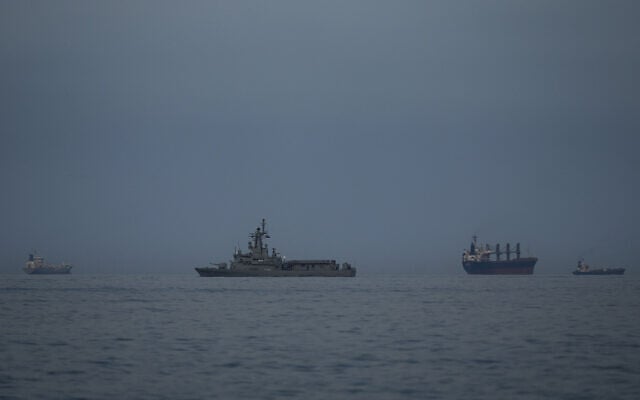
A UAE navy vessel patrols next to cargo ships and oil tankers in the Strait of Hormuz as seen from Khor Fakkan, United Arab Emirates, March 11, 2026. (AP/Altaf Qadri)
A proposal from the UN’s shipping agency calls for a safe maritime corridor to free some 20,000 seafarers stranded in the Gulf amid the war in Iran.
Hundreds of vessels have dropped anchor since Tehran threatened to attack ships attempting to leave the Gulf via the Strait of Hormuz.
The proposal submitted by Bahrain, Japan, Panama, Singapore and the United Arab Emirates, and backed by the United States, calls for “a framework such as a safe maritime corridor.”
It is submitted at a meeting of the UN’s International Maritime Organization (IMO) governing council in London.
“The purpose of this framework would be to facilitate the safe evacuation of merchant ships,” it says. “This measure aims to protect the lives of seafarers.”
At least seven merchant sailors have been killed due to the conflict, IMO Secretary-General Arsenio Dominguez tells delegates.
“They must not become victims of broader geopolitical tensions,” he says, calling for de-escalation to allow the seafarers to leave the Gulf safely.
NATO countries are also looking at what can be done, Secretary General Mark Rutte says.
US President Donald Trump has asked nations to help police the strait to allow oil tankers and other vessels to pass in and out. The strait normally transports a fifth of the world’s oil and liquefied natural gas.
Iran says in a separate submission to the IMO that Iranian authorities continued to provide humanitarian assistance and support to seafarers and vessels in the Gulf and Strait.
The IMO Council session continues tomorrow.
El Al cancels regularly scheduled flights through March 27; doesn’t apply to repatriation flights
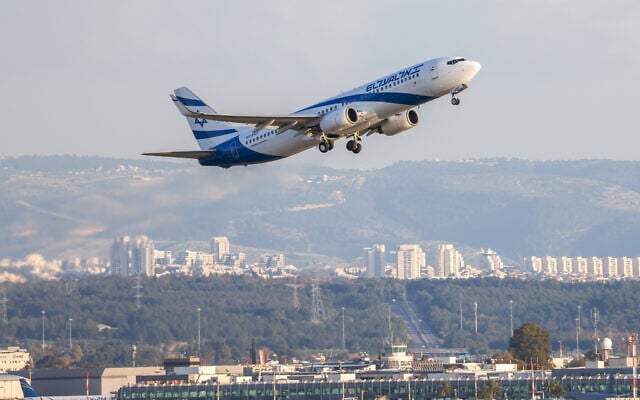
An El Al plane takes off at Ben Gurion International Airport, outside of Tel Aviv, March 5, 2026. (Yossi Aloni/Flash90)
Israel’s flagship carrier El Al cancels its regular scheduled flights planned through March 27, citing current restrictions on operations at Tel Aviv’s Ben Gurion Airport.
In accordance with Home Front Command guidelines, scheduled flights planned to depart through March 27 are cancelled, the airline says.
The cancellations apply only to regularly scheduled flights and do not include repatriation flights that are currently operating.
Scheduled flights to the following destinations are cancelled: Tbilisi, Budapest, Zurich, Barcelona, Belgrade, Berlin, Boston, Batumi, Fort Lauderdale, Frankfurt, Heraklion, Krakow, Larnaca, London Luton, Lyon, Marseille, Bucharest, Paphos, Prague, Chisinau, Thessaloniki, Sofia, Salzburg, Podgorica, Tirana, Tivat, Venice and Vienna.
“At this stage, due to current restrictions, we are unable to offer alternative flights for customers whose flights have been canceled,” El Al says, adding that affected customers can get a full refund or a credit voucher for future travel.
Israel’s airspace has been shut to most commercial traffic since February 28, when joint attacks with the US on Iran began.
Earlier this month, Ben Gurion Airport gradually reopened for limited inbound and outbound flights operated by Israeli airlines El Al, Arkia, Israir and Air Haifa to repatriate Israelis stuck abroad and help travelers inside the country leave.
IDF chief: Attacks by settlers on Palestinians, soliders are ‘morally and ethically unacceptable’
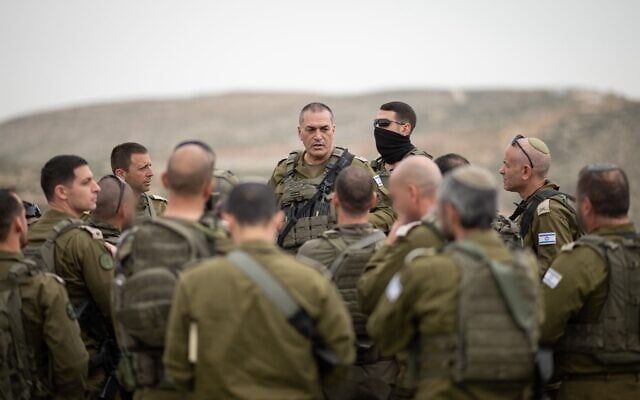
IDF Chief of Staff Lt. Gen. Eyal Zamir meets with officers in the West Bank, March 18, 2026. (Israel Defense Forces)
IDF Chief of Staff Lt. Gen. Eyal Zamir says attacks by Israeli settlers against Palestinian civilians and soldiers in the West Bank are “morally and ethically unacceptable” and cause “extraordinary strategic damage” to the military.
“Recently, there has been an increase in nationalist crime incidents, some of which are aimed directly against our soldiers and toward the civilian population,” Zamir says during a visit to the Central Command today.
“It is unacceptable that during a multi-front war, the IDF is forced to also contend with a threatening minority from within,” he says, according to remarks provided by the IDF.
Zamir calls the assailants “rioters who do not represent the settlements.”
“On the contrary, they endanger the settlements, security, stability, and our values as a people and as a state,” he says.
“I call on all authorities in the country to stand against this phenomenon and uproot it before it is too late. Anyone who thinks these actions help security is mistaken; they are morally and ethically unacceptable, and they create extraordinary strategic damage to the IDF’s efforts,” he adds.
No injuries reported in latest Iranian missile attack on northern Israel
In an update, Magen David Adom says that no injuries were caused in Iran’s latest ballistic missile attack on northern Israel.
A report of an impact in the Krayot suburbs of Haifa was, in fact, a car crash that occurred as sirens sounded. MDA says it treated two people in good condition at the scene.
Lebanon says death toll from Israel-Hezbollah conflict rises to 968
Lebanon’s health ministry says Israeli attacks, in the conflict with the Hezbollah terror group, have killed 968 people in the country since the Iran-backed group started the conflict by firing at Israel on March 2, raising a previous toll of 912 yesterday.
Israel has conducted heavy strikes on Hezbollah, called for widespread evacuations in Lebanon and expanded its presence on the ground.
The new ministry statement says the toll includes 77 women, 116 children and 40 health workers, with 2,432 other people wounded.
Katz says IDF destroyed two bridges in Lebanon used by Hezbollah to smuggle arms
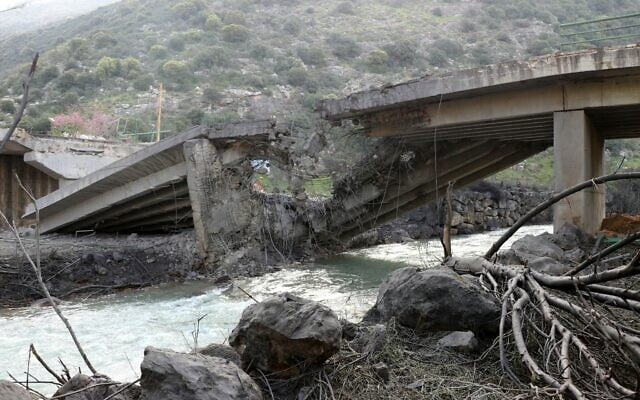
Illustration: A picture shows the destroyed Tayr Falsay bridge connecting the villages located south of the Litani with those on the northern side of the river after it was targeted by an Israeli air strike on March 13, 2026. (Kawnat Haju/AFP)
The IDF struck and destroyed two bridges on the Litani River that were “used to smuggle weapons and send Hezbollah terrorists” to southern Lebanon, Defense Minister Israel Katz says.
He says the strikes are “a direct action against Hezbollah’s use of Lebanon’s state infrastructure to advance terrorist activity.”
“And also a clear message to the Lebanese government: The State of Israel will not allow such a reality,” Katz adds.
Delta suspends flights to and from Tel Aviv through end of May, citing war

A Delta flight takes off at Ben Gurion International Airport, outside of Tel Aviv, October 25, 2021. (Yossi Aloni/FLASH90)
US airline Delta says it is extending the suspension of its Tel Aviv route through May 31, citing the “ongoing conflict in the region.”
Affected flights on the daily nonstop service to Tel Aviv from New York’s JFK airport will be “processed in Delta’s system on March 21, when customers will receive cancellation notifications,” the carrier announces. Flights between Tel Aviv and Atlanta have been paused through August.
Delta previously put the Tel Aviv route on hold through April 1 following the closure of Israel’s airspace on February 28 amid the outbreak of the US-Israeli war with Iran.
“As previously announced, the restart of Atlanta (ATL) to Tel Aviv service has been delayed, with flights from ATL to TLV now paused through Aug. 4 and flights from TLV to ATL paused through Aug. 5,” Delta says.
Impact reported in Haifa suburbs following Iranian missile attack, 9th today
Medics are responding to reports of an impact in the Krayot suburbs of Haifa following Iran’s latest ballistic missile attack.
It is not immediately clear if the reports refer to a direct missile impact or falling fragments following an interception.
Sirens had sounded in Haifa and across the Galilee and Golan Heights. It marks the ninth Iranian attack on Israel today.
Qatar’s Ras Laffan said evacuated as Iran threatens strikes on Gulf energy assets
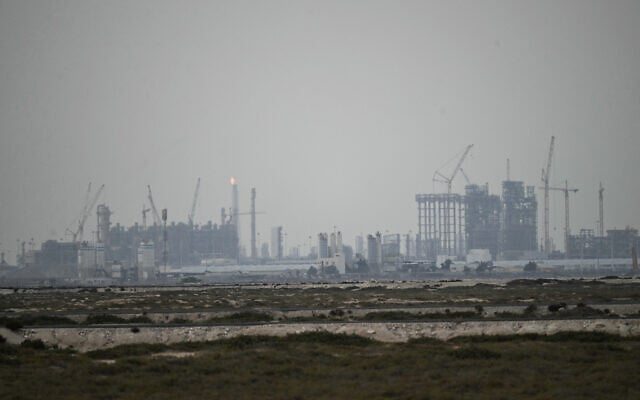
This photo shows QatarEnergy's operating facilities in Ras Laffan Industrial City on March 2, 2026, after Qatar suspended liquefied natural gas production as Iranian strikes hit Gulf energy facilities. (AFP)
Qatar’s Ras Laffan LNG installations are being evacuated, a source with knowledge of the matter tells Reuters, following Iran’s threat to attack Gulf energy facilities.
Iran issued an evacuation warning for several oil facilities across Saudi Arabia, the UAE and Qatar, saying they would be targeted by strikes “in the coming hours,” Iranian state media reported earlier.
Ras Laffan is a major Qatari energy hub.
New Iranian missile attack detected, sirens set to sound in northern Israel
The IDF has detected a new ballistic missile attack from Iran.
Sirens are expected to sound in northern Israel in the coming minutes.
US intel chief says Iran didn’t try to restart nuclear enrichment after last war, seemingly contradicting Trump

US Director of National Intelligence Tulsi Gabbard (center) testifies before the US Senate Committee on Intelligence hearings to examine worldwide threats on Capitol Hill, March 18, 2026, in Washington, DC. (AP/Jose Luis Magana)
WASHINGTON — Seemingly contradicting US President Donald Trump, the US Director of National Intelligence Tulsi Gabbard says that Iran did not try to rebuild its nuclear enrichment program following last year’s US strikes on its nuclear facilities during the 12-day war between Iran and Israel.
“As a result of Operation Midnight Hammer, Iran’s nuclear enrichment program was obliterated. There has been no effort to try and rebuild their enrichment capability,” Gabbard writes in her statement that was presented to the Senate Intelligence Committee ahead of an ongoing hearing.
Trump has claimed in recent weeks that Iran was trying to rebuild its nuclear program following the operation in June 2025.
The Senate committee’s top Democrat notes that Gabbard did not include that revelation in the statement that she read aloud to the panel and asks if that was because she didn’t want to publicly contradict the president.
Gabbard responds that she chose to omit certain parts of her prepared statement as “time was running long.”
State comptroller: Lack of shelters in north is ‘urgent’ danger, state must provide response
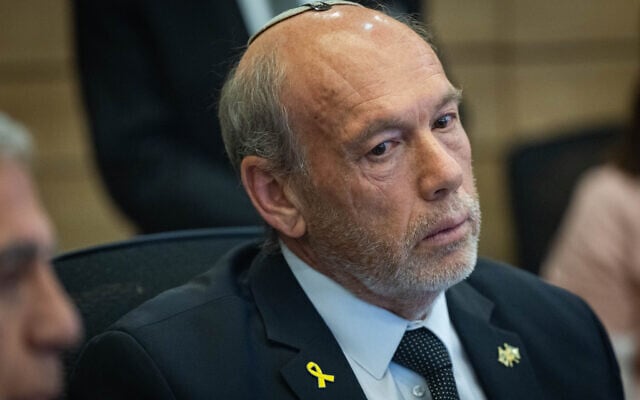
State Comptroller Matanyahu Englman attends a State Control Committee meeting at the Knesset in Jerusalem, May 12, 2025. (Yonatan Sindel/Flash90)
State Comptroller Matanyahu Englman, in a visit to towns in northern Israel that have come under Hezbollah fire, laments the lack of shelters for local residents, which he says is an “urgent” matter for the government to address.
“Operation Lion’s Roar reinforces the importance of protection and how essential it is for defending residents’ lives,” he says, according to Hebrew media reports. “The government must declare the issue of protection as a national project, and complete protection structures in all areas. It can’t be that such significant gaps in protection exist.”
A report by the comptroller from January said that some 3 million Israelis don’t have access to shelters.
Englman also criticizes the government for not providing financial assistance to businesses affected by the war.
IDF publishes footage of strike on Iranian troops in country’s west
The IDF publishes footage showing a strike on Iranian soldiers in western Iran yesterday.
The military says the Israeli Air Force identified five Iranian soldiers operating at a military site, and a short while later struck them.
חיל האוויר חיסל חמישה חיילים של משטר הטרור האיראני במערב איראן
צה״ל ממשיך לחסל חיילים של משטר הטרור האיראני במערב איראן.
חיל האוויר זיהה אתמול בהכוונה מודיעינית מדויקת בזמן אמת, חמישה חיילים של משטר הטרור האיראני שפעלו באתר צבאי במערב איראן.
לאחר הזיהוי, חיל האוויר תקף וחיסל את… pic.twitter.com/79sHnnwUGf— צבא ההגנה לישראל (@idfonline) March 18, 2026
US intel chief: Weakened Iran regime appears intact, will seek military rebuild if it survives

US Director of National Intelligence Tulsi Gabbard testifies before the Senate Committee on Intelligence hearings to examine worldwide threats on Capitol Hill, March 18, 2026, in Washington, DC. (AP/Jose Luis Magana)
WASHINGTON — US intelligence agencies assess that while Iran has been severely damaged by the past two and a half weeks of US and Israeli strikes, the regime appears to remain intact and will seek to rebuild its military capabilities if it survives the war, US Director of National Intelligence Tulsi Gabbard says.
“The IC [US intelligence community] assess that the regime in Iran appears to be intact, but largely degraded, due to attacks on its leadership and military capabilities,” Gabbard says in a prepared statement during testimony before the Senate Intelligence Committee.
Iran’s “conventional military power projection capabilities have largely been destroyed, leaving limited options. Iran’s strategic position has been significantly degraded,” she adds, noting that sanctions in the lead-up to the war sparked mass protests against an already weak regime.
“Even if the regime remains intact, the IC assesses that internal tensions are likely to increase as Iran’s economy worsens,” Gabbard continues. “Even so, Iran and its proxies continue to attack us in the Middle East.”
“The IC assess that if [the] hostile regime survives, it will likely seek to begin a yearslong effort to rebuild its military missiles and UAV [Unmanned Aerial Vehicle] forces,” she says.
Gabbard says Iran was trying to recover from the severe damage inflicted on its nuclear infrastructure during last year’s US and Israeli strikes in June. Tehran also continued to deny UN inspectors access to its facilities in the aftermath of those strikes.
US intelligence agencies have also assessed that Iran had previously demonstrated the technology needed to begin developing intercontinental ballistic missiles (ICBM) before 2035 “should it attempt to pursue that capability,” Gabbard says, while acknowledging that that analysis will need to be updated based on the results of Operation Epic Fury.
Court gives Ben Gvir 5 days to promote officer involved in PM’s corruption trial

Police Supt. Rinat Saban arrives for a hearing at the District Court in Jerusalem, January 25, 2026. (Yonatan Sindel/Flash90)
The Jerusalem District Court gives National Security Minister Itamar Ben Gvir five days to sign off on the promotion of Supt. Rinat Saban, a police investigator whose advancement he has been blocking for months over her involvement in Prime Minister Benjamin Netanyahu’s corruption trial.
If the far-right minister has not complied with the decision by Monday, Saban will be promoted regardless of whether or not he signs off on the move.
Ben Gvir is additionally fined NIS 2,500 (approximately $800) to cover the costs incurred by Saban and her legal team in filing a motion for contempt of court, as the minister continues to flout a prior decision ordering her promotion to the rank of chief superintendent.
Judge David Gidoni last month found that Ben Gvir’s refusal to sign off on Saban’s advancement despite the wishes of senior police brass was likely motivated by “extraneous considerations.” As such, he ordered the minister to immediately allow her promotion.
Gidoni now writes this afternoon that the far-right minister is “not acting to comply with the [previous] judgment.”
Saban, who serves in the police investigations and intelligence division, helped probe Netanyahu and later testified in his corruption case. Ben Gvir began blocking her promotion last year shortly after her testimony, and last month admitted that he sought to stifle her career due to her involvement in the purportedly “illegal” investigation of the premier.
Israel Police Commissioner Danny Levy has been seeking to promote the superintendent and argued in a November court filing that Ben Gvir’s refusal to give his final signature “could sow fear among police officers who testify in criminal investigations.”
The minister, who is responsible for police, typically signs off on officers’ promotions in rank, but that step was seen as little more than a formality until Ben Gvir took office.
Three Iraqi fighters said killed in strike near Syria border
A strike near Iraq’s western border with Syria killed three fighters from the former paramilitary coalition Hashed al-Shaabi today, the alliance says.
The fighters from the alliance — also known as the Popular Mobilization Forces (PMF), now part of Iraq’s regular armed forces — were reportedly hit in a US or Israeli strike that targeted their main command center in Anbar province.
Since the start of the US-Israeli war with Iran, Baghdad has repeatedly denounced attacks on the Hashed al-Shaabi, which also includes brigades belonging to Iran-backed groups.
NATO allies in talks on ‘best way’ to reopen Strait of Hormuz following Trump demands
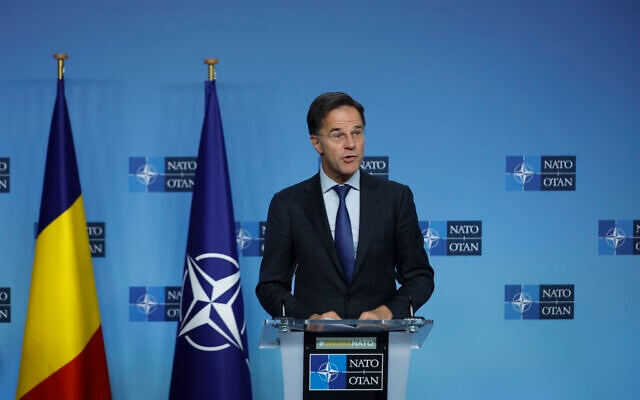
NATO Secretary General Mark Rutte delivers a statement during a press conference before a meeting at NATO headquarters in Brussels on November 18, 2024. (Omar Havana/AP)
NATO chief Mark Rutte says that allies of the military alliance, which includes the US, were in discussions on the “best way” to open the Strait of Hormuz, through which a large chunk of the world’s oil supply normally passes. Iran has obstructed the strait amid the US-Israeli war with the Islamic Republic.
“I have been in contact with many allies. We all agree, of course, that strait has to open up again. And what I know is that allies are working together, discussing how to do that, what is the best way to do it,” Rutte tells a news conference during a visit to a NATO exercise in northern Norway.
US President Donald Trump has urged other global powers to send warships to escort convoys of tankers through the Strait of Hormuz, a vital waterway for the world’s oil and liquefied natural gas supplies. Earlier today, he posted an article on Truth Social headlined, “US allies need to get a grip — step up and help open the Strait of Hormuz.”
No injuries, impacts, reported in latest Iranian missile attack on Eilat area
No injuries or impacts are reported in the latest Iranian ballistic missile attack, targeting the Eilat area in southern Israel.
Sirens had sounded in the community of Be’er Ora, near Ramon Airport.
Iranian gas flows to Iraq halted after attack on Iran’s Pars gas field — Iraqi official
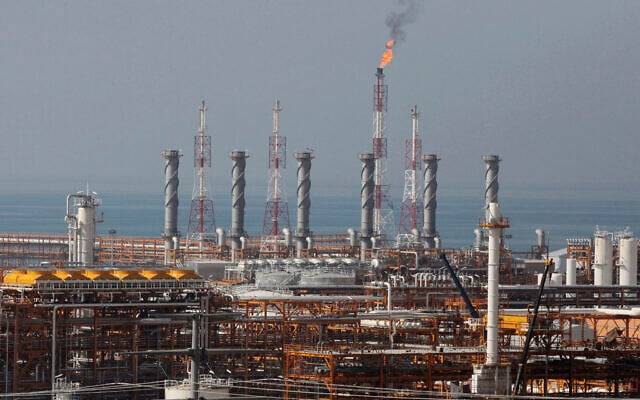
A partially constructed gas refinery at the South Pars gas field is seen on the northern coast of Persian Gulf in Asalouyeh, Iran, January 22, 2014. (AP Photo/Vahid Salemi)
Iranian gas flows to Iraq were halted on Wednesday following an attack on Iran’s Pars gas field, a senior Iraqi official tells Reuters.
Tehran supplies between a third and 40 percent of Iraq’s gas and power needs.
Iran diverted its gas domestically following the attack, the official adds.
The attack was widely reported to have been carried out by Israel with the consent of the United States.
Iran’s president confirms intelligence chief killed by Israel

Iran's President Masoud Pezeshkian takes questions from the media at a press briefing in New York, September 26, 2025. (AP Photo/Angelina Katsanis)
Iranian President Masoud Pezeshkian confirms that Israel assassinated Iran’s intelligence minister Esmaeil Khatib.
“The cowardly assassination of my dear colleagues Esmaeil Khatib, Ali Larijani, and Aziz Nasirzadeh, alongside some of their family members and accompanying team, has left us in deep mourning,” writes Pezeshkian on X, referring as well to the head of Iran’s National Security Council and its defense minister, both killed in Israeli strikes in the ongoing US-Israeli war with Iran that broke out on February 28.
Khatib, killed in an overnight strike, was the third senior Iranian official slain within 24 hours.
“I extend my condolences to the great people of Iran for the martyrdom of two cabinet members, the secretary of the Shura, and the military and Basij commanders,” he continues, referring to the head of the oppressive volunteer paramilitary force. “I am certain their path will continue more steadfastly than before.”
Sirens warning of Hezbollah attack sound in Galilee Panhandle, Golan
Sirens warning of a Hezbollah drone attack from Lebanon sound in the Galilee Panhandle and Golan Heights.
Concurrently, sirens sound near the southernmost city of Eilat amid an Iranian ballistic missile attack.
US defense official says Israeli strike on Iran gas field coordinated with White House — report
A United States defense official confirms to the Axios news site that Israel’s strike on Iran’s South Pars gas field was coordinated with and approved by the US Trump administration, echoing Israeli officials.
The strike marked the first time Israel attacked natural gas facilities in Iran during the ongoing US-Israeli military operation against Iran’s regime.
New Iranian missile attack detected, sirens set to sound in Eilat
The IDF has detected a new ballistic missile attack from Iran.
Sirens are expected to sound in the Eilat area of southern Israel in the coming minutes.
119,000 Syrians said to have returned from Lebanon during Israel-Hezbollah conflict
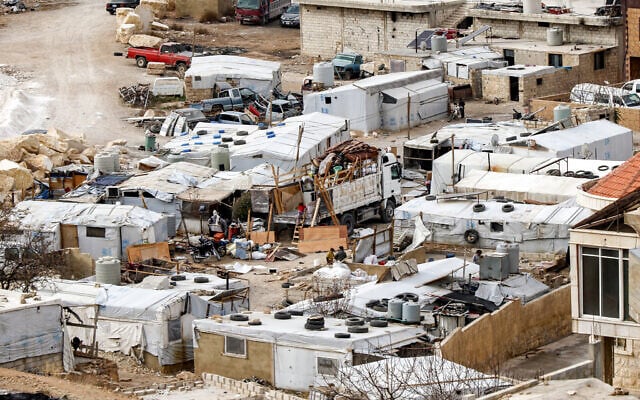
Tents housing Syrian refugees are pictured at a camp in Arsal in eastern Lebanon before being dismantled and returning to Syria on December 16, 2024. (Nidal SOLH / AFP)
Almost 120,000 Syrians have returned to their country from neighboring Lebanon since the latest conflict erupted between Israel and Hezbollah, according to International Organization for Migration figures provided to AFP.
“As of 17 March, 125,784 people have entered Syria from Lebanon” since the fighting there began, “about 119,000 of whom are Syrians,” according to the figures from the UN agency’s Displacement Tracking Matrix.
Lebanon — which hosts around 1 million Syrians who fled their country’s civil war starting in 2011 — was drawn into the Middle East war on March 2 when Iran-backed terror group Hezbollah attacked Israel following US-Israeli strikes that killed Iran’s supreme leader.
Israel has responded with intense strikes on Lebanon and expanded ground operations in the south, where the health ministry said four Syrians were killed yesterday.
Syria has so far stayed out of the regional war.
More than half a million Syrians returned from Lebanon last year, according to the UN refugee agency, following the 2024 fall of longtime ruler Bashar al-Assad, who was supported by Iran and Hezbollah.
3 private planes at Ben Gurion Airport damaged by debris from Iranian missile attack
Three private planes at Ben Gurion Airport were damaged by falling debris following the interception of an Iranian ballistic missile this morning, airport authorities say.
Images seen by The Times of Israel show that one of the planes caught fire from the fragments, while others sustained minor damage.
A spokesperson for the Israel Airports Authority says that “three private aircraft were damaged this morning by interception debris.”
הותר לפרסום: 3 מטוסים פרטיים נפגעו בנתב"ג בימים האחרונים
צילום: שימוש לפי סעיף 27 א' pic.twitter.com/QACuwuNAFB— מעריב | Maariv (@MaarivOnline) March 18, 2026
Three, including 2 children, lightly injured by latest Iranian missile attack on central Israel
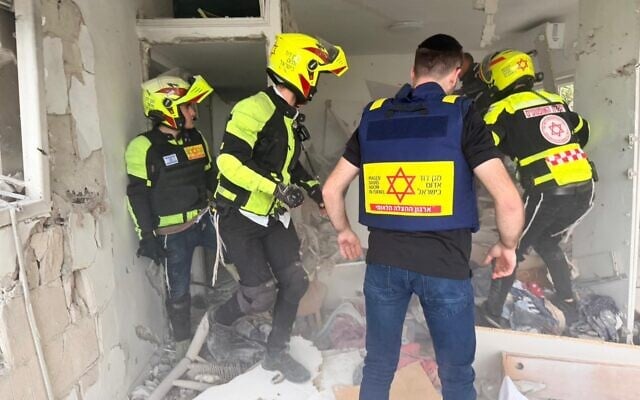
First responders at the site of a suspected Iranian cluster bomb impact in central Israel, March 18, 2026. (Magen David Adom)
Three people are lightly injured by Iran’s latest ballistic missile attack on Israel, medics say.
In Petah Tikva, the Magen David Adom ambulance service says it is treating a 44-year-old man and two children aged 13 and 12 who were hurt by a blast.
Several cluster munition impact sites were reported in central Israel, one of which caused damage to a home.
IDF says it has demolished 5km of Hamas tunnels in Gaza over past two weeks
Amid the war in Iran, the IDF says that in the past two weeks, it has demolished five kilometers (three miles) of Hamas tunnels in the Gaza Strip.
One of the tunnels was located in the eastern Rafah area, where dozens of Hamas gunmen had been holed up amid the ceasefire. Another tunnel was located in Khan Younis in southern Gaza, the military says.
Amid the war in Iran, the IDF says that in the past two weeks it demolished five kilometers worth of Hamas tunnels in the Gaza Strip.
One of the tunnels was located in the eastern Rafah area, where dozens of Hamas gunmen had been holed up amid the ceasefire. Another tunnel was… pic.twitter.com/fvPTqfQRTI
— Emanuel (Mannie) Fabian (@manniefabian) March 18, 2026
Israeli expert: IDF strike on Iranian gas field is ‘dangerous escalation,’ likely to impact markets

Yoel Guzansky, a senior researcher for Iranian and Gulf affairs at the Israeli Institute for National Security Studies. (Courtesy)
Israel’s strike on facilities in Iran’s South Pars gas field signals a “dangerous escalation” in the US-Israeli campaign against Tehran, with potential consequences for regional energy infrastructure and global markets, Yoel Guzansky, a Gulf expert at Tel Aviv’s Institute for National Security Studies, tells The Times of Israel.
“This [strike] could have strategic significance — even [marking] a turning point in the war — not because of the importance of this specific facility for Iran, significant as it may be, but because this is the first time gas facilities in Iran have been meaningfully struck,” Guzansky says.
“Iran is capable of, and may now choose to, target gas and oil facilities in the Gulf states. This could escalate the war to a new level, severely impacting international markets and the ability of Gulf states to export oil and gas,” he adds.
Iran’s state television has already published a threat following the strike, saying that Tehran will be attacking oil and gas infrastructure in Qatar, Saudi Arabia and the United Arab Emirates.
“Such a development could, in turn, trigger a further response from the United States and Israel, potentially including strikes on even more significant Iranian oil infrastructure — chief among them Kharg Island. Therefore, this could mark a very dangerous escalation [in] the war,” Guzansky says.
US President Donald Trump has threatened further attacks on Kharg Island amid efforts to open the Strait of Hormuz, a key artery for oil.
Iranian missile attack damages home in central Israel, other sites — first responders
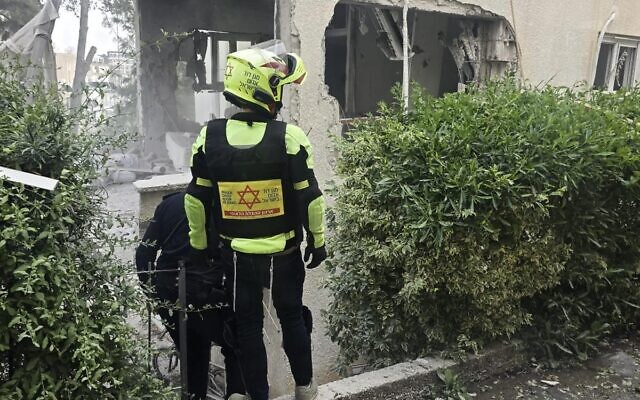
An Iranian missile attack causes damage in central Israel on March 18, 2026. (Magen David Adom)
Damage was caused at several sites in central Israel by cluster munitions from an Iranian ballistic missile, rescue services say.
One of the submunitions caused damage to a home.
There are no reports of injuries.
Russia condemns strike near Iran’s Bushehr nuclear plant reactor, which it built
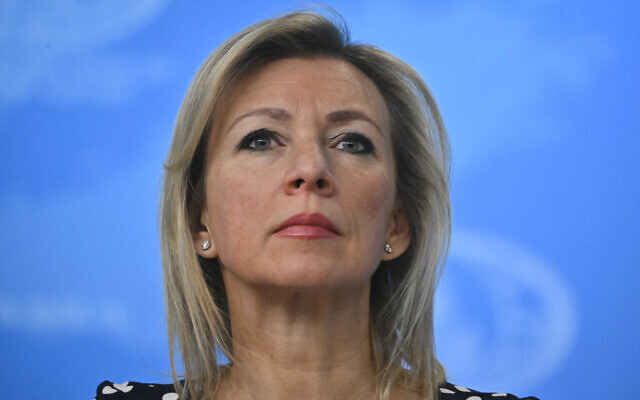
Russian Foreign Ministry spokeswoman Maria Zakharova attends Foreign Minister Sergei Lavrov's annual end-of-year press conference in Moscow on January 18, 2024. (Alexander NEMENOV / AFP)
Russia condemns a strike near Iran’s Bushehr nuclear power plant yesterday, which it said was just meters away from its reactor, and calls on the United States and Israel to stop attacking the Islamic Republic’s nuclear facilities.
Maria Zakharova, a spokeswoman for the Kremlin’s Foreign Ministry, makes the comments at a news briefing.
“We strongly condemn the irresponsible and utterly unacceptable missile strike on the inner perimeter of the Bushehr nuclear power plant, just a few meters from an operational reactor,” Zakharova says.
Such strikes created unacceptable radiological risks for the Middle East, she says, and were fraught with unpredictable consequences.
Russia built the Bushehr plant, helps Iran run it, and is helping expand it.
Iran told the International Atomic Energy Agency yesterday that the attack had caused no damage or injuries.
No injuries, several impacts, reported after potential Iranian cluster bomb salvo
Rescue forces are responding to reports of several impacts, possibly caused by cluster munitions or other falling fragments, following Iran’s latest ballistic missile attack on central Israel.
No injuries are immediately reported.
The missile attack set off sirens across central Israel.
UN nuclear agency doesn’t know status of new Iranian enrichment facility in Isfahan, chief says

The director-general of the International Atomic Energy Agency, Rafael Grossi, attends the presentation of his candidacy for United Nations secretary-general, in Buenos Aires on December 22, 2025. (Juan Mabromata/AFP)
The UN’s International Atomic Energy Agency does not know the status of the new Iranian enrichment facility in Isfahan that is in an underground nuclear complex, agency chief Rafael Grossi says.
“It is underground, but we haven’t visited it yet,” says Grossi, who is in Washington, DC, for a conference and to hold talks with officials from the administration of US President Donald Trump.
Iran informed the UN nuclear watchdog of the new facility in June and Grossi says his inspectors were in Isfahan later that month to see it but had to cancel the visit when the nuclear complex there was struck at the beginning of the 12-day war with Israel.
Grossi says because the inspectors had to cancel their visit, the agency does not know “whether it is simply an empty hall” or hosts concrete pads awaiting the installation of centrifuges – the machines that enriched uranium for power plants and nuclear weapons – or whether some centrifuges have been installed.
“There are many questions that we will only elucidate when we are able to go back,” he says.
A projectile hit an area near Iran’s Bushehr nuclear power plant yesterday evening but caused no damage or injuries, Iran told the IAEA.
Entrances to Iran’s underground and previously bombed uranium-enrichment plant at Natanz were struck earlier in the US-Israeli military attacks on the country, the IAEA confirmed on March 3.
New Iranian missile launch detected, sirens set to sound in central Israel
The IDF has detected a new ballistic missile attack from Iran.
Sirens are expected to sound in central Israel in the coming minutes.
Qatar says Israeli strikes on Iran gas field are ‘dangerous and irresponsible’
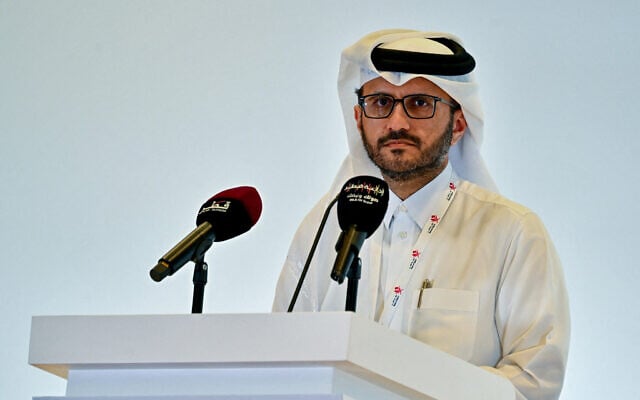
Qatar's Foreign Mininstry spokesperson Majed al-Ansari looks on at a press conference during the 2025 Arab-Islamic emergency summit in Doha on September 15, 2025. (Mahmud HAMS / AFP)
Qatar condemns Israel’s strike on Iran’s South Pars gas field, calling it “dangerous and irresponsible.”
“The Israeli targeting of facilities linked to Iran’s South Pars field, an extension of Qatar’s North Field, is a dangerous & irresponsible step amid the current military escalation in the region,” says Qatar’s Foreign Ministry spokesman Majed al-Ansari on X.
“Targeting energy infrastructure constitutes a threat to global energy security, as well as to the peoples of the region & its environment,” he continues, calling on all sides not to target “vital facilities.”
The foreign ministers of Gulf states are due to meet in Saudi Arabia’s capital today to discuss the war.
Trump once again calls on allies to help open Strait of Hormuz: ‘Get a grip’
After insisting yesterday that the US doesn’t need the help of NATO allies to help secure the Iran-blocked Strait of Hormuz, US President Donald Trump posts an article on Truth Social headlined, “US allies need to get a grip — step up and help open the Strait of Hormuz.”
Trump had been calling on US allies to join a US-led coalition to escort ships through the strait, but received a chilly response from most, who appeared to not want to get involved in a war that their countries didn’t start.
Iran says it will attack energy sites in Gulf after Israeli strike on gas field
Iran’s state television publishes a threat, saying that the Islamic Republic will be attacking oil and gas infrastructure in Qatar, Saudi Arabia and the United Arab Emirates.
The threat resembles other attack warnings put out by Iran during the war, copying the style used by the Israeli military.
Iran specifically threatens Saudi Arabia’s Samref Refinery and its Jubail Petrochemical Complex. It also threatened the UAE’s Al Hasan Gas Field and the petrochemical plants and a refinery in Qatar.
It comes after Iran said its South Pars gas field and associated infrastructure came under attack earlier. Israel confirmed striking facilities there.
The Iranian News Agency Tasnim reports that natural gas facilities in the port city of Asaluyeh, Bushehr province.l, were struck. The site is part of the vital South Pars energy field. pic.twitter.com/2sJOig1VZz
— Faytuks Network (@FaytuksNetwork) March 18, 2026
On the site, firefighters are working to contain the blaze and there is no immediate report on whether anyone has been hurt.
The threat to carry out an even-larger campaign targeting the energy sites of Gulf Arab states comes just hours before the region’s foreign ministers are due to meet in Saudi Arabia’s capital to discuss the war.
The attack on South Pars field involved Phases 3, 4, 5 and 6, Iranian state television reported, blaming Israel and the United States for the attack. It says it has shut down those phases of the field to stop the spreading fire.
Report: Israel expects Iranian escalation after attack on gas facility
Israel Hayom cites a source with knowledge of the latest strike on Iran’s energy facilities, saying the strike on the major gas field marks “an escalation” that harms around a fifth of Iran’s gas processing capacity.
According to the source, Iran is likely to respond by attempting to target energy infrastructure in Israel and possibly across the region.
Iran has executed Swedish citizen, Sweden FM says
Sweden’s foreign minister confirms that Iran has executed a Swedish citizen, after Iranian authorities announced the first execution of a man convicted of spying since the start of its war against Israel and the United States.
“It is with dismay that I have received information that a Swedish citizen was executed in Iran earlier today,” Foreign Minister Maria Malmer Stenergard says in a statement.
Since the man’s arrest during Iran’s 12-day war with Israel in June, Sweden has “repeatedly raised the case at various levels with Iranian representatives,” she adds.
UNICEF says it’s probing Israeli allegations of smuggling inside Gaza aid shipments
The UN’s children agency says it is probing alleged smuggling via its Gaza-bound aid shipments after Israel said it found contraband tobacco and nicotine products in UNICEF shipments.
“UNICEF was informed by Israeli authorities that tobacco and nicotine bottles were found inside a consignment of UNICEF hygiene kits being transported into Gaza by a commercial carrier… As soon as UNICEF was informed, a full internal investigation was launched into the case,” UNICEF says in a statement.
“Despite the preventive measures we have in place, attempts to smuggle such items into shipments from humanitarian agencies do occasionally occur,” the statement says, adding that the agency has a “zero-tolerance policy” regarding smuggling.
Iranian women’s soccer team crosses Turkish border to head home
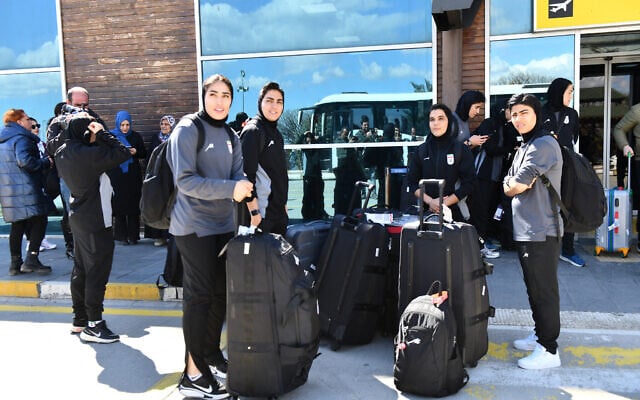
Members of Iran's women's soccer team stand at Turkey's Igdir airport, waiting to reach Dogubeyazit, in Igdir on March 18, 2026 (Ali IHSAN OZTURK / AFP)
The Iranian women’s national soccer team members cross the Turkish border to travel to their home country, including several players who withdrew an asylum bid in Australia.
Seven members of the delegation had sought sanctuary in Australia last week after being branded “traitors” in Iran for refusing to sing the national anthem before their opening game at the Women’s Asian Cup. But five later changed their minds, including captain Zahra Ghanbari.
The team arrived in Istanbul yesterday evening from Oman, then flew to the eastern city of Igdir before traveling home overland.
Wearing Iranian national team tracksuits, the women could earlier be seen leaving the airport for the Gurbulak-Bazargan crossing, while lies about 100 kilometers (60 miles) to the southeast.
The players arrived in Turkey via Oman and Kuala Lumpur, having left Australia where they were competing in the Asian Cup.
“I am missing my family,” one of them told AFP on Monday at Kuala Lumpur airport.
In a post on X, Iranian parliament speaker Mohammad Bagher Ghalibaf said the players and their support team were “children of the homeland, and the people of Iran embrace them.” He said by returning, they had “disappointed the enemies [of Iran] and did not surrender to deception and intimidation by anti-Iran elements.”
In the end, only two of the players remained in Australia.
Senior UAE official: Iran’s attacks will push Gulf states closer to Israel

Diplomatic adviser to the United Arab Emirates president Anwar Gargash arrives at the opening ceremony of the summit on peace in Ukraine, at the luxury Burgenstock resort, near Lucerne, on June 15, 2024. (Denis Balibouse / POOL / AFP)
A top adviser to the United Arab Emirates’ president says that Iran’s attacks on Gulf states are pushing them closer to Israel and to the US.
“Iran’s full-throttle attack on the Gulf states will actually strengthen the Israeli role in the Gulf, will not diminish it,” Anwar Gargash says during a Council on Foreign Relations event.
“We’re not seeing 2,000 Israeli missiles and drones targeting us,” says Gargash. “We’re seeing 2,000 Iranian missiles and drones targeting us.”
“For countries that have relations with Israel, this is — you know, this relationship, in my opinion, will be even more strengthened,” he continues. “For countries that don’t have, I expect… that more channels will be open.
“I think for countries that are seeking to buttress also their defense, their technology, I think it will be more linked. And I think this is also the folly of this Iranian strategy, an Iranian strategy that will actually make the Gulf — make Israel less of a threat and Iran more of a threat,” he says.
“In this war we are seeing how important that American connection is,” he continues, “although that American connection — we might criticize it over a certain defense system or over a certain of lack of response… overall I think the Iranian folly of targeting the region is not in any way diminishing the America[n] role. I think it’s strengthening the America[n] roles.”
Air Force hits gas infrastructure in Iran’s south
The Israeli Air Force struck Iranian gas infrastructure in the south of the country a short while ago, an Israeli official says.
According to the official, the strikes hit Iran’s largest gas processing facility, in the Bushehr Province.
Iranian state television says: “Moments ago, parts of the gas facilities located in the South Pars Special Economic Energy Zone in Asaluyeh were struck by projectiles fired by the American-Zionist enemy.”
Asaluyeh was targeted, 4th/5th Phase, there are a lot of petrochemical complexes there.
Bushehr Province, #Iran(Video: Not mine) pic.twitter.com/aHWzFOgOgM
— Shin (@hey_itsmyturn) March 18, 2026
It adds that firefighting teams were dispatched to the scene to contain the fire.
The South Pars/North Dome mega-field is the largest known gas reserve in the world. The field supplies around 70 percent of Iran’s domestic natural gas. Iran, which shares the massive field with energy giant Qatar, has been developing its side since the late 1990s.
During the 12-day war in June last year, Israel struck Iranian facilities operating at the field.
Israel says senior Hamas moneyman killed in Israeli strike in Lebanon
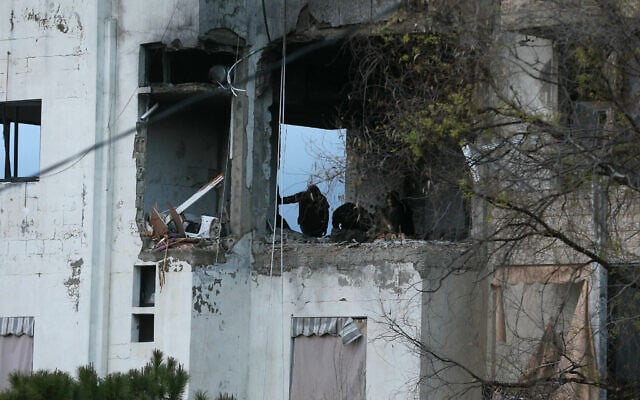
First aid responders inspect the site of an Israeli airstrike that targeted an apartment in the southern coastal city of Sidon on March 15, 2026 (MAHMOUD ZAYYAT / AFP)
A senior Hamas moneyman was killed in an Israeli strike in the coastal Lebanese city of Sidon on Sunday, the military and Shin Bet security agency announce.
The strike killed Wissam Mustafa Hussein Taha, who the Shin Bet says worked “to raise hundreds of millions of dollars worldwide for Hamas.”
Taha operated under the head of Hamas’s “fundraising apparatus,” Essam Khashan, the Shin Bet says. The offices of the apparatus in Sidon were targeted in a strike on March 6.
The Shin Bet says the funds raised by Taha and other Hamas operatives “are used to finance terrorism, military buildup, and salaries for operatives in the military wing.”
No injuries reported in latest Iranian missile attack on north
No injuries are reported in the latest Iranian ballistic missile attack on Israel.
The missile, which set off sirens in communities near the Lebanon border, was likely intercepted, according to initial military assessments.
According to the IDF, the sirens were warning only of the Iranian missile attack, and not any rocket fire from Lebanon.
Sirens heard in north as Iranian missile detected
Sirens sounded in northern Israel a short time ago after the IDF detected a ballistic missile launch from Iran.
UAE says it intercepted 13 missiles, 27 drones today
The United Arab Emirates intercepted 13 ballistic missiles and 27 drones fired by Iran today, says the Emirati Defense Ministry.
Since the start of the war on February 28, the UAE has intercepted 327 ballistic missiles, 15 cruise missiles, and 1,699 drones, according to the Gulf state’s defense ministry. Two UAE soldiers have died in the war, as have 6 civilians, with another 158 wounded.
IDF says intelligence minister Khatib had key role in regime’s ‘repression and terrorist activities’
Following Defense Minister Israel Katz’s announcement, the IDF also confirms that Iran’s intelligence minister, Esmaeil Khatib, was killed in an airstrike in Iran overnight.
Khatib, who had served as intelligence minister since 2021, was targeted by Israeli Air Force fighter jets in the capital Tehran.
The military says the Intelligence Ministry is “the Iranian terrorist regime’s primary intelligence organization, which also played a key role in supporting the regime’s repression and terrorist activities.”
The ministry “possesses advanced intelligence capabilities, overseeing surveillance, espionage, and the execution of covert operations worldwide, particularly against the State of Israel and Iranian citizens,” the IDF says.
As the intelligence minister, the IDF says Khatib “played a significant role during the recent protests throughout Iran, both with regards to the arrests and killing of protesters, as well as shaping the regime’s intelligence assessment,” and during protests in 2022-2023 over the killing of Mahsa Amini.
The IDF says Khatib also led the ministry’s “terror activities against Israeli and American targets around the world, as well as activities directed against targets within Israel” during the current war.
Kremlin condemns US-Israeli ‘murder’ of Iran’s leaders after Ali Larijani killing

Kremlin spokesman Dmitry Peskov attends a meeting of Russian President and Bahrain's King at the Kremlin in Moscow on May 23, 2024. (YURI KOCHETKOV / POOL / AFP)
The Kremlin condemns what it calls “the murder” of Iran’s leaders in US-Israeli airstrikes, a day after Iran confirmed that Ali Larijani, a senior adviser to Iran’s late supreme leader Ayatollah Ali Khamenei, had been killed in Tehran.
“We unequivocally condemn any actions aimed at harming the health of, or indeed murdering or eliminating, members of the leadership of sovereign and independent Iran, as well as those of other countries. We condemn such actions,” Kremlin spokesman Dmitry Peskov tells reporters when asked about Russia’s reaction to Larijani’s death.
Russia, which built and helps run Iran’s only nuclear power station, has strongly criticized the US-Israeli airstrikes against Iran, a close partner, and has called for an immediate ceasefire and negotiations.
It is also widely reported to have attempted and failed on multiple occasions to assassinate Ukrainian President Volodymyr Zelensky throughout its war on Ukraine.
Settler extremists try to rebuild outpost, then attempt arson attack on Palestinian town
Radical settler activists attempted to rebuild the illegal settlement outpost of Kol Mevaser in the central West Bank in the early morning, and then staged an attack on the nearby Palestinian town of Mukhmas after security services destroyed the freshly re-established dwelling.
Some 15 activists ascended the hill where Kol Mevaser has been repeatedly built and then demolished by the security services, to erect tents at the site, according to civil rights activists from the Torat Tzedek organization working to protect Mukhmas.
Border Police and personnel from the Civil Administration then came to remove the tents, although they left a rudimentary wooden home intact. Despite Kol Mevaser being located within a closed military zone, the activists were not detained by the army.
Subsequently, Jewish hooligans, many of them masked, descended from the direction of Kol Mevaser just after 10 a.m. and attacked infrastructure in Mukhmas. Security camera footage showed several extremists setting a fire by a fence protecting a chicken coop. Activists later found burnt cloth that had been use to try and set the coops on fire.
A message put out on a WhatsApps group run by Kol Mevaser activists says: “Despite the difficulty, we are not broken, and we will continue to build anew and to settle the Land of Israel.”
Torat Tzedek head Rabbi Arik Ascherman says today’s attack would not have happened if security forces had enforced the closed military zone against extremists from Kol Mevaser.
“The clear goal of the Kol Mevaser outpost, as with many outposts, is to use violence to force Palestinians out of their homes,” he adds, noting that the nearby Palestinian Bedouin hamlet of Khalet a-Sidra was recently abandoned due to repeated attacks, allegedly by Kol Mevaser extremists.
“They are now working on the village of Mukhmas as well,” charges Ascherman.
IDF says it will bomb bridges on Litani River in coming hours
The IDF says it will bomb bridges on the Litani River in the coming hours, warning Lebanese civilians to evacuate north.
“Due to Hezbollah’s activities and the movement of terror operatives to southern Lebanon under the cover of the civilian population, the IDF is forced to carry out extensive and precise strikes against Hezbollah’s terror activities,” says army spokesman Col. Avichay Adraee.
Adraee says that to “prevent the transfer of reinforcements and combat equipment, the IDF intends to attack crossings on the Litani River” in the afternoon.
“For your safety, you must continue moving to the area north of the Zahrani River and refrain from any movement southward that could endanger your lives,” he adds.
The IDF has assessed that just under 1,000 members of Hezbollah’s elite Radwan Force crossed the Litani River into southern Lebanon to confront Israeli forces carrying out a ground operation.
Last week, the military struck one bridge on the Litani River that it said was being used by Hezbollah as a “key crossing” to move from northern to southern Lebanon.
Iran holds mass funeral for Ali Larijani, Basij head Soleimani
Iran is holding a mass funeral for officials killed by Israel, including Ali Larijani, the secretary of the Supreme National Security Council, and Gholamreza Soleimani, the head of the Basij paramilitary force. Both were killed in Israeli airstrikes overnight Monday-Tuesday.
Larijani was supreme leader Ali Khamenei’s right-hand man and was seen as the de facto leader of the country since the late ayatollah’s killing on the first day of the war.
The first image of the coffin of martyr Ali Larijani alongside his son at the Tehran Martyrs' Ascension Center pic.twitter.com/cNmMHKj8Dl
— Iran Screenshot (@iranscreenshot) March 18, 2026
Soleimani’s oppressive Basij force is a key arm of the regime used to control the population, and he is believed to be responsible for the deaths of many thousands of civilians.
Katz says Iran’s intelligence minister Khatib killed in strike, promises more ‘surprises’
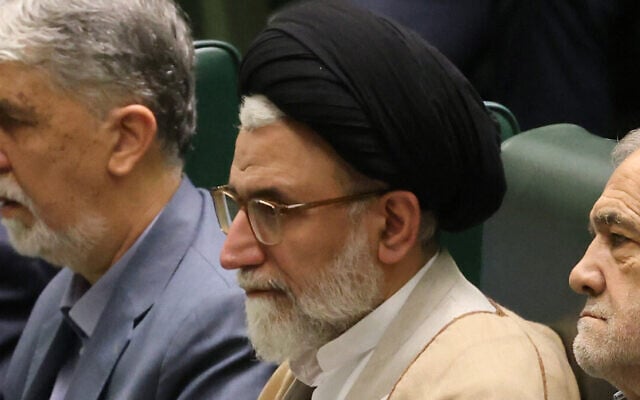
Iran's Minister of Intelligence Esmaeil Khatib in Iran's parliament in the capital Tehran, on August 17, 2024 (ATTA KENARE / AFP)
Defense Minister Israel Katz says Iran’s intelligence minister, Esmaeil Khatib, was killed in an Israeli airstrike in Tehran overnight, adding that “significant surprises” are expected today.
“On this day, significant surprises are expected across all arenas that will escalate the war we are conducting against Iran and Hezbollah in Lebanon,” he says during a security assessment, according to remarks provided by his office.
“The intensity of the strikes in Iran is increasing. The Iranian intelligence minister Khatib was also eliminated overnight,” he says.
Katz says that he and Prime Minister Benjamin Netanyahu have “authorized the IDF to [eliminate] any senior Iranian figure… without the need for additional approval.”
Iran arrests alleged ‘monarchist’ networks, suspected spies as war rages
Iranian authorities say they have arrested more than 100 alleged “monarchist cells” plotting against the Islamic Republic, along with suspected spies and individuals accused of cooperating with an outlawed television channel.
Forces from the Intelligence Ministry “have identified and arrested 111 monarchist cells across 26 provinces before they could take action on the last Wednesday of the year,” the ministry says in a statement carried by Fars news agency.
It is not immediately clear how many individuals were involved in the alleged cells.
The ministry says four suspected spies linked to the United States were arrested in Hamedan city and West Azerbaijan province, both in the country’s west.
Authorities also arrested another 21 people accused of cooperating with the London-based broadcaster Iran International, which is outlawed in Iran.
They also say they seized firearms, bladed weapons, stun guns and batons.
Couple killed by Iranian missile attack in Ramat Gan named as Yaron and Ilana Moshe
The couple killed by an Iranian cluster munition in Ramat Gan overnight have been identified as Yaron and Ilana Moshe.
The couple, aged around 70, were apparently on their way to their reinforced room when the munition from a ballistic missile hit, destroying their apartment and killing them.
IDF video shows strike on Hezbollah operatives moving weapons in south Lebanon
The IDF publishes footage showing the identification of Hezbollah operatives transporting weapons in southern Lebanon, before being targeted in an airstrike.
The operatives were identified by troops of the 91st “Galilee” Regional Division moving RPGs and other weapons out of a car. The IDF says a short while later, an Air Force drone struck and killed the Hezbollah members.
In another incident, troops of the 401st Armored Brigade identified two Hezbollah operatives who had launched rockets at Israeli forces, and a short while later, they were struck and killed, the military says.
Elsewhere in southern Lebanon, troops of the 300th “Baram” Regional Brigade recently demolished over 80 Hezbollah sites, the IDF says.
The military says the brigade also killed two Hezbollah operatives who emerged from one of the sites.
יותר מ-80 תשתיות טרור של ארגון הטרור חיזבאללה הושמדו: כוחות חטיבה 300 במהלך ההגנה הקדמי בדרום לבנון
במסגרת מהלך ההגנה הקדמי, כוחות חטיבה 300 בפיקוד אוגדה 146 ממשיכים בפשיטות ממוקדות בדרום לבנון להשמדת תשתיות של ארגון הטרור חיזבאללה.
בשבוע אחרון, הכוחות השמידו יותר מ-80 תשתיות… pic.twitter.com/mWTtP6cYYJ
— צבא ההגנה לישראל (@idfonline) March 18, 2026
Lebanon war leaves a classroom of children hurt or dead every day, UN says

File: UNICEF's Ted Chaiban in Cairo in 2020 (Khaled DESOUKI / AFP)
War in Lebanon has wounded or killed the equivalent of one classroom of children daily and robbed the remainder of their sense of normalcy since it began two weeks ago, a top official of the UN children’s agency says.
According to Lebanese health ministry figures, at least 111 children have been killed and 334 wounded in Israeli strikes on Lebanon since March 2, when Lebanese terror group Hezbollah joined the regional war in support of its sponsor Iran and began firing rockets and drones into Israeli territory. That equals nearly 30 children a day.
“That’s a classroom of children every day since the beginning of the war that’s either killed or injured in Lebanon,” UNICEF Deputy Executive Director Ted Chaiban says.
Lebanon’s child deaths are among 1,200 children killed across the region in recent weeks — nearly 200 in Iran, four in Israel and one in Kuwait.
“They’ve paid a terrible price. And the first thing we’re calling for is a de-escalation, a political way forward to this war,” Chaiban tells Reuters in Beirut.
Israel says it does not deliberately target civilians and that it takes multiple steps, including early evacuation warnings, to mitigate harm to civilians before strikes on terror targets take place.
Lebanon says Israeli strikes on central Beirut kill 12
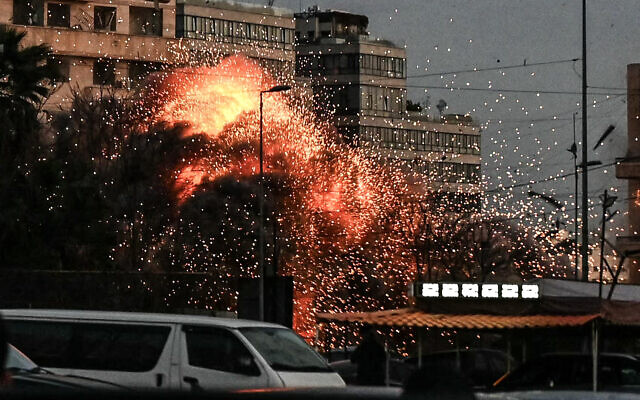
A fireball rises from the site of an Israeli airstrike that targeted a building in Beirut's Bashoura neighborhood on March 18, 2026 (FADEL itani / AFP)
Israeli strikes on central Beirut this morning killed at least 12 people, the Lebanese health ministry says in updated tolls.
The ministry says that the strikes on the Basta and Zuqaq al-Blat neighborhoods in central Beirut also wounded 41.
No injuries reported in Iranian missile attack
No injuries are reported in the latest Iranian ballistic missile attack on Israel.
The small number of missiles, which set off sirens in the Haifa area, were intercepted or struck open areas, according to initial military assessments.
An early warning was also issued in central Israel, but no sirens sounded there.
Israel detects Iranian missile launch, sirens expected in north and center
The IDF has detected another ballistic missile attack from Iran.
Sirens are expected to sound in central and northern Israel shortly.
IDF says strikes in Lebanon targeted Hezbollah HQs, bank, operatives
In response to Hezbollah’s rocket barrage on northern Israel last night, the IDF says it struck weapons depots and command centers in the coastal Lebanese city of Tyre, as well as sites and an operative in Beirut.
The military says the Hezbollah sites in Tyre were “deliberately embedded within the civilian population.”
The IDF says that in Beirut, the Air Force struck facilities of the Al-Qard al-Hasan association, which is known to be used by the terror group as a quasi-bank.
The Israeli Navy, meanwhile, carried out a strike on a “key” Hezbollah operative in the Lebanese capital, the military says, without providing further details.
In southern Lebanon, a strike was carried out against a headquarters of the Imam Hossein Division, an Iranian militia which operates alongside Hezbollah, the army adds.
ארגון הטרור חיזבאללה שיגר עשרות רקטות לעבר שטח מדינת ישראל אמש. בצה"ל זוהתה היערכות מוקדמת של ארגון הטרור חיזבאללה לירי מוגבר ופיקוד הצפון החל בשיבוש וסיכול הירי. כחלק ממאמצי השיבוש הותקפו מספר משגרים, מחסני אמצעי לחימה ומפקדות מבצעיות. עם תחילת הירי, בסגירות מעגלים מהירות,… pic.twitter.com/hibNhlT4hP
— Israeli Air Force (@IAFsite) March 18, 2026
IDF targeted Iran’s Intelligence Minister Esmaeil Khatib in overnight strike
The IDF targeted Iran’s intelligence minister, Esmaeil Khatib, in an overnight airstrike in Tehran, according to an Israeli official.
The strike was first reported by Iran International, and shortly afterward confirmed by an Israeli official.
The results of the strike are still being looked into by Israel.
IDF says it killed Gaza Hamas commander tied to precision missile project
The IDF says it killed a Hamas commander in the Gaza Strip yesterday who worked to advance the terror group’s “precision missile project.”
The strike killed Yahya Abu Labda, a commander in Hamas’s supply and logistics department.
The military says Abu Labda was responsible for the “procurement and transport of military equipment and weapons” for Hamas’s military wing.
“Abu Labda led and advanced the transfer of dozens of tons of raw materials for rocket production and advanced electronic components to support Hamas’s manufacturing enterprise,” the IDF says.
Amid the ongoing war in Iran, the IDF has said it has killed dozens of Hamas operatives in the Strip, mostly accusing them of violating the ceasefire. In the case of Abu Labda, the IDF does not mention the ceasefire.
חיל-האוויר תקף וחיסל את המחבל יחיא אבו-לבדה, מפקד במחלקת האספקה של ארגון הטרור חמאס, אתמול (ג׳).
במסגרת תפקידו אבו-לבדה היה אמון על רכישה ושינוע של ציוד צבאי ואמצעי לחימה עבור הזרוע הצבאית של ארגון הטרור חמאס. אבו-לבדה הוביל וקידם עשרות טונות של חומרי גלם לייצור רקטות ורכיבים… pic.twitter.com/4FGQN2LQ2o
— Israeli Air Force (@IAFsite) March 18, 2026
IDF says it thwarted over half of Hezbollah barrage last night, expects more
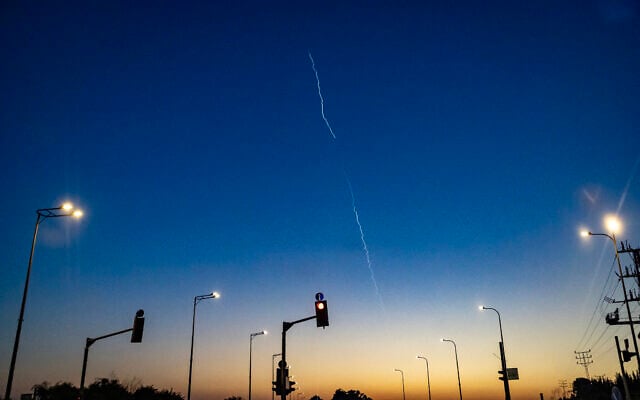
A rocket trail from the Iron Dome missile defense system is seen in the sky from a car waiting at a red light near Afula, northern Israel, on March 17, 2026, amid Hezbollah rocket attacks. (Odd ANDERSEN / AFP)
The IDF says it thwarted more than half of Hezbollah’s rocket barrage on northern Israel last night, and assesses that the terror group plans to launch similarly large attacks every few days.
According to military estimates, Hezbollah intended to fire at least 100 rockets. In practice, it mustered around 40 short-range rockets, several missiles, and five drones.
Most of the rockets were intercepted, landed in open areas, or fell short in Lebanon. One, however, struck a home in the northern city of Karmiel, causing damage. All five of the drones were intercepted, according to the IDF.
The Israeli Air Force carried out strikes on Hezbollah rocket launchers, launch teams, and command centers both before and during the barrage, aiming to disrupt it. The military says several launchers were destroyed before they could be used, and at least 10 more were struck afterward.
In recent days, Hezbollah has been firing an average of about 150 rockets per day, according to the IDF, which assesses that the group is attempting to periodically escalate with larger barrages like the one planned last night.
Roughly two-thirds of the daily rocket fire has been directed at Israeli forces operating in southern Lebanon and along the border, with the remaining third aimed at Israel.
The IDF believes Hezbollah still possesses thousands of short-range rockets with ranges of up to 40 kilometers, along with hundreds of longer-range projectiles. However, most of its remaining capabilities are now based deeper in southern Lebanon, including north of the Litani River. As a result, short-range rockets are largely limited to targeting troops in southern Lebanon or Israeli communities in the Galilee, rather than cities deeper inside Israel.
The military also assesses that Hezbollah has decentralized its rocket array, using launchers with fewer barrels spread across more locations. While this makes them harder to detect and destroy, it also reduces the number of rockets that can be fired at once.
In response to last night’s barrage, the IDF has been carrying out strikes across Lebanon, including in the coastal city of Tyre, which it describes as a Hezbollah “center of gravity.” The area had already been partially evacuated, and the military issued a new warning ahead of the strikes.
The IDF has also targeted gas stations in Lebanon that it says are owned by Hezbollah. It says the strikes on the Hezbollah-owned fuel company causes damage to the terror group’s income and mobility.
Meanwhile, as Israel’s ground operation in southern Lebanon continues, the IDF assesses that fewer than 1,000 members of Hezbollah’s elite Radwan Force have crossed the Litani River to confront the troops.
So far, the military says it has killed at least 200 Radwan operatives, who it says are deployed in small cells across nearly every village in southern Lebanon and are mostly retreating after encountering Israeli forces.
IDF again warns all civilians to leave southern Lebanon
The IDF repeats its wide-scale evacuation warning of southern Lebanon, telling civilians they should evacuate to the north of the Zahrani River.
The warning was first issued on Thursday and repeated again yesterday.
“Hezbollah’s terror activities are forcing the IDF to act forcefully against it in that area, and it does not intend to harm you,” says army spokesman Col. Avichay Adraee.
“Airstrikes are ongoing, as the IDF is operating with great force in the area. Therefore, for your safety, we again urge you to evacuate your homes immediately and move at once to the north of the Zahrani River,” he says.
“Any movement southward may put your lives at risk,” Adraee adds.
#عاجل‼️ انذار عاجل إلى سكان جنوب لبنان المتواجدين جنوب نهر الزهراني
????إن نشاطات حزب الله الإرهابية تُجبر جيش الدفاع على العمل ضده بقوة في تلك المنطقة وهو لا ينوي المساس بكم.
????الغارات مستمرة حيث يعمل جيش الدفاع بقوة كبيرة في المنطقة. ولذلك وحرصًا على سلامتكم نعود ونناشدكم… pic.twitter.com/PHeX38LftQ
— افيخاي ادرعي (@AvichayAdraee) March 18, 2026
The IDF has pushed troops deeper into southern Lebanon in recent days in an attempt to distance the threat of Hezbollah from the border.
Iran’s nuclear doctrine not likely to change, foreign minister says
A handout photograph released by the Iranian Foreign Ministry on February 8, 2026, shows Iran's Foreign Minister Abbas Araghchi speaking to a forum in Tehran (Iran's Foreign Minister / AFP)
Iran’s ostensible stance against the development of nuclear weapons won’t significantly change, Foreign Minister Abbas Araghchi tells Al Jazeera in remarks relayed by Iranian media, cautioning that the new supreme leader has yet to publicly express his view on the matter.
Former supreme leader ayatollah Ali Khamenei, who was killed early in the US-Israeli war against Iran, opposed the development of weapons of mass destruction in a fatwa, or religious edict, issued in the early 2000s.
Western countries, including the US and Israel, have for years accused Tehran of seeking nuclear weapons despite the supposed decree, while Iranian authorities have said their nuclear program is solely for civilian purposes.
Araghchi says fatwas depend on the Islamic jurist issuing them and adds he is not yet in a position to judge the jurisprudential or political views of Mojtaba Khamenei, Iran’s new supreme leader.
Health Ministry says 192 hospitalized due to war in past 24 hours
The Health Ministry reports that in the past 24 hours, 192 injured people have been taken to hospitals as a result of the conflict with Iran and Hezbollah.
Among those treated in hospitals, four are in moderate condition, and 177 are in good condition. One person has been treated for anxiety.
The ministry does not give a breakdown of the causes of injuries, and some might have been sustained by people trying to reach shelters, rather than as a direct result of missile fire.
The ministry also says that since the beginning of the war with Iran on February 28, 3,727 people have been admitted to hospitals, 74 of whom are currently hospitalized.
New Israeli strike reported on central Beirut
A new Israeli strike hit central Beirut’s Zuqaq al-Blat neighborhood, state media reports, the second on the densely populated area since the early morning without prior warning.
A blast was heard throughout the capital, and plumes of smoke were seen rising from the area.
A building in Bashoura, also in central Beirut, was struck earlier following an Israeli warning.
????Footage of the Israeli raid that targeted an apartment in the vicinity of the Zaqaq al-Balat area, Beirut. ????#IranIsraelWar #TelAviv #IranAttack #IsraelAttack #BreakingNews #Beirut pic.twitter.com/rPuvCX8WWT
— Chaudhary Parvez (@ChaudharyParvez) March 18, 2026
Iran executes man convicted of spying for Israel, judiciary says
Iranian authorities have executed a man convicted of spying for Israel, the judiciary says, in the first such execution announced since the war with Israel and the United States broke out.
“The death sentence of a spy for the Zionist regime, who had been providing images and information, about the country’s sensitive locations to Mossad officers, was carried out this morning,” the judiciary’s Mizan Online website says.
Mizan identifies the man as Kouroush Keyvani and says he was arrested during Iran’s 12-day war with Israel last June. It lists details of his alleged meetings with agents from Israel’s Mossad spy agency and says he received training in “six European countries and in Tel Aviv.”
No injuries reported in latest Iranian missile attack
No injuries are reported in the latest Iranian ballistic missile attack on Israel.
The small number of missiles, which set off sirens in central Israel and the West Bank, were likely intercepted, according to initial military assessments.
It marks the fourth Iranian missile attack on Israel since midnight.
Air Force hits Iranian internal security forces, ballistic missile HQ
The Israeli Air Force struck several Iranian military headquarters in Tehran during a wave of strikes yesterday, the military says.
The IDF says the targets included a headquarters of a security unit of the Islamic Revolutionary Guard Corps, “responsible for handling protests”; a maintenance center of the internal security forces; and a headquarters of Iran’s ballistic missile forces.
The military says it also struck several Iranian air defense systems during the wave of strikes, “to expand the Air Force’s aerial superiority over Iranian skies.”
Iran launches ballistic missile toward central Israel
A new ballistic missile attack from Iran has been detected by the IDF.
Sirens are expected to sound in central Israel in the coming minutes.
Qatar announces missile interception as booms heard in Doha
Qatar’s defense ministry says it intercepted a missile attack as blasts are heard in Doha.
“Armed forces intercepted missile attack which targeted State of Qatar,” the ministry of defense says in a statement, released shortly after an AFP journalist in the capital heard several blasts.
Iranian FM threatens that ‘global repercussions’ of war ‘will hit all’
The repercussions of the war in the Middle East will be felt globally, Iran’s top diplomat says, suggesting more Western officials should push back against the conflict.
“Wave of global repercussions has only begun and will hit all — regardless of wealth, faith, or race,” Iranian Foreign Minister Abbas Araghchi posts on X, accompanied by a copy of the US National Counterterrorism Center director’s resignation announcement prompted by the war on Tuesday.
“A rising number of voices — (including) European and US officials — exclaim that the war on Iran is unjust. More members of the international community should follow suit,” the post adds.
IDF strikes Hezbollah targets in south Lebanon after issuing evacuation warning for Tyre
The IDF says it has launched a wave of airstrikes against Hezbollah infrastructure in southern Lebanon.
The military earlier issued an evacuation warning for the southern coastal Lebanese city of Tyre.
The IDF says that the strikes come following that warning and in response to Hezbollah’s large rocket barrage on northern Israel last night.
Road in central Israel damaged by Iranian cluster munition; no reports of injuries
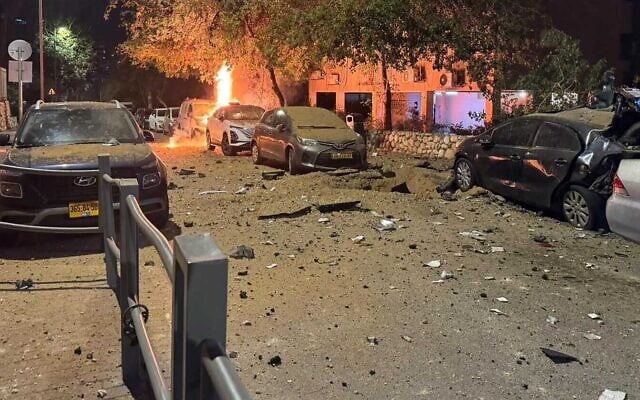
Damage is seen on a road in central Israel from an Iranian cluster missile, early March 18, 2026. (Magen David Adom)
Damage was caused in central Israel by cluster munitions from the latest Iranian ballistic missile.
Footage shows that one submunition from the missile caused damage to a road.
Police say they are responding to reports of several impact sites.
Medics say there are no reports of injuries.
Video shows cluster munitions from Iranian missile crashing down over central Israel
The latest Iranian ballistic missile targeting central Israel appears to have carried a cluster bomb warhead, footage shows.
Medics are responding to reports of impacts, though there have been no calls regarding injuries so far.
The latest Iranian ballistic missile targeting central Israel appears to have carried a cluster bomb warhead, footage shows. pic.twitter.com/8j2JcLem9a
— Emanuel (Mannie) Fabian (@manniefabian) March 18, 2026
Iran launches another ballistic missile attack targeting central Israel, triggering sirens
Another ballistic missile attack from Iran has been detected by the IDF.
Sirens sound in central Israel.
No injuries reported in latest Iranian missile attack that targeted southern Israel
No injuries are reported in the latest Iranian ballistic missile attack, targeting southern Israel.
The missile, which set off sirens in Beersheba and the surrounding area, was likely intercepted, according to initial military assessments.
It marks the second Iranian missile attack on Israel since midnight, after a missile carrying a cluster bomb warhead killed two and wounded others in central Israel shortly after midnight.
Paramedics report 2 people were lightly hurt by shrapnel from Iran missile targeting Tel Aviv area
Along with the Ramat Gan couple in their 70s who were killed by the Iranian ballistic missile fired at the Tel Aviv area, paramedics treated two other people who were lightly wounded by shrapnel, while others were injured while running to shelters or received treatment for acute anxiety.
New Iranian ballistic missile launch detected, with sirens sounding in the south
A new ballistic missile attack from Iran has been detected by the IDF.
Sirens sound in southern Israel shortly.
Saudi Arabia to host FMs of Arab and Islamic nations to discuss regional security
Saudi Arabia will host a consultative meeting of foreign ministers from a number of Arab and Islamic countries in Riyadh on Wednesday evening to discuss ways to support regional security and stability, the kingdom’s foreign ministry says.
Australia’s PM says Iranian missile struck near its Mideast military HQ in UAE
An Iranian projectile hit near Australia’s military headquarters for the Middle East in the United Arab Emirates, Prime Minister Anthony Albanese says, adding no one is hurt.
“At 9:15 this morning at the Al Minhad base that Australia has in the United Arab Emirates, there was an Iranian projectile hit near that base,” Albanese tells reporters.
“I can confirm that no Australian personnel were injured, and everyone is absolutely safe,” he adds.
Iran’s Guards say deadly cluster missile attack on Tel Aviv area was to avenge Larijani
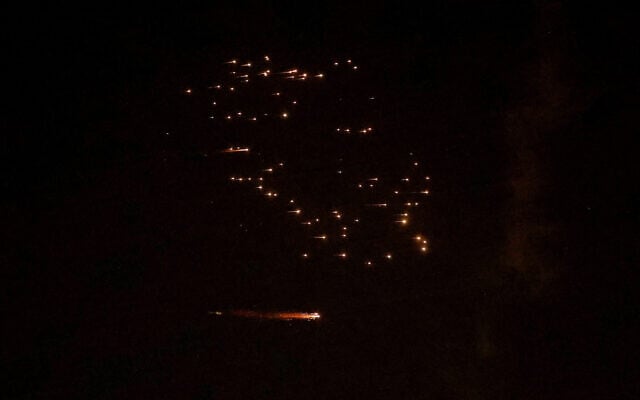
Rocket trails from an Iranian missile with a cluster warhead are seen in the sky above the coastal city of Netanya on March 18, 2026. (Jack Guez/AFP)
Iran acknowledges launching cluster missiles at Israel early Wednesday, the latest use of a weapon designed to spread maximum damage and evade Israel’s multiple layers of air defenses.
A statement from the paramilitary Islamic Revolutionary Guard Corps reported by Iranian state television says the force launched both Khorramshahr-4 and Qadr missiles in the attack that targeted an area near Tel Aviv.
The IRGC describes the attack as revenge for Israel killing top security official Ali Larijani.
Footage filmed by The Associated Press showed the release of the cluster munition from at least one missile over Israel.
The attack killed two people in Israel.
Cops open investigation after deadly shooting in Holon amid Iran missile attack
Police open a homicide investigation into a deadly shooting in the Tel Aviv suburb of Holon that occurred amid the earlier Iranian ballistic missile attack on the area.
UN watchdog says projectile reportedly hit premises of Iran’s Bushehr nuclear plant
The International Atomic Energy Agency says Wednesday it received a report from Iran that its Bushehr nuclear power plant complex had been hit by a projectile.
The carefully worded statement from the United Nations’ nuclear watchdog represents the first word outside of either Iran or Russia about the incident Tuesday.
“The IAEA has been informed by Iran that a projectile hit the premises of the Bushehr NPP on Tuesday evening,” the IAEA says, using an acronym for nuclear power plant. “No damage to the plant or injuries to staff reported.”
It adds the IAEA’s leader, Rafael Mariano Grossi, reiterates his “call for maximum restraint during the conflict to prevent risk of a nuclear accident.”
The US military’s Central Command, which is in charge of forces launching airstrikes across southern Iran, doesn’t immediately respond to a request for comment.
Drone and rocket attacks reported in Saudi Arabia, Kuwait and Iraq
Saudi Arabia has intercepted several drones and Kuwait’s air defenses responded to a rocket and drone attack, authorities from both countries say.
The Saudi defense ministry says in two statements it has destroyed a total of six drones in the east of the country.
“Kuwaiti air defenses are currently intercepting hostile rocket and drone attacks,” Kuwait’s military also posts on X.
In Iraq, meanwhile, security sources say that a drone attack targeted the US embassy in Baghdad and an explosion was heard in the area.
IDF launches strikes in Beirut, including a central neighborhood reportedly hit without warning
Israel hits a central Beirut neighborhood early Wednesday, local media reports, in a strike that came without warning, as other strikes hit the city’s southern suburbs.
Local media reports the strike hit the central Zuqaq al-Blat neighborhood, where the Israeli military last week hit a Beirut branch of the Hezbollah-linked financial firm Al-Qard Al-Hassan.
In the earlier strike on the central area, the Israeli military had released an evacuation warning in advance.
An AFP correspondent heard the sound of several explosions early Wednesday as the strikes hit.
Argentina’s Milei denounces Iran on anniversary of deadly Israeli embassy attack

Argentinas President Javier Milei speaks during a ceremony to commemorate the 34th anniversary of the deadly bombing at the Israeli embassy in Buenos Aires, at the Israeli Embassy Square in Buenos Aires on March 17, 2026. (Juan Mabromata/AFP)
Argentina’s President Javier Milei slams Iran and reiterates his support for the United States and Israel as he attends an event commemorating a deadly attack on the Israeli embassy in Buenos Aires some thirty years ago.
The bombing on March 17, 1992, involved a truck packed with explosives ramming into the Israeli embassy in the Argentine capital, killing 22 people and injuring more than 200.
In 2024, an Argentine court ruled the attack was ordered by Iran, along with the deadly 1994 assault on an Argentine Israelite Mutual Association (AMIA) Jewish community center, which killed 85 people.
“In the face of terrorism, there can be no truce,” Milei says at an anniversary event held at the site of the former embassy.
“We are making it clear where we stand at this historic moment, in which the United States and Israel have decided to put an end to the Iranian government, a tyranny that not only holds its own population captive but has devoted itself to spreading terrorism for decades.”
Since US-Israeli forces launched a war against Iran on February 28, Tehran has responded with attacks throughout the Middle East and threats that have nearly halted shipping in the Strait of Hormuz, through which one-fifth of global oil supplies normally passes.
“Israel is a strategic ally of our country, we are united through shared values,” Milei adds.
The event is attended by about 100 people, with funeral wreaths of white flowers decorating the area.
Argentina is host to the largest Jewish community in Latin America, with nearly 300,000 people living mostly in Buenos Aires.
Two people killed in Ramat Gan by Iranian ballistic missile
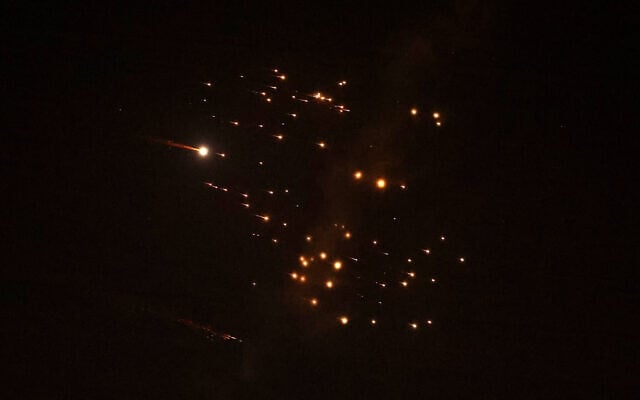
Rocket trails from an Iranian missile with a cluster warhead are seen in the sky above the coastal city of Netanya on March 18, 2026. (Jack Guez/AFP)
The Magen David Adom ambulance service announces the death of two people who were seriously wounded in an Iranian ballistic missile impact in the Tel Aviv suburb of Ramat Gan.
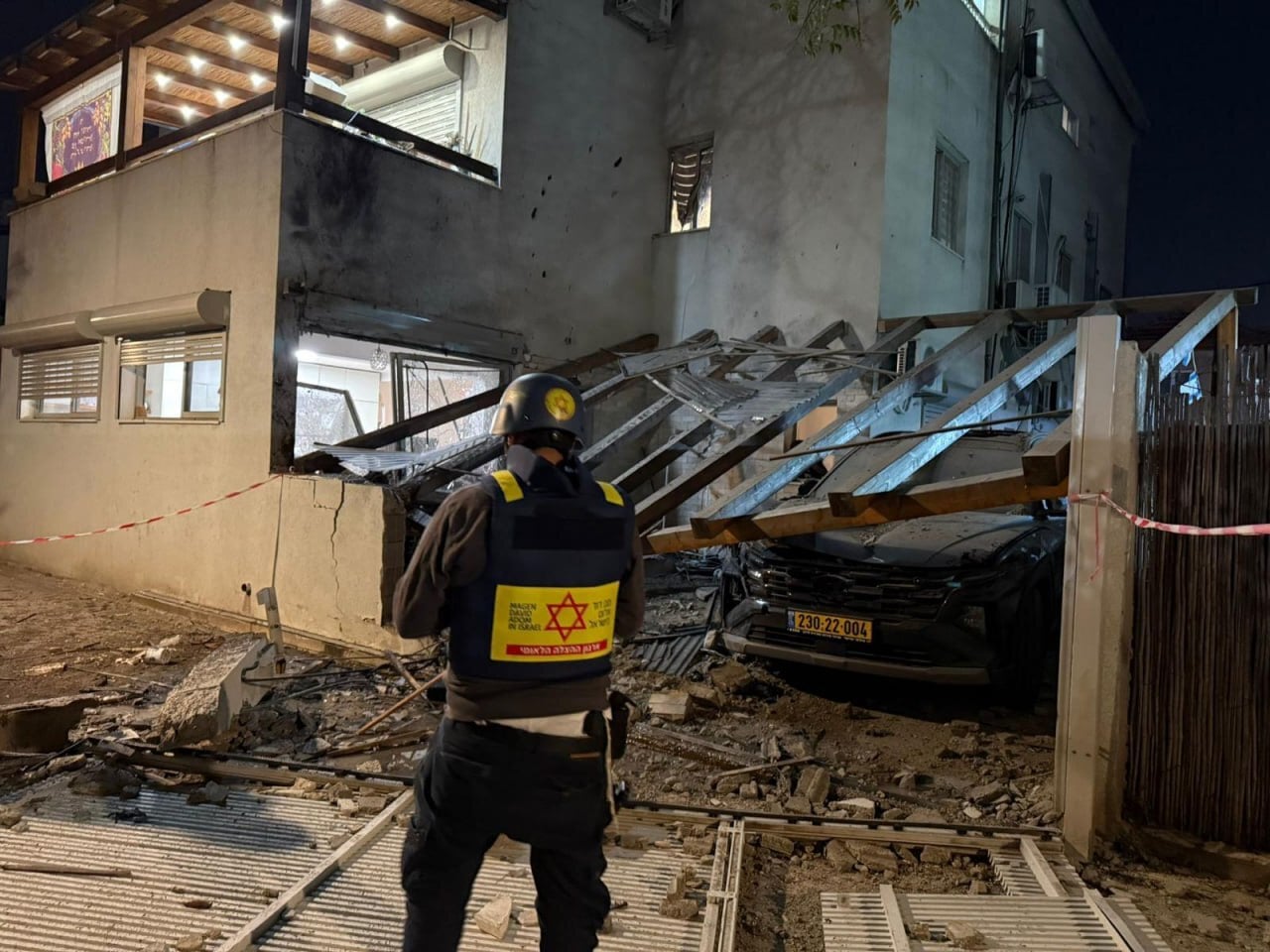
Hebrew media reports identify the two as a couple in their 70s.
*Ramat Gan impact scene:*
Emergency crews at the scene in Ramat Gan where a couple in their 70s were killed in the Iranian missile strike. pic.twitter.com/wAu3Lu2JuQ
— (((IsraelMatzav))) (@IsraelMatzav) March 17, 2026
Initial, unconfirmed reports indicate they were headed to the bomb shelter.
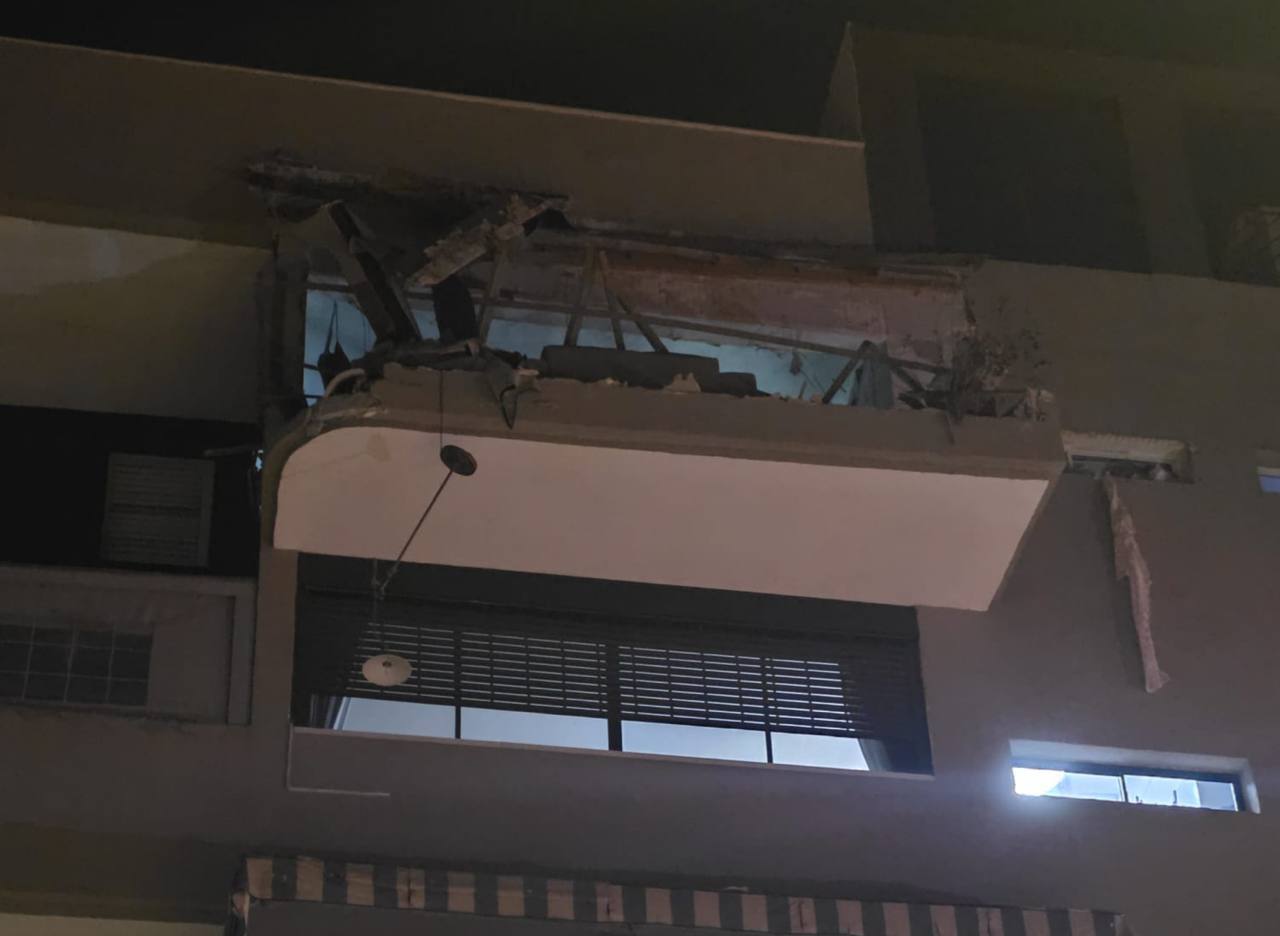
MDA adds that paramedics are taking a 25-year-old in Bnei Brak who received a light shrapnel wound to his hand to Tel Aviv’s Ichilov Hospital.
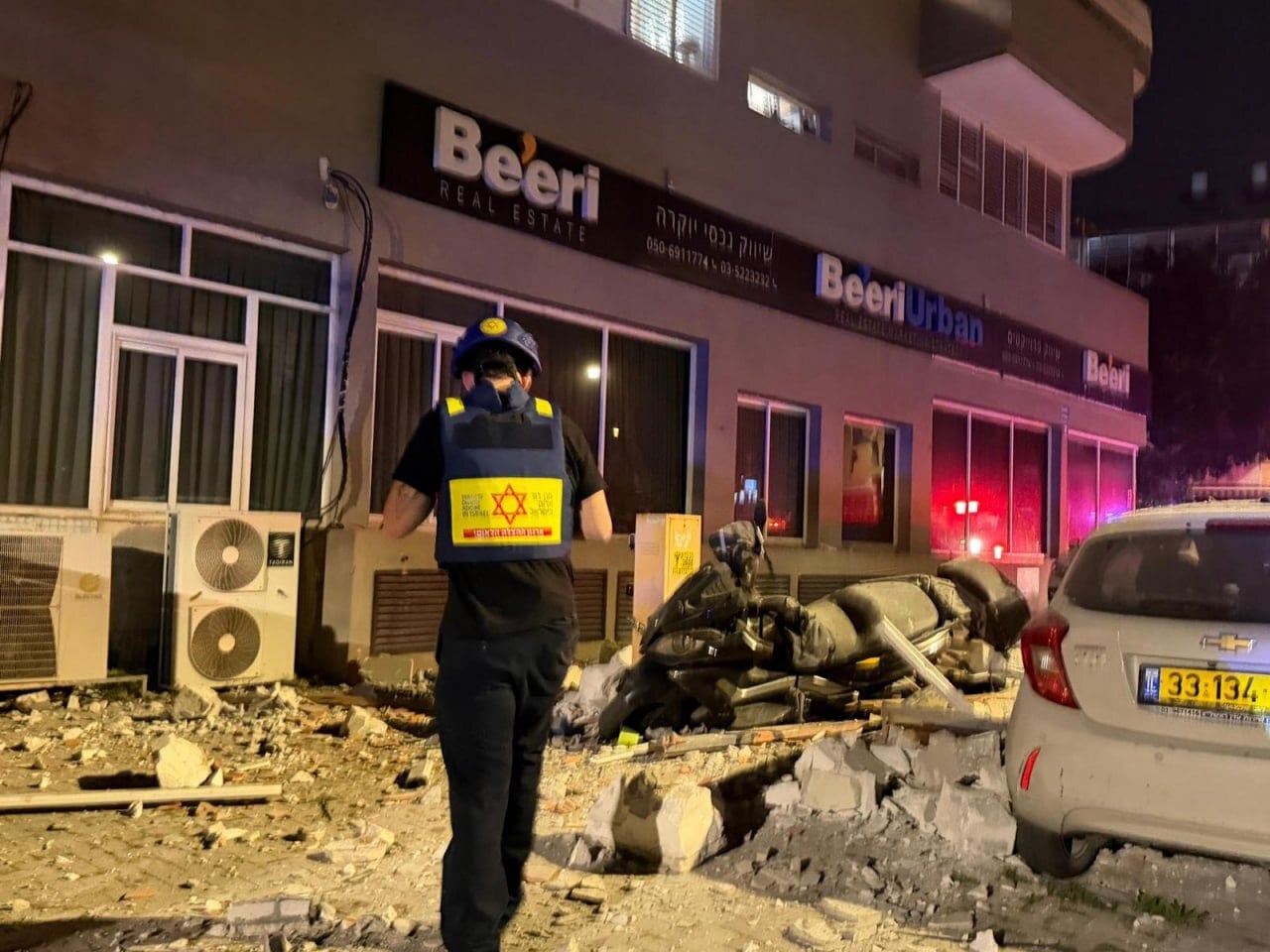
Damage, including at Tel Aviv train station, reported after Iranian missile attacks
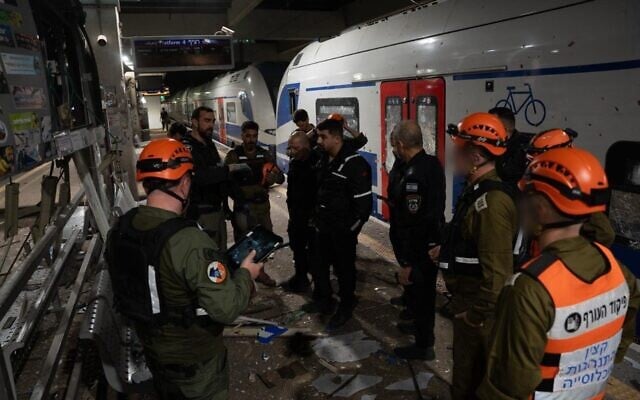
Security and rescue personnel at Tel Aviv's Savidor Central Train Station after impact from an Iranian missile attack early on March 18, 2026. (IDF)
Damage is reported at several sites following the latest Iranian missile attack, including Tel Aviv’s Savidor train station.
Israel Railways says service has temporarily been suspended as a result of the damage to the platforms at the station.
Firefighters are also working to extinguish several blazes in the central Israel cities of Petah Tikvah and Kafr Qasim.
המוקד: נזק רב בתחנת הרכבת סבידור pic.twitter.com/T67XkWE3uG
— חדשות המוקד (@hamoked_il) March 17, 2026
Iran launches fresh missile volley targeting Jerusalem area, after firing cluster warhead in last attack
Another Iranian ballistic missile attack targeting Israel has been detected by the IDF, with sirens activated in Jerusalem and communities in areas surrounding the capital.
The Magen David Adom ambulance service says it hasn’t received any reports of injuries following the previous volley, footage of which published by the Kan public broadcaster showing an Iranian missile with a cluster warhead dispersing over central Israel, though paramedics are operating in several areas where there were reports of impacts.
תיעוד: טיל מצרר בשמי המרכז@Nov_reuveny pic.twitter.com/0IOMrwBKHF
— כאן חדשות (@kann_news) March 17, 2026
Iran fires missile salvo, setting off sirens in center of country, parts of south
The IDF says Iran has launched another volley of ballistic missiles at Israel, setting off sirens across the center of the country, the Jerusalem area, parts of the West Bank and some areas in southern Israel.


read more: