

 From the Liveblog of
Wednesday, March 18, 2026
From the Liveblog of
Wednesday, March 18, 2026
Syria unveils plan to eliminate Assad’s chemical weapons
 Add ToI as a Preferred Source on Google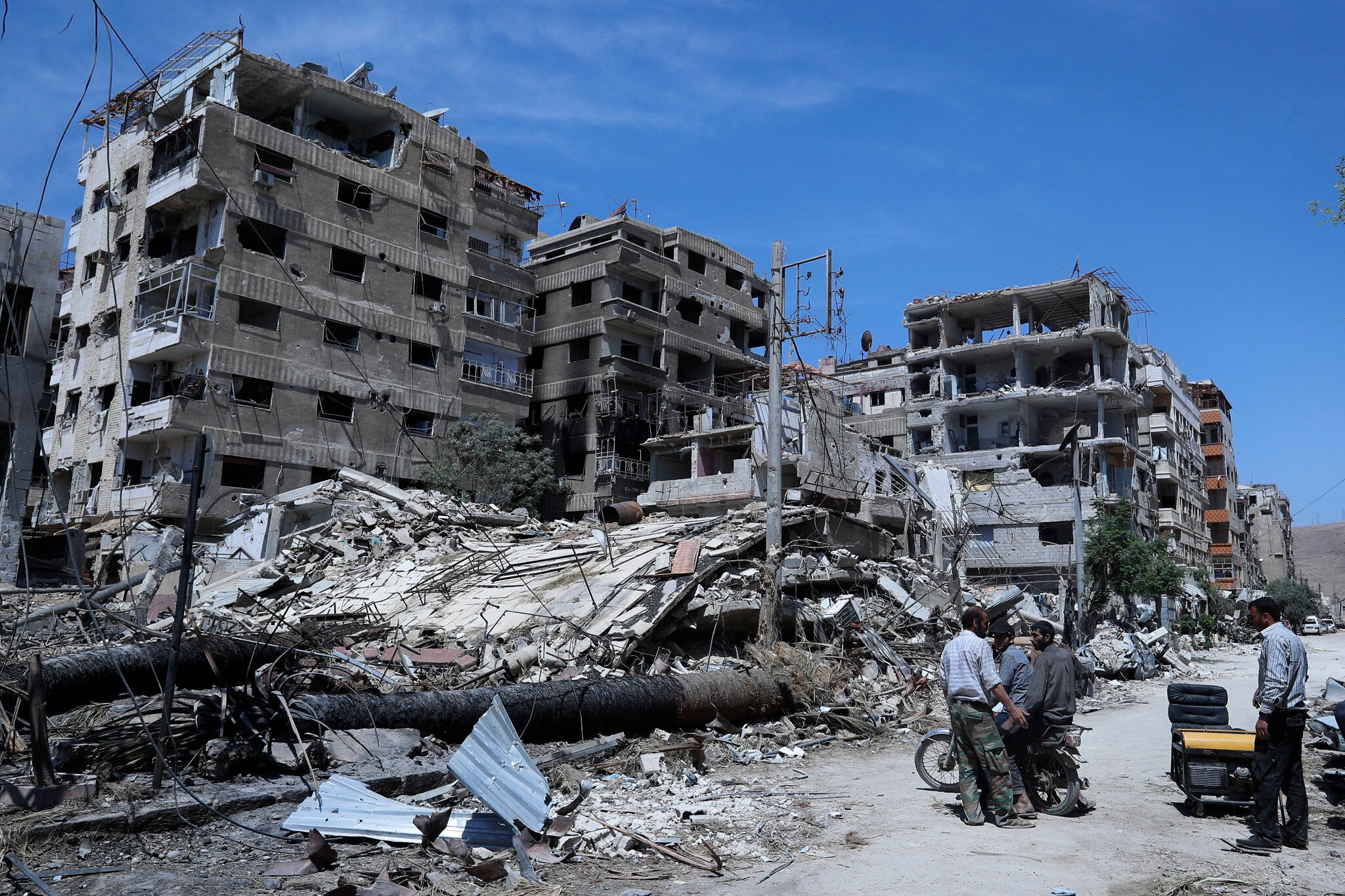
Syria launches a plan supported by Washington to rid the Middle Eastern country of legacy chemical weapons that were used against its people under ousted leader Bashar al-Assad.
For decades, Assad ran a large-scale program for chemical weapons, the use of which killed and injured thousands during Syria’s long-running civil war.
Despite Damascus’s signing onto the Chemical Weapons Convention in 2013 and declaring a 1,300-ton stockpile, prohibited use continued and the size of the program remains unclear.
An international task force backed by the United States, Germany, Britain, Canada and France, among others, will track down all remaining elements of the program and destroy them under the supervision of the Organization for the Prohibition of Chemical Weapons, Syria’s ambassador to the United Nations, Ibrahim Olabi, says in an interview.
As many as 100 sites in Syria need to be inspected to determine what toxic munitions remain and how they should be destroyed, OPCW experts have said.
It will require a time-consuming and costly operation to prevent the proliferation of weapons of mass destruction in a region fraught with conflict and political turmoil. The expanding US-Israeli war on Iran and broader regional security concerns will make the timing of the mission uncertain, but all the more necessary to prevent future use, officials say.
“We don’t know what’s remaining. It was a secret program,” Olabi says. “The job is on Syria to basically look for these things and then declare them.”
A diplomatic source, who speaks on condition of anonymity to discuss the sensitive matter, says the 100 sites could be anything from military bases to laboratories or offices.
“It will probably take many months if not years to get it done, and of course, the current situation in the Middle East doesn’t help the process move forward to the actual destruction of any remnants of Assad‘s chemical weapons program,” the source says.










The Times of Israel Community.