

Live updates (closed)
 Add ToI as a Preferred Source on Google
The Times of Israel liveblogged Friday’s events as they happened.
Spiritual leader of Israel’s Druze community calls on demonstrators to go home
Sheikh Muafak Tarif, the spiritual leader of Israel’s Druze community, together with Yisrael Beytenu MK Hamad Amar calls on Druze demonstrators to clear roads and return to their homes.
US condemns ‘reprehensible’ violence against Syrian Druze
The United States condemns violence against Syria’s Druze community and calls on the interim authorities to hold perpetrators accountable.
“The recent violence and inflammatory rhetoric targeting members of the Druze community in Syria is reprehensible and unacceptable,” State Department spokeswoman Tammy Bruce says in a statement.
Netanyahu and Katz announce Israel struck target near Damascus presidential palace
Prime Minister Benjamin Netanyahu and Defense Minister Israel Katz issue a joint statement announcing that Israel had struck a target near the presidential palace in Damascus.
“This is a clear message to the Syrian regime. We will not allow forces to be sent south of Damascus or any threat to the Druze community,” they say in the statement.
IDF confirms fighter jets struck near Damascus palace of Syrian leader Sharaa
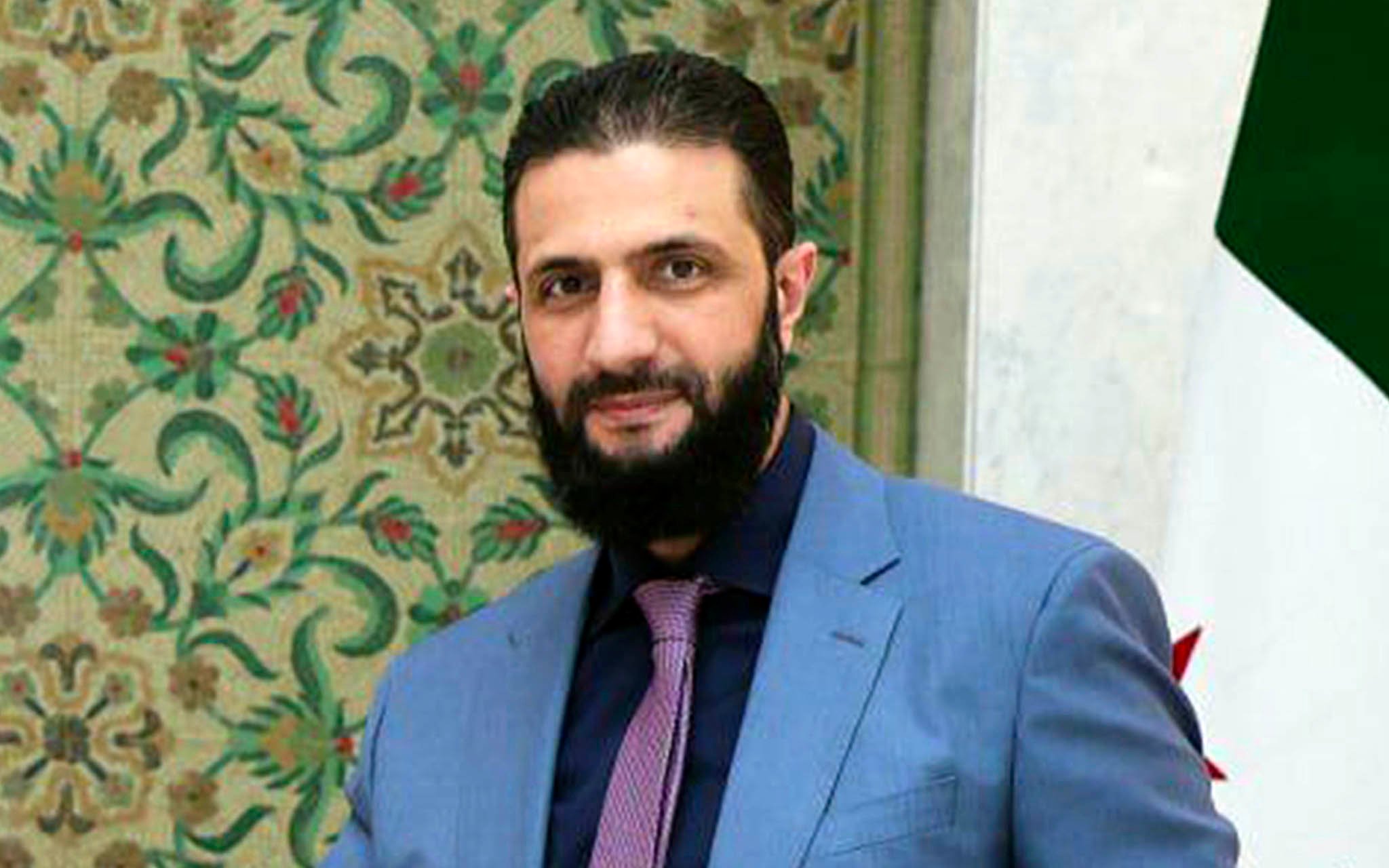
Syria's interim President Ahmad al-Sharaa in Damascus, on March 10, 2025. (SANA via AP)
The military releases a statement confirming Israeli fighter jets launched strikes near Syrian leader Ahmad al-Sharaa’s official residential compound in Damascus.
Rubio says Iran shouldn’t be afraid of nuclear inspections, including by US
Iran should not be afraid of nuclear inspections, including by Americans, US Secretary of State Marco Rubio tells the Fox News Hannity program, amid diplomatic efforts between the two countries over Iran’s nuclear program.
Houthi missile launched from Yemen sets off sirens in Haifa and across north
The IDF says it has identified the launch of a ballistic missile from Yemen toward Israel, adding that air defense systems are “working to intercept the threat.”
The missile launch sets off sirens across large swaths of northern Israel, including the country’s third most populous city of Haifa.
IDF says Yemen missile was intercepted before entering Israeli territory
The IDF says it downed the ballistic missile launched from Yemen by the Iran-backed Houthi rebels before it entered Israeli territory.
It adds that sirens “were activated according to policy,” referring to concerns about falling debris from the interception.
There have been no reports of direct injuries or damage as a result of the attack, which the Houthis have yet to claim.
Debris from Houthi missile interception damages roof of kindergarten at northern kibbutz
Debris from the interception of the missile fired from Yemen penetrated the roof of a kindergarten at Kibbutz Mishmar Ha’emek in northern Israel.
No one was hurt as a result of the damage.
שברי מיירט של הטיל ששוגר מתימן חדרו את גג הרעפים בגן ילדים, בקיבוץ משמר העמק שבעמק יזרעאל
צילום: המועצה האזורית מגידו pic.twitter.com/YAFUKFrdtC
— Yael Hadad | יעל חדאד (@Yael_Hadad97) May 2, 2025
IDF says chief war goal is return of hostages, contradicting Netanyahu’s position
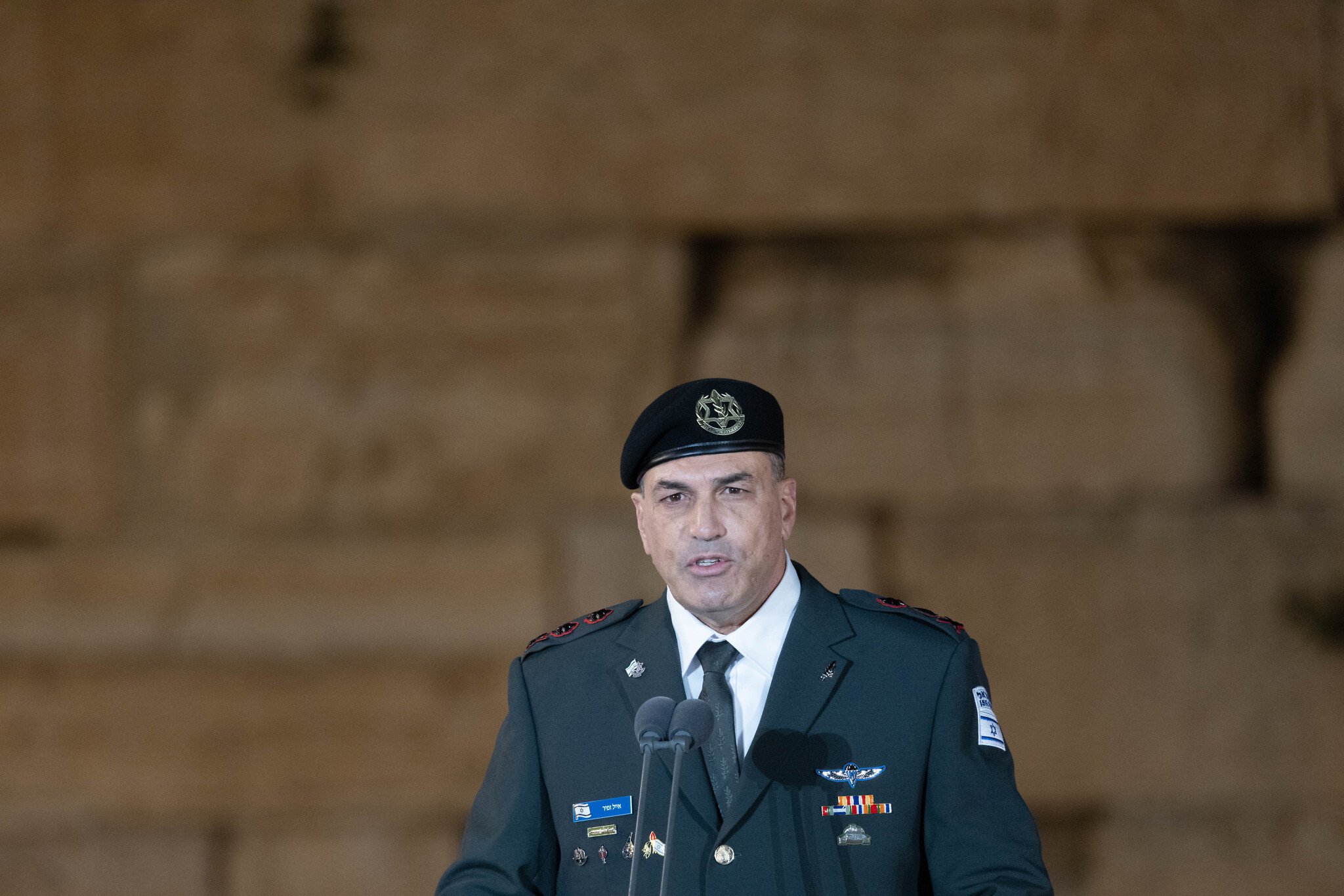
IDF Chief of Staff Lt. Gen. Eyal Zamir attends a ceremony marking Memorial Day for Israel's fallen soldiers and victims of terror, at the Western Wall in Jerusalem's Old City, on April 29, 2025. (Chaim Goldberg/Flash90)
The IDF says that it’s most important goal of the war is returning the 59 hostages still held by Hamas, contrary to the position of Prime Minister Benjamin Netanyahu, who said yesterday that “victory” over the terror group, not the return of the hostages, was the supreme objective of the war in Gaza.
“The supreme mission that the IDF is dealing with is our moral duty to return the hostages. The second mission is defeating Hamas. We are working to advance both goals, with the return of the hostages being at the top [of the list of priorities],” the military says.
After clashes, Syrian Druze leaders sign deal to hand over heavy weapons to regime
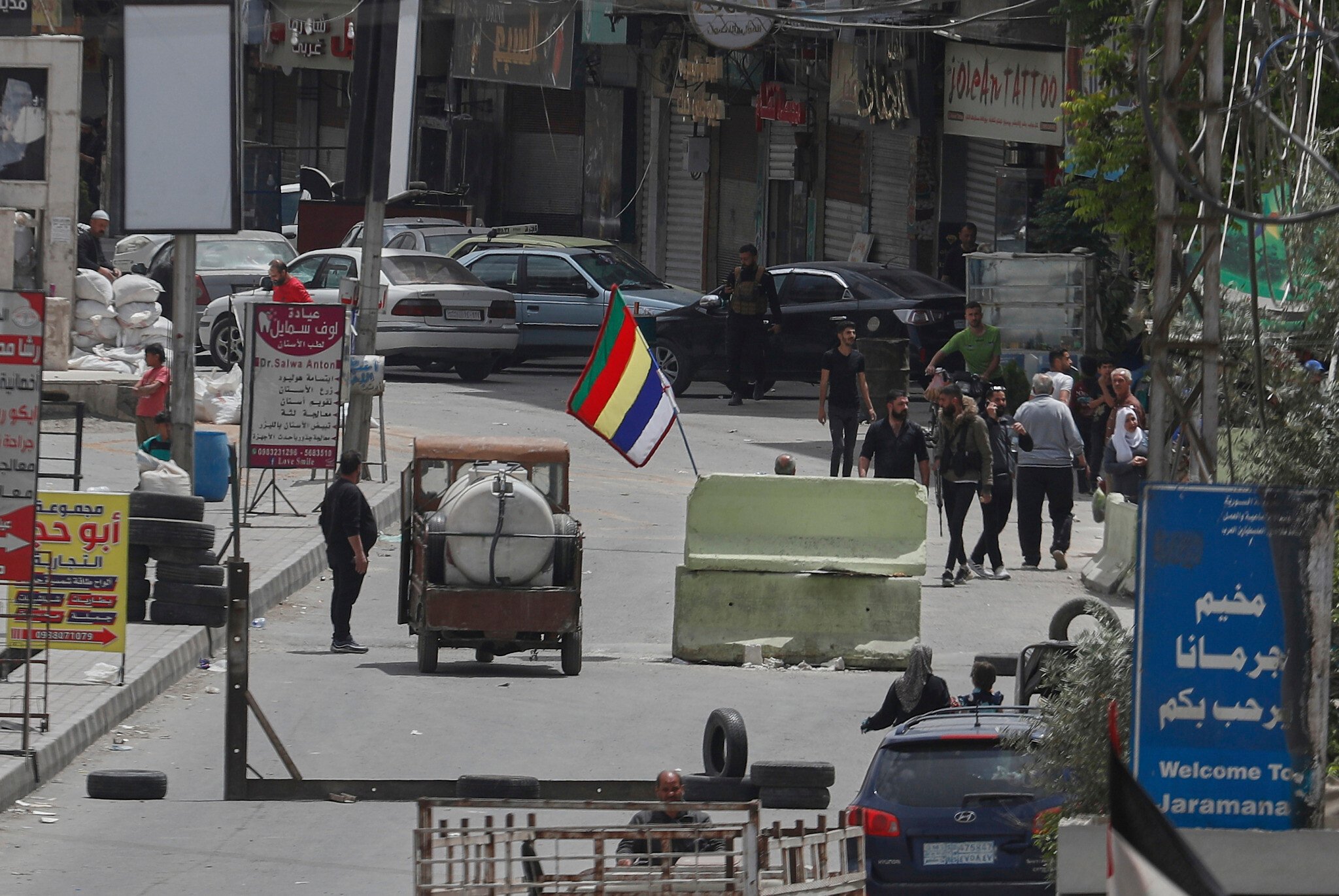
Druze gunmen stand next to their sect's religious flag at a checkpoint at one of the Jaramana suburb entrances, after clashes in the area between members of the minority Druze sect and pro-government fighters, in the southern suburb of Jaramana, Damascus, Syria, April 30, 2025. (AP Photo/Omar Sanadiki)
Druze representatives in the Jaramana area in the suburbs of Damascus have signed an agreement with Syrian regime representatives to hand over heavy weapons held by the Druze to the regime and to reinforce the regime’s security forces in the area.
Hossam al-Tahan, head of the Syrian regime’s security administration in the Damascus area, announced the agreement. According to the agreement, unlicensed weapons will be handed over to the authorities after a defined period.
Furthermore, last night, the governor of the Sweida province, a Druze stronghold in southern Syria, announced an agreement allowing the entry of official Syrian security forces into the area, for the first time since the fall of Bashar al-Assad’s regime and the rise to power of Ahmad al-Sharaa.
The new regime’s agreements with the Druze in Syria come after several days of clashes between local armed Druze groups and other armed groups, followed by confrontations between the Druze and official Syrian security forces in Druze strongholds across Syria. These caused Israeli strikes Jerusalem has said were in defense of the Druze community, many members of which live in the Jewish state.
The Syrian Observatory for Human Rights, an opposition body operating from outside Syria, has reported 21 deaths in the past 24 hours and 101 in recent days. According to the report, most were armed men killed in exchanges of fire, but nine Druze civilians were executed by Syrian security forces. These claims have not been independently verified, and the Observatory has a shaky track record regarding reliability.
Many kindergartens closed today as hundreds of teachers call in sick in unofficial strike
Many kindergartens around the country will not open today, as hundreds of kindergarten teachers call in sick in an unofficial strike in protest at a surprise 3.3 percent drop in salaries for April amid the war in Gaza, Hebrew media reports.
Some municipalities have announced that some of their kindergartens will remain closed as not enough substitutes have been found.
The areas affected include Jerusalem, Ramat Gan, Rehovot, Kfar Saba, Netanya, Shoham, Yavne, Hod Hasharon and Kiryat Ono. In the latter city, some elementary school teachers have also taken a sick day.
Organizers of flotilla defying siege on Gaza claim Israel targeted ship in drone strike near Malta
Organizers of a “Freedom Flotilla” attempting to deliver humanitarian aid to the Gaza Strip — defying an Israeli blockade amid the war against Hamas — claim their ship was attacked overnight in an alleged Israeli drone strike that targeted it twice, resulting in a fire onboard and a breach in the hull.
They say there are 30 activists onboard, the coalition’s press officer Yasemin Acar tells CNN, adding: “There is a hole in the vessel right now and the ship is sinking.” She says that apparently the target was the generators at the front of the vessel, and that they no longer have access to electricity.
According to CNN, citing marine traffic websites, the ship is Palau-flagged Conscience.
The alleged attack happened off the coast of Malta in international waters in the Mediterranean Sea at 00:23 a.m. Malta time (1:23 a.m. Israel time), the coalition says on X, adding that it has been “organizing an action under a media blackout to limit Israeli sabotage.”
BREAKING: At 00:23 Maltese time, a #FreedomFlotilla ship was subjected to a drone attack. The front of the vessel was targeted twice, resulting in a fire and a breach in the hull. The ship is currently located in international waters near #Malta. An #SOS distress signal was sent. pic.twitter.com/J6oEQafuOb
— Freedom Flotilla Coalition (@GazaFFlotilla) May 2, 2025
The statement claims Israel is behind the attack: “Israeli ambassadors must be summoned and answer to violations of international law, including the ongoing blockade and the bombing of our civilian vessel in international waters.”
There is no immediate comment from Israel.
The coalition posts videos of a fire on a ship at nighttime that can’t immediately be confirmed.
It says it sent out an SOS signal, but hours later, Malta has yet to respond, adding the ship is 17 kilometers from Malta’s coast.
Acar tells CNN that a “small boat” has been sent from southern Cyprus.
Katz: Damascus strike is a warning to Syrian leader not to harm the Druze
Defense Minister Israel Katz says the overnight Israeli airstrike near the presidential palace in Damascus is a “clear warning to the Syrian regime.”
“When [Syrian leader Ahmed al-Sharaa] wakes up in the morning and sees the results of the Israeli Air Force fighter jets strike, he understands that Israel is determined to prevent harm to the Druze in Syria,” he says.
“It is his duty to protect the Druze in the suburbs of Damascus from attacks by jihadist rioters and to enable the hundreds of thousands of Druze in Sweida and Jabal al-Druze to defend themselves on their own, and not to send jihadist forces into the villages,” Katz says.
“It is our duty to protect the Druze in Syria from harm, for the sake of our Druze brothers in Israel, their loyalty to the state, and their immense contribution to Israel’s security,” he adds.
Houthis claim latest missile attack, say they targeted IDF airbase near Haifa
The Houthi rebels in Yemen claim responsibility for launching a missile this morning at what they say was a military base in northern Israel.
The military spokesperson for the Houthis says they launched a ballistic missile toward the Ramat David Airbase, southeast of Haifa.
Sirens were activated in Haifa and other communities in northern Israel around 5:30 a.m., and the IDF reported that a missile launched from Yemen was intercepted.
IDF soldier killed in car crash during operational activity in Golan Heights

An IDF soldier was killed yesterday in a car crash during operational activity in the Golan Heights, the military announces.
The soldier is named as Sgt. Niv Dayag, 19, of the Paratroopers Brigade’s 890th Battalion, from Ramat Hasharon.
Another three soldiers were lightly wounded in the crash, on the Route 98 highway near Ramat Magshimim, the military and medics say.
The Magen David Adom ambulance service says it treated the four after their military vehicle overturned on the highway, with medics declaring the death of Dayag.
The IDF says the circumstances of the crash are under further investigation.
The chief of the Central Command, Maj. Gen. Avi Bluth, and the chief of the Northern Command, Maj. Gen. Ori Gordin have also appointed a panel of experts to look into the deadly crash. The team will be headed by Col. Nadav Maisles, the commander of the Yiftah Brigade.
Kindergartens, elementary and middle schools to start at 11 a.m. Sunday, Teachers Union says
The Israel Teachers Union announces that following a breakdown of negotiations with the Education Ministry, studies in kindergartens, elementary schools and middle schools will start at 11 a.m. on Sunday.
Special education institutions are exempted from the strike, and high schools are under the purview of a different union.
From 8 a.m. until 11 a.m., teachers will hold “public relations conferences” but won’t accept schoolkids, the statement says.
The Union accuses the Finance Ministry of “purposely and systematically” sabotaging ongoing talks aimed at improving the conditions of education employees, but not negotiating continuously and not showing up to a meeting on the matter with its representatives and with Education Minister Yoav Kisch.
Union Secretary General Yaffa Ben David vows to continue its struggle, accusing the treasury of being “arrogant and morally blind” and of behaving with “outrageous indifference.”
Report: Trump has appointed Martin Marks as White House liaison to Jewish community
US President Donald Trump has tapped Martin Marks as the administration’s liaison to the country’s Jewish community, Jewish Insider reports, citing a White House spokesperson.
Trump didn’t appoint anyone to that position in his previous term, though Jared Kushner de facto filled some of its roles alongside Elan Carr, who was a special envoy on combating antisemitism.
“President Trump is committed to restoring peace through strength, bringing the hostages home and combating antisemitism at home and abroad. The White House Faith Office is delivering on the President’s promise to protect religious freedom for Americans of all faiths, including Jewish Americans,” the outlet quotes White House Assistant Press Secretary Taylor Rogers as saying.
Marks previously led Trump’s efforts to attract Jewish voters in last year’s election. His bio on his personal X account now reads: “Director of Jewish Outreach, Trump 2024.”
Wrapping in the white house with @martinjmarks pic.twitter.com/7kJvJongl2
— Yossi Farro (@FarroYossi) May 1, 2025
Malta disputes claim it didn’t help Gaza aid flotilla, says all aboard confirmed safe

A Maltese tugboat helps put out a fire onboard the vessel Conscience, sparked by what the ship's operators, the Freedon Flotilla Coalition, said was an Israeli drone strike, in international waters near Malta in the Mediterranean Sea, early May 2, 2025. (Government of Malta)
Everyone aboard an aid flotilla for Gaza that was allegedly hit by drones in international waters off Malta overnight are “confirmed safe,” the Maltese government says in a statement.
“The vessel had 12 crew members on board and four civilian passengers; no casualties were reported,” the statement says, adding that a nearby tug was directed to aid the vessel, which the government confirms is Palau-flagged Conscience.
“The tug arrived on the scene and began firefighting operations,” the government says, contradicting the pro-Palestinian activists’ claim that Malta didn’t respond to the mayday call for many hours.
The statement says that by 1:28 a.m. local time (2:28 a.m. Israel time), “the fire was reported under control. An Armed Forces of Malta patrol vessel was also dispatched to provide further assistance.”
Forty-five minutes later, “all crew were confirmed safe but refused to board the tug … The ship remains outside territorial waters and is being monitored by the competent authorities,” the statement concludes.
Flotilla organizers have claimed the ship was hit in an Israeli drone strike. Israel hasn’t commented on the accusation.
IDF says 400 Haredim have joined its ranks this week

Ultra-Orthodox soldiers are drafted into the military at an induction center, April 28, 2025. (Israel Defense Forces)
Some 400 members of the ultra-Orthodox community were drafted to the military this week, the IDF says.
The military says they include 196 combat troops and 167 combat support soldiers. A further 23 of the new recruits are still in the process of being assigned a role.
Of the combat soldiers, 105 have been placed in the Kfir Brigade’s Netzah Yehuda Battalion; 48 in the Hasmonean Brigade; 19 in the Tomer Company in the Givati Brigade’s Rotem Battalion; 20 in the Hetz Company in the Paratroopers Brigade’s 202nd Battalion; and four in the Nevatim Airbase’s ground defense unit.
In addition to the conscripts, another 26 older Haredi men joined the military as reservists. Those men are those who have already completed the so-called Shlav Bet (Stage B) track, in which older people are put through two weeks of basic training before being sent to serve in noncombat roles.
The 26 reservists, along with another 100, will next week begin an additional six-month combat training period before being sent to the Hasmonean Brigade’s reserve company.
The IDF says it “will continue to work to expand the recruitment of the ultra-Orthodox community, while maintaining their religious lifestyle throughout their service and adjusting the conditions of the service to their needs.”
The military will soon complete sending out a total of 24,000 draft orders to members of the ultra-Orthodox community, an effort that began last summer. This past year, some 70,000 Haredi males were listed as eligible for military service.
In addition to those orders, the IDF is also sending out first draft orders to all Israelis who turn 16.5, without exempting Haredim as it previously did. (Soldiers only join the military from age 18, but the recruitment process begins earlier.)
The military has said that it currently requires some 10,000 new soldiers — 70 percent of whom will be combat troops — but can only accommodate the enlistment of an additional 3,000 ultra-Orthodox soldiers this year, due to their need for special conditions. This would be in addition to some 1,800 Haredi soldiers who are already drafted annually.
Red Cross warns Gaza humanitarian work on ‘verge of total collapse’
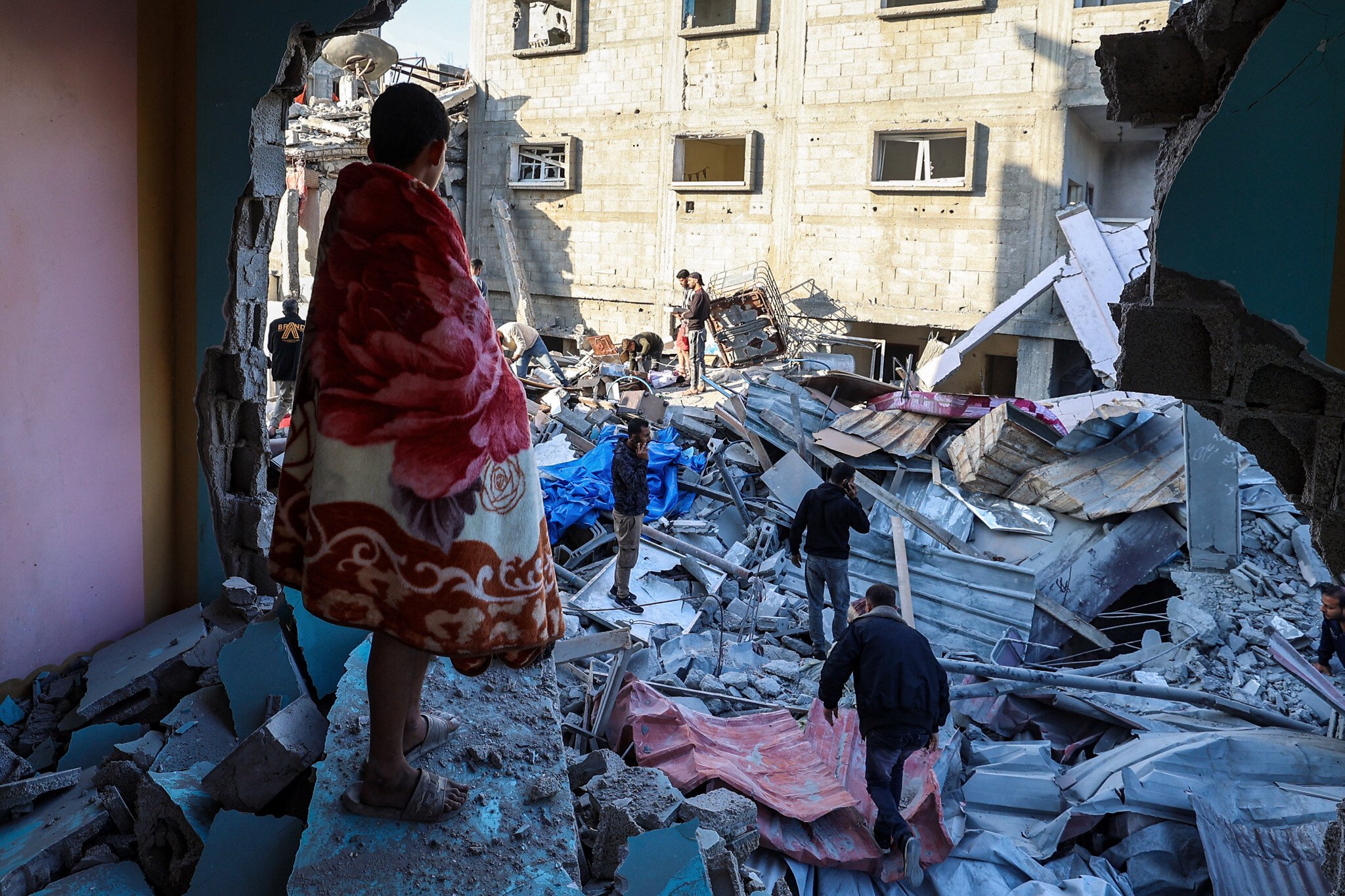
A youth draped in a blanket looks on as people look for survivors in the rubble of a building hit in an Israeli strike in the Bureij camp in the central Gaza Strip on May 2, 2025. (Photo by Eyad BABA / AFP)
The Red Cross warns that the humanitarian response in Gaza is on the “verge of total collapse” after two months of Israel blocking aid to the Strip in a bid to pressure the Hamas terror group to release the 59 hostages it is still holding.
“Without an immediate resumption of aid deliveries, the International Committee of the Red Cross (ICRC) will not have access to the food, medicines and life-saving supplies needed to sustain many of its programs in Gaza,” it says in a statement.
“Civilians in Gaza are facing an overwhelming daily struggle to survive the dangers of hostilities, cope with relentless displacement, and endure the consequences of being deprived of urgent humanitarian assistance,” Pascal Hundt, ICRC Deputy Director of Operations, says in the statement.
“This situation must not — and cannot — be allowed to escalate further.”
ICRC stresses that under international humanitarian law, “Israel has an obligation to use all means available to ensure that the basic needs of the civilian population under its control are met.”
“If the blockage continues, programs such as the ICRC common kitchens, which often provide the only meal people receive each day, will only be able to operate for a few more weeks,” it warns.
Israel is planning to allow assistance into the enclave to resume in the current weeks, according to officials. It is planning to radically alter the way humanitarian aid is distributed when this happens, an Israeli and Arab official familiar with the matter have told The Times of Israel this week.
The plan is to transition away from wholesale distribution and warehousing of aid and to instead have international organizations and private security contractors hand out boxes of food to individual Gazan families, according to the officials.
Report: Lebanese army seizes hundreds of rockets from Palestinian terror group in country’s north, raids Hezbollah bases
The Lebanese army has seized 800 rockets in the Al-Beddawi Palestinian refugee camp in northern Lebanon, the Saudi channel Al-Hadath reports.
The military has also reportedly entered bases belonging to Hezbollah in northern Lebanon.
There is no official confirmation of the report in Lebanon.
According to the report, the rockets belonged to the Popular Front for the Liberation of Palestine – General Command terror group, a small Palestinian organization that has been operating in recent years from Lebanon. It has ties to the main Popular Front for the Liberation of Palestine and is not known to have carried out major terror attacks independently in recent years.
Herzog visits Vatican Embassy, says he hopes late pope’s prayer for hostages’ freedom will be fulfilled
President Isaac Herzog visits the Vatican Embassy in Jaffa to sign the book of condolences on the passing of Pope Francis.
“The President expressed his condolences to the Catholic communities in the Holy Land and around the world, and emphasized his hope that the late Pope’s prayer for the release of the hostages will soon be fulfilled,” his office writes on X.
“May his prayer for justice and peace be quickly fulfilled in the immediate release of the Israeli hostages,” he writes in the condolence book, “who are being cruelly held in a horrific crime against humanity, morality, and God himself; in the elimination of hatred and extremism; and in a world of growing compassion, in the spirit of the prophets of Israel and the shared spiritual heritage of humanity.”
נשיא המדינה @isaac_herzog ביקר הבוקר בשגרירות הוותיקן ובבית הנונציו האפיפיורי, וחתם על ספר תנחומים שנפתח רשמית לרגל פטירתו של האפיפיור פרנציסקוס. הנשיא הביע את תנחומיו לקהילות הקתוליות בארץ הקודש וברחבי העולם, והדגיש את תקוותו לכך שתפילת האפיפיור המנוח לשחרור החטופים תתגשם במהרה.… pic.twitter.com/YcmfgznqTd
— Office of the President of Israel (@IsraelPresident) May 2, 2025
Report: Some officials are regarding targeted Gaza aid ship as Hamas-affiliated
While Israel has officially not commented on allegations of a drone strike against an aid flotilla bound for Gaza, an unsourced report claims that the ship is affiliated with Hamas.
“Israel isn’t commenting but some are defining the ship attacked next to Malta as Hamas-affiliated, and say that it was a sophisticated aerial attack,” Yedioth Ahronoth’s military correspondent Yossi Yehoshua writes on X.
Lebanon warns Hamas not to take actions compromising country’s sovereignty, stability
Lebanon has warned the Palestinian terror group Hamas not to conduct operations that compromise Lebanon’s sovereignty or disturb its stability, Beirut’s supreme defense council says.
‘JCPOA 2’: Sources say US-Iran talks discussing framework not very different from 2015 deal
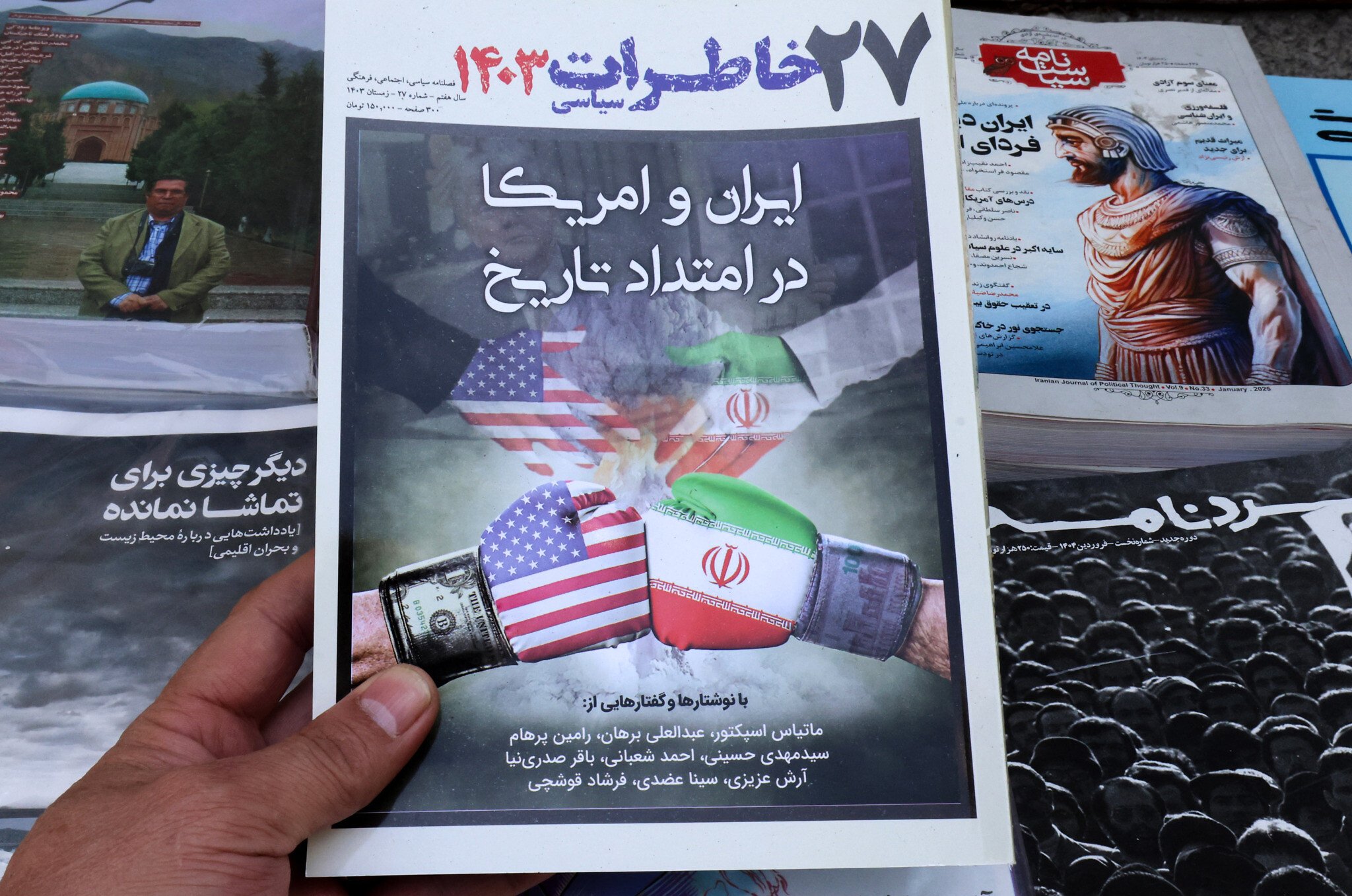
This picture shows a magazine front page at a kiosk in Tehran on April 19, 2025, featuring the Iran-US talks on the Iranian nuclear program set to begin in Rome on the same day. (Atta Kenare/ AFP)
US-Iran negotiations for a deal to curb Tehran’s nuclear program are shaping up toward a deal that isn’t very different from the 2015 nuclear deal that US President Donald Trump withdrew from in 2018, Reuters reports, citing eight unnamed officials and diplomats from all sides of the negotiations who have disclosed previously unreported details under discussion.
The sudden pivot to negotiations with Iran in April was a shock for Prime Minister Benjamin Netanyahu, who had flown to Washington seeking Trump’s backing for military strikes on Iran’s nuclear facilities and learned less than 24 hours before a joint White House press event that US talks with Iran were starting within days, four sources familiar with the matter tell Reuters.
In just three weeks, the US and Iran have held three rounds of talks aimed at preventing Tehran from building a nuclear weapon in return for sanctions relief. A fourth round is expected to take place in Rome soon.
An initial framework under discussion preserves the core of the 2015 Joint Comprehensive Plan of Action (JCPOA) — scrapped by Trump in 2018 during his first term, eight sources say.
A deal may not look radically different from the former pact, which he called the worst in history, but would extend duration to 25 years, tighten verification, and expand so-called sunset clauses that pause but don’t completely dismantle aspects of Iran’s nuclear program, all the sources say.
Under the terms being discussed, Iran would limit stockpile size and centrifuge types, and dilute, export or seal its 60 percent uranium stock under unprecedented International Atomic Energy Agency (IAEA) scrutiny — all in exchange for substantial sanctions relief, all the sources say.
The US State Department, Iran’s foreign ministry and Netanyahu’s office do not respond to requests for comment.
While Israel is demanding Iran not be allowed to enrich uranium at all and Tehran is saying enrichment is non-negotiable, three Iranian officials say that the size of the uranium stockpile, shipping stocks out of the country and the number of centrifuges are under discussion.
Under proposals discussed in rounds of talks in April, Iran would cap enrichment at 3.67%, in line with the JCPOA, all the sources say, including three Iranian officials. Tehran is also open to granting the IAEA expanded access to its nuclear sites, the Iranian sources say.
The proposals do not seek to dismantle Tehran’s nuclear infrastructure entirely as Israel and some US officials want, but aim to lock in permanent constraints on uranium enrichment that deter any breakout, the sources say.
Another possible compromise could involve Iran retaining minimal enrichment, with 5,000 centrifuges, while importing the rest of the enriched uranium, possibly from Russia, one of the three Iranian sources, a senior security official, tells Reuters.
In return for limits on enrichment, Tehran has demanded watertight guarantees that Trump would not again ditch a nuclear pact, the three Iranian officials say.
A senior regional source close to Tehran says the current debate over Iran’s uranium stockpiles centers on whether Iran “will keep a portion of it — diluted — inside the country while sending another portion abroad, possibly to Russia.”
According to the source, Iran has even floated the idea of selling enriched uranium to the United States.
Iran currently operates around 15,000 centrifuges. Under the JCPOA, Iran was allowed to operate around 6,000.
“Essentially, the negotiations are shaping into a ‘JCPOA 2,’ with some additions that would allow Trump to present it as a victory, while Iran could still keep its right to enrichment,” the senior Iranian official says.
Missile launched from Yemen at northern Israel, IDF says
A ballistic missile has been launched from Yemen at Israel, the military says.
Sirens are expected to sound in northern Israel in the coming minutes.
The Home Front Command has issued an early warning to residents across the north.
Sirens sound in north as missile launched from Yemen for 2nd time today
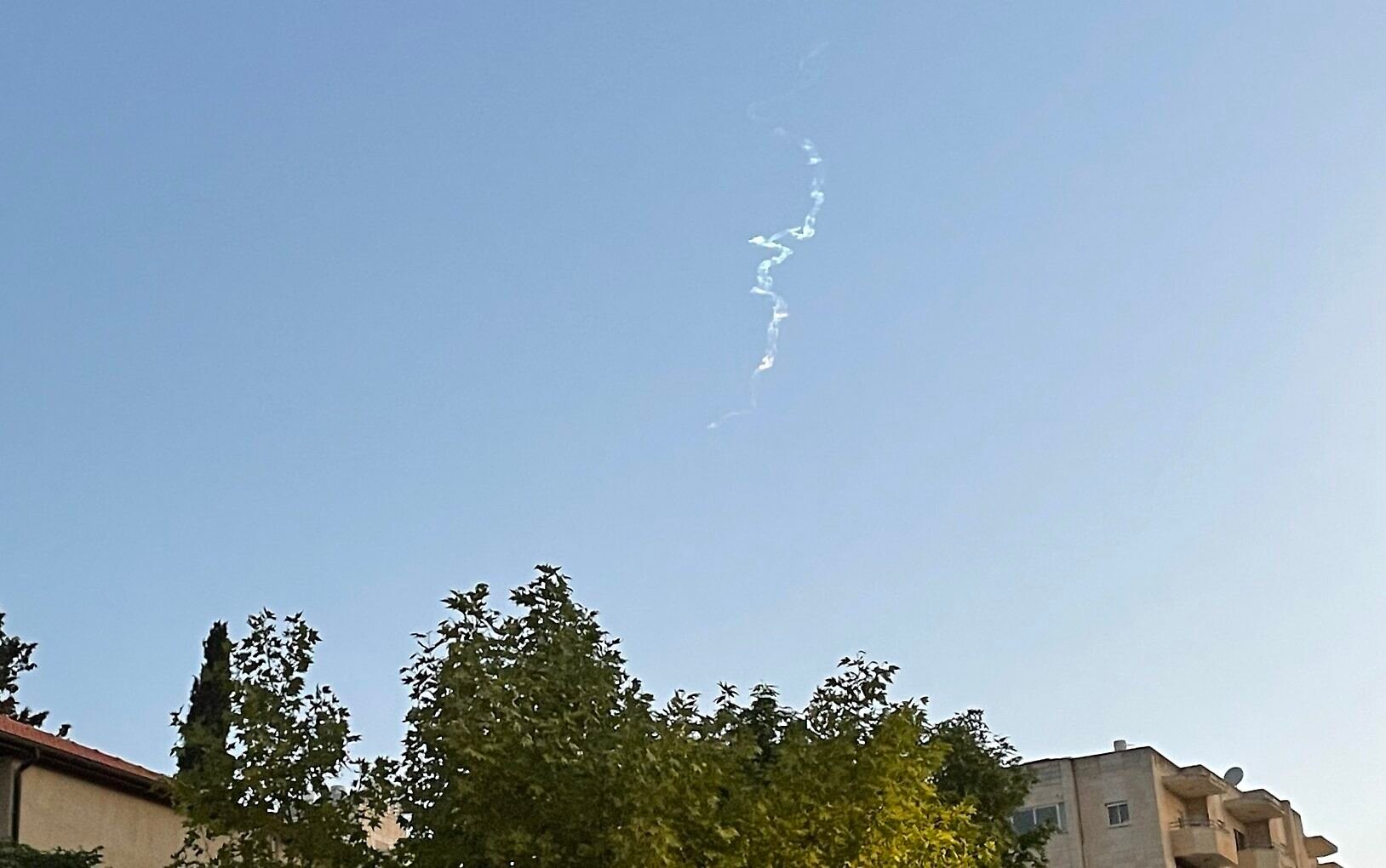
Illustrative: Smoke trails, apparently from the interception of a Houthi missile fired from Yemen, are seen high above Jerusalem, May 2, 2025. (Times of Israel)
Sirens are sounding in Haifa and across northern Israel following the launch of a ballistic missile from Yemen.
The IDF says it is working to shoot down the projectile.
It marks the second Houthi attack on Israel today, after the Iran-backed terror group claimed to have fired a missile at the Ramat David Airbase early this morning. The IDF said that the missile was intercepted.
Germany’s intel service lists AfD as ‘right-wing extremist’ party
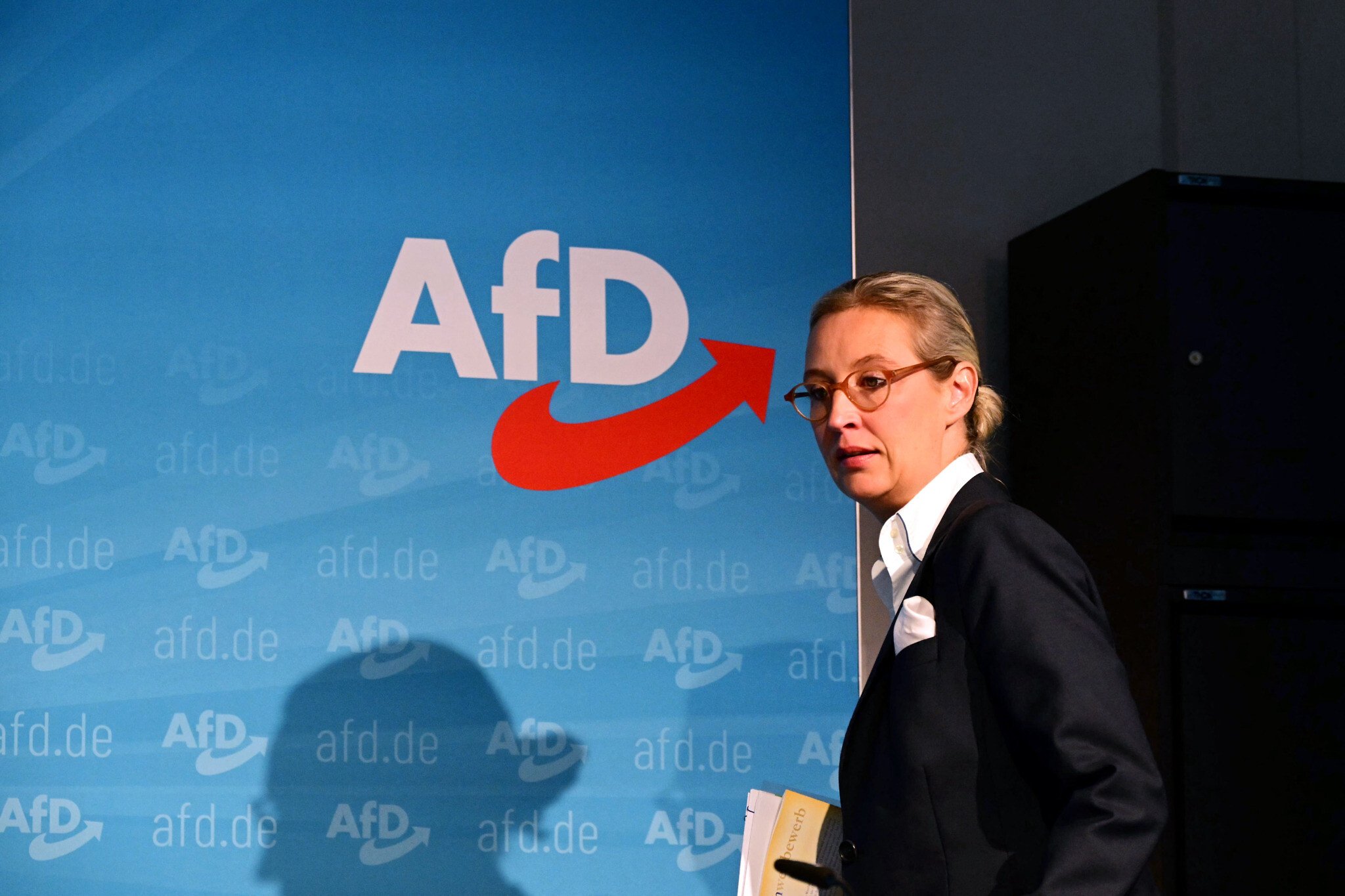
Co-leader of Germany's far-right Alternative for Germany (AfD) party Alice Weidel arrives for a press conference in Berlin on September 2, 2024. (Tobias SCHWARZ / AFP)
The German domestic intelligence service says it has classified the Alternative for Germany (AfD) party, which placed second in national elections in February, as a “right-wing extremist effort” — making it subject to greater and broader surveillance of its activities.
The Federal Office for the Protection of the Constitution cites the “extremist character” of the party, and says it “disregards human dignity” — in particular by taking aim at those who have moved to Germany from mostly Muslim countries.
The party criticizes the move, with deputy chairman Stephan Brandner saying that it “is complete nonsense, has absolutely nothing to do with law and order, and is purely political in the fight of the cartel parties against the AfD.”
The AfD has already been under enhanced surveillance by authorities in some regions, but the announcement by the domestic spy agency means the agency’s officials can use informants and other tools such as audio and video recordings to monitor the party’s activities nationwide.
The office, which has warned of growing extremism in Germany, cites court decisions in two German regions in recent years that detailed party efforts to undermine a free and democratic order.
The party “aims to exclude certain population groups from equal participation in society, to subject them to unconstitutional unequal treatment and thus to assign them a legally devalued status,” the agency, known as BfV, says.
The party had already come under scrutiny from the BfV for its links to extremists and its ties to Russia. Of the 38,800 far-right extremists counted by the agency last year, more than 10,000 are members of the party.
Nancy Faeser, the interior minister, says in a statement that the classification is “clear and unambiguous” and resulted from a 1,100-page “comprehensive and neutral audit” that had no political influence.
Under the move, any surveillance of AfD activities must abide by a “principle of proportionality” under German law.
The measure does not amount to a ban of the party, which can only take place through a request by either of parliament’s two chambers or the federal government through the Federal Constitutional Court.
No immediate reports of injuries or damage in latest Houthi attack; IDF checking details
The IDF says it is investigating the results of interception attempts of a ballistic missile launched at Israel by the Iran-backed Houthis in Yemen a short while ago.
There are no immediate reports of injuries or damage in the attack.
Sirens had sounded in Haifa and other areas of northern Israel, in the second Houthi attack on the country today.
Since March 18, when the IDF resumed its offensive against Hamas in the Gaza Strip, the Houthis in Yemen have launched some 25 ballistic missiles and several drones at Israel.
Nearly half of the missiles triggered sirens in the country and were shot down, while the others fell short.
Report: Shin Bet bolstering security around Netanyahu to ‘unprecedented levels’
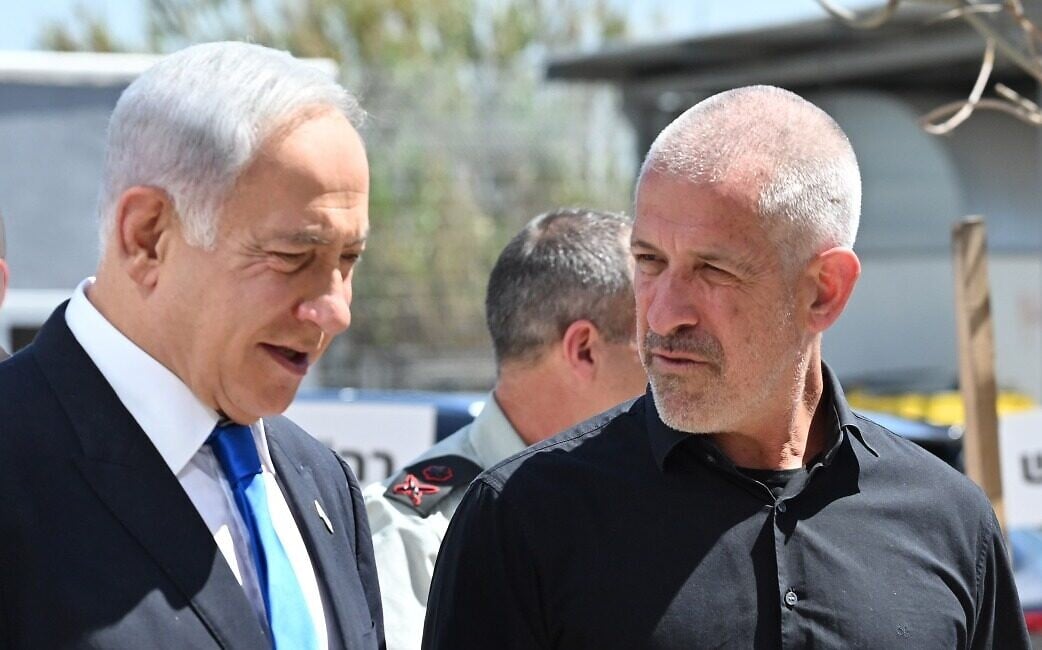
Prime Minister Benjamin Netanyahu (left) and Shin Bet chief Ronen Bar, on April 4, 2023. (Kobi Gideon/GPO)
The Shin Bet has intensified security surrounding Prime Minister Benjamin Netanyahu “to unprecedented levels,” the Ynet news site reports, without citing sources.
New reported measures by the security agency include the use of an advanced screening machine and sophisticated surveillance cameras, alongside manual searches involving physical pat-downs.
As part of the enhanced security, new devices for inspecting footwear have also been activated, the report adds.
Jill Sobule, pop star who composed songs for a new ‘Yentl,’ dies at 66 in home fire

Jill Sobule performs as part of Wesley Stace's Cabinet of Wonders at City Winery on October 19, 2018, in New York City. (Al Pereira/Getty Images via JTA)
Jill Sobule, the Jewish American pop singer whose hit “I Kissed A Girl” topped charts in the 1990s, has died at 66.
The cause of death was a fire at her home outside Minneapolis, her publicist has announced. Sobule had been due to perform in Colorado today.
Sobule, who grew up as the only Jewish student at her Catholic school in Denver, broke new ground when she released “I Kissed A Girl” in 1995. The song chronicled a same-sex flirtation between two women and arrived at a time when queer narratives were rare in pop culture.
Sobule, who later came out as bisexual, said it was the kind of song she wished she had been able to hear when she was a teen.
The same year, her song “Supermodel,” satirizing teen culture, found success after it was included in the hit movie “Clueless.”
She performed in a revue of “Fiddler on the Roof” songs at a Jewish music festival in New York in 2007 alongside the Klezmatics and Theodore Bikel, who played the lead character Tevye.
And in 2016, she made headlines by composing the music for a new staging of “Yentl,” the Isaac Bashevis Singer story about a gender-bending yeshiva student propelled into the popular consciousness by the 1986 movie of the same name starring Barbra Streisand.
Sobule said she valued “Yentl” as a depiction of transgenderism but had been struck by learning that Singer was unhappy with the movie and sought to address his objections by having the music come from “a Jewish chorus” instead of being sung by the characters.
“I think he would approve of my music,” she told NPR at the time. “I really do, because it keeps the spirit of the play, and it has a sense of humor. I think he actually would like it because it doesn’t feel intrusive.”
And in 2022, she played both a cantor and the rabbi’s wife in “A Wicked Soul in Cherry Hill,” a staging of the true story of the New Jersey rabbi convicted of arranging the murder of his wife.
Sobule’s latest project was “F–k 7th Grade,” an autobiographical musical about being queer in middle school that was well reviewed during its off-Broadway run in New York City. She had been scheduled to perform songs from the musical in Denver today, in a venue that will now host an informal memorial service.
Government to discuss option of Oct. 7 state inquiry, days ahead of High Court deadline
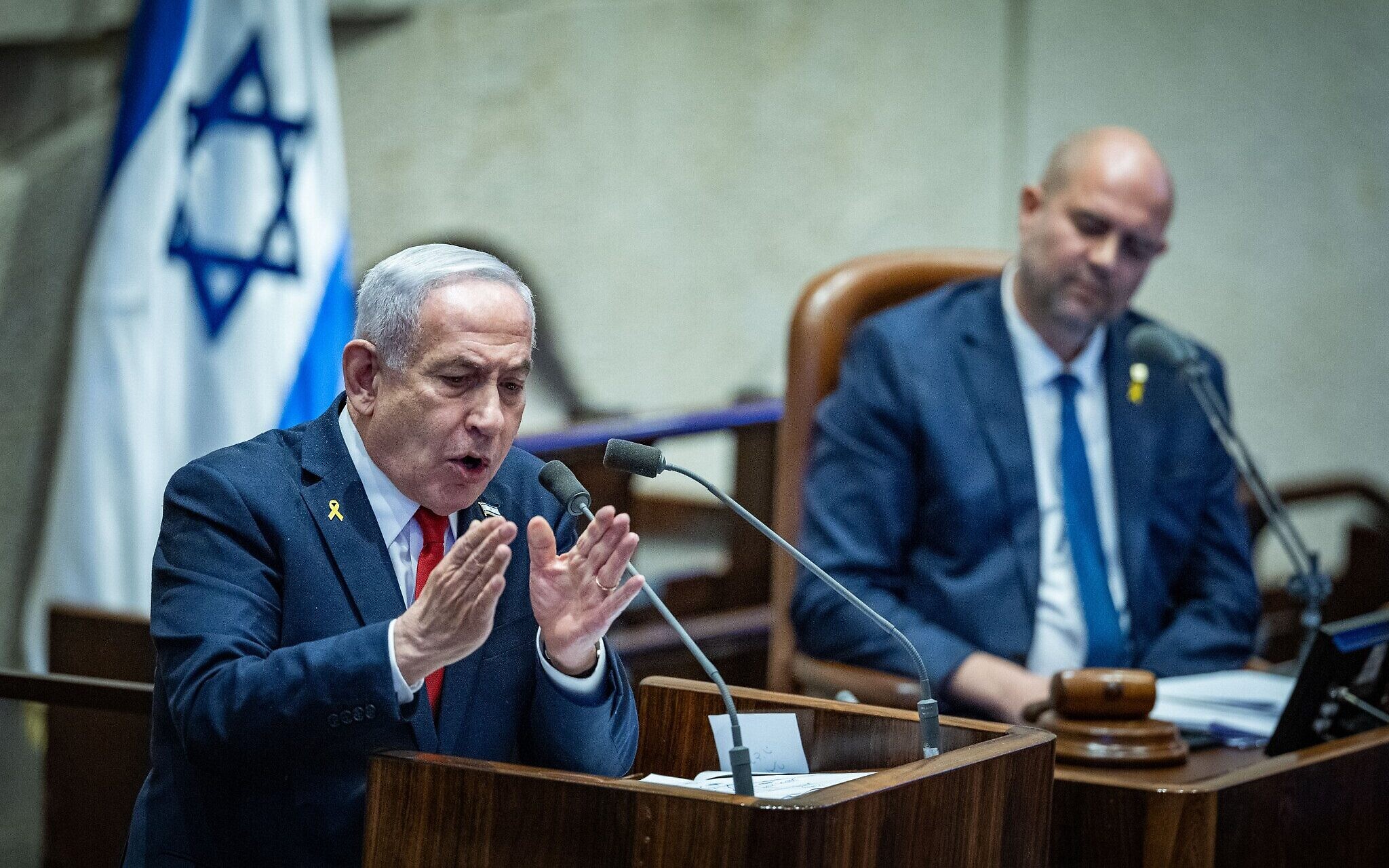
Prime Minister Benjamin Netanyahu addresses the Knesset in a debate about a state commission of inquiry into the events surrounding the October 7, 2023, Hamas invasion, March 3, 2025. To his left is Knesset Speaker Amir Ohana. (Chaim Goldberg/Flash90)
The government will on Monday hold a second meeting discussing the potential formation of a state commission of inquiry into the failures leading up to, during and after the October 7, 2023, Hamas invasion and atrocities, according to a formal agenda published by the government secretariat and reported by Hebrew media.
The meeting is being held less than a week before a May 11 deadline set by the High Court of Justice in February, which granted a 90-day extension before it must update the court as to its position on establishing such a committee.
The government informed the court in February that the cabinet had held a meeting on the issue, in accordance with a December ruling by the High Court that ordered the government to hold such a hearing within 60 days, and said that the “overwhelming majority” of ministers were of the opinion that the “time was not ripe” to establish a commission.
The government has fiercely opposed the establishment of a state commission of inquiry into the October 7 catastrophe, originally on the grounds that such an inquiry could not be conducted while Israel was at war, but increasingly due to accusations by several cabinet ministers that such a commission would be biased against the government.
Almost 19 months after the onslaught, the government hasn’t said what sort of inquiry it supports, and hasn’t taken any steps to form one.
State commissions of inquiry have been established in the past to look into other military failures, including the events of the Yom Kippur War in 1973 and the Sabra and Shatila massacre in Lebanon in 1982.
A government commission of inquiry, in which the government appoints the members of the commission, was established to investigate the failures of the 2006 Second Lebanon War, although it was granted some of the powers of the more rigorous and independent state commissions, including the power to subpoena witnesses.
Jeremy Sharon contributed to this report.
Report: Gaza aid convoy attacked near Malta organized by Hamas, planned to confront IDF forces
A Maltese tugboat helps put out a fire onboard the vessel Conscience, sparked by what the ship's operators, the Freedon Flotilla Coalition, said was an Israeli drone strike, in international waters near Malta in the Mediterranean Sea, early May 2, 2025. (Government of Malta)
The Gaza “Freedom Flotilla” ship attacked overnight near Malta had planned to confront Israeli forces and was part of a convoy organized by the Hamas terror group, the Saudi news channel Al Arabiya reports, citing a Western security source.
No further details are provided and there is no further confirmation of these claims. It is possible that the intended meaning is that the ship planned to engage with IDF forces as it approached Gaza.
The ship was being used by an organization claiming to be delivering humanitarian aid to Gaza, which accused Israel of conducting the drone strikes. Israel hasn’t commented.
Trump to revoke Harvard’s tax exempt status, amid standoff over anti-Israel protests
US President Donald Trump says his administration will strip Harvard University of its tax-exempt status.
“We are going to be taking away Harvard’s Tax Exempt Status. It’s what they deserve!” Trump says in a post on his social media platform.
The Trump administration has withheld government funding from Harvard, Columbia and other US universities ostensibly over pro-Palestinian, anti-Israel campus protests over Israel’s war against Hamas in Gaza.
Trump has cast the protesters as foreign policy threats who are antisemitic and sympathetic to the Hamas terror group. The Trump administration is also attempting to deport some foreign protesters and has revoked hundreds of visas across the country.
Fires renew in Latrun area, planes said scrambled but Fire Service says blaze under control
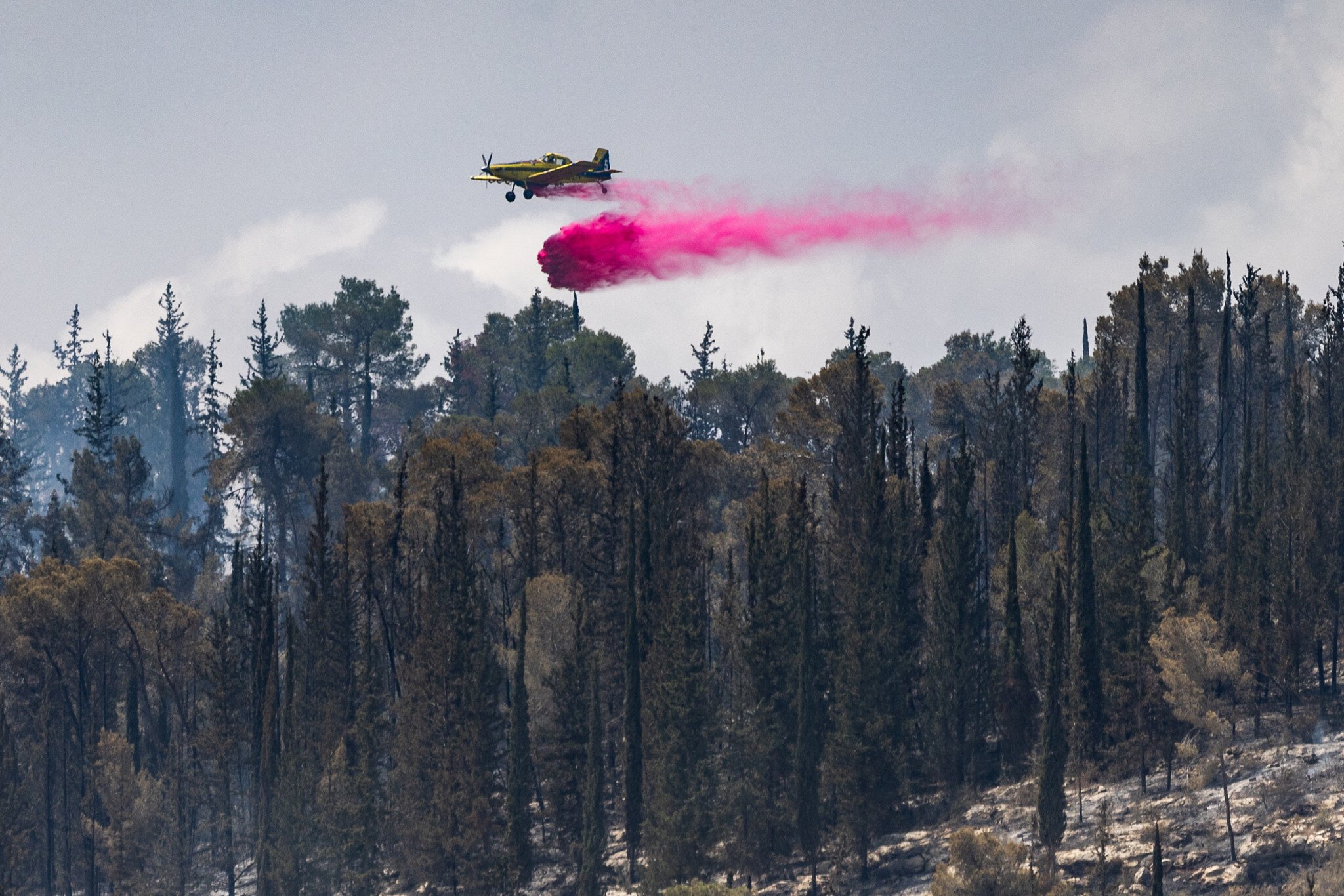
Firefighters work to extinguish a massive wildfire in Latrun, on the outskirts of Jerusalem, on May 1, 2025. (Chaim Goldberg/Flash90)
Renewed fires on the outskirts of Jerusalem are currently “under control” after firefighters were dispatched to the scene, a Jerusalem District Fire Service spokeswoman tells The Times of Israel.
Hebrew media outlets report that planes are also helping extinguish the fires in the Latrun area.
It comes after huge wildfires raged on Wednesday and yesterday, burning some 20,000 acres and causing highways to be blocked for many hours and communities to be temporarily evacuated.
Netanyahu meets Druze leader, who hails Damascus strike and condemns violence during Druze protests
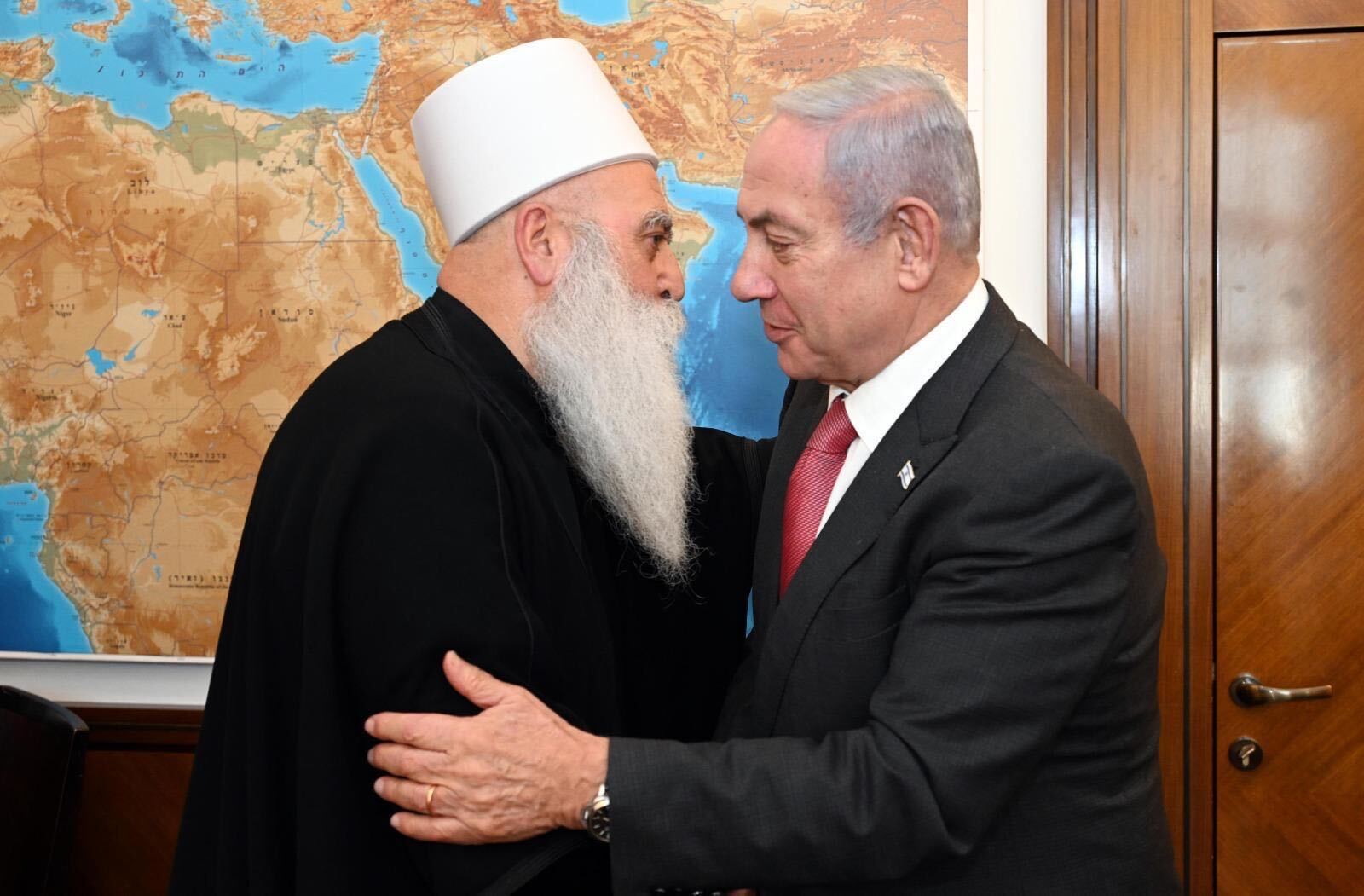
Prime Minister Benjamin Netanyahu, right, speaks with Druze community spiritual leader Sheikh Muafak Tarif at the Prime Minister's Office in Jerusalem on May 2, 2025. (Haim Zach/GPO)
Prime Minister Benjamin Netanyahu has spoken with Sheikh Muafak Tarif, spiritual leader of the Druze community in Israel, says Netanyahu’s office.
Tarif thanks Netanyahu for his orders to protect the Druze in Syria this week, including last night’s strike on the presidential palace complex in Damascus, says the PMO.
According to the readout, Tarif says the Israeli actions “sent a deterrent message to the Syrian regime regarding Israel’s commitment to the Druze community in Syria.”
After Druze protesters blocked roads in northern Israel last night and into early this morning, Netanyahu tells Tarif that he expects the Druze to respect the law in Israel, as it normally does.
Tarif responds that Druze leaders condemn violence and law-breaking from the protesters, and assures him that the Druze will continue to respect Israel’s laws, according to the PMO.
Fire breaks out near Ramle, some residents evacuated
Firefighters are working to extinguish a spreading brush fire that broke out near the central city of Ramle, Hebrew media reports.
Some residents on the city’s eastern edge have been evacuated as five firefighting crews combat the flames along Route 40.
Meanwhile, a fire service spokeswoman says renewed blazes on Jerusalem’s outskirts are “under control” after firefighters and two planes arrived at the scene.
Syria calls Israeli attack near presidential palace ‘a dangerous escalation’
Syria’s presidency says in a statement that an overnight Israeli airstrike near the presidential palace in Damascus is a “dangerous escalation.”
In a statement, the presidency condemns the strike and describes it as “a serious escalation against state institutions and its sovereignty.”
Iran says it rejects ‘threats and pressure’ after Trump calls to halt oil, petrochemical sales
Iran’s foreign ministry says Tehran rejects “threats and pressure” after US President Donald Trump said all purchases of Iranian oil or petrochemicals products must stop, state media reports.
Germany voices ‘deep concern’ over Syrian sectarian clashes
Germany expresses “deep concern” at reports of sectarian clashes between Druze fighters and other forces in Syria and calls on the country’s new rulers to “ensure civilians are protected.”
Hours after Israel said it had carried out an airstrike on the capital Damascus, the German foreign ministry also says in a statement that “Syria must not become the venue for regional tensions to be played out.”
Yemen’s Houthis claim responsibility for missiles launched at Haifa
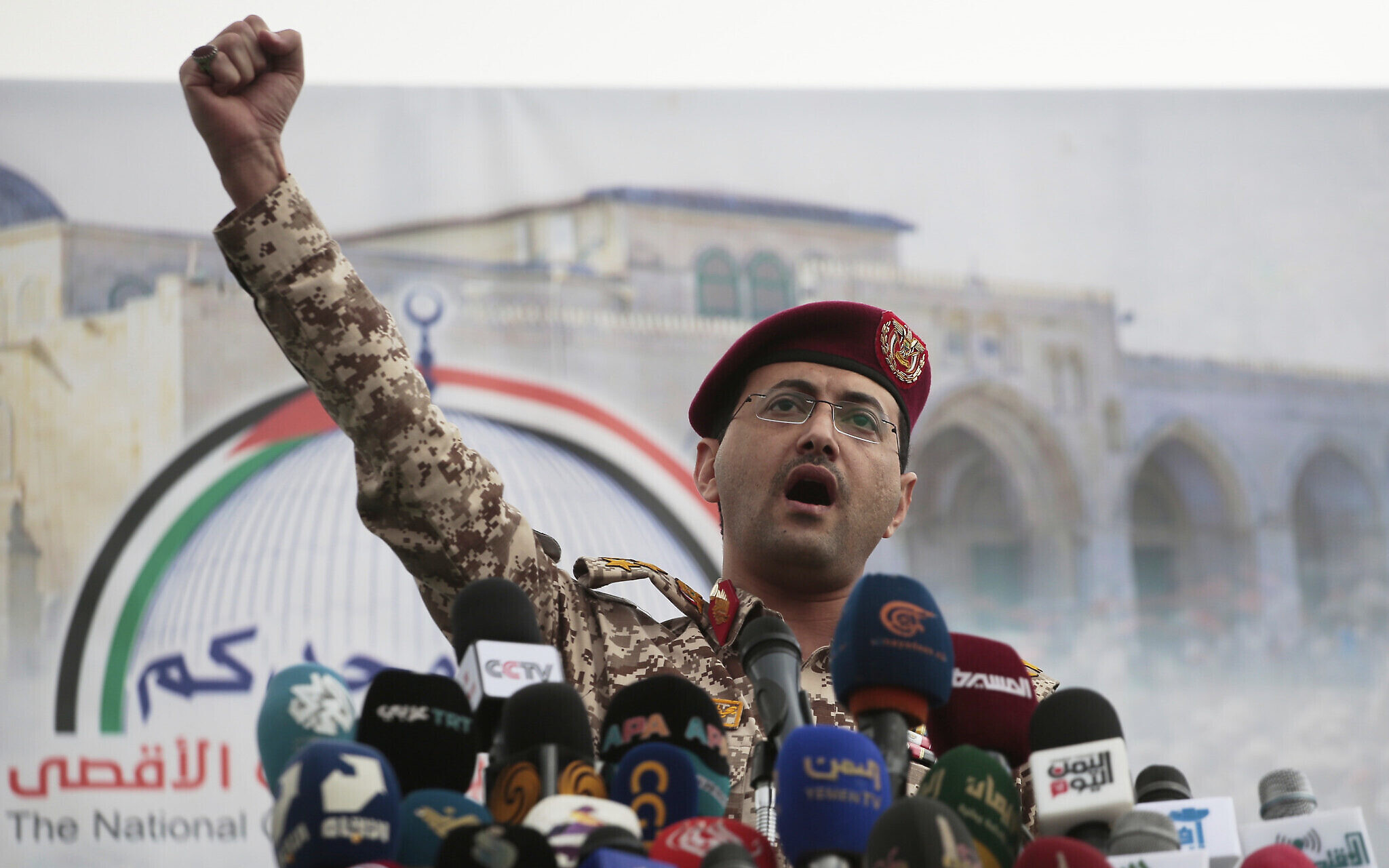
Houthi military spokesman Yahya Saree speaks at a rally against the US and Israel in Sanaa, Yemen, April 18, 2025. (AP Photo/Osamah Abdulrahman)
The Houthi rebels in Yemen have claimed responsibility for launching a missile at Haifa in northern Israel.
The military spokesperson for the Houthis says they launched another ballistic missile within hours toward Haifa.
Earlier today, sirens were activated in northern Israel, and the IDF reported that a missile launched from Yemen was intercepted.
Fire Service says blaze near Ramle brought under control
The Fire and Rescue Service has brought a renewed fire near Ramle under control, a spokesperson confirms to The Times of Israel.
The fire broke out earlier this afternoon, just east of the central city along Route 40.
Some residents of the city’s Gan Haqal neighborhood were evacuated due to the blazes and five firefighting crews were dispatched to the scene.
Earlier today in the Latrun area, on the outskirts of Jerusalem, firefighters managed to contain another renewed conflagration with the help of two planes.
Lapid bashes PM for not publicly declaring Israel’s ‘necessary basic conditions’ for Iran nuclear deal
Opposition Leader Yair Lapid hits out at Prime Minister Benjamin Netanyahu for not publicly declaring in English what Israel’s “five necessary basic conditions” are for a nuclear deal between the United States and Iran, amid the ongoing negotiations between the sides.
In a social media post, Lapid lists the conditions as “‘absolutely no’ uranium enrichment, removing all enriched material from Iran, destroying centrifuges, disassembling the ballistic missile program, and close and unrestricted supervision.”
Treasury chief, education minister feud as teachers union threatens strike over salary cuts
Finance Minister Bezalel Smotrich and Education Minister Yoav Kisch publicly exchange fire after the latter backed a teacher union’s call for a nationwide strike on Sunday as part of a salary dispute.
Smotrich sent a letter to teachers in which he wrote: “I cannot comprehend that when hundreds of thousands of reservists are leaving everything — their homes, families, work and livelihoods — and give their lives to defend the homeland, it is those who educate our children who will go on strike and harm the war effort.”
The Treasury chief also described the salary cuts as “a reduction of only several percentage points in a temporary manner to finance the war.”
Hitting back, Kisch accuses Smotrich of being “totally disconnected from the crisis in the education system.”
Fire Service reports ‘no dramatic incidents’ in area of blazes near Jerusalem
The Fire and Rescue Service says there are “no dramatic incidents” in the area of the fires near Jerusalem.
“Several smoke locations are being monitored, firefighting forces and firefighting aircraft continue to operate, and everything is under full control,” the service says.
The Israeli Air Force has not been activated to fight the blazes today, as the service has said they are under control.
On Wednesday, when major fires were raging near Jerusalem, the IAF said it offered the Fire and Rescue Service assistance in the morning hours, but was rejected. The fire service told the IAF at the time to be prepared to potentially provide a firefighting plane in the evening hours, according to military officials.
But at 1 p.m., as the fires began to spread in the Jerusalem area, the IAF on its own accord began to prepare its C-130J Super Hercules heavy transport planes for firefighting efforts, despite not receiving any official request from the fire service.
Preparing the Super Hercules, known in the IAF as Shimshon, for firefighting efforts takes several hours.
Only at 3 p.m. did the fire service send the IAF a request to have a firefighting plane ready, and it was deployed within two and a half hours, at 5:30 p.m. Because the IAF began to prepare the planes before the formal request from the fire service, they were deployed much faster than it would have normally taken.
Four Super Hercules planes were involved in the firefighting efforts on Wednesday and Thursday, dropping nearly 100 loads of retardant material over the major fires in the Jerusalem area.
IDF says it successfully downed second Houthi ballistic missile
The IDF says the second ballistic missile launched by the Houthis in Yemen at Israel today was successfully intercepted.
Sirens had sounded in Haifa and across northern Israel. The Houthis claimed to have targeted Haifa.
Top cop said to tell Herzog that force bracing for further violence after right-wing riot at Reform shul
President Isaac Herzog urged Israel Police Chief Danny Levy to spare no means when investigating the right-wing rioters who stormed a Reform synagogue in Raanana earlier this week, according to Ynet.
The rioters forced their way inside the synagogue and assaulted people who had gathered Tuesday night to view a screening of a joint Israeli-Palestinian Memorial Day ceremony, lightly injuring four officers and three participants.
According to the unsourced report, the president told Levy that he takes the violence seriously and strongly condemns it. Levy apparently replied to Herzog that he and the police view the incident similarly, and are preparing for the possibility of similar events in the future.
Three rioters were arrested that night. One of the detainees, 20-year-old Ra’anana resident Ofir Reuven, was released to house arrest earlier this week after police requested to keep him in custody for an additional five days, per Ynet.
He was charged with disorderly conduct and obstructing a police officer from performing his duties.
New German gov’t to consider whether to seek ban on AfD, says incoming minister

Germany's far-right Alternative for Germany (AfD) party candidate for chancellor Alice Weidel, second from left, and other top party officials applaud after German television publishes the first exit polls in the German general elections, during the electoral evening in Berlin, Germany, February 23, 2025. (Soeren Stache / Pool / AFP)
German authorities under the incoming government are to review whether to launch an effort to ban the Alternative for Germany (AfD) party after it was classified as extremist, Social Democrat leader Lars Klingbeil tells the Bild newspaper on Friday.
“The AfD is an attack on Germany,” Klingbeil, who is set to become finance minister in the next government, tells Bild. “They want a different country, they want to destroy our democracy. And we must take that very seriously.”
PM’s office hits out at ‘baseless’ reports that Israel rejected Egyptian ceasefire plan
After reports in Arabic-language media that Israel rejected an Egyptian plan for a temporary ceasefire and hostage release, Prime Minister Benjamin Netanyahu’s office calls them “baseless.”
“Hamas was and remains the obstacle to a ceasefire,” says the Prime Minister’s Office in a statement.
IDF says troops killed head of terror network in Nablus area
The IDF says one of the leaders of a terror network in the Nablus area of the northern West Bank was killed by troops earlier today.
Commandos of the Duvdevan unit operated in the Balata camp, near Nablus, following intelligence provided by the Shin Bet on the whereabouts of Omar Mustafa Abu Lail, the prominent terror operative.
During attempts to arrest Abu Lail, the IDF says he was shot and killed. The military says the soldiers also located a handgun in the operative’s vehicle. A second suspect was detained in the area.
According to the IDF and Shin Bet, Abu Lail, 39, was involved in several shooting attacks on troops in the Nablus area, along with transferring weapons to other operatives in Nablus and Jenin, and providing shelter for wanted Palestinians.
The Palestinian Authority health ministry says it was notified by Israeli authorities of Abu Lail’s death, indicating his body is being held by the IDF.
US to keep second aircraft carrier in Mideast another week amid battle with Houthis
WASHINGTON — US Defense Secretary Pete Hegseth has ordered the USS Harry S. Truman aircraft carrier to remain in the Middle East for a second time, keeping it there another week so the US can maintain two carrier strike groups in the region to battle Yemen-based Houthi rebels, according to a US official.
In late March, Hegseth extended the deployment of the Truman and the warships in its group for a month as part of a campaign to increase strikes on the Iran-backed Houthis. The official says Hegseth signed the latest order Thursday and it is expected that the Truman and its strike group warships will head home to Norfolk, Virginia, after the week is up.
Gen. Erik Kurilla, head of US Central Command, requested that the Truman be extended again, according to officials. The San Diego-based USS Carl Vinson aircraft carrier and its strike group arrived in the region a few weeks ago and are operating in the Gulf of Aden.
The Truman, along with two destroyers and a cruiser in its strike group, is in the Red Sea.
IDF says 5 more Syrian Druze evacuated to Israeli hospital for treatment

A military ambulance transporting injured Syrian Druze to an Israeli hospital crosses the border fence near the Druze village of Majdal Shams in the Golan Heights on April 30, 2025. (Jalaa Marey/AFP)
Five Syrian Druze, who were apparently wounded during sectarian violence in the country, were evacuated by the Israeli military to a hospital a short while ago, the IDF says.
They were taken to Ziv Hospital in Safed, where five other wounded Syrian Druze were taken in recent days.
The military says troops are “deployed to southern Syria and prepared to prevent hostile forces from entering the area and Druze villages.”
“The IDF continues to monitor the developments, while maintaining readiness for defense and different scenarios,” the military adds.
UN chief denounces Israeli strike near Damascus presidential palace
UN Secretary-General Antonio Guterres condemns an Israeli airstrike near the presidential palace in Damascus, Syria.
Guterres calls the attack a violation of Syria’s sovereignty, which he says Israel must respect along with “its unity, its territorial integrity and its independence,” UN spokesman Stephan Dujarric says in a statement.
Israel said to okay expanded Gaza op, call up of more reservists during meeting led by PM
During security consultations hosted this evening by Prime Minister Benjamin Netanyahu, Israel okayed plans to expand the fighting in Gaza that will necessitate the enlistment of tens of thousands of reservist troops, according to Hebrew news outlets.
The reports indicate the expanded operation will be limited in nature and not involve occupying large swaths of Gaza.
The cabinet is expected to convene Sunday so ministers can approve the plans.
Several wounded after car drives into crowd in Germany’s Stuttgart
Several people are injured after a car drove into a crowd of people in the southern German city of Stuttgart, emergency services say
The city police says on its X account that “a car had driven into a group of people” in the central Olgaeck area while the fire service said on its account that there were “several hurt, including some seriously injured.”
Rubio denounces Germany for designating AfD as extremist, urges course reversal
US Secretary of State Marco Rubio denounces Germany’s designation of its far-right AfD party as an extremist group.
“Germany just gave its spy agency new powers to surveil the opposition,” Rubio says in a post on X. “That’s not democracy—it’s tyranny in disguise.”
“Germany should reverse course,” he adds.
PA leader Abbas: ‘Hamas-affiliated gangs primarily responsible’ for Gaza aid looting
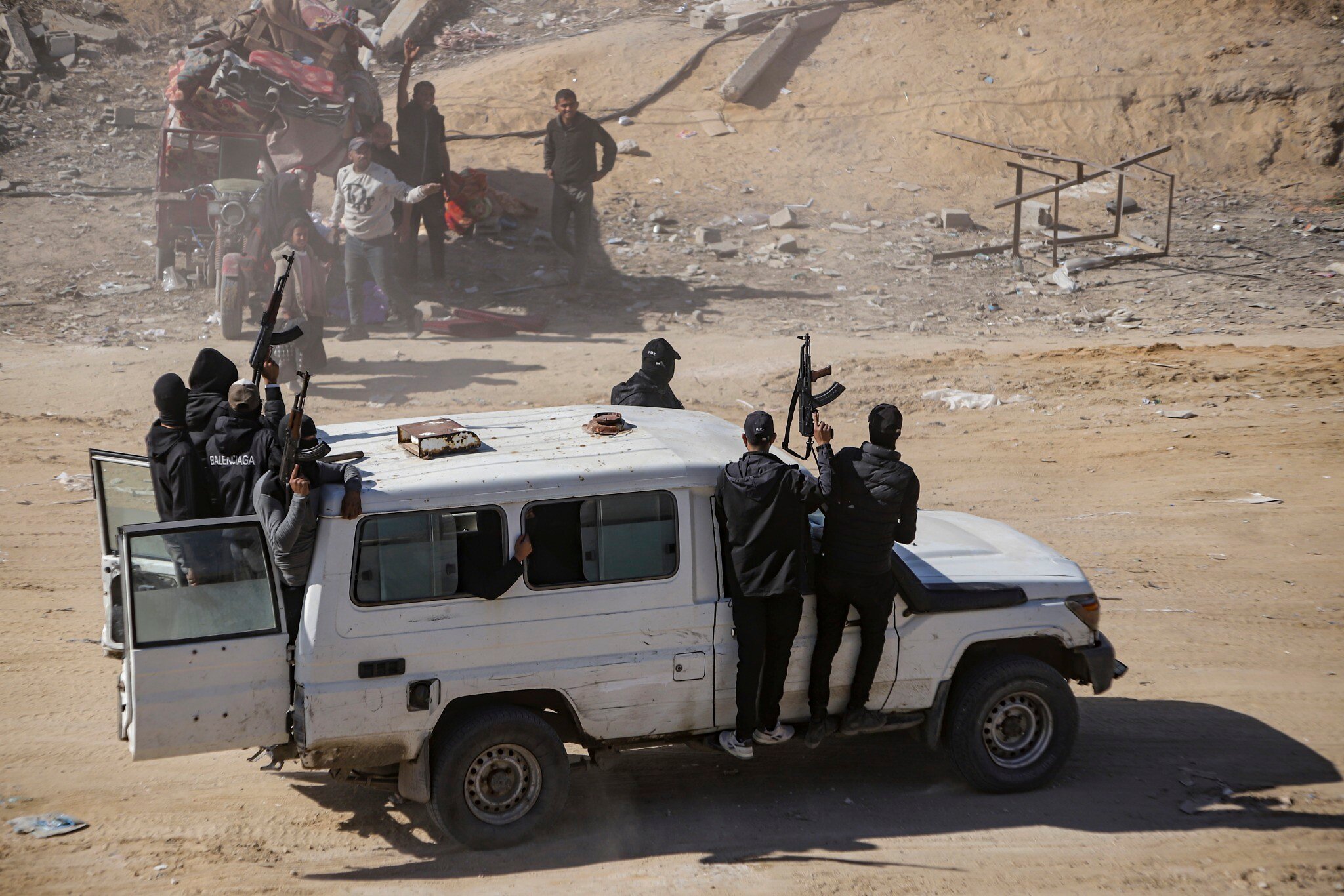
Hamas operatives seen as aid trucks arrive in Rafah, Gaza Strip, January 21, 2025. (Jehad Alshrafi/AP)
Palestinian Authority President Mahmoud Abbas issues a statement condemning Israel over its military offensive in the Gaza Strip as well as the enclave’s Hamas rulers for looting humanitarian aid.
The statement posted to the PA’s official Wafa news agency says Abbas “also expressed his categorical rejection and firm condemnation of the looting and theft carried out by criminal gangs targeting warehouses and storage facilities of humanitarian aid designated for the people of Gaza.”
It adds that the PA “held Hamas-affiliated gangs primarily responsible, emphasizing that the Palestinian people will not forgive these disgraceful acts committed in such a critical time, especially in the besieged Strip.”
Trump taps radio shock jock, Haredi publisher and Witkoff’s son for Holocaust Memorial Council
Days after firing eight Joe Biden-era appointees from the board of the US Holocaust Memorial Council, including former second gentleman Doug Emhoff, President Donald Trump has tapped eight new members.
Among them are shock jock Sid Rosenberg, who was a Trump surrogate during last year’s campaign, and Rabbi Pinchos Lipschutz, the founding editor and publisher of Yated Ne’eman, a leading Haredi Orthodox publication. Alex Witkoff, son of Trump’s diplomatic envoy Steve Witkoff, was also on the list.
They will replace Emhoff and a number of Biden administration officials, including Susan Rice, Tom Perez and Ron Klain, all of whom Trump abruptly dismissed from the board this week.
“This Council has the important task of preserving the memories and stories of the loved ones whose lives were robbed in one of the darkest moments in History. NEVER FORGET!” Trump writes in the announcement on his social media platform Truth Social.
The eight new names will join 41 other members currently sitting on the council, including a number of other Biden appointees, the Washington Post reports. The board oversees the US Holocaust Memorial Museum in Washington. Board members have often been political appointments and serve five-year terms. It is highly unusual to dismiss groups of members midway through their terms.
German police say ‘no indications of attack’ after car drives into crowd in Stuttgart
Police in the southern German city of Stuttgart say there are “no indications of an attack” after a car drove into a crowd in the city center, injuring several.
“Based on our current investigations… our colleagues at the scene believe this was a tragic accident,” the police force says in a statement on its X account.
Hostage Omri Miran’s wife: ‘Victory over our enemies is the return of the hostages’

Omri Miran (center) from Kibbutz Nir Oz, with his wife Lishay (left) and daughter Roni; Omri was taken captive by Hamas terrorists to Gaza on October 7, 2023 (Noa Sharvit/Courtesy)
The wife of hostage Omri Miran calls on Prime Minister Benjamin Netanyahu to meet her after he declared this week that “total victory” over Israel’s enemies is a more important war goal than returning the hostages.
“The victory over our enemies is the return of the hostages,” writes Lishay Miran Lavi on X. “As long as our enemies have hostages in their hands, they are defeating us anew every day.”
“There will be no rebirth or rehabilitation, we won’t achieve victory or be able to celebrate independence with a full heart, without every Jewish mother knowing the State of Israel will not abandon its children in enemy captivity,” she adds.
PM’s office uploads edited video to YouTube that cuts out moment when Netanyahu forgot his son’s name
Prime Minister Benjamin Netanyahu’s office has uploaded a video to the official YouTube account of the Prime Minister’s Office that cuts out a portion of a speech this week in which he forgot his younger son Avner’s name.
The new version of the video includes a jump cut that skips over that part of the speech, during which Netanyahu initially referred to his son as Abraham.
“What’s his name?” Netanyahu said before asking someone in the crowd his son’s name. “Avner, thanks.”
After chuckling, Netanyahu jokingly brushed off the memory lapse, saying, “No, I was testing you.”
IDF says air defenses downed drone ‘from the east’
A drone launched at Israel “from the east” was shot down by the Israeli Air Force a short while ago, the military says.
No sirens sounded “according to protocol,” the IDF adds.
The drone was apparently launched from Yemen.
Consultant says security report on arson at Pennsylvania governor’s home won’t be made public

This image provided by Commonwealth Media Services shows damage after a fire at the Pennsylvania governor’s mansion while Democratic Governor Josh Shapiro and his family slept inside on April 13, 2025, in Harrisburg, PA. (Commonwealth Media Services via AP)
HARRISBURG, Pennsylvania — A consultant paid to review security at the official residence of Pennsylvania Governor Josh Shapiro after it was firebombed by a late-night intruder says that his team’s findings will not be made public.
Retired state police Col. Jeffrey Miller says in a statement that the “sensitive nature” of the findings he has given to Shapiro and state police “precludes their release to the public for obvious reasons.”
The dangerous breakdown in protection has raised questions about how the intruder was able to elude state police security as he climbed a 7-foot (2-meter) fence and smashed two windows, then crawled inside and ignited destructive fires with two gasoline-filled beer bottles.
“I am confident that if fully implemented, the key recommendations that we have made will prevent an attack of this nature from succeeding in the future,” Miller saus. His San Diego-based security consulting firm is being paid more than $35,000 for the work.
Miller and his team assessed security at Shapiro’s official residence and has recommended how to “mitigate the gaps discovered,” as Miller put it in a contract document filed with the state. They interviewed state police employees about duty assignments the night of the attack and about security monitoring systems that were in place.
They also looked into fire suppression, the outer and inner perimeters, training and other factors.
Israel said readying list of government and military targets in Syria
Israel is readying a list of military and government targets to potentially strike in Syria, the Kan public broadcaster reports, after the military launched a strike near the Damascus presidential palace last night that Prime Minister Benjamin Netanyahu said was a “clear message to the Syrian regime.”
US State Department approves possible sale of air defense missiles to Saudi Arabia
The US State Department has approved a possible foreign military sale to Saudi Arabia of AIM-120C-8 Advanced Medium Range Air-to-Air Missiles and related support for $3.5 billion, the Pentagon says in a statement.
The principal contractor will be RTX Corp, according to the Pentagon.
Syria reports Israeli strike targeting Hama countryside
An Israeli strike targeted the vicinity of a village in Syria’s Hama countryside, the Syrian state news agency reports.
US judge strikes down Trump order against law firm Perkins Coie
A US federal judge has struck down Donald Trump’s punitive executive order targeting law firm Perkins Coie as a violation of the US Constitution’s protections for free speech and due process, in a setback for the Republican president’s campaign against the legal industry.
US District Judge Beryl Howell’s ruling is the first by any judge deciding the legal merits of any of the several directives Trump has aimed at law firms that have handled legal challenges to his actions, represented political adversaries, or employed lawyers who have taken part in investigations of him.
Howell, based in Washington, has barred federal agencies from enforcing Trump’s March 6 order against Perkins Coie. The judge previously issued a temporary restraining order blocking enforcement of key provisions of Trump’s directive.
The Justice Department can appeal Howell’s order to the US Court of Appeals for the District of Columbia Circuit.
Perkins Coie, a 1,200-lawyer firm founded in Seattle, represented the campaign of 2016 Democratic presidential nominee Hillary Clinton, whom Trump defeated in his first presidential run. Trump’s executive order sought to restrict its lawyers from accessing government buildings and officials, and threatened to cancel federal contracts held by the firm’s clients. The firm sued, calling the order a violation of the Constitution’s First Amendment protections against government abridgment of speech and Fifth Amendment guarantee of due process — a requirement for the government to use a fair legal process.
The judge’s ruling represents the broadest rebuke yet for Trump’s pressure campaign against law firms that he has accused of “weaponizing” the justice system against him and his political allies. US Justice Department lawyer Richard Lawson, defending the orders in court, argued in each case that Trump was lawfully exercising his presidential power and discretion.
Three other major law firms – WilmerHale, Jenner & Block and Susman Godfrey – also sued the administration to block executive orders Trump issued against them. Other judges have temporarily blocked those orders while the cases proceed.


read more: