

 From the Liveblog of
Monday, October 5, 2026
From the Liveblog of
Monday, October 5, 2026
Germany’s AfD mulls softening opposition to EU and euro
 Add ToI as a Preferred Source on Google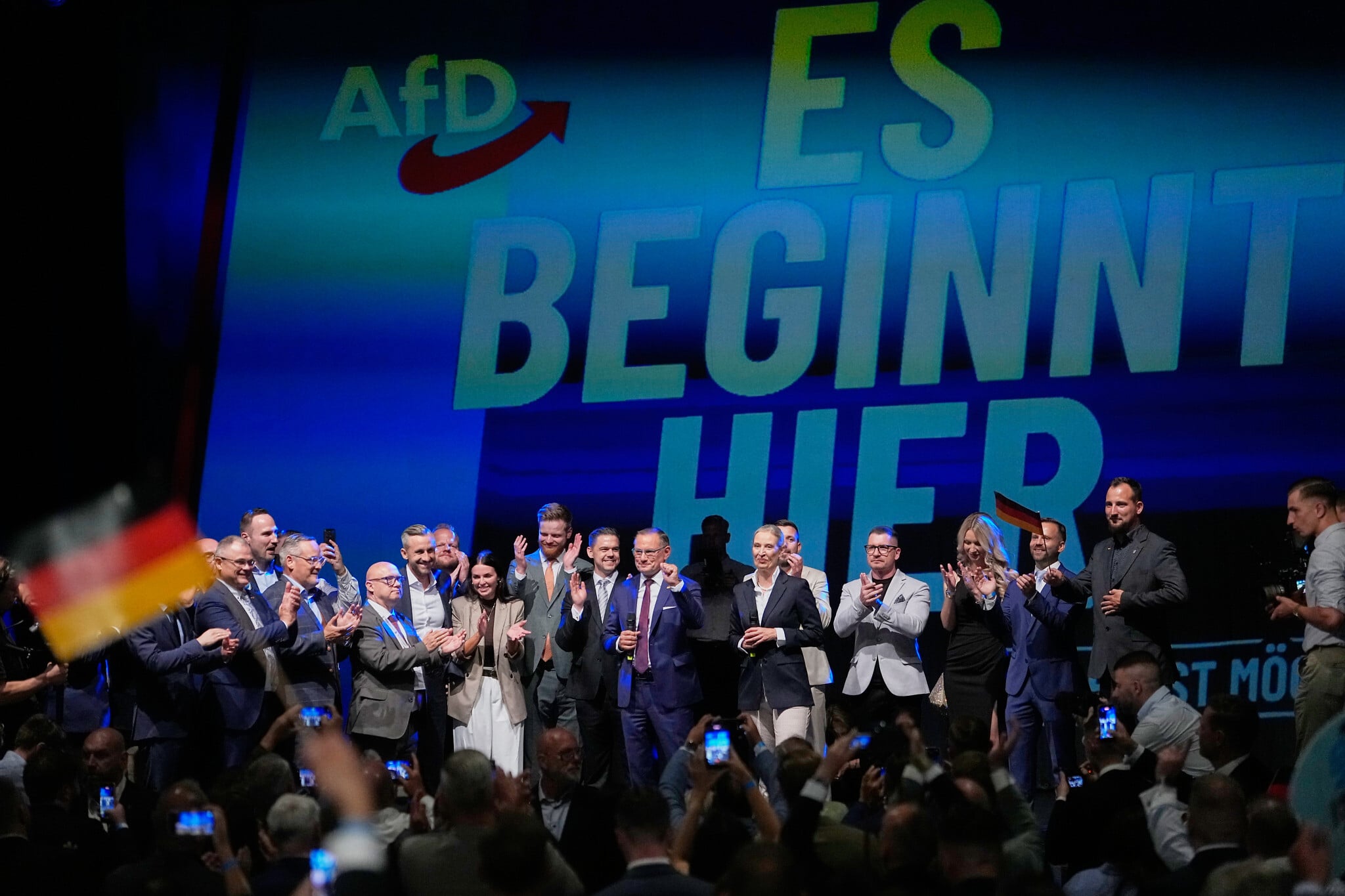
The far-right Alternative for Germany (AfD) should aim for a “new order” within the European Union, according to an internal document seen by AFP, a move away from its previous demands to exit the bloc.
According to a position paper entitled “Sovereign nations, common Europe,” the European election in 2029 could produce a “patriotic and right-wing majority” in the European Parliament, representing “a historic window” to change the EU.
The office of one of the authors, AfD MEP Rene Aust, tells AFP that the document was approved by elected AfD politicians at the European, national and state levels, including national co-leader Tino Chrupalla.
The paper also represents a softening of the party’s position on the single currency.
When the AfD was founded in 2013 in reaction to the eurozone sovereign debt crisis, it wanted an “orderly dissolution” of the euro.
The new document instead foresees a “correction of the (euro’s) flawed structures.”
It says that the party should join forces with other like-minded parties in Europe to achieve a “new order in European co-operation.”
According to the text, the AfD would aim to “renegotiate the European treaties” to restrict the scope of EU competences to “areas in which the common benefit is truly evident”.
These would include “the effective protection of Europe’s external borders, the proper functioning of the internal market, cross-border action against crime” and security policy.
However, the document keeps open the possibility of a German referendum on EU membership.
If the efforts of the party and its allies do not result in “substantial changes to the European Union in the German interest… the German people must themselves decide which Europe policy the country should have.”
In 2025, the anti-Islam, anti-immigration, and Moscow-friendly AfD became the largest opposition party to the governing coalition formed by Chancellor Friedrich Merz’s center-right CDU/CSU and the center-left Social Democrats.
The AfD has been steadily climbing in the polls ever since, establishing a steady lead over the CDU/CSU and scores of up to 30 percent.
It also came first in two regional elections in September in the eastern heartland.
The party has sometimes had strained relations with other far-right movements in Europe.
In 2024, France’s far-right National Rally formally broke with the AfD in the European Parliament over controversial comments made by an AfD MEP about Nazi Germany’s SS force.










The Times of Israel Community.