

Democratic socialists scored big US primary wins, but that’s not the whole story
Israel-critical group’s victories concentrated in House races in deepest-blue districts, while few members won in Senate races, though Republicans still feeling the heat
 Add ToI as a Preferred Source on Google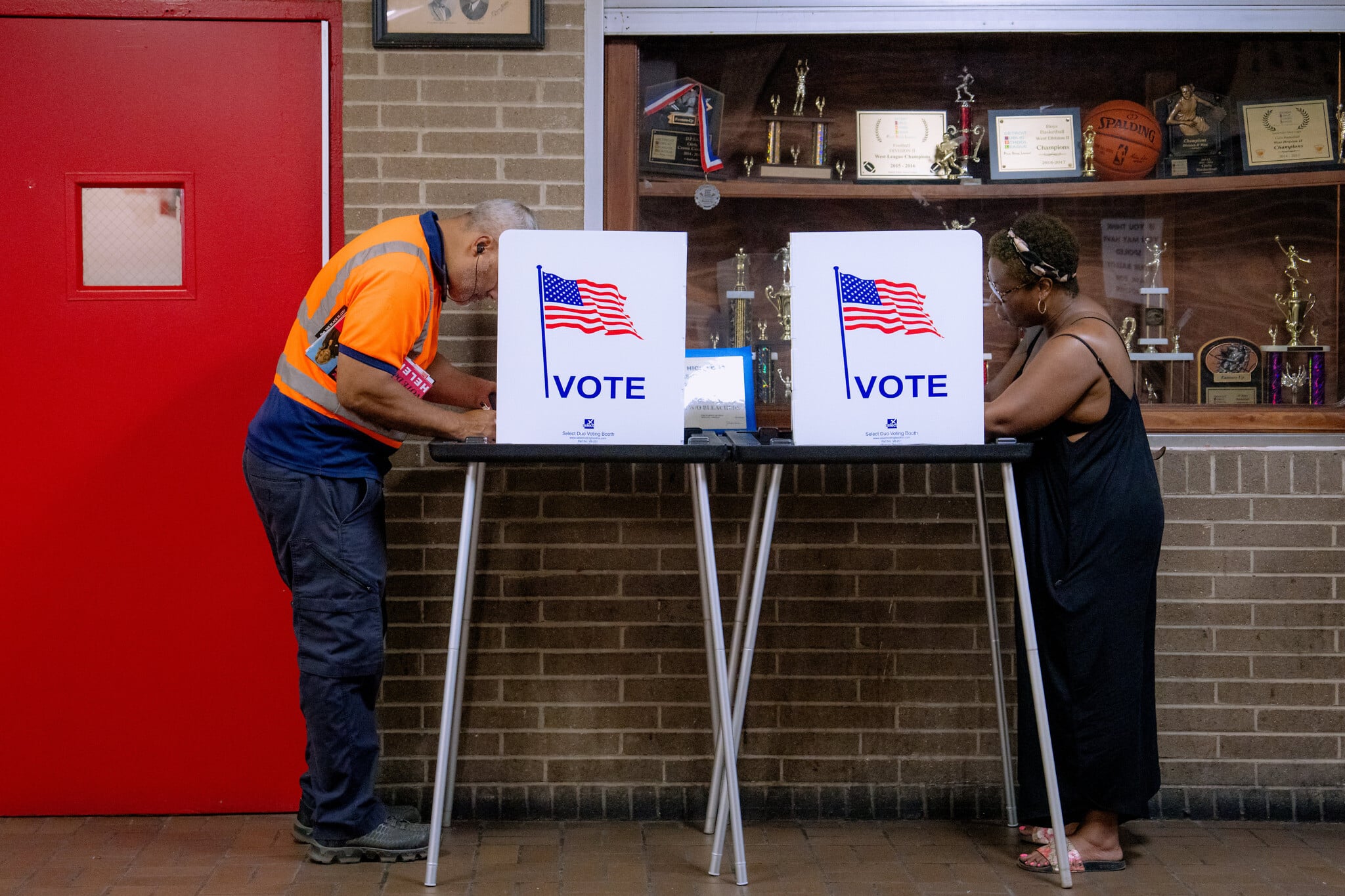
JTA — A string of US House primary successes for democratic socialists, most of whom are sharp Israel critics, was hailed as a major shift in party politics over the course of the summer. But now that the primaries have concluded, a full picture of the results shows that the group’s victories were concentrated in House races in the deepest-blue districts, while few politicians have scored wins in Senate races.
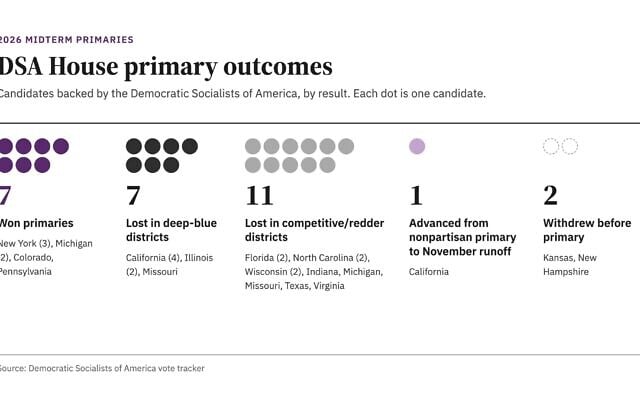
During the primary season, candidates backed by the Democratic Socialists of America won seven out of the 25 US House primaries in which they competed, securing two wins in Michigan, one in Colorado, three in New York and one in Pennsylvania, according to the DSA’s vote tracker. However, these wins have all occurred in Democratic strongholds: New York City, Detroit, Denver and Philadelphia.
“It’s a little bit dangerous to overinterpret a handful of elections compared to all the others,” Elaine Kamarck, a senior fellow in governance at the Brookings Institution, told the Jewish Telegraphic Agency. “Calling the DSA the new big kid on the block is a little bit premature.”
In addition to the seven DSA primary winners, another DSA candidate who ran in a California nonpartisan primary advanced to a US House runoff against a Democratic incumbent in November. Two additional democratic socialists, from Kansas and New Hampshire, withdrew before their respective House primaries.
Of the DSA’s 18 House primary losses, seven occurred in deep-blue areas – demonstrating that even in the country’s most progressive pockets, democratic socialists often weren’t popular. These defeats notably included one in St. Louis, where incumbent Wesley Bell trounced DSA firebrand and anti-AIPAC crusader Cori Bush.
Granted, the DSA victories are still unprecedented in a country where socialism has long been anathema. The candidates might have only succeeded in deeply Democratic districts – but that means they are all but assured victory on Election Day. Taken together, they’ll constitute a larger contingent in Congress than ever before.
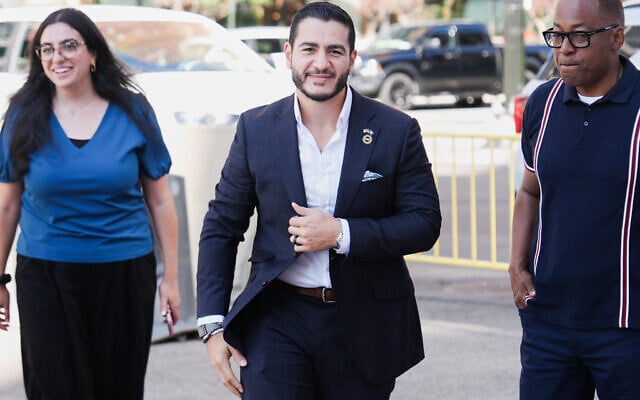
Many of the DSA candidates made Israel and its supporters central issues during their campaigns, and there’s little doubt that their presence will tilt the Democratic caucus in Congress further away from Israel.
The DSA’s official stance on Israel includes an end to the country’s “colonization and occupation of all Arab lands,” the “self-determination of the Palestinian people,” and the cessation of “US complicity in Israel’s genocide and apartheid.” Although the DSA has won fewer races than it has lost, the victories would more than triple the group’s presence in the US House, with five newcomers in addition to Reps. Rashida Tlaib of Michigan and Alexandria Ocasio-Cortez of New York.
Jeff Robbins, a Boston-based attorney and former Democratic Senate staffer, said that supporters of Israel should be concerned by the wins, even if they don’t constitute a wave.
Robbins, who also served as a delegate to the United Nations Commission on Human Rights under former president Bill Clinton, warned that if anti-Israel DSA politicians keep racking up wins, Democratic strategists will discourage candidates from supporting Israel’s response to Hamas after the October 7 attacks.
Recommending any action to the contrary, he argued, will result in “the quickest campaign you’ve ever seen.”
“It will be over before you can say ‘the Golan Heights’,” Robbins quipped.
And yet, although the media spotlight has shone on the DSA’s standout victories, establishment candidates have secured more wins at the ballot box from a numerical perspective. In addition, democratic socialists have focused more on the House than the Senate, where they would need to appeal to broader statewide electorates to win seats.
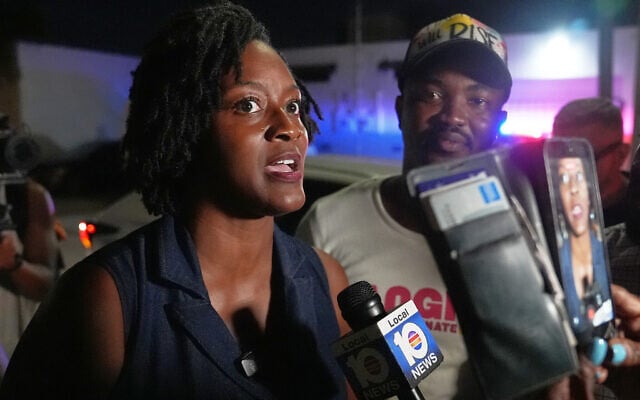
One major exception to that rule is Florida DSA member Angie Nixon, who pulled off a stunning primary victory in a state that Trump won by about 13 percentage points in 2024. But she didn’t join the DSA until shortly before the election, and she didn’t get its endorsement.
Another DSA-endorsed Senate candidate, Gregory Levy of Ohio, will be running in the November general election as an independent.
But the three other staunchly progressive Senate candidates who will be on the Democratic ballot in November – in Maine, Michigan and Minnesota – don’t define themselves as democratic socialists. While many are still highly critical of Israel, they have differences with DSA and are more interested in making sure they appeal to the more politically diverse populations they will face statewide. They face close races where swing voters who don’t identify strongly with either party are likely to make the difference.
For instance, though many of Abdul El-Sayed’s positions are similar to DSA policies, he told The Wall Street Journal in August that he is “not technically or practically DSA” and that he doesn’t oppose capitalism. At the same time, he has earned the support of many democratic socialist politicians, including Vermont independent Sen. Bernie Sanders.
Kamarck observed that Michigan, which has a huge Arab-American population, remains the nerve center of the Democratic Party’s pro-Palestinian movement. Yet although polls forecast a landslide victory for El-Sayed, who sharply criticized Israel throughout his primary campaign, she termed his victory in early August as “a squeaker.”
“It was a one-point race,” she said. “What that says is that this is not finished.”
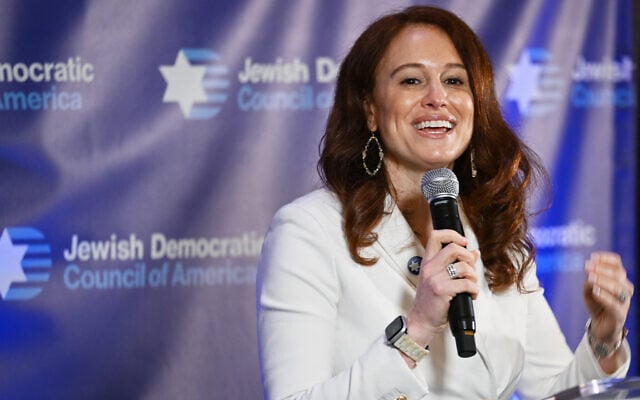
Halie Soifer, CEO of the Jewish Democratic Council of America, said in a statement at the time that although her group was disappointed in El-Sayed’s victory, his “razor-thin margin isn’t the resounding win for the far-left that was predicted.”
An Economist model issued shortly after El-Sayed’s victory predicted that the Democratic Party’s chances of winning in November fell to 48 percent following the primary. But a Marist poll published on Wednesday gave El-Sayed a seven-point lead over Republican Mike Rogers, with a 3.8% margin of error.
Meanwhile, post-primary predictions showed that Minnesota’s Peggy Flanagan would secure an easy victory in her blue state’s Senate race. However, a new KSTP/SurveyUSA poll found that her five-point lead over Republican Michele Tafoya had narrowed to a statistical tie. Like many party progressives, Flanagan has accused Israel of committing genocide in Gaza.
As for Maine’s Troy Jackson, the progressive was trailing Republican Sen. Susan Collins, a five-term incumbent, by 3 points, with a 3.1% margin of error, according to an AARP poll released on Thursday.
Nixon in Florida was 11 points behind Republican Sen. Ashley Moody, with a 4% margin of error, a Stetson University poll from late last month found. On the other hand, St. Pete Polls placed the candidates in a dead heat just the week before, giving Moody just a 0.3-point edge, with a 3.2% margin of error.
In a testament to the growing power of the DSA – even in a red state – Moody reportedly told Fox News Radio last week that she is “seeing way-too-close-for-comfort polls in many Republican Senate races.”
And in an email blast sent the same day, according to Florida Politics, Moody warned that “the polls have been all over the place.”
“Some have us up. Two have us tied,” she wrote. “We’re in the final stretch, where everything we do, and your support, really matters.”







The Times of Israel Community.