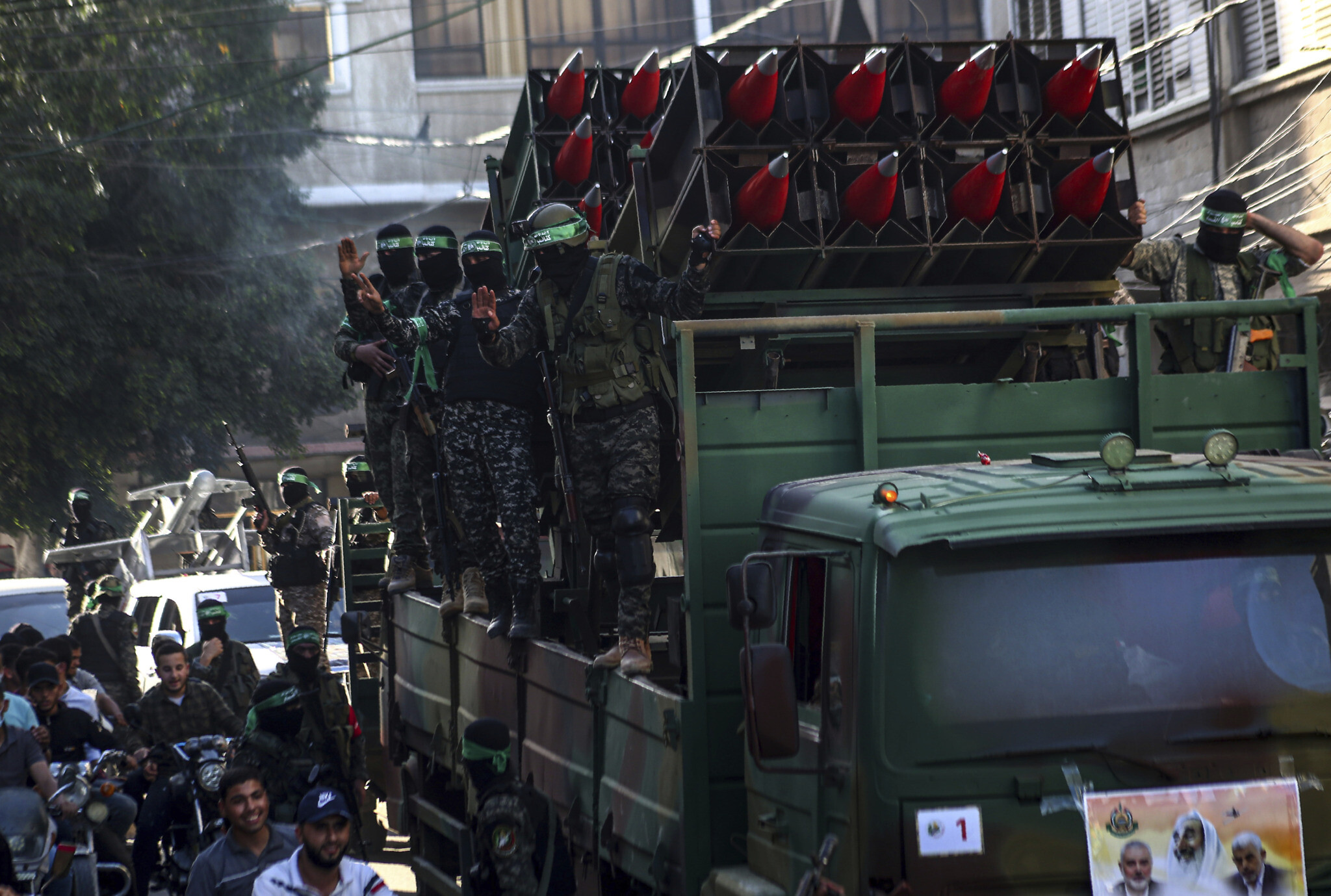
Masked Hamas members parade with Qassam rockets through the streets of Khan Younis, southern Gaza Strip, on May 27, 2021. (AP/Yousef Masoud)
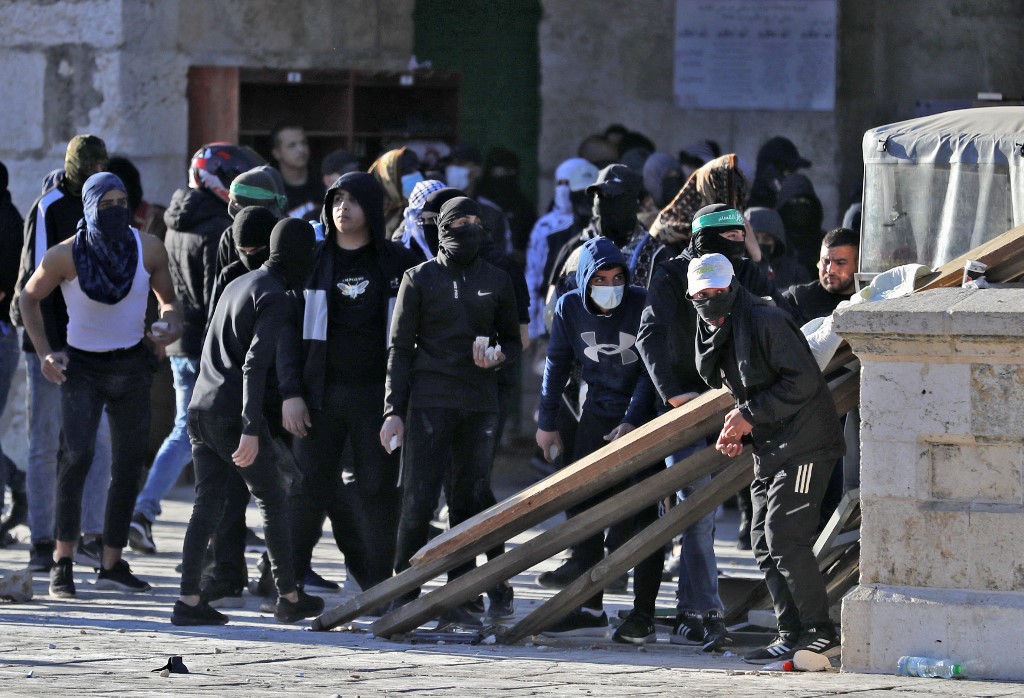
Egypt talked down the Hamas terror group from potentially firing rockets at Israel following Friday’s violence at the Temple Mount, where hundreds of Palestinians clashed with Israeli police, according to a Saturday report.
Channel 12 news reported, without citing a source, that indications from the Hamas-run Gaza Strip were that the clashes at the Al-Aqsa Mosque could have escalated into a full-blown conflict.
The network claimed that Hamas would have likely fired rockets at Israel over the violent clashes in which over 158 Palestinians were hurt and 470 were arrested.
Egyptian intelligence officials then stepped in to try to deescalate the tensions, the report said.
Citing unspecified Arab media reports, Channel 12 said Israel agreed to Egyptian proposals to release those detained during the clashes in exchange for Hamas not escalating the situation.
Get The Times of Israel's Daily Editionby email and never miss our top stories
No rockets were fired from the Gaza Strip following the clashes, and at least 130 rioters remained detained as of Saturday night.
Palestinians clash with Israeli security forces at the Al Aqsa Mosque compound atop the Temple Mount in Jerusalem’s Old City, on Friday, April 15, 2022. (Ahmad Gharabli/AFP)
The Al-Aqsa Mosque, which sits atop the Temple Mount. is the emotional epicenter of the Israeli-Palestinian conflict and tensions there can easily snowball into wider conflagrations. Hamas and other Gaza-based terror groups have repeatedly invoked the flashpoint holy site as a red line. Police actions to quell riots there last year helped trigger the 11-day war in Gaza in May.
Advertisement
Help us report truthfully on social media
As a multimedia journalist, my job is to take the quality, fact-based journalism produced by The Times of Israel newsroom and make it accessible across every platform — from Instagram posts to podcasts to short-form videos.
This is how many, especially young people, consume news these days. But misinformation is rampant on social media. Our team at ToI produces accurate, responsible short-form reporting on Israel and the Jewish world.
If you believe in the importance of factual social media journalism, please consider joining our reader support group, The Times of Israel Community. Your financial support is essential to sustain responsible multimedia reporting.
We’re really pleased that you’ve read X Times of Israel articles in the past month.
That’s why we started the Times of Israel - to provide discerning readers like you with must-read coverage of Israel and the Jewish world.
So now we have a request. Unlike other news outlets, we haven’t put up a paywall. But as the journalism we do is costly, we invite readers for whom The Times of Israel has become important to help support our work by joining The Times of Israel Community.
For as little as $6 a month you can help support our quality journalism while enjoying The Times of Israel AD-FREE, as well as accessing exclusive content available only to Times of Israel Community members.
Thank you, David Horovitz, Founding Editor of The Times of Israel


 Add ToI as a Preferred Source on Google