

US envoy suggests Israeli strike in Syria sought to ‘bait’ Turkey ahead of elections
Katz says claim ‘full of inaccuracies,’ Jerusalem made diplomatic effort to avoid recent bombing of base near Turkish border; Tom Barrack confirms Mossad chief spoke with Syrian FM ahead of strike
 Add ToI as a Preferred Source on Google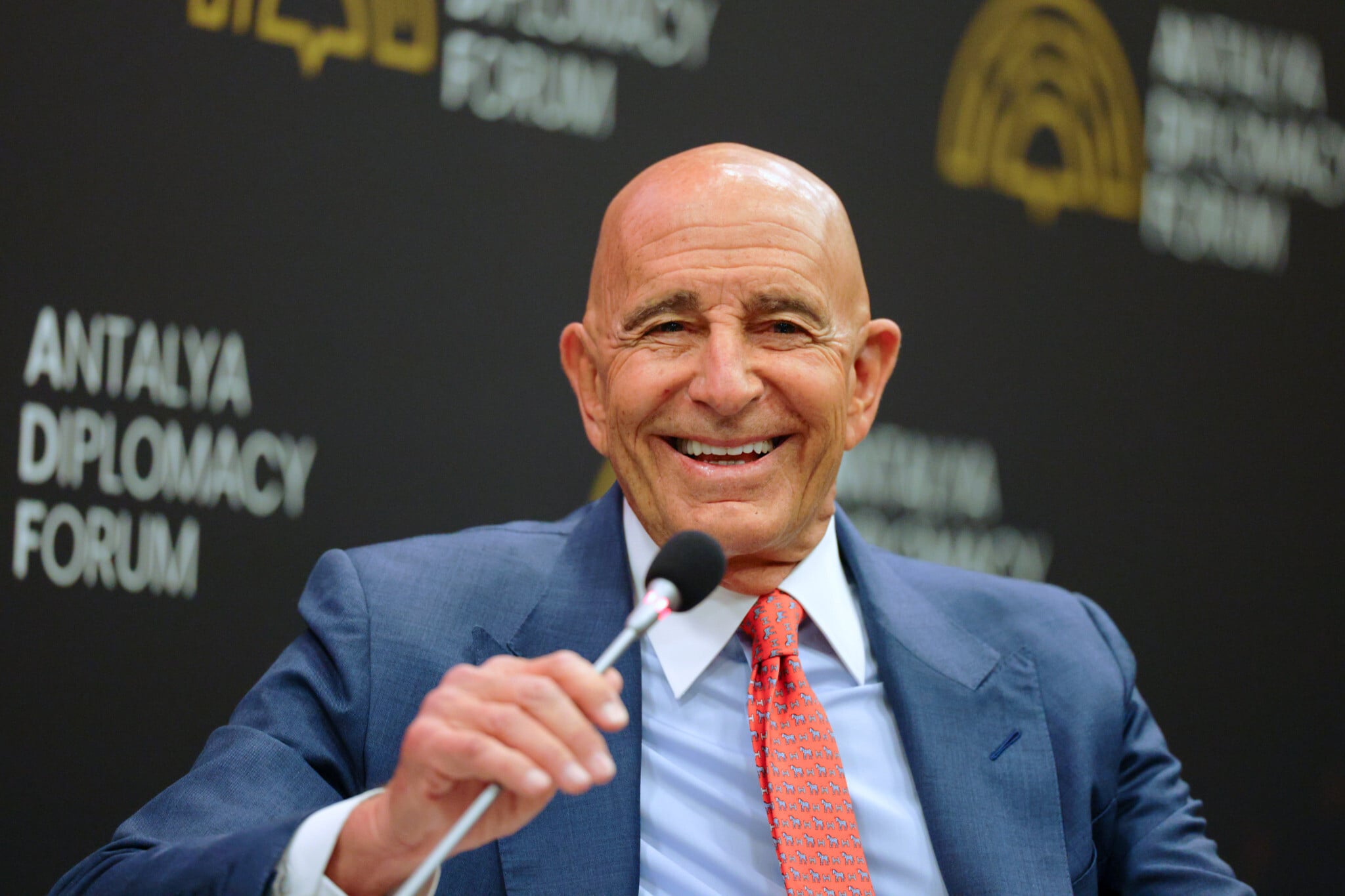
US Ambassador to Turkey Tom Barrack suggested in an interview broadcast Friday that a recent Israeli strike on a Syrian military airport, where Israel claimed Turkey was set to deploy troops, could have been an attempt by Israel to “bait” Turkey into conflict ahead of the elections.
In a wide-ranging interview with Mario Nawfal, a Lebanese-Australian entrepreneur, Barrack, who is also US special presidential envoy for Syria and Iraq, directly contradicted US foreign policy, by saying that Israel was illegally occupying the Golan Heights.
Asked about the attack on the airbase, Barrack said that Israel was trying to draw Turkey into conflict was one of two “postulated theories” as to why Israel carried out the strike despite ongoing contacts between Israel, the US and Syria over Jerusalem’s concerns.
Israel confirmed late Tuesday that it was behind overnight airstrikes against a military airport in northern Syria, where it claimed Turkey was planning to deploy forces in violation of agreements between Jerusalem and Damascus.
“One theory is they were just baiting Turkey, and it’s a very aggressive, but maybe well-received, pre-election concept,” Barrack said, implying that conflict between Israel and Turkey would serve Prime Minister Benjamin Netanyahu ahead of the elections scheduled for October 27.
Barrack also put forth the possibility that the strike on the base was the result of confusion between various Israeli security bodies. “The other theory is that between the IDF, the Mossad and the Prime Minister’s Office there was a miscommunication,” he said.
The ambassador cast doubt on Israel’s claim that Turkey was moving military assets into Syria’s northwestern Abu al-Duhur military airport, saying US intel did not indicate such action.
Elsewhere in the interview, Barrack also said that Israel “occupies” the Golan Heights, in direct contradiction to the official US position, after Washington recognized Israeli sovereignty over the territory during US President Donald Trump’s first term.
The envoy is known to regularly pontificate about Middle East developments in public—a rarity for a sitting US official —but it is often unclear whether his comments represent administration policy or his own.
In response, Defense Minister Israel Katz said Barrack’s remarks were “full of inaccuracies” and included “positions that contradict the position of US President Trump.”
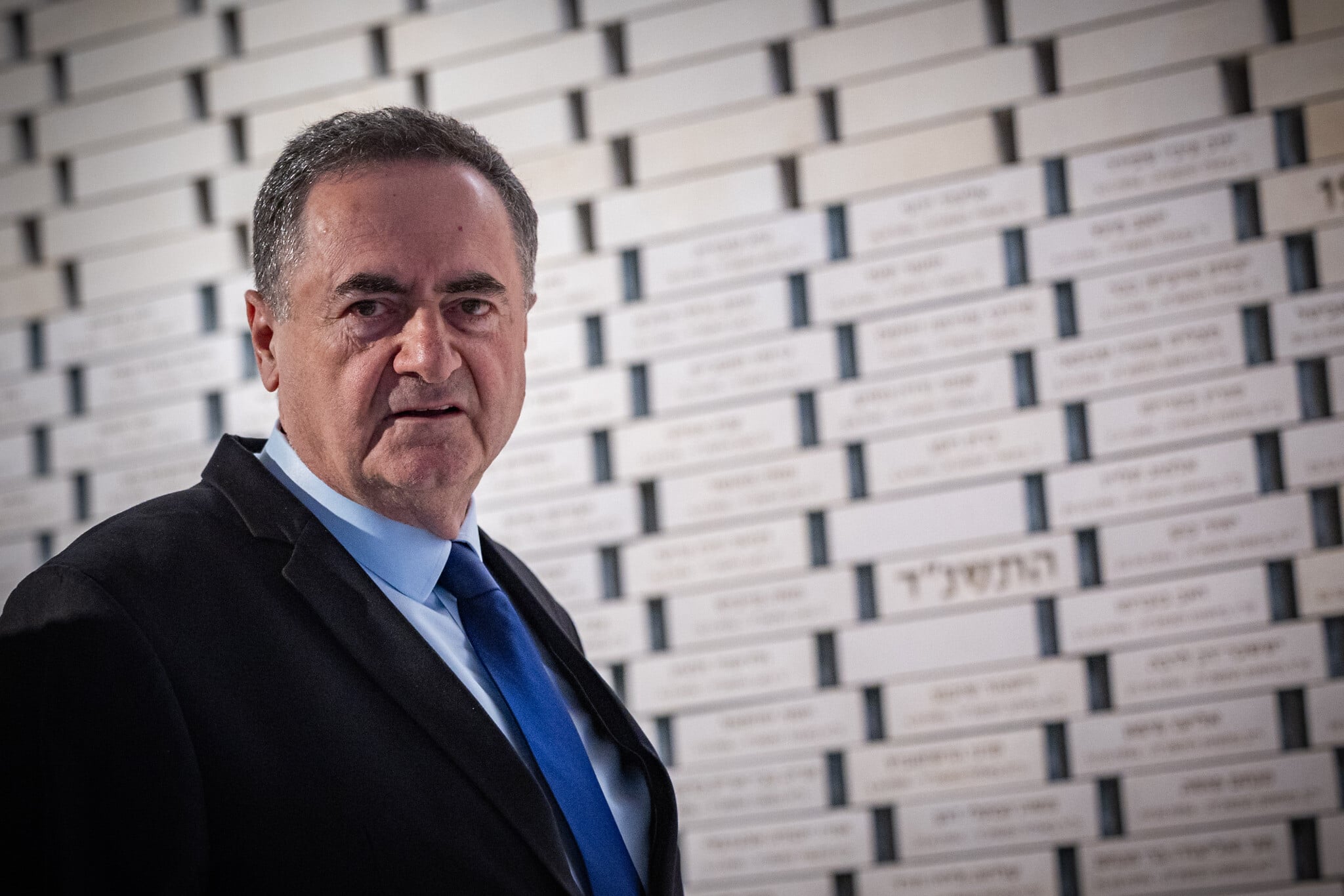
Regarding the strike in Syria, Katz said the Israeli military had recommended “several times” striking Syria’s Abu Duhur military airport due to Turkey’s alleged plans to deploy forces there, which “would endanger the security of the State of Israel.”
Katz said that after several discussions held with Netanyahu and the military, “it was agreed that before granting approval [for the strike], a direct warning would be issued to the Syrian regime at the highest levels in an attempt to prevent [Turkey’s] move, and that is what was done.”
He added that “at the same time, the intelligence was conveyed to the relevant authorities in the United States.” After Israel’s warning “went unanswered,” Katz said he and Netanyahu “authorized the IDF to carry out the strike, and it was successfully carried out.”
Meanwhile, Foreign Minister Gideon Sa’ar told Channel 12’s “Meet the Press” on Saturday evening that Israel has “no interest in escalation with Turkey.”
“We are committed to preserving the status quo,” Sa’ar said, adding: “We will not accept the establishment of Turkish bases in Syria.”
He explained that Israel has taken note of how Iran infiltrated Lebanon and Gaza and that Jerusalem doesn’t want “that same situation with Turkey and Syria.”
He added that Israel “always prefers” diplomatic solutions, and reiterated that there is no intention to escalate tensions with Turkey.
His remarks came after long-tense relations between Israel and Turkey intensified even further in recent days, with Ankara issuing another arrest warrant for Netanyahu, accusing him of “genocide” in Gaza. Israel vociferously denies the charges.
ISRAEL ALMOST STARTED A WAR WITH TURKEY, AND NO ONE, NOT EVEN TRUMP, SAW IT COMING…
Israel’s strike in Syria almost started a war with Turkey, and Trump’s Special Envoy just gave me an extraordinary account of how it happened
According to Ambassador Tom Barrack, Israel… pic.twitter.com/2rwudobQIL
— Mario Nawfal (@MarioNawfal) August 21, 2026
In response to Ankara’s move, Netanyahu’s office said that Turkish President Recep Tayyip Erdogan “now seeks to extend his aggression against Israel into Syria. Israel will not tolerate it.”
The Israeli statement reiterated past accusations by Jerusalem against Erdogan, calling him “an antisemitic dictator who has massacred Kurds, harbors Hamas terrorists, occupies half of Cyprus, and jails record numbers of journalists and politicians who oppose him.”
A miscommunication
Barrack confirmed reports that Mossad chief Roman Gofman had spoken with Syrian Foreign Minister Asaad al-Shaibani several days before the strike to convey Israel’s concerns. Barrack described the talks as a two-hour, in-depth conversation.
“Perhaps the Mossad director was conducting a really serious backchannel that he wasn’t finished with, perhaps he wasn’t satisfied with, that he was going to come back the next week and have another discussion,” Barrack said, presenting his second theory.
“And in the meantime, a commander someplace, based on what they thought their intelligence reading was, thought we need to move quickly and we need to move now,” he said.
Barrack added that “to Israel’s credit,” it told the US some six days before the strike that it had intelligence indicating “there might be Turkish movement into this site.”
“We all did our due diligence. We went back to our respective intelligence agencies. The answer we got is, no, that’s not happening,” Barrack said.
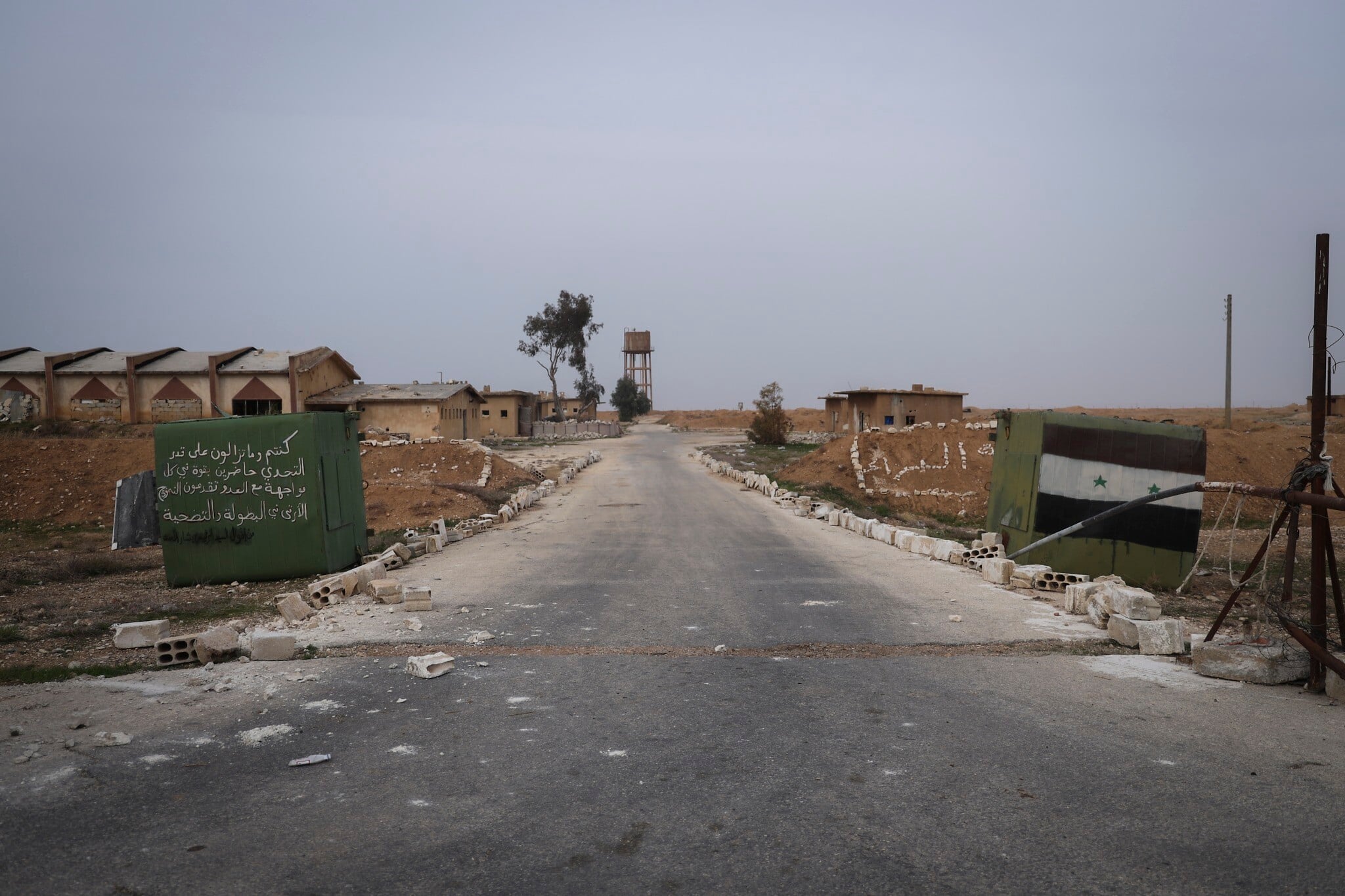
“Probably the most likely” explanation for the Israeli strike “is that they picked up some conversations of some contemplated strategy of the Turks increasing a training program on that site,” Barrack said.
He added that current arrangements don’t forbid that, and that the Turks “openly train and supply and help the Syrian government” along the countries’ shared border.
Turkey’s Defense Ministry on Thursday denied that a Turkish military delegation had visited the airbase, a day after Syria’s foreign minister had said that such a visit took place.
Netanyahu’s office accused Syria late Tuesday of being on the verge of violating a “status quo agreed with Israel in security matters” by allowing Turkish troops to deploy at the airbase, adding that such a deployment would threaten Israel’s security. Netanyahu later said Israel had also warned Turkey against any military activity in Syria ahead of the strike.
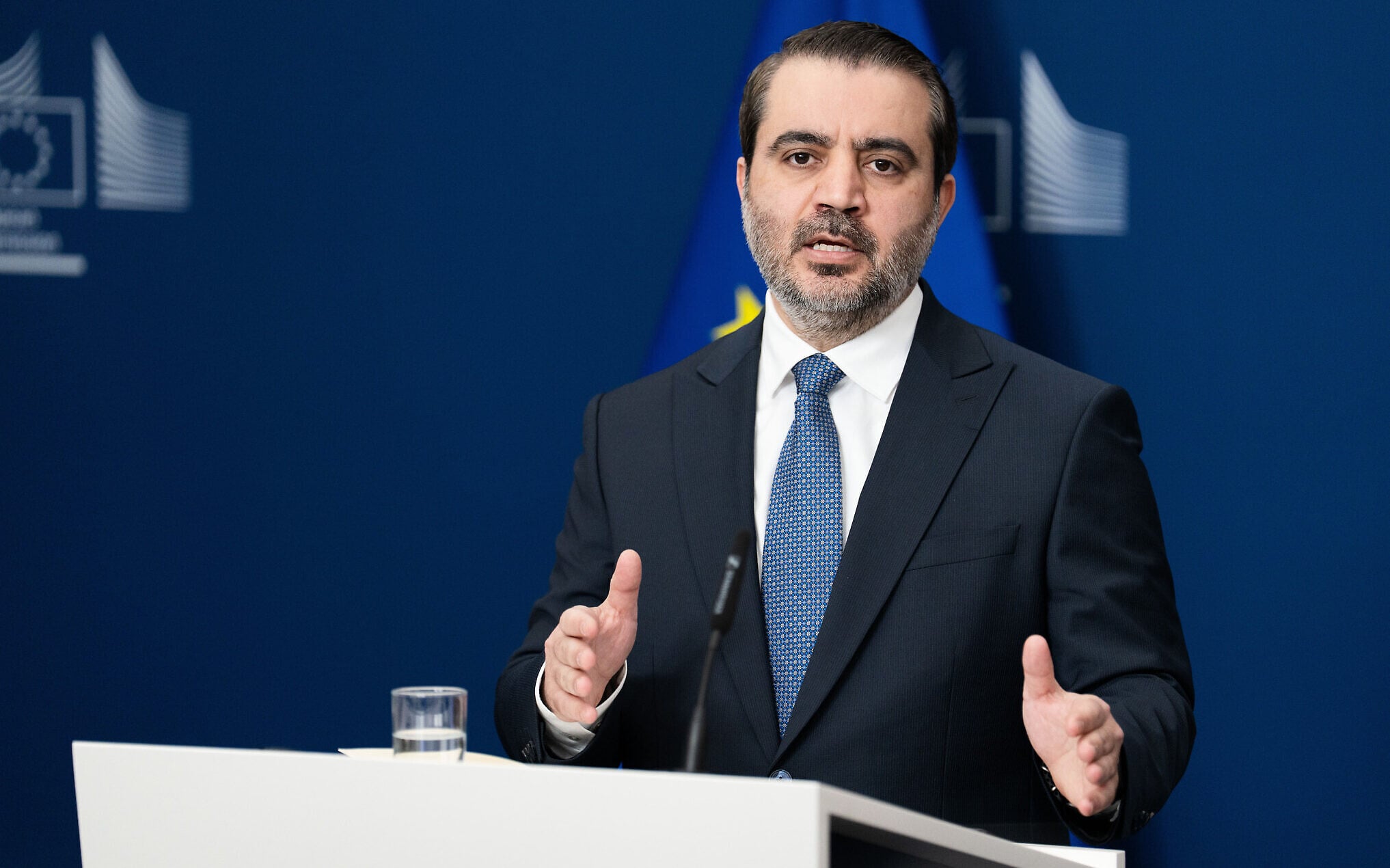
And on Wednesday, Syria’s al-Shaibani acknowledged that Turkish military officers had recently visited the airbase in question, but denied any plans for a Turkish military deployment.
The visit by Turkish officers to the Abu Duhur airbase was nothing more than a facet of “ongoing military cooperation” between allies, al-Shaibani insisted in an interview with the Axios news site.
Despite tensions between the neighbors — in particular over the presence of Israeli troops in a southern Syria buffer zone — Israel and Syria’s new authorities have held several rounds of direct talks and have agreed to establish an intelligence-sharing mechanism.
Israel has launched hundreds of strikes on Syria since the December 2024 toppling of Assad by Islamist forces led by former jihadist Ahmed al-Sharaa, who relies on support from Turkey and has received enthusiastic backing from Trump. But the latest strike went much further into Syria than the so-called security zone in the south of the country.
‘The Golan is Syria’s’
In a separate portion of the interview, Barrack also referred to the Golan Heights as occupied by Israel, despite the US having recognized Israeli sovereignty there during Trump’s first term.
Barrack said that “In the Golan, with Syria, they still occupy the Golan against the UN resolutions, against all the international order, which has said the Golan is Syria’s.”
Israel captured the Golan Heights from Syria in the 1967 war and annexed it in 1981. The UN considers the territory occupied Syrian land and the annexation null and void, with UN resolutions calling for Israel’s withdrawal to the June 4, 1967, line.
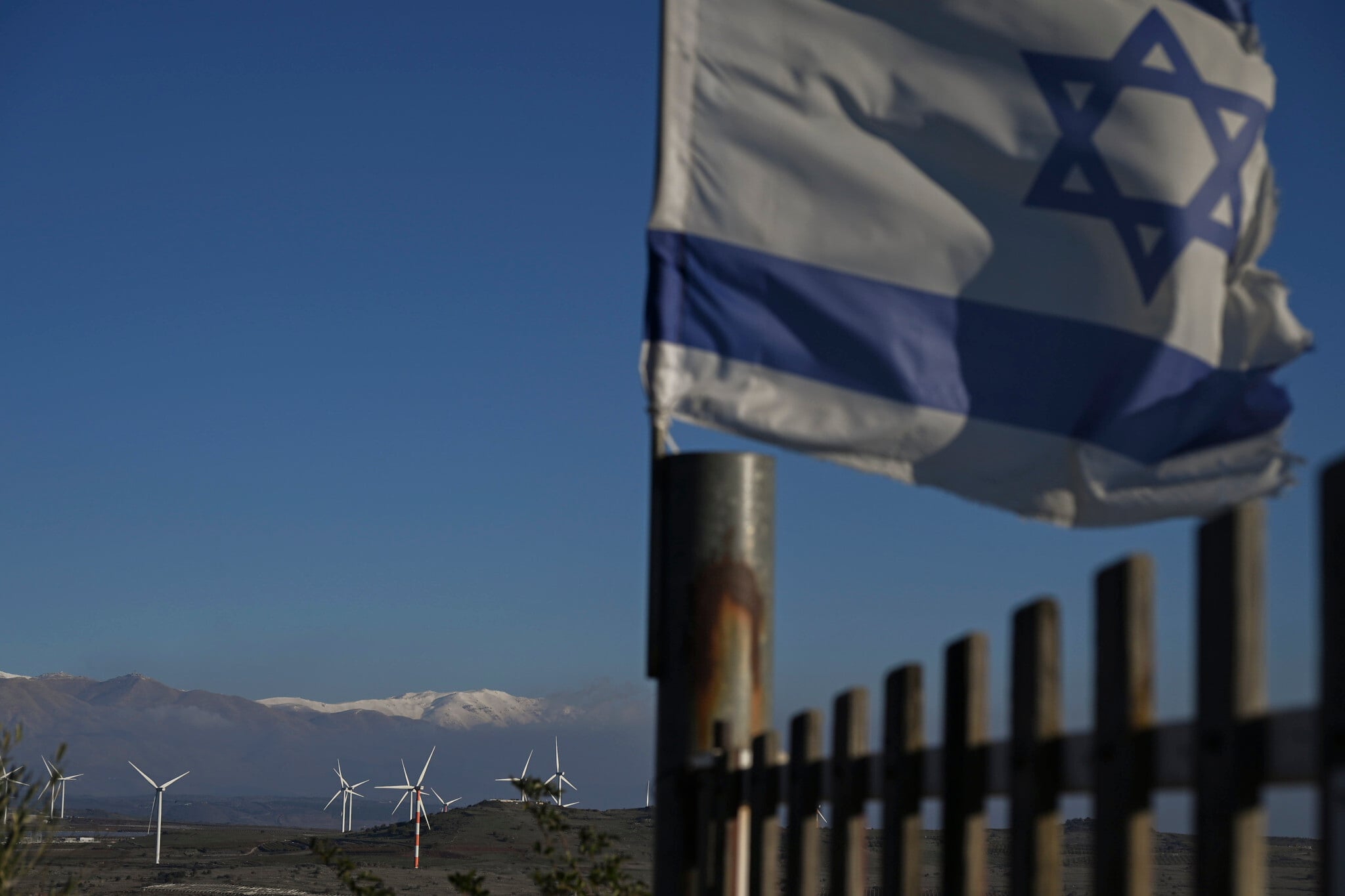
In March 2019, Trump signed a proclamation recognizing Israeli sovereignty over the Golan Heights, reversing decades of US policy. Colombia became the second country to recognize Israeli sovereignty over the Golan this month, joining the United States.
Barrack’s remarks sparked a backlash Saturday from conservative activist and US presidential ally Laura Loomer, who posted on X that he “should resign for his lack of understanding of US foreign policy.”
AP contributed to this report.







The Times of Israel Community.