 Add ToI as a Preferred Source on Google
We were completely stuck in the mud. All of us — our team of seven volunteers in three white vans, along with 100 refugees in a convoy of 24 cars — deep in the Ukrainian countryside. The mud was covered in late-March frost.
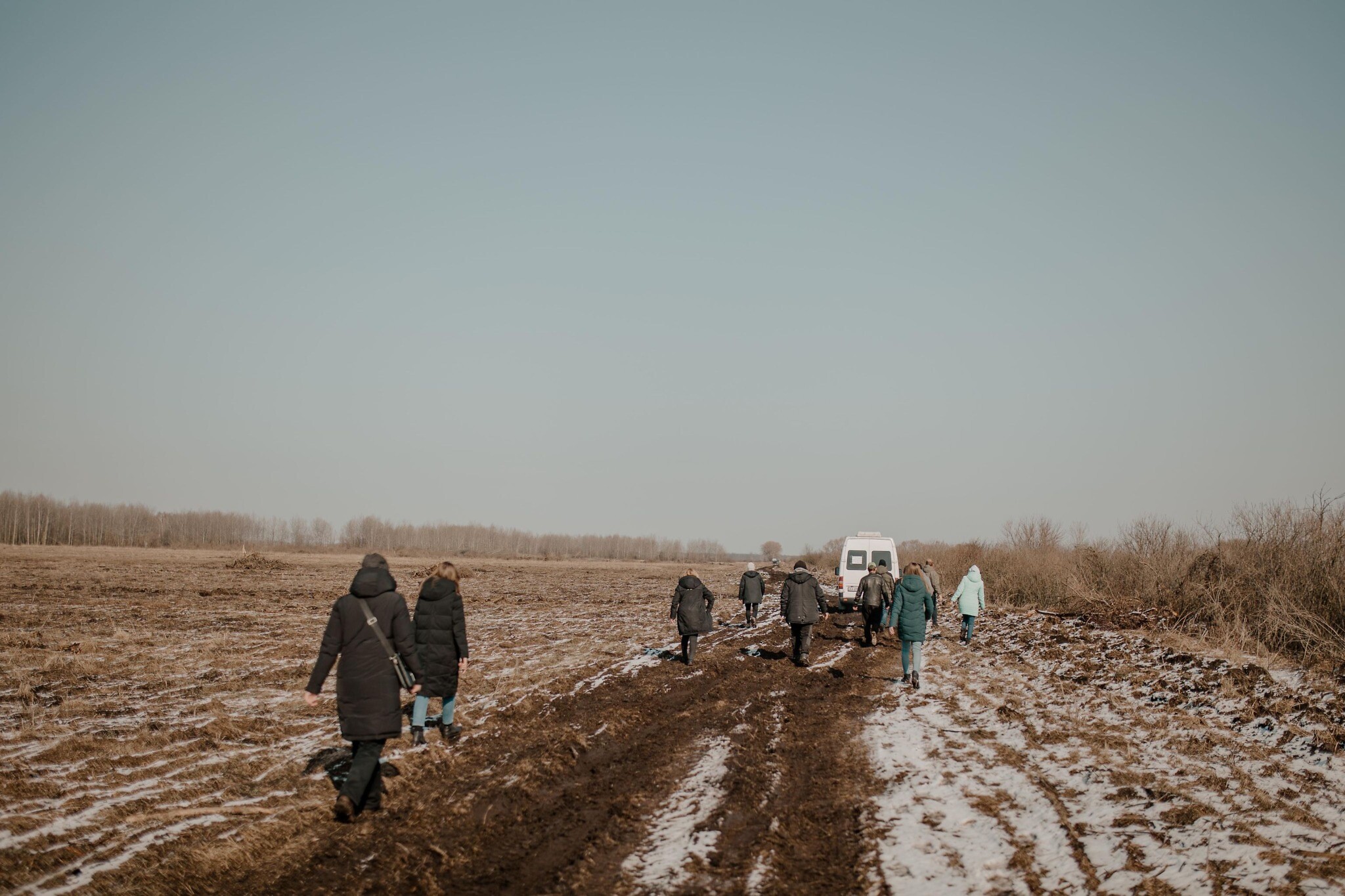
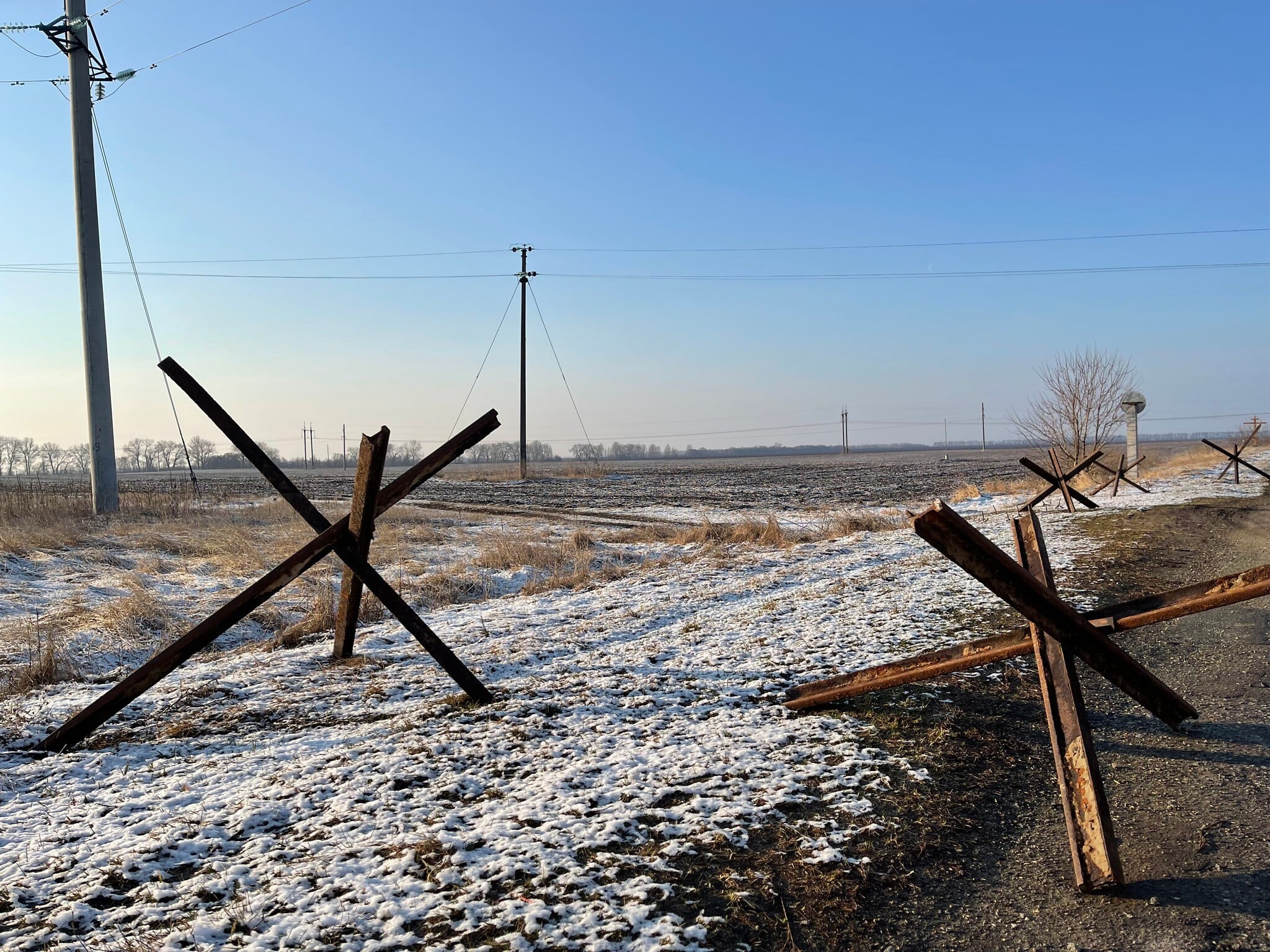
There had already been weeks of bitter fighting since the Russian invasion on February 24 and we were not using the roads because the Russians had captured them during the night. There was sporadic shooting along the roads so we crossed the fields on foot, grateful it was not raining or snowing. And most of all, grateful that there didn’t seem to be landmines.
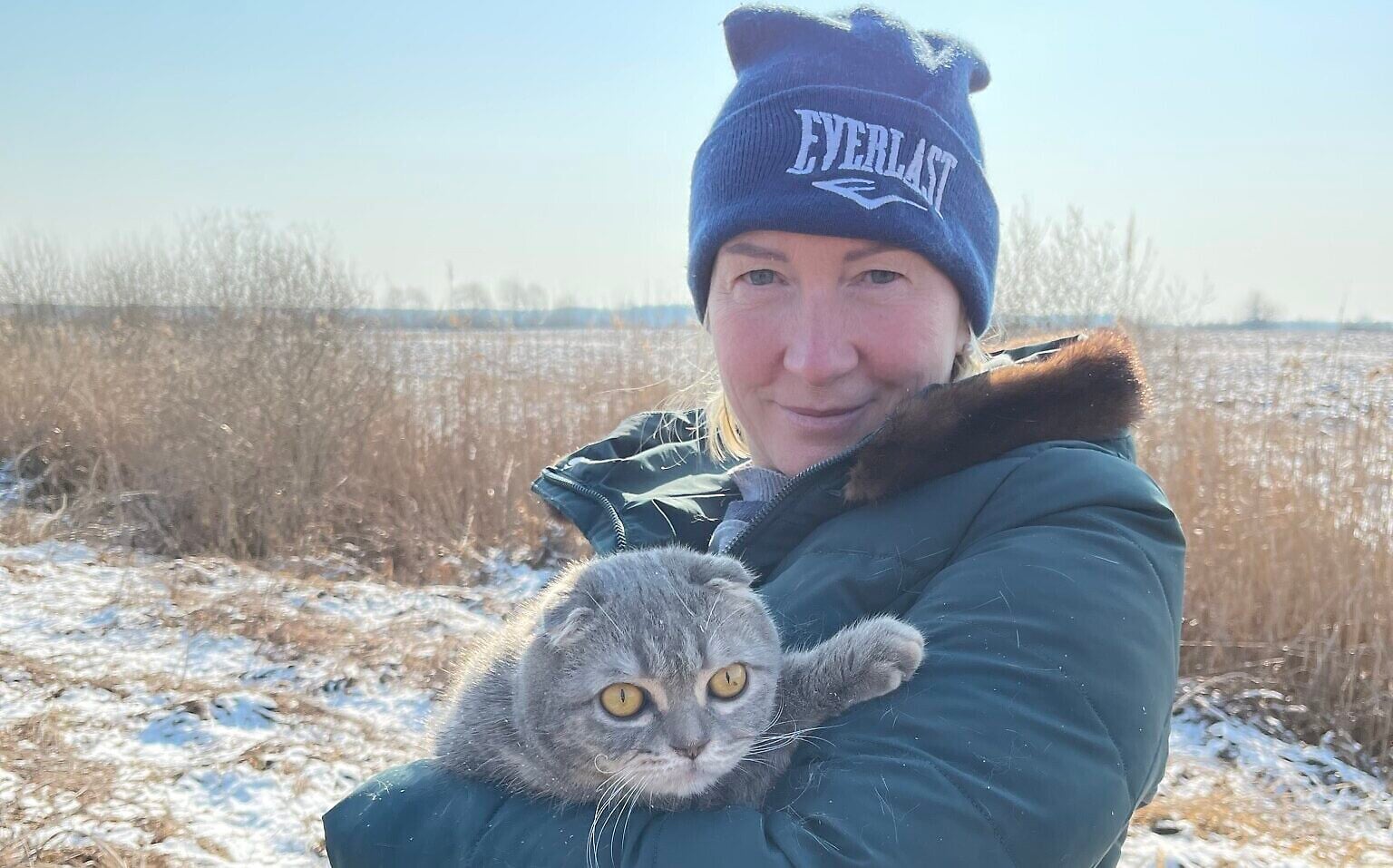
It was a diverse group — us volunteers and the scores of people fleeing their homes in the villages surrounding Yaroslavka, in Chernihiv Oblast northeast of the capital, Kyiv. Some of the refugees were desperate, some cheerful, some cold, some well off, some seemingly destitute. A number of people carried their pets. Most were off to Kyiv, but many wanted to get to the country’s western border and cross into Poland. They were leaving their entire lives behind — everything but their family members, some bags, and, perhaps if they were lucky, a car.
“Why are you here, why are you doing this?” a young woman with a child asked my colleague and me.
The members of the organization with which I had organized a ride-along as a journalist (and then continued to work with as a volunteer) — Plain Compassion Crisis Response (PCCR) — are in Ukraine because as Mennonites, Baptists, Amish or even non-denominational Christians, they believe in non-violence. They also share the religious belief that helping their fellow man is valued above all. To that end, they go to conflict zones and, with the help of locals, travel around in their white vans taking in people who are hopeless.
PCCR’s makeshift Ukrainian headquarters are at a large Baptist assisted-living facility that has been turned into a safe house for volunteers, the elderly, and refugees with no final destination yet. It is close to the cities of Lutsk and Rivne, but the organization wishes to keep the exact location secret for its residents’ safety. The house is formally run by two good-natured people known simply as “Babushka“ and “Dyedushka” — Ukrainian for “grandmother” and “grandfather.”
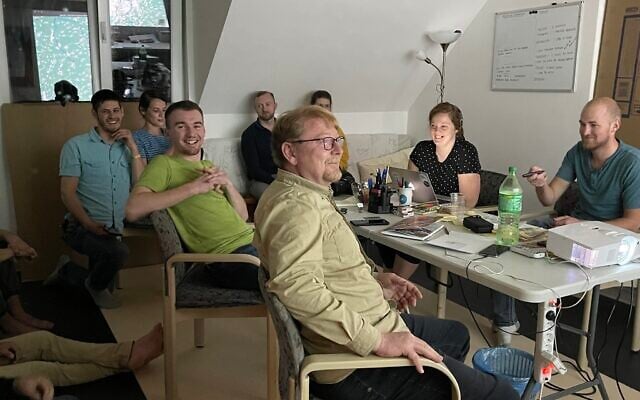
The team is young — most of the volunteers are in their mid-20s. They often spend nights hiding in the houses of locals who offer information on where and how the Russians are moving, and who needs to get out. As it happened, although it wasn’t planned, we ended up doing that on this mission as well.
A dangerous approach
Our team woke up that Saturday, March 19, at dawn to head eastward to the village of Yaroslavka, northeast of Kyiv and Brovary, close to the Russian-occupied village of Stara Basan. We had a meeting the evening before to talk about the route and possible problems we could encounter: checkpoints, hostilities, car troubles — and most of all, which roads to take and how many people to expect. The operation was to take roughly 15 hours from start to finish.
Getting to Yaroslavka would be difficult. We would need to approach it through volatile territory, including driving through Kyiv on the way there and back, where heavy traffic would slow our progress and the threat of an outbreak of fighting or incoming artillery fire was always looming.
Before bed on Friday, the men filled the truck with food and other goods the locals were running short on. Our operation was to be an exchange of sorts — goods delivered, people picked up. All the supplies at Plain Compassion Crisis Response come from donations.
One of the first people I met was the young man with whom I would be driving around for the next two days. Wesley (everyone interviewed for this story requested that their last names be withheld for their safety) was just 20, and came from a Mennonite family of missionaries who originally hail from Pennsylvania and Ohio. He lived in Texas and Mexico growing up, but his family moved to Ukraine in 2019 to work with a local Mennonite congregation and do volunteer work. He says that Ukraine is where he is needed and where he will stay.
Also with us was Lucy, a local Ukrainian whose given name was Liudmyla. Gentle and shy on the surface, Lucy had no problem asserting authority when necessary and handled every curveball thrown at her with aplomb. She and her colleague, Dorcas, an American girl, get most of the credit for keeping the 100 refugees calm and relaxed — especially as we all crossed the open fields on foot.
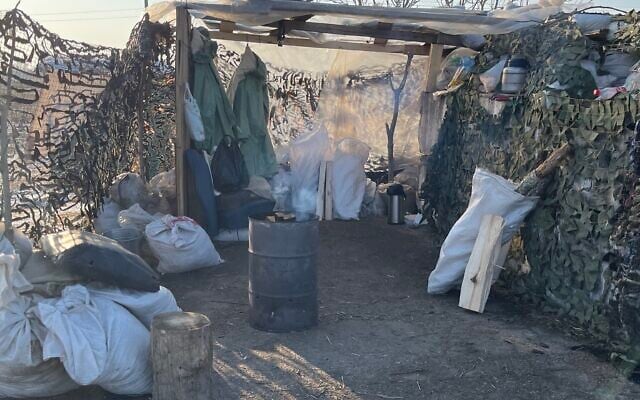
The Ukrainian army checkpoints that dotted our route smelled of burned rubber and dampness, and were built from bags of sand, concrete blocks, green fabric and basically anything the soldiers were able to find and make use of. Next to them the troops lit fires, which they used to make coffee, warm their hands and cook their food. When there were exchanges of gunfire, they hid in the improvised shelters or in ditches on the side of the road and shot through the tiny gaps in the makeshift barricades.
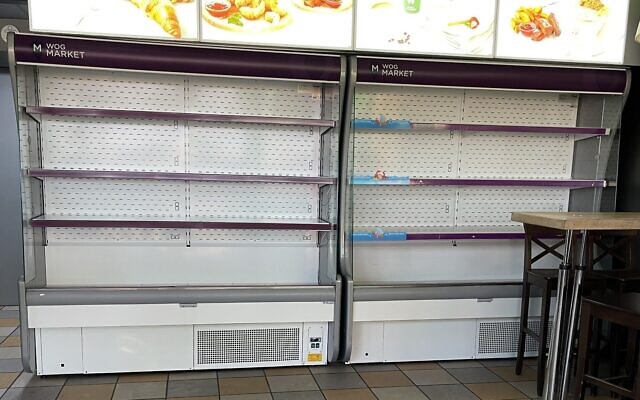
I was grateful that I had packed a lot of food and water because the further east we went, the emptier the shelves were at the gas stations we passed. We crossed a half-destroyed bridge and encountered bombed-out and burned cars, as well as abandoned tanks and many shell-shocked faces. We were constantly in touch with PCCR headquarters, which relayed the information it received in real-time from civilians and pastors, and so we altered our route as we went. The mission required us always to be cool, flexible and patient.
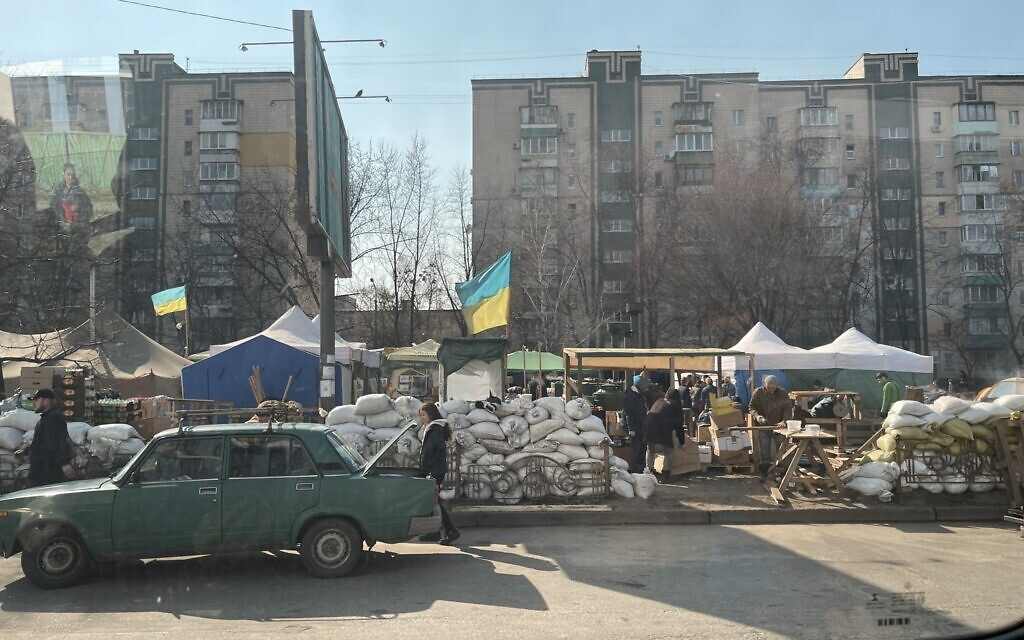
That became especially evident in Kyiv, where we stood unmoving for hours in bottlenecked traffic between checkpoints. It occurred to me then that if the Russians wanted to easily dispose of a lot of civilian and military personnel, these long, slow lines were an ideal target to bomb.
We eventually realized that instead of completing the round trip in one day as planned, we’d have to drop off the supplies with their recipients, find a place to sleep, and then gather the civilians early in the morning, immediately after curfew lifted. Darkness caught up with us on the bumpy winding roads between almost abandoned villages, naked trees and an empty vastness.
Lucy was in contact with our hostess, the woman who had reached out to PCCR for help and set our mission in motion, and the woman kindly offered us a place to stay the night. But before going to her house, we stopped to meet with a local pastor who runs a refugee shelter for people who cannot or will not leave the area, and dropped off about two-thirds of the supplies — mostly food.
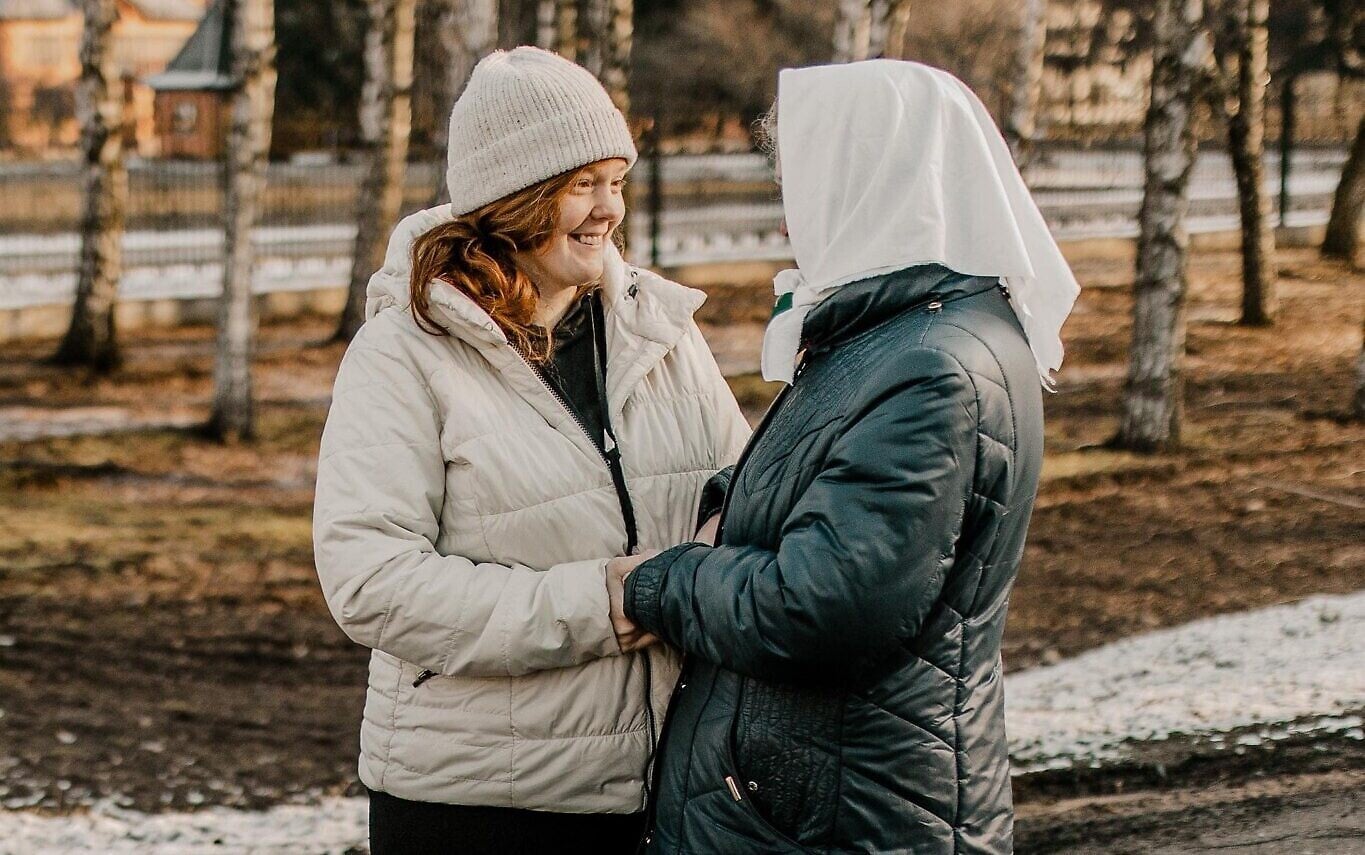
I wandered around the premises, which gave off an air of sadness and loneliness. One of the women there noticed that I was cold and warmed my hands between hers, staring at me intensely. She even followed me outside to give me a pair of wool mittens. I was ashamed to accept them, so I tried to politely refuse, but she insisted, blessing us volunteers and giving each one a hug.
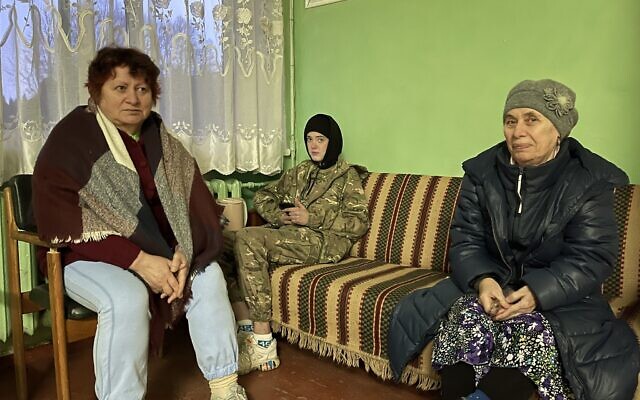
There were a couple of dozen people at the shelter — elderly, the infirm, military troops and orphans — and they were slowly running out of food and other supplies. We said our goodbyes and went out into the night.
A biblical journey
Our hostess’ house was tucked away at the end of an isolated village. Even Wesley’s incredible driving and Lucy’s navigation skills weren’t enough to get us all the way there. She had to meet us on the road and guide us towards her little house, nestled between a field and a forest. All three vans, fortunately, fit into her large yard, which also had a tool shed and an outhouse, as there was no bathroom in the house.
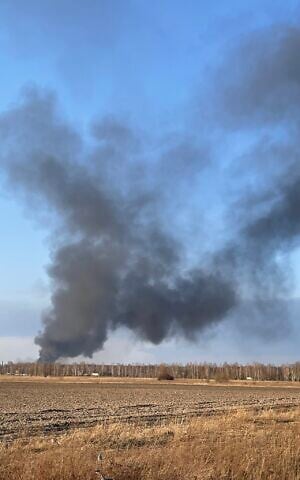
But we were greeted with homemade borscht, all things pickled and lots of tea. It was warm and cozy in the house, which was like one big tapestry with carpets on the floors and walls, and blankets on the sofas. Outside there was gunfire not too far away and snow was falling. We could also hear bombing in the distance. After being fed to capacity, Dorcas and I went to the neighbor’s house to sleep, as the volunteers were not all able to fit in one house. Our second hostess immediately tried to feed us again. Even though I was incredibly tired and it was warm under the heavy blanket, I remained half awake, thinking about the battle in the fields just a few hundred meters away from us. I wasn’t afraid, but I feared for the men doing the fighting.
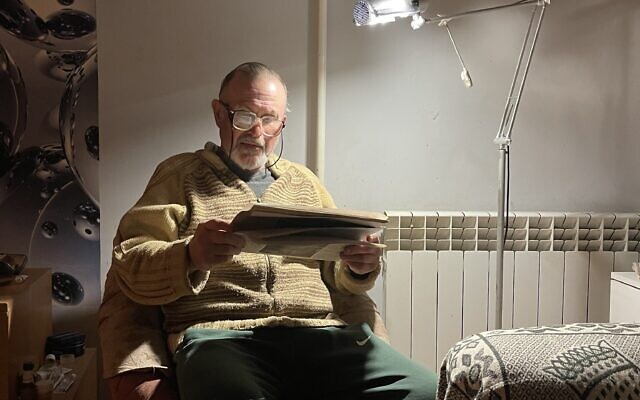
We awoke early and were again practically force-fed. Breakfast was homemade strawberry jam and eggs with bread, and we accepted it with gratitude. Dorcas and I walked back to the first house where we rejoined the team, left the rest of the supplies and said a very tearful goodbye. Though her family encouraged her to flee, the hostess remained behind to care for the old villagers who chose to stay.
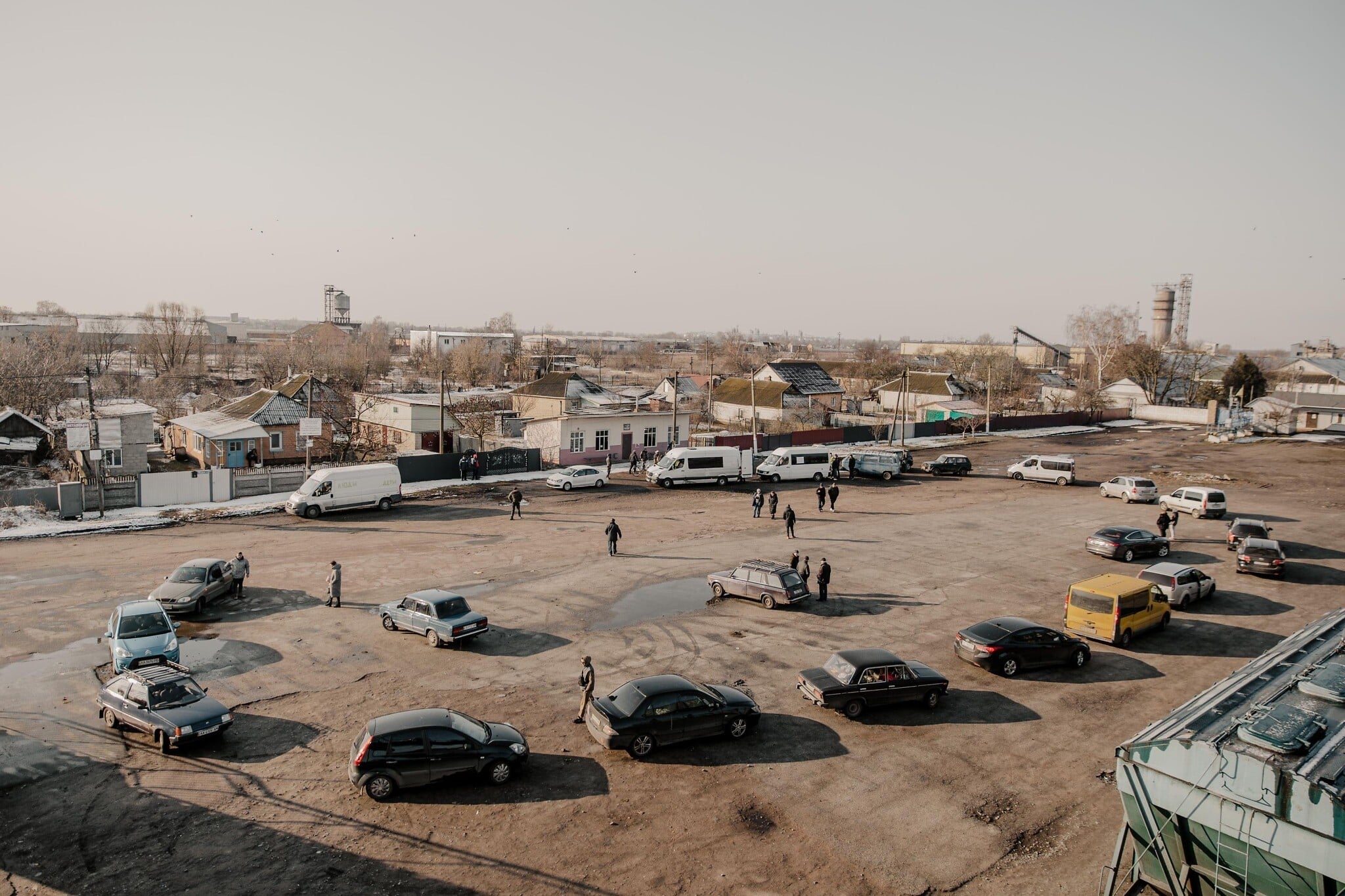
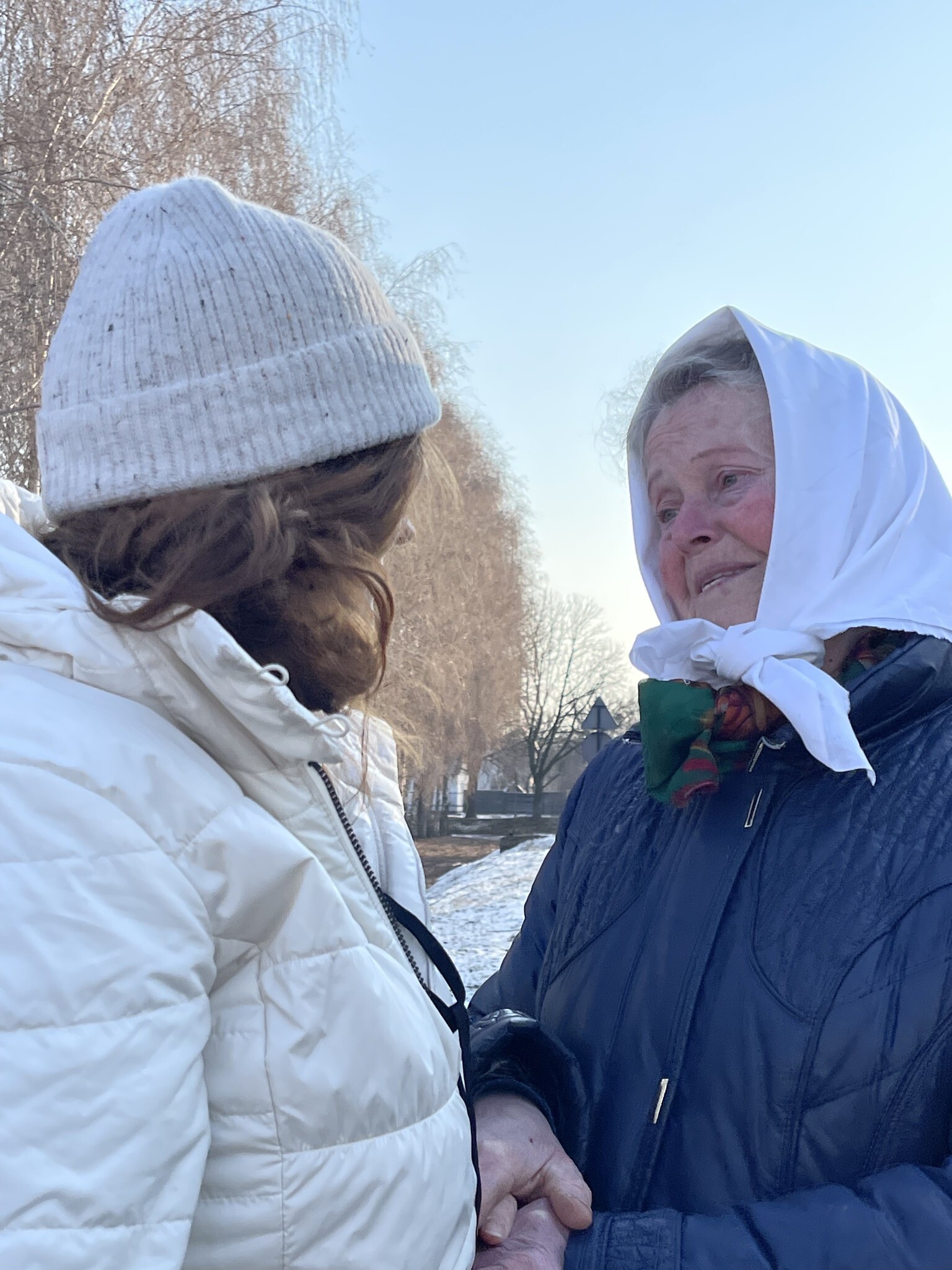
At the rendezvous point where the convoy assembled, there was excitement mixed with tears. Vans were filled to the brim with passengers and luggage, and new cars came around every minute. Men who stayed behind said goodbye to women and children, and often to their parents, too. I sat next to an elderly woman, Anna, who had ridden a bicycle for four hours from her village in order to join us. She was over 70, and brought with her only a plastic shopping bag and her passport. I did my best to comfort her as she sobbed.
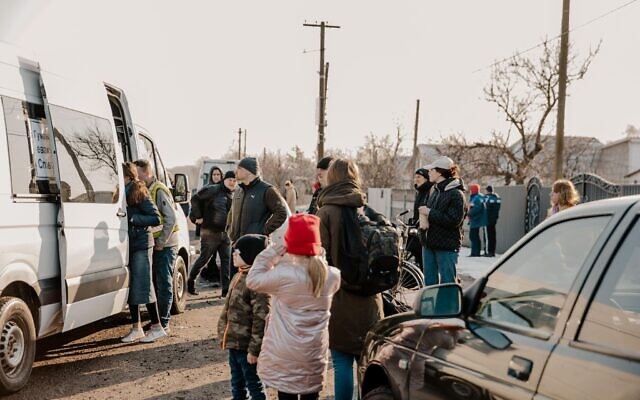
“They killed six civilians in my village,” Anna said. “Their family members crawled on all fours to be allowed to take the bodies off the street, but they did not let us. They stayed there, in the streets, rotting, for a week. Then the Russians threw the bodies into a field, and the men from our village risked their lives by going there, wrapping the bodies in rugs, and burying them.
“They killed our animals for fun. When a bullet broke my window and hit the wall in my room, I decided it was time for me to leave, no matter how,” she said, grabbing my hand and placing the bullet in my palm.
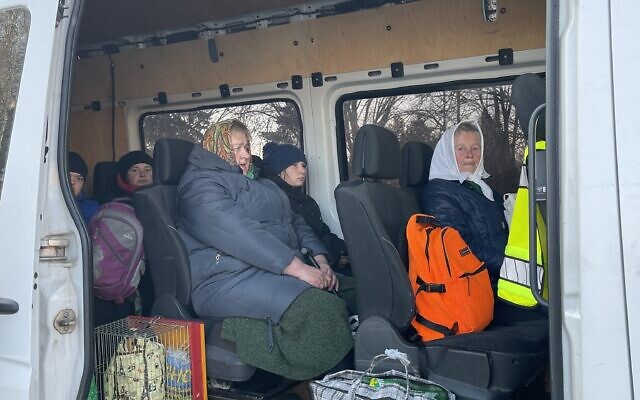
I gave her my sandwich and distributed the chocolate I had left among the children. I even received some smiles in return. We formed a convoy — our van first, then cars, then another van, cars again, and the last van. The goal was to stick together, at least until Kyiv.
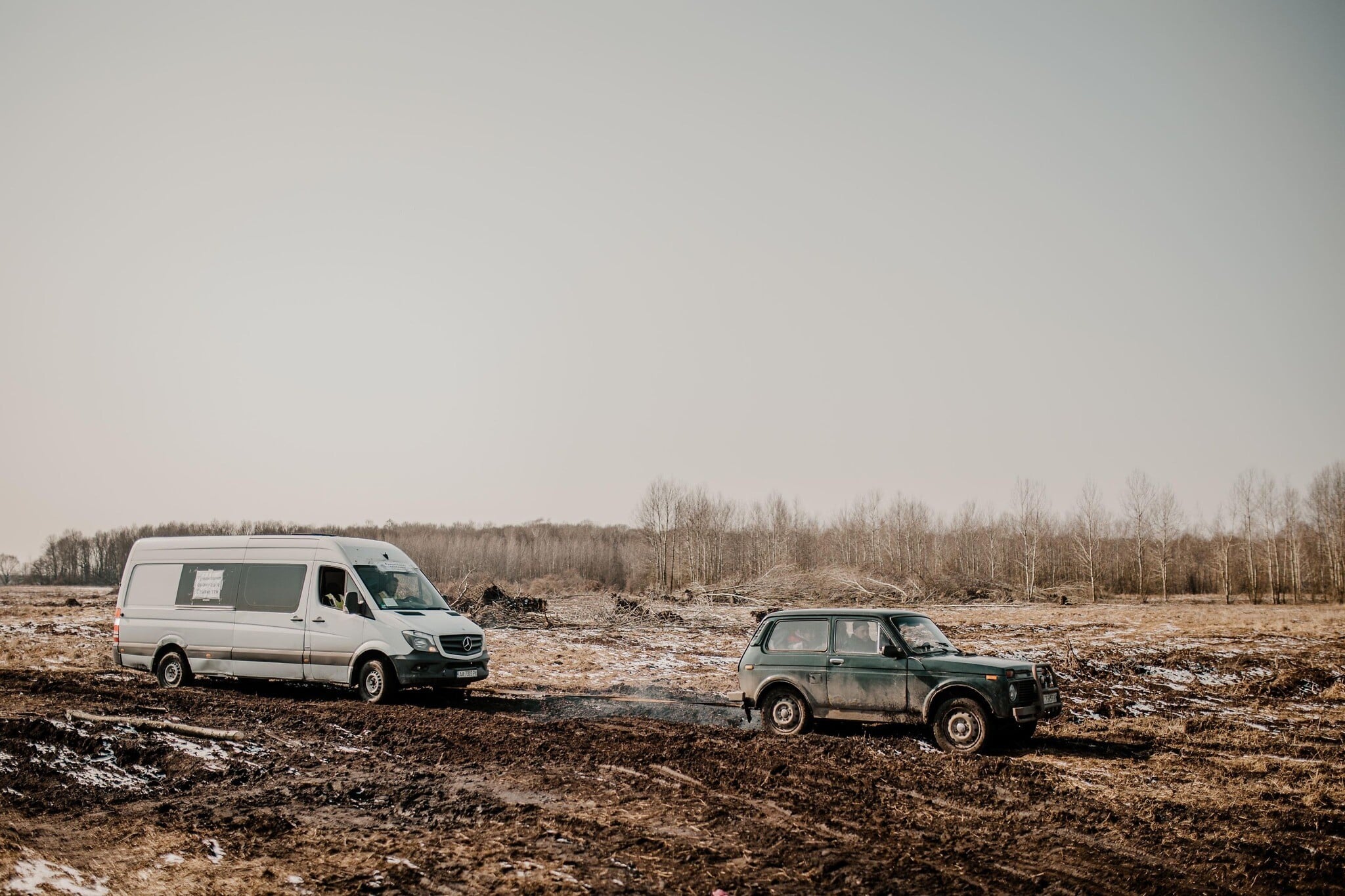
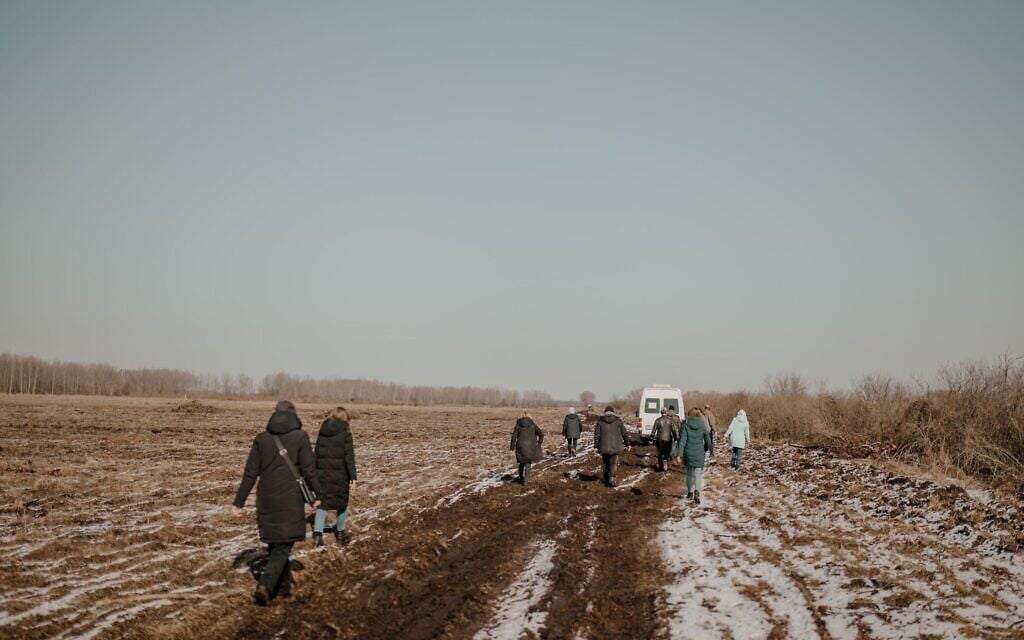
We soon found out that the road had been captured by the Russians in the fighting overnight – the only way out was to drive through the fields. It was muddy and dangerous; at one point we almost ended up in a ditch. Soon it became clear that all the passengers and baggage were too heavy, and most of the refugees – the women, children and the elderly – started crossing the fields on foot while the men dealt with the vehicles stuck in the mud.
With every step, I thought about buried landmines and the Russians who might have been hiding in the nearby forest, ready to attack. I observed the faces around me. The procession seemed almost biblical – mothers and children, old folks, pets and meager possessions carried in the arms of their owners. Above us towered the wide, blue Ukrainian sky.
The biggest hero was a local man with an old but sturdy car that managed to tow the vans out of the mud to safety. As we gathered around him, we took photos and tried to pay him for the extra gas. It was then that I had the chance to peek inside the many vehicles in our traveling caravan. There were families, dogs and cats, boxes full of memories of the lives they left behind. Everyone was helping each other, sharing snacks and playing with the animals. There seemed to be hope.
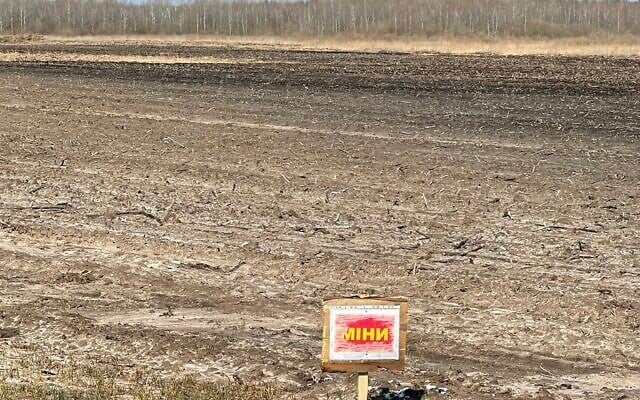
All the while, we were next to a minefield – fortunately, one marked with a warning sign. I took it upon myself to warn everyone to not go astray. After a delay of some five hours, we continued our journey. At one Ukrainian army checkpoint we gave the men warm boiled potatoes, bread, and some meat that our hostess prepared for us. The soldiers smiled with gratitude. I asked if they would speak to me, and they said yes but requested that I take no photos, so nobody would identify them and try to harm their families.
“At the checkpoint we spend at least 24 hours, often longer. Most of the men are from the region. We’ve had fighting tonight, and hard fighting,” one fighter said with a grin, handing me an empty large-caliber shell casing. There is only one possible outcome to this conflict, he said: Victory.
Homeward bound
The drive back to headquarters was long and equally as taxing as the journey out. Many of the refugees chose to stay in Kyiv, and the convoy slowly came apart. I couldn’t help but wonder how long the hatred towards Russia would burn on, even after the war, given everything that had transpired. My colleagues, all devoted to religion, had spoken of how important it is to forgive, but also how very hard.
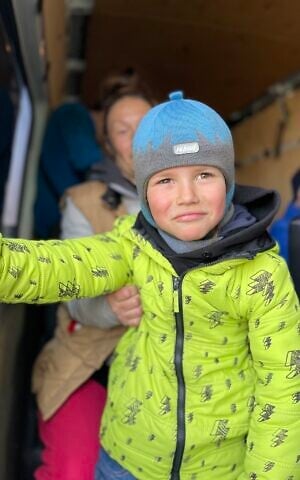
We arrived back at PCCR headquarters with about 15 refugees, many of whom would attempt to reach Poland in the following days. Our exhaustion was indescribable, but we were also euphoric, and managed to hold a debriefing session where we cracked jokes and discussed future plans.
I spoke with Daniel, the manager of the organization in Ukraine. He told me how PCCR was formed in 2014 as a response to the refugee crisis in parts of the Middle East following the rise of the Islamic State, and how he and his family lived in Iraq for two-and-a-half years. The organization has deployed in 14 locations since its inception, helping in war-torn areas or places struck by natural disasters such as floods and earthquakes. Daniel loves his team and said that he’s awed by how mature, dedicated, and productive they are — especially since they come from all corners of the globe, from different cultures and backgrounds.
“We are an NGO in the real sense of the word. It is not important to me who belongs to which – if any – religion, but that we unite around one vision, one mission, one purpose — and that is to help our fellow man,” Daniel said, evidently relieved after the team returned from the mission unharmed. I asked him how he viewed the war in Ukraine from a political standpoint.
“Even though I cannot stand what is happening to the Ukrainian people, this war is not about Ukraine. This is World War III and Ukraine happens to be the piece of real estate that they are fighting over, but Ukraine is not the issue here. Still, may God’s protection be on their side,” he said, and went to plan another rescue mission with his team.

The Times of Israel Community.